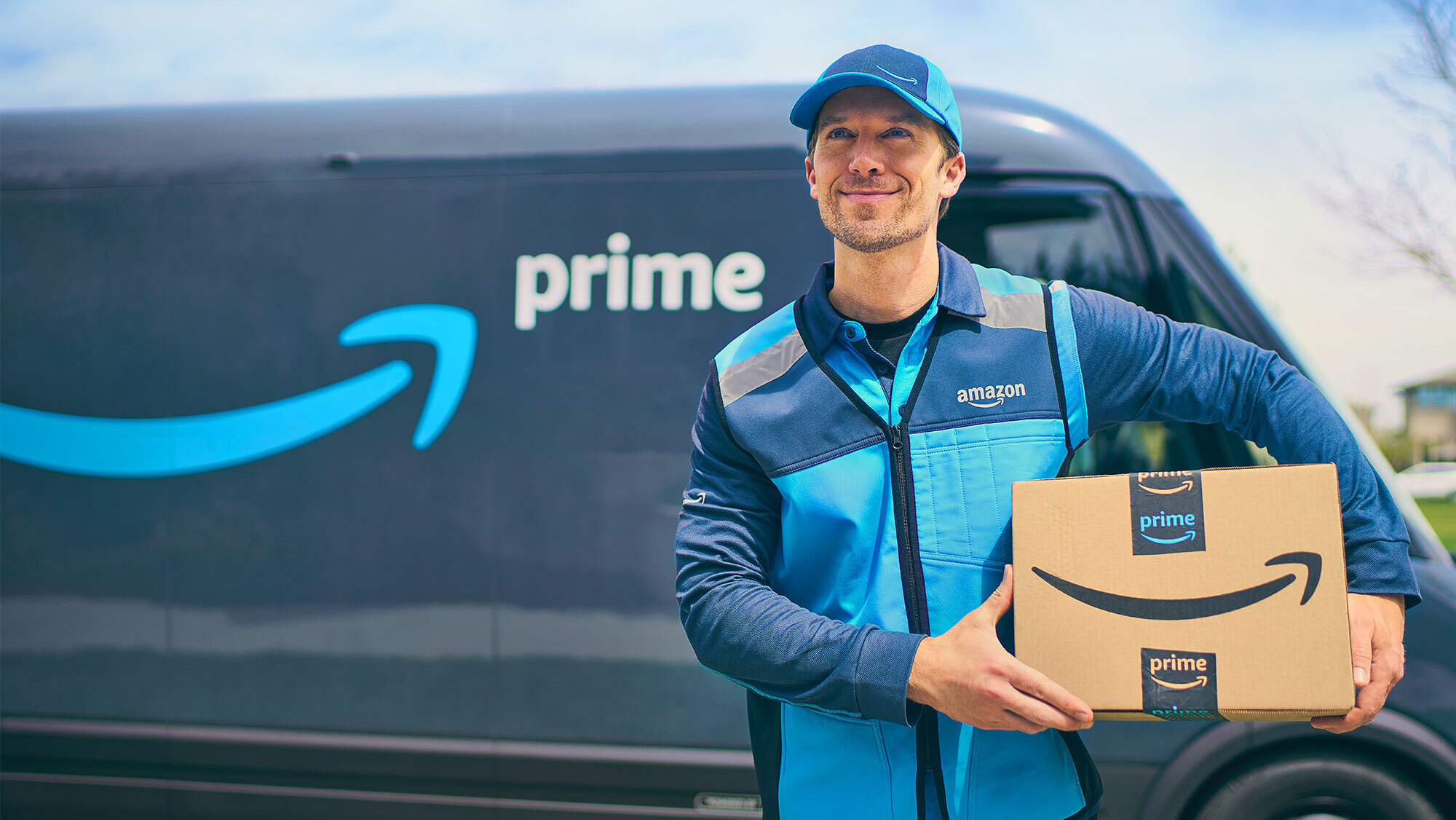
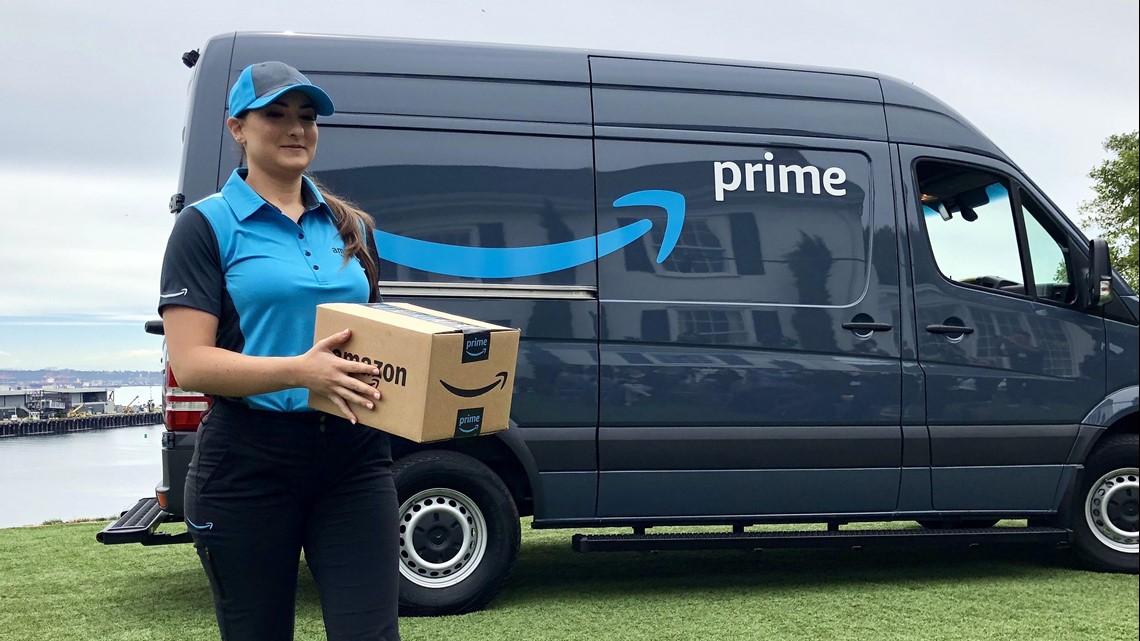
Jobs Delivering Packages For Amazon

Remember when the only person who knew your delivery driver’s name was your suspiciously friendly doorman? Fast forward to 2025, and the Amazon Delivery universe has officially become the internet’s favorite unscripted reality show. We’ve all seen the TikToks: a porch pirate getting absolutely demolished by a Ring camera, a driver yeeting a 40-pound bag of cat litter over a six-foot fence with the precision of an Olympic javelin thrower, and the now-viral saga of a guy in Ohio who tipped his driver with a signed jersey and a cold Gatorade. It’s the gig economy’s gladiator arena, and we are all, collectively, hooked. But beyond the viral clips and the memes, there’s a multi-billion-dollar human algorithm working overtime, and the chatter is reaching a fever pitch.
Let’s be real: Amazon has rewired our brain chemistry. The “Add to Cart” button is basically a dopamine slot machine, and the payout is the satisfying thunk of a cardboard box hitting your doorstep. But the cultural obsession has shifted from the what (what did I order?) to the how (how the hell did that get here so fast?). The job of an Amazon delivery driver has pivoted from a thankless blue-collar grind to a weird, hyper-visible spectator sport. It’s a strange cocktail of surveillance capitalism, algorithmic gatekeeping, and genuine human grit. We’re not just talking about a job; we’re talking about a modern-day digital pilgrimage where the driver is both the hero and the martyr. And with Amazon’s recent push into same-day delivery and AI-driven routing, the pressure cooker is whistling louder than ever.
Why is everyone suddenly talking about this? Because it’s the one job nearly every American has interacted with, yet understands almost nothing about. It’s the murky, awkward middle child between the white-collar tech elite in Seattle and the consumer who just wants their 50-pack of assorted fruit snacks. The discourse is split: some see it as a liberating, flexible hustle that pays decent cash, while others see it as a dystopian, back-breaking step backward in labor rights. The truth, as always, lives somewhere in the chaotic middle, drenched in sweat and stained with spilled energy drinks. Buckle up, because we are about to dive deep into the boxes, the bots, and the bruised egos of the Amazon delivery ecosystem.
Must Read
The Cult of the Dashboard: Inside the DSP Subculture
Scratch the surface, and you’ll find that “Amazon delivery driver” isn’t one job—it’s a sprawling, tangled web of Delivery Service Partners (DSPs), independent contractors, and the ominous, looming shadow of the AI. The subreddits and Discord servers are toxic yet addictive, filled with drivers comparing "Netradyne" scorecards (that creepy in-van camera that judges your every glance) like they’re trading Pokémon cards. There’s an entire subculture dedicated to "the gray area"—the forbidden art of peeing in a Gatorade bottle while navigating a rural cul-de-sac, or the strategic placement of a package to avoid a "photo on delivery" flag that triggers a human review. It’s a digital underground where drivers trade intel on which DSP is less likely to screw you over, and where the phrase "Amazon Flex" is uttered with the same reverence and fear as a cursed spell.
Social media has turned this into a bizarre form of entertainment. On one side, you have the "Day in the Life" vloggers, who sit in their 2018 Ford Transit, showing off their snack hacks and route-optimization spreadsheets. On the other, you have the "Smile, You’re on Camera" compilations, where drivers are caught picking their noses or flirting with a golden retriever. But the real cultural shift is the weaponization of the customer review. If a driver leaves a package in the "wrong" spot, the customer can nuke their score with a single tap, potentially costing them their job. This has created a bizarre power dynamic where the customer is the middle-manager, and the driver is a hamster on a wheel running toward an ever-moving finish line. It’s a fascinating, albeit grim, reflection of how we treat the invisible workforce that powers our convenience addiction.

How to Survive the Prime Tsunami: A Consumer’s Guide to Not Being a Jerk
You can’t fix the system, but you can absolutely fix your own behavior to make the ecosystem less miserable for everyone—including yourself. First, stop ordering single items. That 99-cent phone charger you bought last Tuesday? It cost Amazon more in diesel than you paid in shipping. When you batch your orders, you give the routing AI a better chance to create logical clusters, meaning less zig-zagging for the driver and fewer chances for your package to end up in a ditch. Think of your shopping cart as a Tetris board: fill it efficiently, and the game is easier for everyone.
Second, decode the "Notes" section like a pro. Instead of writing passive-aggressive novellas ("If it doesn't fit, just leave it, I guess..."), be hyper-specific. Use landmarks: "Behind the ceramic frog next to the hose." Provide gate codes in the delivery instructions, not in a separate text message that the driver can’t see. If you live in an apartment building with a code-buzzer that never works, you are the villain of this story. Fix it, or pick up your package from a locker. The locker is your friend. It is a non-judgmental, climate-controlled sanctuary that saves the driver ten minutes of panic.
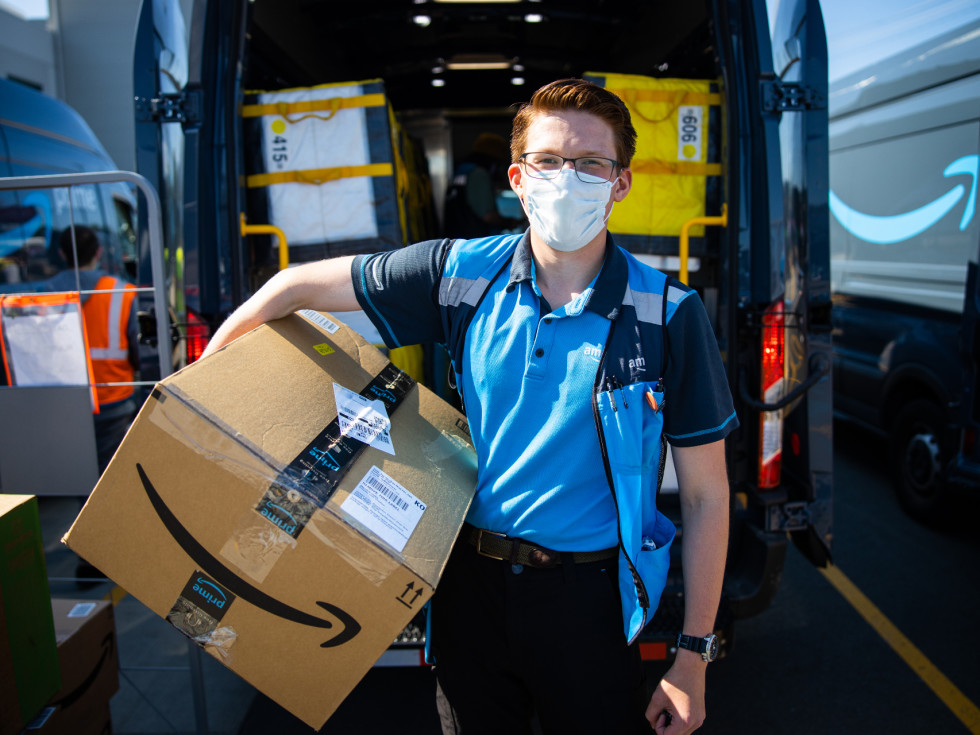
Third, tip in cash, always. I know the app offers a tip option, but the algorithm often pools those tips and factors them into the driver’s base pay, effectively negating your generosity. A crisp $5 bill handed over in that awkward 10-second interaction window does more for a driver’s morale than a digital tap. It also lets them know you see them. It’s a tiny act of rebellion against the algorithm that tries to quantify their labor. If you don’t have cash, offer a cold bottle of water on a hot day. It sounds patronizing, but trust me, after hour six in a black van with a broken AC unit, that Dasani tastes like liquid gold.
Fourth, and this is crucial: do not hover. We get it, you want your Chia Pet. But standing by the door, staring through the peephole, and yanking the door open the second the package hits the mat is a rookie move. It confuses the camera, triggers a "customer interaction" flag, and can delay the driver because they have to awkwardly hand it to you. Let them take the photo, let them walk away, and then pounce. Treat the delivery like a nature documentary: observe from a distance, don't scare the wildlife.

Frequently Asked Questions: The Internet’s Burning Debates
Is it true Amazon drivers are forced to pee in bottles?
Ah, the meme that refuses to die. The short answer is: not officially, but functionally, yes. Amazon’s official policy states that drivers have autonomy over their breaks. However, the routing software— affectionately nicknamed "The Beast"—is notoriously aggressive. It calculates route times based on a perfect-world scenario where there are no traffic jams, no dogs, no locked gates, and no confusing apartment layouts. If you stop for a 15-minute break to use the restroom, you run the risk of falling behind schedule, which chips away at your "Fantastic Plus" score, which influences your standing with the DSP. So, to hit their numbers, many drivers resort to the bottle or the "bushes of shame." It’s not a company mandate; it’s a physics mandate created by an algorithm that doesn't have a bladder. This is the core irony of the job: the tech is smart enough to map your route, but too dumb to schedule a toilet break.
Is the pay actually $20+ an hour? Or is that a scam?
The internet is awash with conflicting salary screenshots, and the answer is layered. DSP drivers (the ones in the branded blue vans) generally start around $18-$20 per hour. But that’s your base rate. The dirty secret is the "guaranteed hours" game. If you finish your route in 6 hours but were guaranteed 8, you generally still get paid for 8. This sounds great, but it creates a perverse incentive. Drivers who finish too fast are seen as "efficient" and get their routes loaded with more stops next shift. Drivers who finish too slow get penalized. So, the actual hourly rate fluctuates wildly based on how many stops the algorithm decides to throw at you. When you factor in the wear and tear on your personal vehicle (if you're doing Flex), the gas, and the lack of health insurance, that $20-an-hour figure becomes a lot fuzzier. It’s not a scam, but it’s definitely not the passive cash cow some TikTok gurus are selling you.

What happens if I tip bait? (And other moral quandaries)
Tip-baiting—where you promise a big tip in the app and then zero it out after delivery—is arguably the lowest move on the internet. For Amazon Flex drivers, the tip is often the difference between a profitable shift and a net loss. While the app doesn't explicitly punish the customer, there is a system: Amazon tracks your "tip adjustment" history. If you routinely zero out large tips, the system statistically learns it. What happens? You get deprioritized. Your orders mysteriously start taking 48 hours to arrive instead of 5. The driver community also has a shadowban list. Word spreads in local DSP chat groups: "Unit 4B at the Oakwood Apartments? Don't take that route. They're tip-baiters." You won't get banned, but you'll get a reputation, and your packages will mysteriously end up at the bottom of the stack, or 'briefly delayed' due to a 'routing anomaly.' Karma is real, and it drives a Ford Transit.
So, is this a passing fad or a permanent scar on our modern lifestyle? Unfortunately, it’s the latter. The convenience loop is too deep; we’ve collectively decided that waiting more than 24 hours for a novelty t-shirt is a human rights violation. This job is the inevitable consequence of our on-demand culture. The "Amazon driver" is now a permanent archetype, right up there with the mailman and the milkman of yesteryear. But the narrative is shifting. We are starting to see them not as invisible cogs, but as the last physical touchpoint of the digital empire. They are the human face of our algorithm-driven desires.
The permanent change isn't just the job itself, but the power we've handed over. We’ve traded the local post office gossip for a sterile, driverless future that hasn't fully arrived yet. For now, the wheels are still turning thanks to human endurance. The fad isn't the job; the fad is our expectation that everything can be delivered at the speed of light without a cost. As we watch the next viral video of a driver battling a swarm of wasps or dodging a rogue golf cart, let’s remember: they are not a glitch in the system. They are the system. And they probably need a bathroom break.