Jeld Wen Exterior Doors Painting
There is a moment, just before the final coat of paint dries on a front door, that feels almost alchemical. You are not merely changing a color; you are rewriting the psychological script of your home’s façade. For decades, the front door has been the handshake of a house—the first tactile and visual introduction to the lives within. Yet, when that door bears the name JELD-WEN, the canvas is not just wood or fiberglass; it is a piece of engineered Americana, a product of a company that has been molding the country’s perimeters since the early 1960s. To paint one is to engage in a dialogue with a legacy of mass production, architectural trends, and the deeply human desire for a threshold that feels both immutable and inviting.
The act of painting an exterior door is often dismissed as a weekend chore, a prelude to selling a house or a quick fix for curb appeal fatigue. But in our era of hyper-curated exteriors—where the "Grandmillennial" style clashes with brutalist minimalism—the painted door has become a potent symbol of identity. It is the difference between a home that whispers and one that shouts. And when you are working with a JELD-WEN product, a brand that adorns millions of homes across North America, you are stepping into a specific technical dance. It’s not just about picking a shade of "Urbane Bronze" and praying; it’s about understanding the composite skin, the factory primer, and the secret life of the gasket seal. This is where the mundane becomes the magical, and where a roller becomes a wand.
The Unseen Alchemy: Chemistry, Culture, and the Color of First Impressions
Let’s get uncomfortable for a second: most exterior door failures are not the paint’s fault; they are a failure of stratification. JELD-WEN doors, particularly their popular fiberglass models, are not porous like solid wood. They are a dense, resin-rich composite that expands and contracts at a different rate than the atmosphere around them. Painting them is less about surface coverage and more about creating a flexible, impermeable membrane. The dark fun fact here? A black door on a JELD-WEN unit facing west can reach surface temperatures of 160°F (71°C) on a summer afternoon. At that temperature, standard latex paint begins to undergo plasticization—it softens, becoming tacky, and then as it cools rapidly at dusk, it shrinks, creating micro-fractures that are invisible to the naked eye but fatal to the finish over two seasons. This is the hidden warfare of thermal shock, and it’s why your neighbor’s navy door looks chalky within a year.
Must Read
Culturally, the door is a conspiracy of color and expectation. In Feng Shui, the front door is the "Mouth of Chi," and its color dictates the energy that enters. A red door—a classic choice for many Victorian homes—is a direct invitation to luck and vitality, but on a modern JELD-WEN fiberglass unit, red is a villain. It has the lowest light reflectance value (LRV) of all colors, absorbing the sun’s wrath without apology. This is the psychological trap: we choose a color based on emotional resonance, yet the physics of the material punishes our sentimentality. The modern, culturally aware painter knows that a "cheerful" yellow must be balanced with a high-quality acrylic resin with ceramic microspheres to deflect solar radiation. It’s a blend of ancient wisdom and modern polymer science.
Furthermore, there is the quiet drama of the factory primer. Many people assume that a new JELD-WEN door arrives ready for paint, but the pre-primed surface is often a thin, water-based coat designed primarily for storage and shipping, not for protection. It is a false promise. The true alchemy occurs when you sand this slick surface—not to remove it, but to scar it with 220-grit paper. This creates "tooth," the microscopic valleys that allow the topcoat to mechanically lock in. To skip this step is to treat your paint like a decal, and decals peel. This nuance is the difference between a homeowner and a craftsperson; the former sees a flaw, the latter sees an opportunity for adhesion.
The Four-Point Protocol: From Sanding to Sealing
Consider the case of Amelia, a graphic designer in Portland, who bought a 1990s suburban split-level with a tired, almond-colored JELD-WEN steel door. She wanted "Sulking Room Pink" (a Farrow & Ball shade) and almost sprayed it directly over the rusted imperfections. Her mistake would have been catastrophic. Steel doors, unlike fiberglass, require a rust-inhibitive primer specifically formulated for ferrous metals. The takeaway? You must identify your door's core material before you choose your paint. JELD-WEN offers three primary exterior doors: wood (which needs oil-based primers to prevent tannin bleed), steel (which needs anti-corrosive primers), and fiberglass (which needs a high-build acrylic primer to fill the subtle grain pattern). Ignoring this trinity is the root of all peeling.
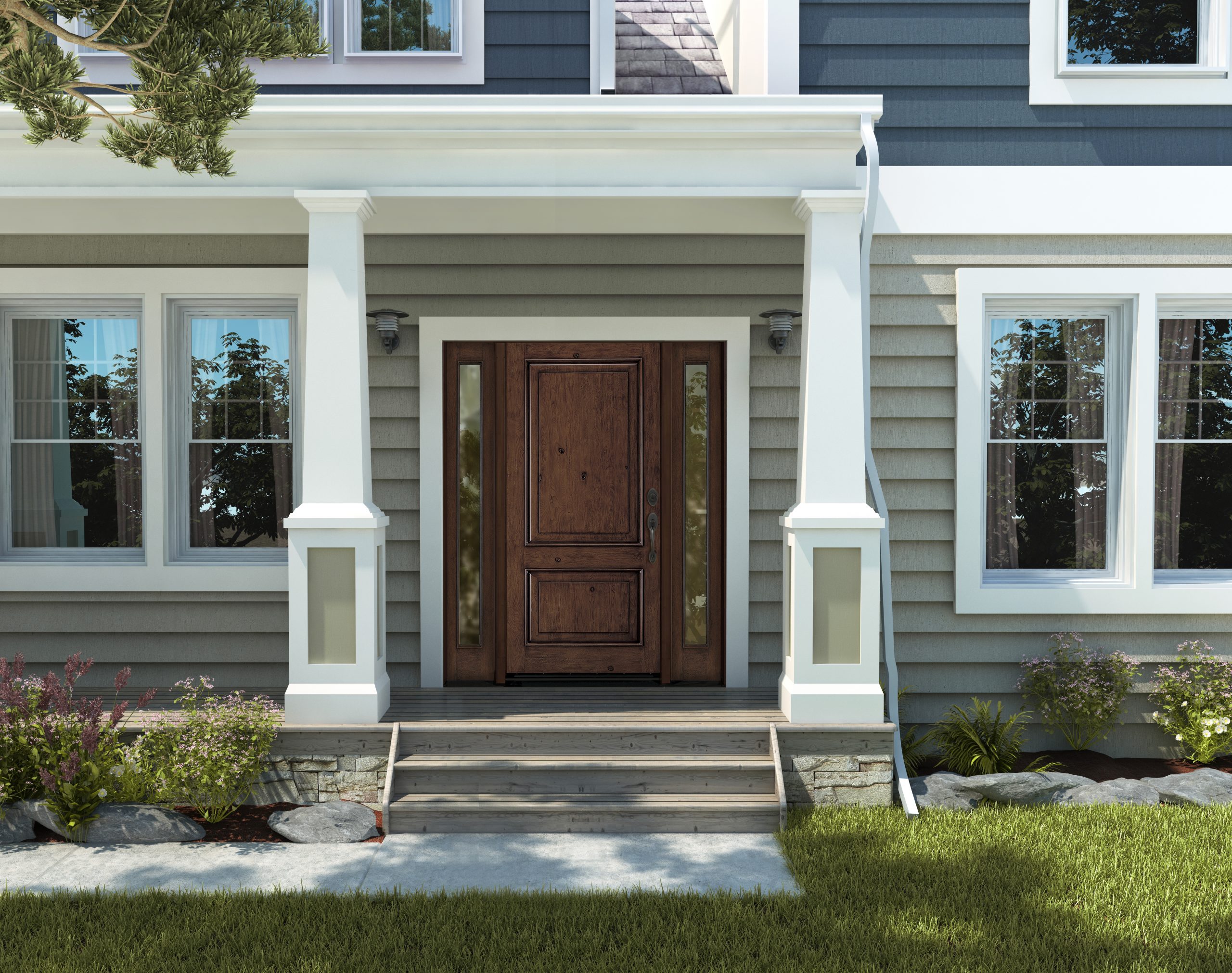
For the practical reader, your timeline should start not at the paint store, but at the weather forecast. You need a window of 48 hours with temperatures between 50°F and 80°F and zero humidity. Paint applied in the direct sun on a JELD-WEN door will blister, as the solvent evaporates faster than the film can form. The protocol is simple but unforgiving. First, remove the hardware entirely—do not tape it, and here’s the dark fun fact: painters’ tape on a thermostatically heated steel door can leave behind a silicone residue that repels paint, causing "fisheyes" (small craters) in your finish. Second, wash the door with a deglosser (a liquid sandpaper) which breaks down the oils from your fingers and the factory residue. Third, apply your primer in a thin, even coat, allowing it to cure for a full 24 hours—not the "recoat time" on the label, but the full cure. Fourth, paint using a high-density foam roller for the panels and a high-quality synthetic brush for the edges, laying off the paint in a vertical direction to mimic natural light.
Let’s look at the "Maintenance Myth." Most people believe that once the door is painted, the job is done for a decade. In reality, a JELD-WEN exterior door is a sacrificial lamb to the elements. It takes the brunt of UV radiation, windblown rain, and the thermal shock mentioned earlier. The actionable insight here is the 90-Day Check. Within three months of painting, run your hand over the surface at dusk. If it feels rubbery or tacky, your paint hasn't fully coalesced—you need to increase the cure time, and you likely used a cheap paint with too much water content. If it feels slick, you haven't used enough acrylic binder. The practical solution is to invest in a 100% acrylic paint (not vinyl-acrylic, which is cheaper but less flexible) and to always apply two topcoats, even if the first coat looks perfect. The first coat is for adhesion; the second coat is for opacity and future adhesion.
Another scenario involves the "Rebranding" of a home. A tech entrepreneur in Austin purchased a house with a massive, double-door JELD-WEN fiberglass entryway. The previous owner had painted it a uniform charcoal gray. The new owner wanted a two-tone scheme: matte black panels with a glossy white frame. This is a high-risk aesthetic. The takeaway is that contrast reveals texture. On fiberglass, the embossed wood grain is subtle; dark colors hide it, light colors expose it. To achieve this look, you must use a special bonding primer on the smooth frame, and you must accept that the transition line between the two colors will be a site for delamination unless you use a low-tack seam tape and remove it immediately after the final pass, before the paint skins over. This is architectural couture—it looks magnificent but requires the precision of a surgeon.
The Great Paint Debate: Five Questions Homeowners Ask
Can I paint a JELD-WEN door that has been previously stained or sealed?
Yes, but you are entering a battle of adhesion against the oily residue of the stain. The stain has penetrated the wood fibers or the composite gel coat. You cannot simply paint over it. First, you must abrade the surface aggressively with 120-grit sandpaper to break the gloss and expose the raw material beneath. Then, you must apply two coats of a shellac-based primer (like Zinsser B-I-N), which is the only primer strong enough to block the tannins and oils from bleeding through your new topcoat. This is a rescue mission, not a repaint.
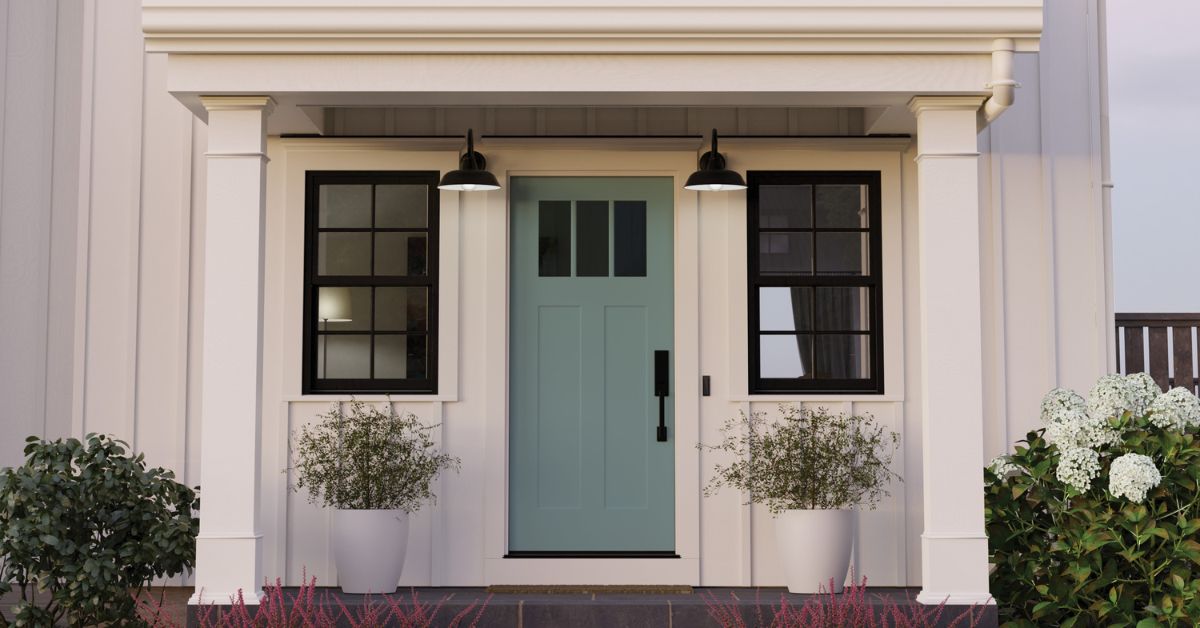
The challenge is that oil-based stains leave a microscopic film that water-based paint hates. Even after sanding, the film can remain in the pores. If you ignore this, you’ll see a phenomenon called "solvent pop" two months later—tiny, pinhead-sized craters where the paint has bubbled off the surface. The fix is tedious: chemical stripping of the old stain before you even think about priming. It is worth the labor because painting a stained door completely transforms the home's character, turning a rustic oak into a sleek slate grey, but it requires the patience of a monastic scribe.
How long should I wait between primer and topcoat on a new JELD-WEN door?
The industry standard is to wait for the primer to be "dry to the touch" but not fully cured. This is usually around 1 to 2 hours for latex primer. However, this is a trap. If you apply topcoat over a dry-but-not-cured primer, the solvents in the topcoat can cause the primer to soften and shrink, creating a "crows foot" wrinkle pattern. The safest protocol for exterior doors is to wait 24 hours. If you wait longer than 72 hours, you risk contamination from dust and pollen, which means you need a light scuff sanding before the topcoat.
For steel doors, the wait is even more critical. Steel is non-porous, so the primer has only its porous microparticles to cling to. If the topcoat is applied too thickly and too quickly, the underlayer of primer becomes a hydraulic system, pushing moisture up into the paint film. Wait the full 24 hours, check the humidity, and if your topcoat goes on, do it in thin passes, allowing each pass to flash off (become tacky but not wet) before applying the next. This is the "delay for durability" rule.
Is spray painting better than brushing for a JELD-WEN exterior door?
Spraying gives a flawless, factory-like finish, but it is vastly overrated for a door that is already hung. Overspray will drift onto your siding, your hinges, and your doorway. If you must spray, you need to remove the door from the hinges and lay it flat in a controlled environment. This is the only way to get a truly even film thickness without sags. However, brushing a JELD-WEN door, specifically the fiberglass models, has a hidden advantage: the brushing action physically pushes paint into the embossed grain, increasing the surface contact area.
![Home Page [www.jeld-wen.com]](https://s3.us-east-2.amazonaws.com/cmd-jeld-wen/assets/images/2560/2639481208.jpg)
For the average homeowner, a combination of rolling and "tipping off" (lightly dragging a dry brush over the rolled surface) is superior. It provides the texture of a roller (which helps hide minor imperfections) and the smooth, leveled finish of a brush. If you do spray, beware of the "dry spray"—paint that atomizes into dust before it hits the surface. This is common in windy conditions and leaves a coarse, sandpaper-like texture that trashes the door’s sheen. Unless you have professional rigs and masking skills, the brush is your ally.
What sheen should I use for an exterior door?
There is an ongoing debate between Satin and Semi-Gloss. Satin hides every imperfection and feels modern, but it is less resistant to abrasion and fingerprints. Semi-gloss is shinier and easier to clean, but it ruthlessly highlights every roller mark and uneven patch. For a JELD-WEN door, the sheen choice also affects heat reflection. Lower sheens absorb more light and heat. On a fiberglass door, you can use Satin safely. On a steel door, I recommend a Satin with a high percentage of silicone additive, as it withstands thermal expansion without cracking.
The dark fun fact about sheen is that it lies. A Semi-gloss black door will appear more "silky" than a Satin white door because of light reflectance. The higher the gloss, the more the door appears to change color in different lighting conditions. If you want a deep, moody color like "Green Smoke," use Flat or Matte. Flat paint is a sponge for sunlight, hiding the underlying fiberglass texture. But flat is porous; it will absorb dirt and become chalky quickly. The compromise is a "Low-Luster" or "Eggshell" exterior grade, which offers a 10-15% gloss level—enough to repel water but low enough to hide the swirl marks of your sanding.
How do I fix peeling paint on a JELD-WEN door without repainting the whole thing?
You cannot—not politically, not physically. Peeling paint is a wound, and it reveals a broken bond between the substrate and the topcoat. If you attempt to localize the repair, you will leave a hard edge of old paint that will continue to telegraph the failure. The only correct fix is to use a heat gun to soften the peeling areas, scrape away the loose paint, and then sand the entire door down to sound material. Then, you must re-prime the entire door to ensure uniform porosity.
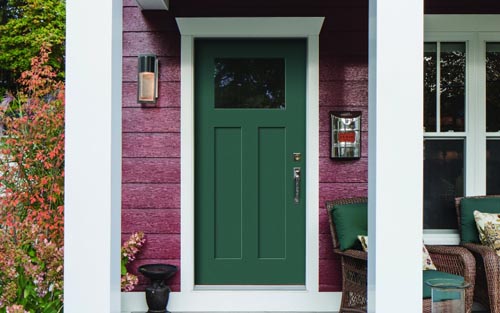
This is the reality of "perfect visibility"—the eye forgives a whole new paint job, but never a patch. If the peeling is caused by moisture from behind (e.g., a leaking threshold), you must fix the water intrusion first. Painting over moisture damage is brittle, delusional work. Once the door is dry, apply a high-build prime, sand, and repaint. The final outcome is not a repair; it is a resurrection.
In the grand narrative of homeownership, painting your JELD-WEN door is a confession of hope. It is the acceptance that entropy is the enemy, and that we can, with a brush and a few gallons of acrylic, hold back the decay of the outside world. This task connects us to a primal instinct—the desire to demarcate our territory, to say to the wilderness, "Here, I am safe." The ritual of prepping and priming is almost meditative, a slow, controlled dance against the chaos of the elements. We find order in the sanding block, we find confidence in the even coat.
We often speak of a home's "curb appeal," but that phrase is too commercial. What we are really doing when we repaint our door is addressing our own psychology. We are proofreading our first impression to the world. The color we choose, the sheen we apply, and the patience we exhibit will dictate how our guests feel before they even knock. A pristine, deeply saturated door promises a maker’s care; a faded, chalky door suggests neglect. It is the closest thing we have to a bio-signature of our domestic lives.
Ultimately, the paint on your JELD-WEN door is a mirror of your relationship with time. It says whether you believe in future maintenance or short-term gratification. As the sun sets and the light catches the subtle curve of the panel, the door stands as a testament to our small, daily acts of rebellion against rust and rot. It is not just a door; it is a shield, painted with the colors of our bravery.