Is Norwegian Cruise Line Stock A Buy
There’s a peculiar kind of alchemy that happens when you mix cheap piña coladas, a horizon that refuses to end, and the cold, hard calculus of a quarterly earnings report. Norwegian Cruise Line Holdings (NCLH) is not just a company that floats massive hotels across the ocean; it is a barometer for a very specific human impulse—the urge to escape. For decades, cruising was the domain of retirees and honeymooners, a floating bingo hall with a buffet. But in the post-pandemic era, it has mutated into something else entirely: a high-stakes, debt-laden, adrenaline-fueled gamble on the idea that consumers will always prioritize experiences over things. The question on every retail investor’s lips isn’t just “Can I afford a balcony suite?” but rather, “Can I afford to bet on the people who can?”
This is a stock that lives on the bleeding edge of macroeconomic sentiment. When inflation dips, NCLH soars; when a new variant sneezes, it plunges. As of late 2024 and into 2025, the narrative is one of “record booking volumes” and “Waves” season optimism, yet the balance sheet still drags a weight of debt that would make a Mediterranean cruise ship look nimble. To answer whether Norwegian Cruise Line stock is a “buy” requires us to wade through financials that are as choppy as the North Sea, while also understanding the psychology of the modern vacationer. It’s a story about leverage—both financial and emotional—and whether we are witnessing a mature industry’s golden era or a speculative bubble with a swim-up bar.
The Uncomfortable Math of Fun: Debt, Dilution, and the Yield Trap
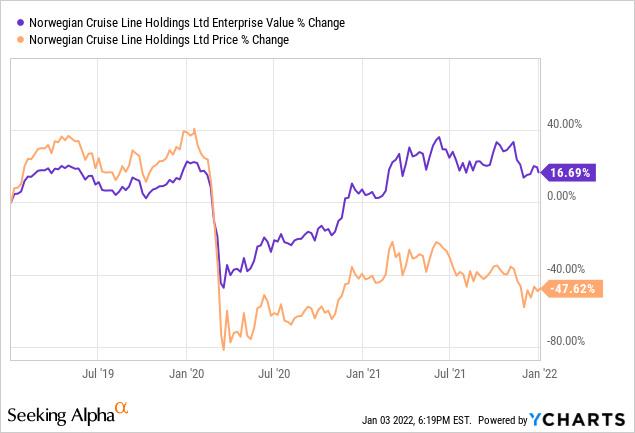
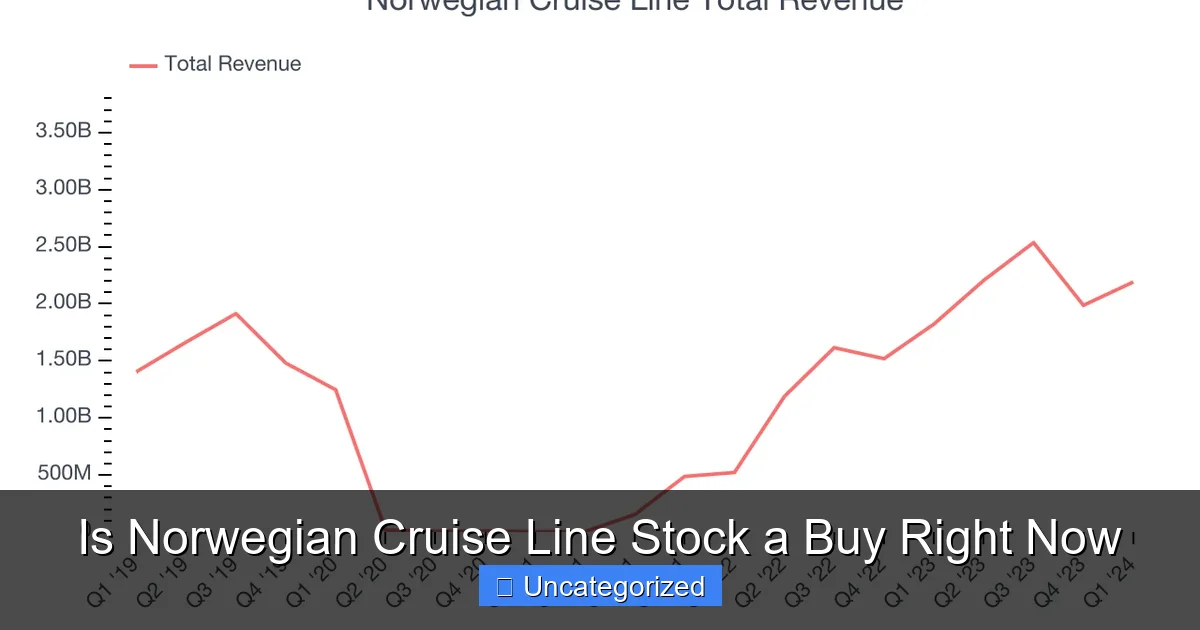
Let’s start with the elephant in the stateroom: Norwegian Cruise Line is carrying roughly $13 to $14 billion in debt. To put that into perspective, that’s enough to buy every private island in the Bahamas and still have change for a few dozen mega-yachts. When the pandemic halted sailing in 2020, NCLH did what any rational company would do—they borrowed money at high interest rates to survive. Unlike Carnival or Royal Caribbean, Norwegian held less cash reserves and had to dilute shareholders aggressively. This was the “dark fun fact” of the cruise industry: the ships kept floating, but the share count ballooned. For investors, this means that even if revenues return to record highs, the per-share earnings might remain muted for years as the company prioritizes deleveraging over dividends.
Must Read
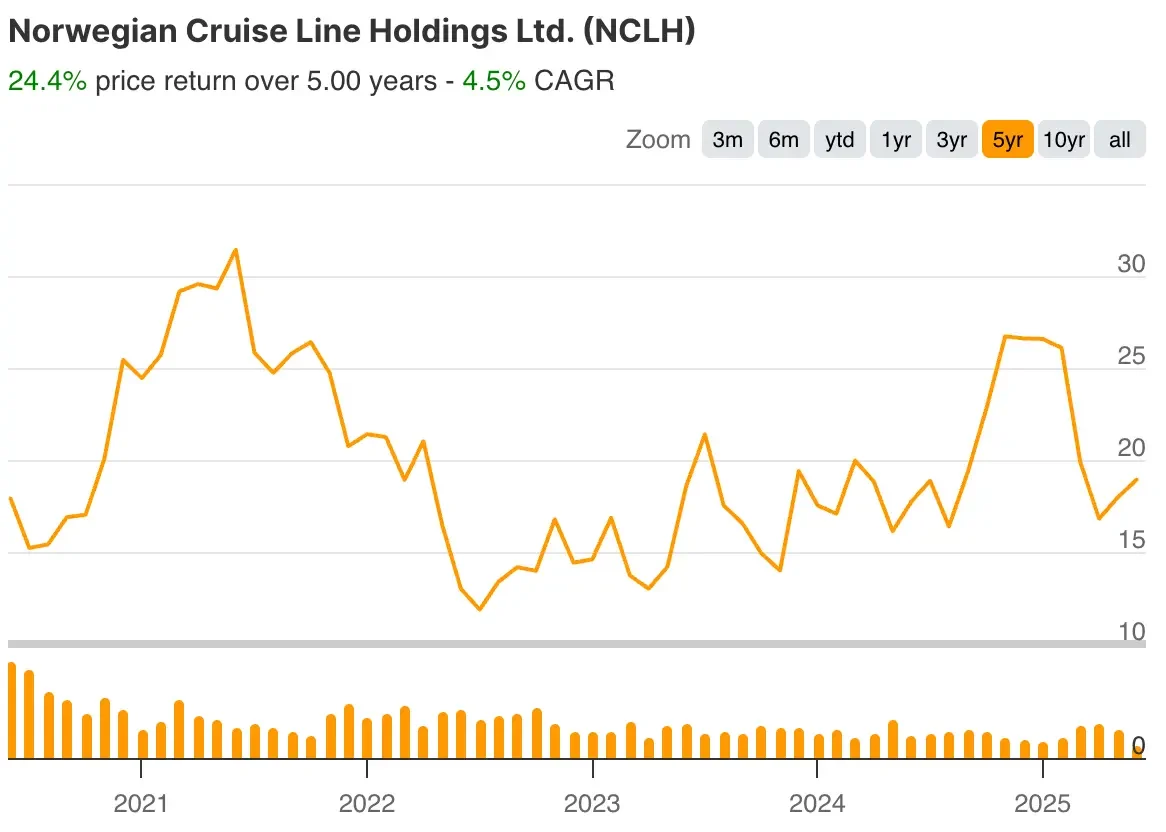
The psychological trap here is the “value trap” narrative. On paper, the price-to-earnings ratio looks tantalizingly low compared to tech stocks. But this is an illusion generated by cyclicality. Cruise lines are not growth stocks; they are leveraged cyclical consumer discretionary plays. When the economy sneezes, discretionary spending on a 7-day Alaskan cruise catches a cold. Historically, NCLH stock has traded in a volatility band that would give a day trader whiplash—it’s not uncommon to see 5% swings on a single piece of news about fuel prices or a CDC update. The modern investor must ask themselves if they have the stomach for a ride that includes both norovirus scares and geopolitical tensions in the Mediterranean, all while watching their portfolio mimic a storm swell.
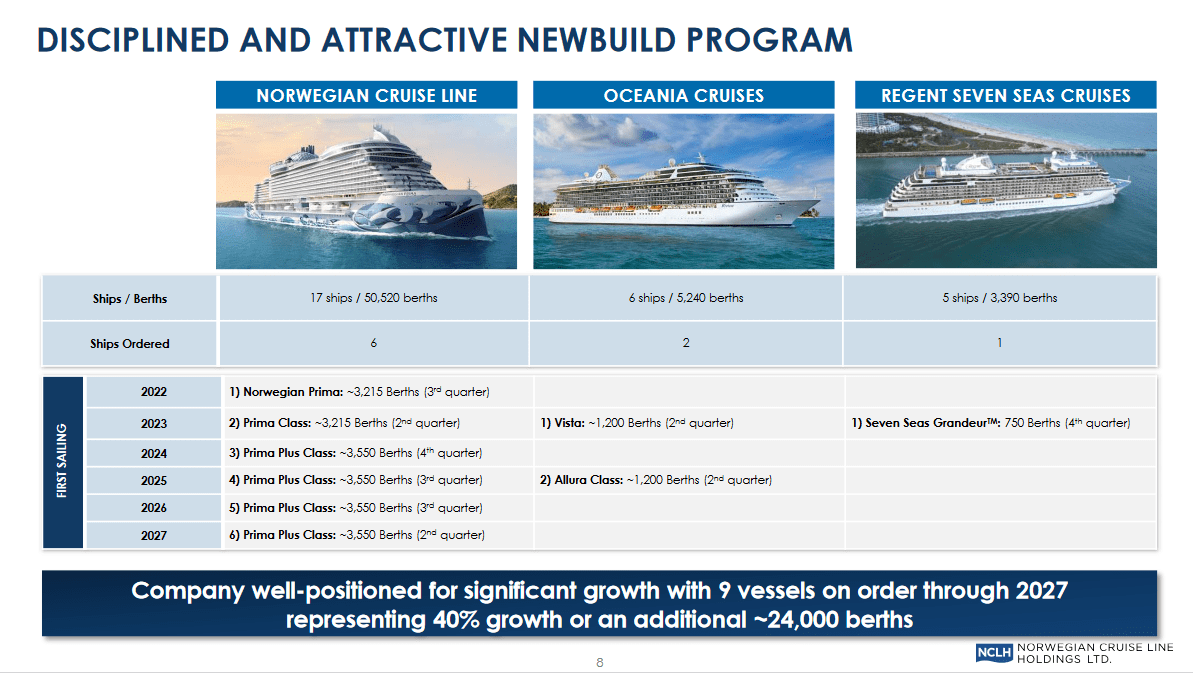
Furthermore, the industry’s race to build bigger ships—Norwegian’s upcoming Prima class vessels—represents a classic industry prisoner’s dilemma. Every competitor is adding capacity, flooding the market with new berths. This is fantastic for vacationers (lower prices), but terrible for yield management. While NCLH touts strong onboard revenue (casinos, spa, specialty dining), the base ticket price is increasingly cannibalized by aggressive promotions. The stock’s performance is thus a direct reflection of a brutal supply-demand equation. If the global economy dips into a short recession, the drop in discretionary income will hit NCLH first, before it hits airlines or hotels, simply because a cruise is a longer, more expensive commitment that requires planning.
The Behavioral Economics of the “Waves” Factor and The Great Escape
To understand if this stock is a buy, you must understand “Wave Season.” This is the period from January to March when consumers, suffering from post-holiday blues and cabin fever, book their next vacations. It is a psychological phenomenon as much as a sales metric. Booking behavior during this window is driven by a primal need for anticipation—the act of booking a cruise provides a dopamine hit that staves off the winter darkness. For Wall Street, Wave Season is the battleground. A “strong Wave Season” narrative can propel the stock up 20% in a month, while a lukewarm response to pricing can trigger a sell-off. It is detached from the actual sailing date (often 12 months out), making the stock a bet on future sentiment rather than current operations.
Cultural trends work in NCLH’s favor here. The modern consumer, specifically Gen Z and younger Millennials, are increasingly rejecting “stuff” for “experiences.” This is the FIRE (Financial Independence, Retire Early) movement’s hedonist cousin—YOLO economics. There is a rising trend of “work-from-cruise” digital nomads, taking advantage of satellite internet to work from the lido deck. Norwegian has been aggressive in catering to this by removing the “freestyle” dress codes and prioritizing Wi-Fi packages. Yet, this cultural tailwind creates a paradox: the more “normal” it becomes to cruise, the more the product might lose its premium cachet. If everyone is cruising, the exclusivity fades, pushing yield down even as volume increases. Investors are banking on the idea that volume will outweigh the margin dilution, but cruise lines have historically struggled with maintaining pricing power.
Let’s also look at the dark side of the onboard economics. NCLH makes a significant portion of its profit from the casino. Walk through any NCL ship at night and you will find a smoky, buzzing casino that rivals Las Vegas. This is not an accident; it’s a calculated strategy to capture high-margin revenue from high-spending gamblers who are often enticed with free cruises. The stock price is thus partially a proxy for global gambling appetites, which can be as fickle as the weather. Similarly, the alcohol packages—the “Free at Sea” promotion—are a masterclass in behavioral pricing. They feel generous, but they encourage consumption that drives up variable costs, and the margin on a $17 cocktail is significantly lower than the margins on the base fare. The stock’s success hinges on whether they can keep churning alcohol volume without allowing the cost structure to spiral out of control.
Balancing the Books and the Berth: A Practical Investor’s Playbook
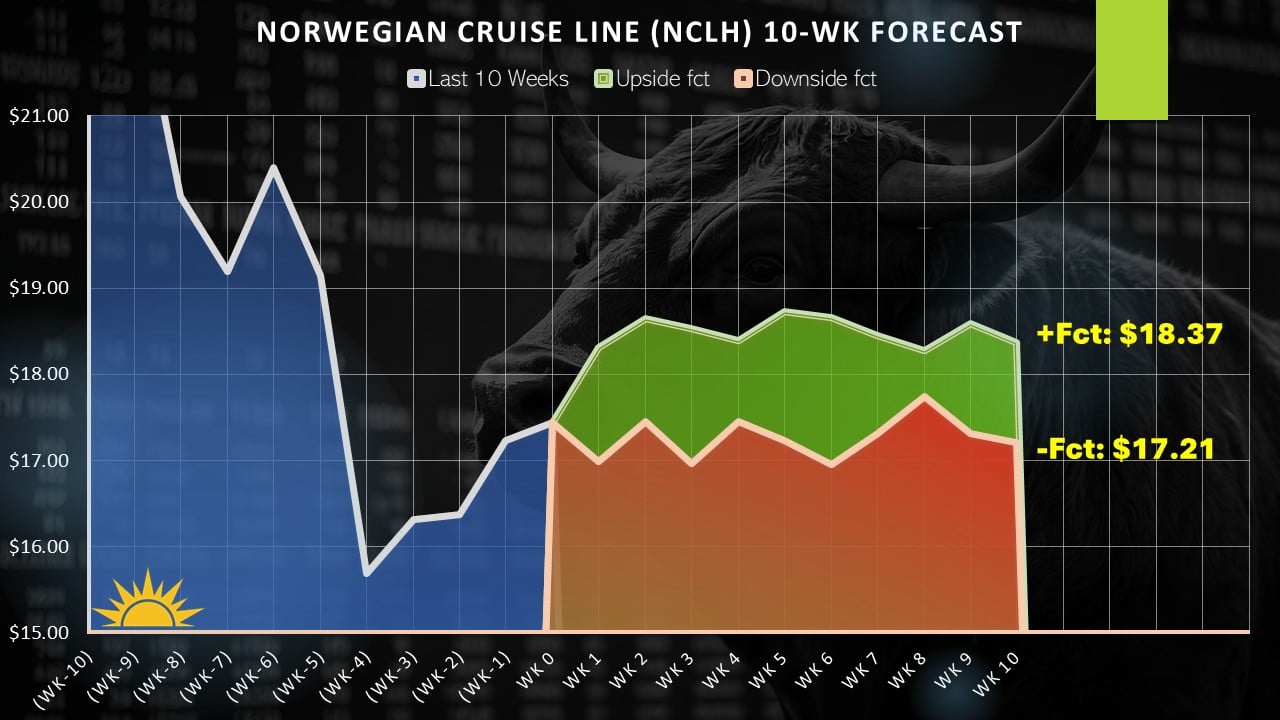
Let’s get down to brass tacks. You are reading this not for thrills, but for practical insight. Scenario A: The Soft Landing. If the Federal Reserve cuts rates moderately, inflation stabilizes, and the American consumer remains employed, NCLH could see a “rally to normalization.” In this scenario, the stock could trade at 12-14 times forward earnings, representing a 30-40% upside from current levels (assuming ~$1.50 EPS). The playbook here is to buy on dips leading into the Spring earnings report, where they will announce the final Wave Season numbers. You are essentially betting that the “haves” are still willing to pay $2,000 for a balcony room because they cut back on Starbucks and Amazon instead.
Scenario B: The Debt Spiral. Consider the cost of refinancing. NCLH has a wall of maturities coming due in 2025-2027. With interest rates still elevated, they are paying high yields on new bonds. A sudden spike in oil prices (fuel is their second largest expense after labor) or a shutdown of a key port (e.g., escalating tensions in the Middle East causing Red Sea rerouting) could spike costs by hundreds of millions. In this scenario, the stock is a falling knife. The key metric to watch is Adjusted Free Cash Flow. If they are barely generating free cash flow after interest payments, they cannot invest in ship refurbishments, which will hurt future pricing power. A conservative investor should set a rule: do not average down until the company shows two consecutive quarters of positive free cash flow after interest and mandatory debt repayments.
Actionable Takeaway: Buy the Ship, Not the Water. Instead of buying common stock, consider the risks of dilution. Common shareholders are last in line. If the company needs to raise capital again (as they did in 2020), common stock gets hit the hardest. Experts suggest that if you have a high risk tolerance, allocate no more than 2-3% of your portfolio to NCLH. Consider it a “lottery ticket” with better odds than crypto. For a more stable cruise play, look at the preference shares (NCLH.PR) which offer a fixed dividend, though they lack upside potential. The emotionally intelligent move is to separate your vacation wish list from your balance sheet. Just because you love the Norwegian Encore doesn’t mean you should love the ticker.
For current shareholders, the operational tactic is to “trim and trail.” If you bought at the pandemic lows ($15), you’re sitting on a fortune. Consider taking your initial investment off the table and letting the “house money” ride. For new investors, wait for the volatility. NCLH often drops 10-15% immediately after an earnings call, even if the news is “good,” simply due to profit-taking by institutional investors. Set limit orders 10% below the market price and be patient. Use the “DCA” (Dollar Cost Averaging) strategy but only over a 9-12 month horizon, acknowledging that this is a highly cyclical asset. Do not check the price daily; check the booking trends on their investor relations page instead.
Finally, consider the geopolitical angle. Norwegian’s itineraries are heavily skewed towards the Caribbean and Europe. Any destabilization in the Suez Canal or a new travel advisory for Mexico could force last-minute itinerary changes, leading to compensation costs and a hit to reputation. Since the stock is traded based on consumer confidence, a single viral story of a stranded ship or a norovirus outbreak can ding the stock far more than the actual financial damage warrants. Recognizing this, a savvy investor treats all media headlines about cruises as noise, focusing solely on the Load Factor (occupancy rate) and Net Per Diem (revenue per passenger per day). These two numbers are the true health indicators that bypass the PR fluff.
Five Burning Questions: Navigating the NCLH Investor Fog
1. Is the high debt load actually manageable, or is it a ticking time bomb?
It is a relentless tide, but manageable—for now. The key is to look at the maturity schedule. NCLH has pushed most of its major maturities out to 2028-2030, giving them a runway. They are currently generating hundreds of millions in EBITDA (Earnings Before Interest, Taxes, Depreciation, and Amortization), which provides cover. However, they are paying roughly $500-700 million annually in interest expenses. That’s a massive drag on net income. The company is betting that they can “grow out” of the debt by keeping ships full and raising prices. The risk is a prolonged economic downturn that reduces passenger counts to below 90% occupancy for two consecutive years. If that happens, they won’t cover interest costs, and they’d have to go back to the capital markets with their hat in hand.
In a worst-case scenario, they could exercise “distressed exchanges” or issue mandatory convertible bonds, which would strangle common shareholders. But the company has a high degree of asset coverage—the ships themselves are worth billions. Lenders won’t pull the plug easily because liquidation values are far lower than going-concern values. So, the debt is manageable as long as the global economy remains stable. It is not a case of bankruptcy risk in the near term, but rather a slow bleed of potential earnings that could have gone to shareholder returns. Think of it as a yacht with a leaky hull—it floats, but you constantly hear the bilge pump running.
2. Should I buy before the Q1 earnings report or wait?
Timing is everything, and the smart play is usually to wait for the Q1 report (released in late April/May) to clear the fog. Historically, NCLH stock experiences a “sell-the-news” event post-earnings, regardless of the results. Analysts will question the guidance for the coming year, and any slight conservative outlook will be punished. If you buy now, you are exposed to the risk that management’s tone is cautious. If they say, “Bookings are up, but at lower prices,” Wall Street will interpret that as a yield problem and drop the stock. If they say, “Pricing is record high,” they might raise the stock, but you'll be chasing it.
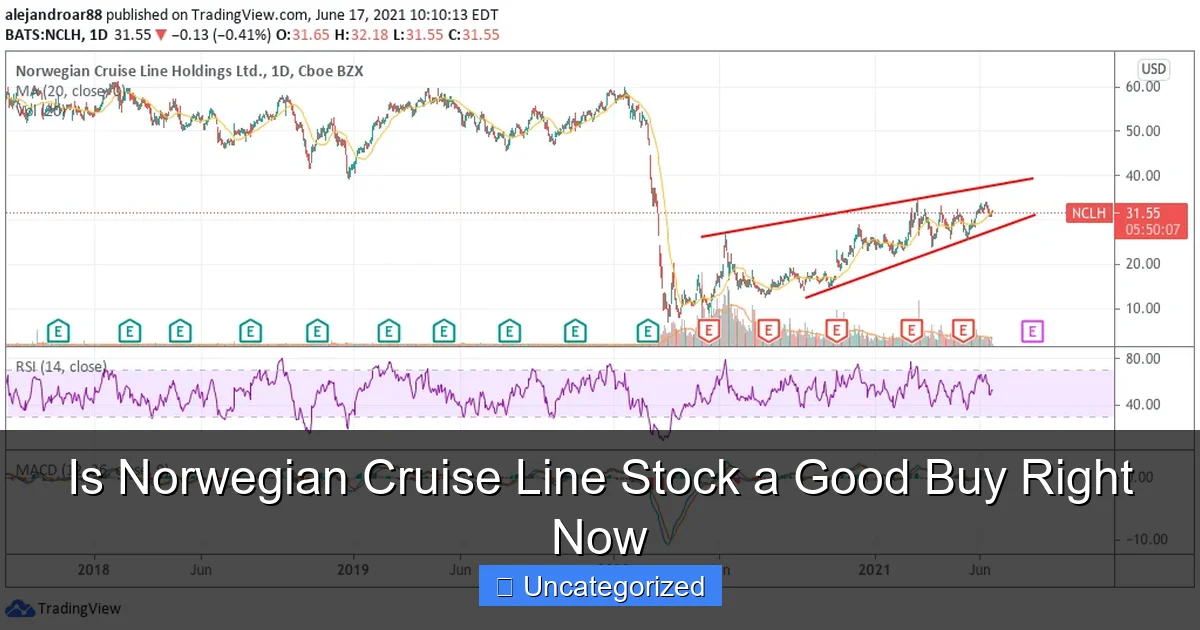
The alternative strategy is to wait for the stock to dip 15% from its 52-week high, which often happens in the summer lull (post-cruise season, pre-Wave pre-announcements). Buying after the summer crash is more attractive because the pandemic-era “revenge travel” tailwind has officially expired, meaning the comparisons get easier. The market has a short memory. By waiting for the actual data to hit the tape, you avoid the “guesswork” that plagues pre-earnings gambling. Patience is your life jacket here.
3. Is Norwegian Cruise Line a better buy than Carnival or Royal Caribbean?
This is the eternal cruise investor debate. Royal Caribbean (RCL) is the premium operator—they have better margins, lower debt leverage, and operate the iconic Icon of the Seas. They are the “Apple” of the cruise world. Carnival (CCL) is the value giant; they are the highest leveraged and the most sensitive to fuel prices. NCLH sits in the middle. It’s the “Pepsi” or the “Maverick” of the group. They have fewer ships, which theoretically allows for more targeted refurbishment, but they also have higher fixed costs per ship.
When comparing, look at Forward EV/EBITDA (Enterprise Value to EBITDA). NCLH usually trades at a discount to RCL but a premium to CCL. However, NCLH has a unique advantage: their “Freestyle Cruising” model is more attractive to younger demographics compared to Carnival’s boisterous party reputation. If your goal is maximizing growth, RCL is safer. If you want maximum leverage to an economic upturn, NCLH offers more beta—it will rise faster than RCL in a bull market but fall harder in a bear market. For a balanced core holding, RCL wins. For a speculative satellite holding, NCLH offers the higher reward, but with proportionally higher sleep-deprivation risk.
4. What is the “dividend” situation? When will they bring it back?
The short answer is: Don’t hold your breath. Norwegian suspended its dividend in March 2020 and has not reinstated it. The company has repeatedly stated that all free cash flow is earmarked for debt repayment and new ship construction. Even with record bookings, the board is prioritizing a get-back-to-investment-grade credit rating. Any reinstatement of a dividend before 2026 seems highly unlikely, unless they do a tokenistic $0.01/share just to say they did. For income investors, this stock is a no-go zone. You are purely buying for capital appreciation.
In terms of shareholder returns, the company is focusing on share buybacks—which some argue is superior to dividends because it’s tax-advantaged. However, they haven't executed any major buybacks yet. The market perceives the lack of income as a sign of weakness, often undervaluing the stock. If you need income, you are better off buying the 7% yielding preferred shares (ticker: NCLH PR) which are less volatile than the common stock. But remember, preferred shareholders have a claim junior to bondholders but senior to common shareholders. It’s a lower-risk, lower-reward way to play the same company.
5. How does fuel price volatility impact the buy thesis?
Fuel is the variable that can cause the most sudden, unpredictable damage. Maritime fuel (Very Low Sulfur Fuel Oil) is tied to crude oil prices. NCLH does hedge fuel, but not 100% of their exposure. For every $10 increase in the price of Brent Crude per barrel, NCLH’s annual fuel costs increase by roughly $50-70 million. That directly hits the bottom line. However, they have a mitigating strategy: the Fuel Surcharge. Most cruise lines can pass on fuel cost increases to passengers via a clause in the ticket contract. However, they often choose not to exercise this clause to avoid sticker shock, absorbing the cost to maintain volume.
When oil spikes due to geopolitical events, the stock usually dips immediately, driven by panic. This is often an overreaction. Because demand for cruising is relatively inelastic in terms of fuel-driven ticket price increases (a $50 increase on a $2000 cruise is 2.5%), the real impact is usually more on sentiment than on actual operational costs. A better proxy to watch is the relationship between distillate inventories and passenger demand. If oil goes high but the economy is booming, the stock shrugs it off. If oil goes high and the consumer is struggling, it’s a lethal combination. Therefore, your buy thesis must include a view on oil price direction. Historically, falling oil prices are a huge tailwind for cruise margins, making them effectively a short-oil play.
In the end, the question of buying Norwegian Cruise Line stock is a Rorschach test of your worldview. If you believe in the indomitable resilience of the American consumer—their desire to post sunset photos from a hot tub, to gamble aboard a neon-lit casino, to escape the drudgery of cubicle life—then the stock is a compelling, albeit volatile, long-term asset. It is a bet on the hedonistic impulse that has survived wars, plagues, and recessions. We are seeing a cultural shift where the “bucket list” is checked off before the mortgage is paid, and that favors this industry.
Yet, the investment also tempts our darker instincts: the greed for quick gains. The leverage of the company amplifies not just the profits, but the paranoia. Watching NCLH is a masterclass in emotional regulation. It forces you to sit with uncertainty, to resist the panic of a 7% down day stemming from a rumor about a hurricane path. In our daily lives, we know that booking a vacation rarely solves our underlying stress—it merely postpones it. Similarly, buying this stock rarely solves a portfolio’s need for stability; it injects it with adrenaline.
Ultimately, this is a stock for the optimist with a strong stomach. It is a tangible share of a business that sells intangible joy. As investors, we weave our own narratives onto the ticker symbols. If you see the ocean half-full, and believe the debt is a mountain to be climbed rather than a storm to be weathered, then perhaps it is a buy. But always remember the old sailor’s proverb: Fair winds are nice, but you only truly need them when you’re sailing into a storm. Keep your life jacket on, and never bet the cabin on a single wave.