Intersubjectivity Meaning In Tagalog
Ever had a moment where you just get someone without them saying a word? That silent nod across a crowded jeepney, the shared eye-roll when your tita starts her "when I was your age" spiel—that, my friend, is intersubjectivity in its most delicious, everyday form.
In the Philippines, we don't just have a word for it; we have a culture for it. The direct English translation is "intersubjectivity," but the deeper, soul-level meaning lives in our pakikipagkapwa-tao—the shared self, the recognition that "I am because you are." It’s the philosophical fancy-pants term for shared understanding, the magical space where two (or more) minds meet.
Breaking Down the "MBA" of Feelings
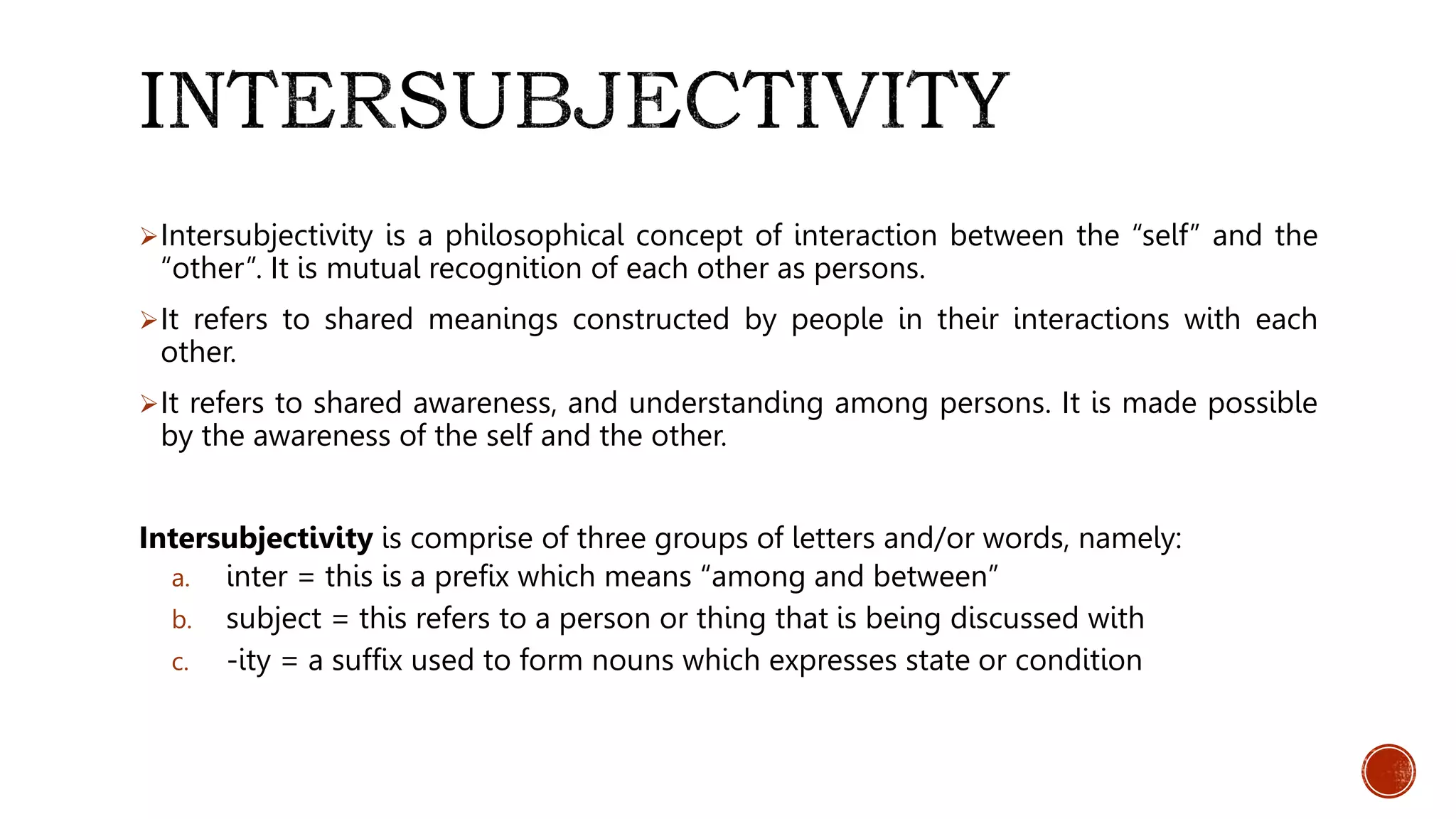
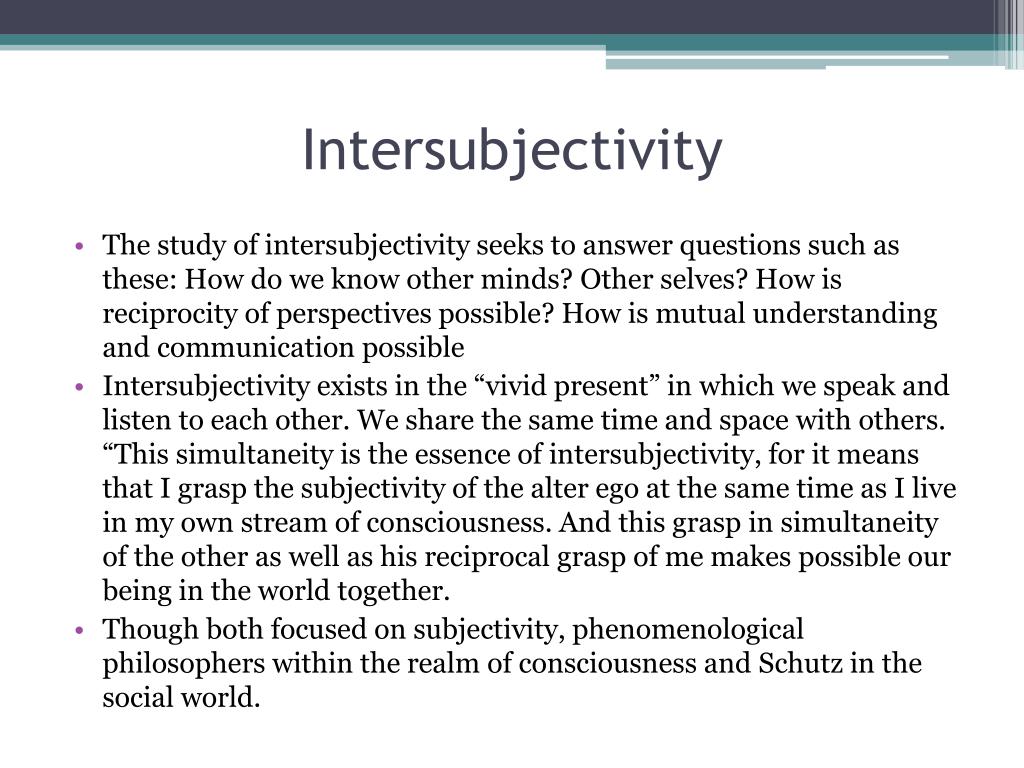
Think of it as the Merriam-Webster definition, but with a side of rice and a shared sizzling sisig. The word itself comes from philosophy, specifically phenomenology, and it means the condition where multiple subjects share a common field of experience.
Must Read
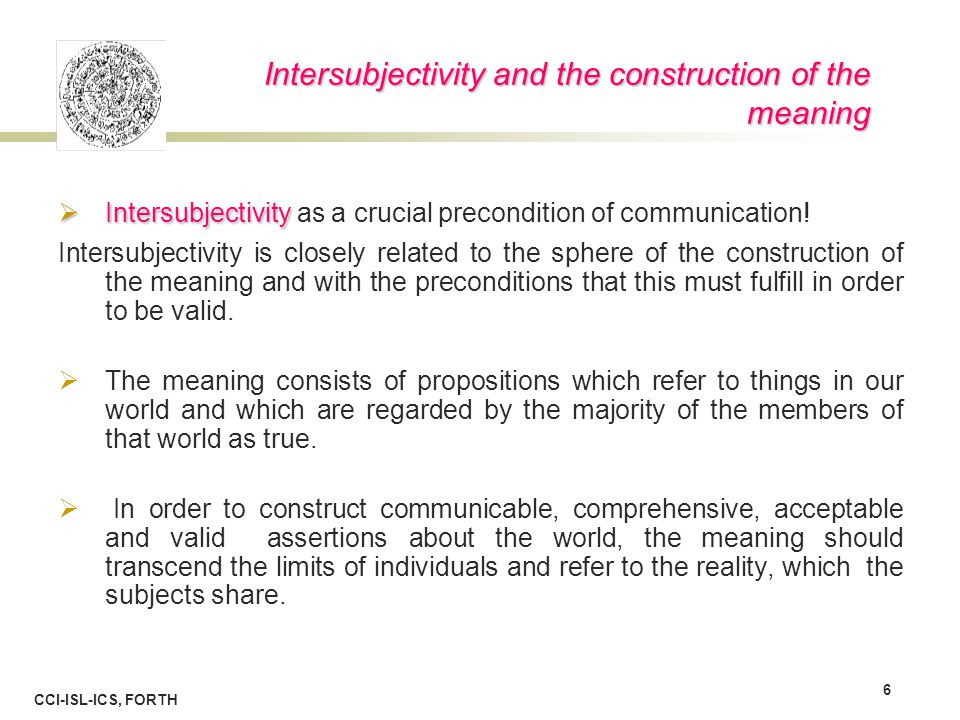
But in Tagalog, we don't abstract it. We live it. When you say "nagkaintindihan tayo" (we understood each other), you're not just saying you got the facts. You're saying: your heart, your context, your mood—all of it is now part of my reality, and we operate from that shared ground.
It’s the opposite of an object. When you treat a person as a kapwa, you are acknowledging their inner world as vividly real as your own. You’re not looking at them; you’re looking with them.
Your Daily Barrio: Intersubjectivity in Action
You don't need a philosophy degree to practice this. In fact, you do it every time you say "Kumusta ka na?" and actually wait for the answer, listening for the pause, the sigh, the twinkle in the eye. That’s you, collecting data on their inner state to sync your response.
Consider the utang na loob (debt of gratitude) system. It’s not just about money; it’s a complex web of intersubjective obligations. You understand why your neighbor is asking for a favor, and they understand that you understand the weight of it. Without that shared meaning, it's just a transaction. With it, it's a bond.
Even the way we gossip—sorry, kwentuhan—is a practice in intersubjectivity. We trade stories to build a collective reality. "Did you hear about Aling Nena?" isn't just about news; it's about calibrating your moral compass to your community's shared rhythm. We are literally building a group mind over a cup of barako coffee.
Fun Fact: The Power of "Tayo"
Here’s a tiny linguistic gem: The Filipino word "tayo" means "we" or "us," but it has a dual nature. It can be inclusive (you and me) or exclusive (me and someone else, not you). This subtle shift in pronouns is a constant, daily negotiation of who is inside the circle of shared understanding. It’s subconscious, but it’s a beautiful exercise in defining your relational boundaries.
Pro-Tip: To practice intersubjectivity today, drop the "I" statements for a bit. Instead of saying "I think this is a bad idea," try "What if we looked at this differently?" You’re inviting the other person’s reality into your decision-making process. That’s power, but the gentle, "kapwa" kind of power.

Tech vs. The Soul
Modern life tries to kill intersubjectivity. You’re in a room full of people, but everyone is in their own phone bubble—a black mirror capturing only your own reflection. That’s the opposite of shared reality; that’s solipsism wearing a wifi connection.
But here’s the fun twist: even online, we crave it. When you send a meme that perfectly sums up your existential dread and your best friend replies with "HAHAHAHA RELATE," that’s a digital high-five of intersubjectivity. You’ve achieved a sync, just through pixels.
The key is to do it on purpose. Next time you’re in a Grab, look at the driver. Don't just say "Good morning," say "Ang init ngayon, noh?" (It’s so hot today, right?). That simple question is an invitation to share a sensory experience. You’re asking, "Are you feeling this too?" It costs nothing, but it builds a bridge.
The Final, Warm Hug
At its core, intersubjectivity in the Filipino context is about presence. It’s the opposite of being a ghost. In a world that’s increasingly noisy and divided, the radical act is to simply say, "Nandito ako. Nakikita kita." (I’m here. I see you.)
It’s the quiet comfort of sitting with a friend who is crying, without offering a solution. You’re not just two separate bodies in a room; you are a temporary, single entity of shared pain and support. That is the profound, unspoken magic of pakikipagkapwa-tao.
So today, try to be a little less "ako" (me) and a little more "tayo" (us). The universe gets a little less lonely, one shared glance at a time.