Interactive Brokers Margin Leverage
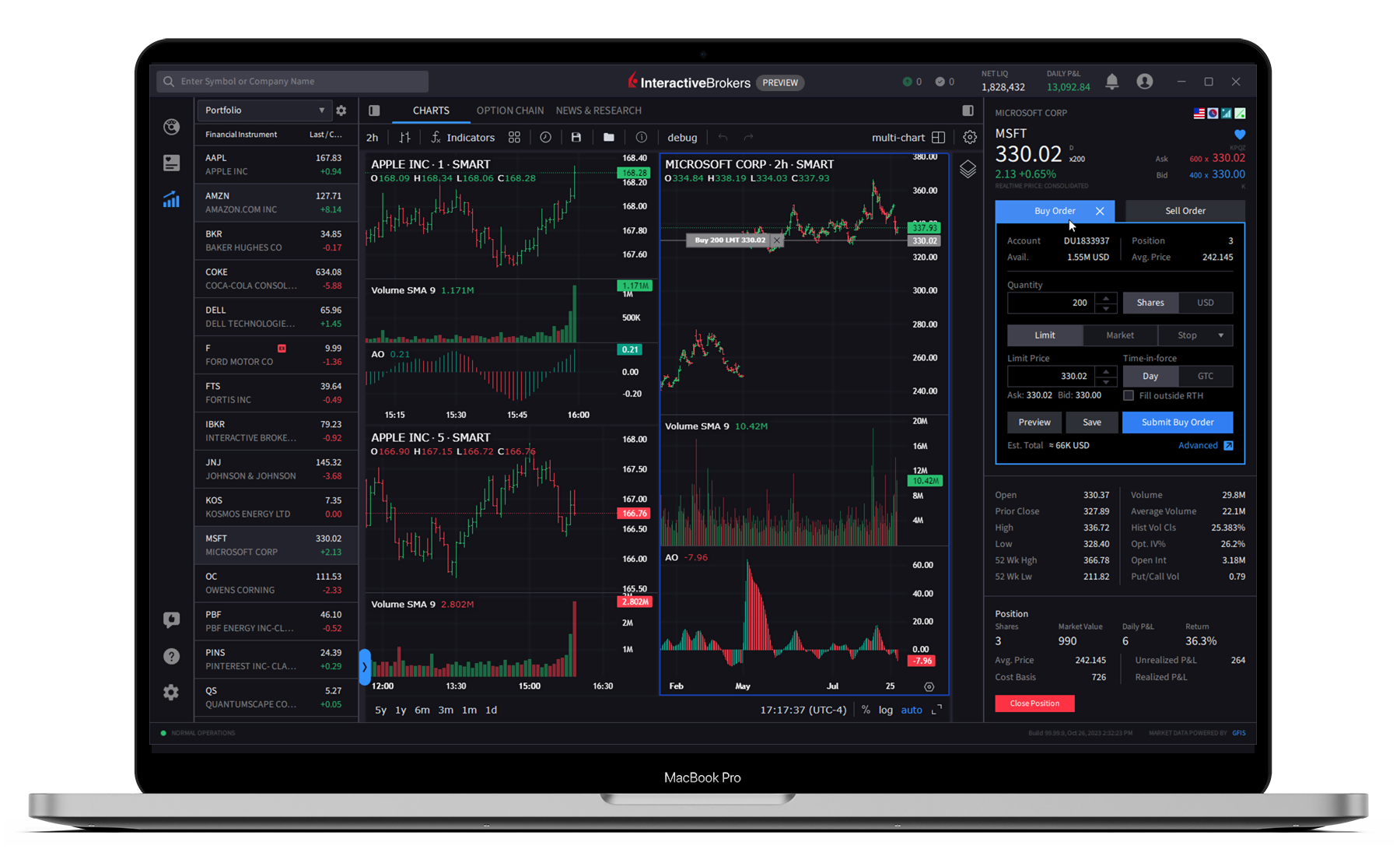
There was a time, not so very long ago, when the grand arena of stock trading was a gilded cage, accessible only to a privileged few who could physically jostle for position on the floor of the exchange. For the average person, the idea of leveraging one’s capital—borrowing money to amplify a bet on a company’s future—was a whispered rumor, a thing of Gatsby-esque mansions and brokerages with marble lobbies that smelled of cigars and latent power. The initial human necessity behind leverage was not greed, but aspiration; it was the desire to overcome the crushing inertia of a slow, savings-based existence. To a mid-century investor, the concept of buying $10,000 worth of stock with only $5,000 of your own money was a Faustian bargain, requiring a phone call to a gruff, bespoke-suited broker who treated margin accounts like a secret handshake. The paperwork was terrifying, the margins were opaque, and the speed was glacial—a single trade could take hours, and the settlement period was a dusty, analog purgatory of physical certificates being ferried by bicycle couriers between marble halls. Leverage back then was a blunt, terrifying instrument, trusted only by the very rich or the recklessly confident. The original "margin" in the 1920s was a Wild West concept, where a trader could put down as little as 10% of a stock’s value, breathing the rarefied air of infinite returns until the market sneezed. When the Great Depression arrived, that sneeze became a hurricane, wiping out not just fortunes but entire family lineages, proving that without regulation, leverage was simply a high-speed train to ruin. The Securities Exchange Act of 1934, with its landmark Regulation T, was the first seatbelt, setting a 50% initial margin requirement. Yet, for decades, the psychological barrier remained. The technology of the 1970s and 80s—the ticker tape machine, the early Quotron terminals—made the mechanics faster, but the experience was still deeply human and fallible. Investors had to track their equity by hand on ledger paper, anxiously waiting for the dreaded "margin call" to arrive via Western Union telegram, a notification that felt less like a business transaction and more like a personal indictment from the gods of finance. This era was defined by the custodian—your broker knew your father, knew your house, and could decide, on a whim, whether to give you a day to cover a shortfall or to liquidate your position in a blind panic, a process that was often arbitrary and brutal. The true turning point, the quiet revolution, was the democratization of the financial toolkit. The transition from physical trading floors to digital interfaces in the late 1990s and 2000s did more than just speed up the process; it transformed leverage from a relationship-based privilege into a programmable, rule-based utility. Interactive Brokers (IBKR) emerged not as a trendy app, but as a pragmatic, engineer-driven institution that looked at the clunky, human-centric system of margin lending and decided to automate the logic, reduce the costs, and strip away the mysticism. The nostalgia we feel for the "old days" of trading is often a romanticization of the human connection, but the reality was a system riddled with inefficiency, high spreads, and punitive interest rates on borrowed capital that often exceeded 12% or 15%. The shift towards a computerized "portfolio margin" system was the digital equivalent of replacing the horse and buggy with a sports car—it was dangerous if mishandled, but devastatingly effective when understood.
The Algorithmic Awakening and the Death of the Paper Margin Account
The major transformation that defined the turn of the millennium was the re-engineering of risk itself. In the past, risk was assessed in binary terms—a stock was either "qualified" for margin or it wasn't. The vintage facts of the 90s reveal a bizarre reality where brokers charged a flat, uniform rate for all margin loans, ignoring the volatility of the underlying collateral. You could borrow at the same cost to buy a stodgy utility company as you could to buy a hyper-volatile tech startup, a logical absurdity that led to massive mispricing. Interactive Brokers saw this inefficiency and hacked the classic system by implementing a real-time risk management engine that continuously monitors a portfolio's beta and Value-at-Risk (VaR). This was a jarring break from the past, where your broker glanced at your account once a day over coffee; now, an algorithm crunches your every position every millisecond, calculating the theoretical loss across thousands of potential market scenarios. This shift brought with it a bizarre juxtaposition of the old and the new. The term "margin" itself, derived from the Latin margo, meaning "edge" or "border," used to describe the literal boundary of your deposit. Today, the edge is dynamic, fluid, and computational. Traditional brokers used to require a massive desk of analysts to set maintenance margins, a process that took weeks. IBKR, however, treats margin as a fluid property of your entire portfolio. For instance, in the era of the dot-com bubble, if you held two massively volatile tech stocks, the old rules would punish you with a 50% requirement on each. The modern, futuristic approach uses a "portfolio margin" hack that recognizes the correlation between positions—if you hold an index ETF and a short futures contract on the same index, the actual risk is negligible, so the margin requirement falls to as low as 15% or even less. It’s a system that rewards sophisticated risk-offsetting, whereas the old system punished you for diversification by treating each leg as a separate, fully risky bet. Today, the modernization is about the speed and granularity of that leverage. The classic principle of "buying on margin" has been hacked into a thousand different financial instruments: leveraged ETFs, futures spreads, and forex pairs that offer up to 50:1 leverage. Interactive Brokers’ "Tiered" interest rate structure is a direct modern hack on the old fixed-rate system. In the past, a $10,000 loan and a $1,000,000 loan cost the same percentage. Now, IBKR treats your account balance like a utility bill, where the first $100,000 costs a slightly higher rate (though still far below the national average), but anything above that drops to rates that were once reserved for massive institutional hedge funds. This is the democratization of the wholesale money market—giving the retail trader the same borrowing arbitrage as Goldman Sachs, but using the nostalgic trust of a local bank teller.Classic Risk, Modern Velocity
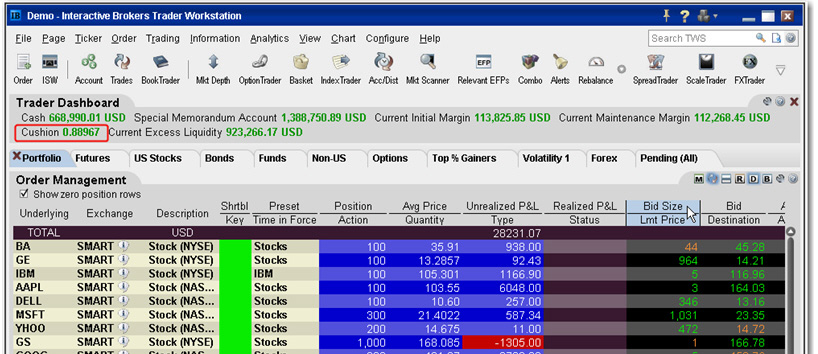
The classic principle of the margin call—the ultimate reckoning—has not disappeared, but its punishment has been algorithmically refined. In the past, the margin call was a human negotiation, a desperate phone call that could be ignored or countered. Today, the "Risk Navigator" and system-generated liquidations are instant, ruthless, and devoid of emotion. This is a modernization that cuts both ways. On one hand, it removes the hostile, arbitrary nature of the old broker-banker relationship; on the other, it requires a level of digital literacy and self-discipline that the old guard never needed. The modern trader must understand that their account is not a vault, but a living, breathing organism of collateral, monitored by a sleepless machine. To leverage with Interactive Brokers is to accept that you are playing a video game where the game master is a supercomputer, and the rules are written in stochastic calculus, not in legal jargon. This new era also thrives on the "hack" of free riding and settlement periods. In the 1990s, if you bought and sold a stock within three days without funding the purchase, you were flagged for "free riding," a violation that could freeze your account for 90 days. Modern platforms, including IBKR's, have accelerated settlement cycles (moving from T+3 to T+1 in 2024), but they have also provided sophisticated "pattern day trading" tools that allow intraday margin to be utilized with a clarity that was previously invisible. The process is no longer about avoiding the sin of using unsettled funds; it’s about a real-time dashboard showing your "Available Funds" and "Buying Power" updated every second. The modern hack is to treat that dashboard not as a scoreboard, but as a health monitor, using the leverage not to get rich quick, but to optimize exposure efficiently.Navigating the Leverage Labyrinth
Is trading on margin merely "borrowing money," or is it something more dangerous and complex for the modern user?
The historical myth is that margin is simply a loan, akin to taking out a mortgage on your stocks. The reality, honed by decades of market crashes from 1929 to 2008, is that margin is an option on risk, a derivative of your own future liquidity. In the past, the danger was opaque—you didn't know your exact risk until the bill arrived. Today, the danger is velocity. With Interactive Brokers, the complex part is not the lending rate, but the fact that the collateral elasticity changes by the second. The nostalgia for simple borrowing is dangerous because it lulls you into a false sense of security. Modern margin is a continuous, real-time feedback loop where your account is a derivative of the spot price of every instrument you hold. The risk is not the interest you pay, but the forced liquidation during a flash crash, where the speed of the algorithm’s sell signal can decimate your account before you can even open the app. The modern fact is that margin is a utility, but it’s a utility that can burn your house down if you ignore the gas leak.
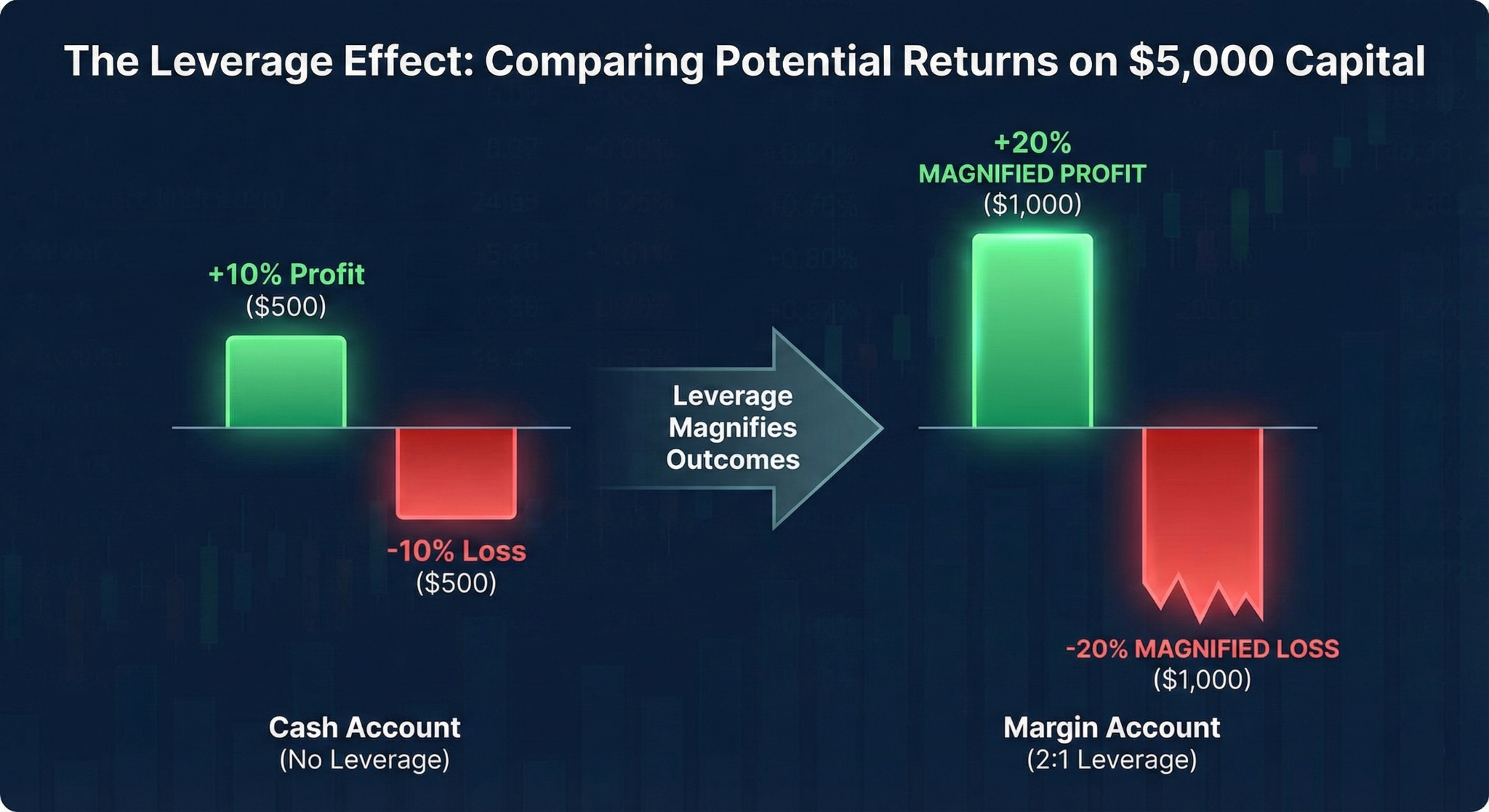
Furthermore, the complexity now lies in portfolio construction. In the 1980s, borrowing against a stock was simple because your portfolio was probably just two or three names. Today, with fractional shares, ETFs, and options, the compressing effect of portfolio margin means that a specific combination can reduce your requirement—but also hide a catastrophic tail-risk scenario. The historical myth was that diversification lowered your margin requirement, which is generally true, but the modern fact is that during a "correlation breakdown" (like in March 2020), everything falls together, and the low margin requirement becomes a mirage. The sophistication demanded is not in reading a ledger, but in understanding systemic correlation. You have to understand that the leverage granted by IBKR is a privilege based on statistical modeling, and models fail. The golden rule from the past still applies, but it’s been sharpened for the digital age: never borrow more than you can afford to see vanish from your screen in a matter of minutes, because the algorithm will not hesitate to take it.
How does Interactive Brokers' interest rate on margin compare to the "old school" brokers, and why does this matter for long-term investors?
The old-school brokerage model was a bizarre paradox: the rich got lower rates, and the poor got punished. Before the internet, retail brokers often charged "call money" rates plus a massive markup, sometimes 4% to 6% over the prime rate. For a small account, this meant paying 11% to 13% interest just to hold a leveraged position. This was a historical drag that made long-term leverage almost a sucker’s bet, because the interest costs compounded against you faster than the stock could appreciate. Interactive Brokers, in a revolutionary move in the late 2000s, peeled back the curtain and offered rates that are essentially at the benchmark rate plus 0.5% to 1.5%. This is a seismic shift—it moves margin from a wealth management penalty into a legitimate, cost-effective capital allocation tool.
Must Read
For the long-term investor, this modernization is the difference between bleeding to death and breathing. Consider a $50,000 loan over a year. At the old 12% rate, you pay $6,000 in interest. At the modern IBKR rate (lets say 6%), you pay $3,000—a saving of 50% that directly impacts your total CAGR. Historically, financial advisors told you to avoid margin for long-term use because the interest alone would strangle you. Today, with rates so low, the strategy of "borrowing to invest" can be ethically and mathematically sound, provided the market returns outpace the cost of carry. The futuristic aspect is that the long-term investor can now use leverage as a hedge against inflation, borrowing at a fixed low rate to buy income-producing assets, essentially converting the price of money into a predictable expense. This was a privilege once reserved for family offices, but the data-driven transparency of IBKR has turned margin into a boring, calculated line item in your financial plan, rather than a cataclysmic gamble.
Many are scared of "losing it all." Has the evolution of leverage technology made total ruin more or less likely than in the analog era?
Paradoxically, the technology that allows for higher leverage has also introduced tools that make total ruin less likely for the disciplined user, but more likely for the negligent one. In the analog era, total ruin was a slow-motion car crash. You could bankrupt yourself in 1929 because the information lag meant you didn't know the market was crashing until you read the newspaper the next morning, while your brokers were physically unable to liquidate positions due to the chaotic floors. The evolution of IBKR’s auto-liquidation features is a painful safety net—they will sell your positions to cover the deficit without your consent. This sounds terrifying, but it actually protects you from catastrophic negative balances, where you owe more than you have. In 1987, some investors ended up owing millions more than their liquid assets because of settlement slippage; today, the system stops you at the edge of the cliff.

However, the modern technology introduces a new kind of ruin: the logical fallacy of "guaranteed" stop-losses and risk management. The worst-case scenario in the past was a delay; the worst-case scenario today is a gap-down event. If a stock opens down 50% due to a scandal, the broker’s algorithm will try to sell you out, but at a price so low it wipes out your account, and the "ruin" is instant, with a digital receipt. The modern fact is that to prevent total ruin, you must actively use "guaranteed" stop orders or options spreads to cap your theoretical loss. The implication is that the software has shifted the burden of safety entirely onto the trader. There is no human broker to call and say, "Give me a break." The evolution is that victory is no longer about beating the market, but about mastering the risk mechanics of the platform itself. If you program your account correctly, ruin is unlikely; if you treat the platform like a video game with infinite respawns, the futuristic algorithms will cut you down with surgical precision.
The Next Twenty Years: The Symbiosis of Human and Machine Leverage
Looking forward two decades, the legacy of Interactive Brokers and the evolution of margin will likely lead to a scenario where the human element is almost entirely removed from the execution of leveraged trades. We are heading towards a world where "margin" is no longer a debt obligation but a data stream. In the future, we will likely see fully AI-driven portfolio management where the algorithm automatically adjusts your leverage based on the VIX (fear index) and your own psychometric risk profile, measured in real-time via biometric feedback—your heart rate and sweat levels while watching a drawdown. The nostalgic concept of making a conscious decision to "leverage up" will be replaced by a passive, algorithmic optimization that craves the most efficient use of capital at every second, without human hesitation or greed. However, the human necessity behind leverage—the desire to accelerate one's trajectory, to achieve a life that outpaces one's current savings—will remain eternal. The next twenty years may bring us tokenized collateral, where your house, your art, or even your intellectual property can be used as margin for trading, unlocking unprecedented liquidity. The boundary between your personal net worth and your trading account will blur into a holistic balance sheet. Yet, the vital lesson from the past, from the marble halls to the mobile app, will remain: leverage amplifies everything—returns, losses, and folly alike. The tools will become smarter, the margins will be slimmer, and the risks will be more elegantly hidden. The final frontier is not the technology, but the wisdom of the user, who must look at the immense power of algorithmic leverage and remember that it is a servant, not a master. The future is not about escaping our financial past, but about wielding its sharpest tool with a calm, modern hand.