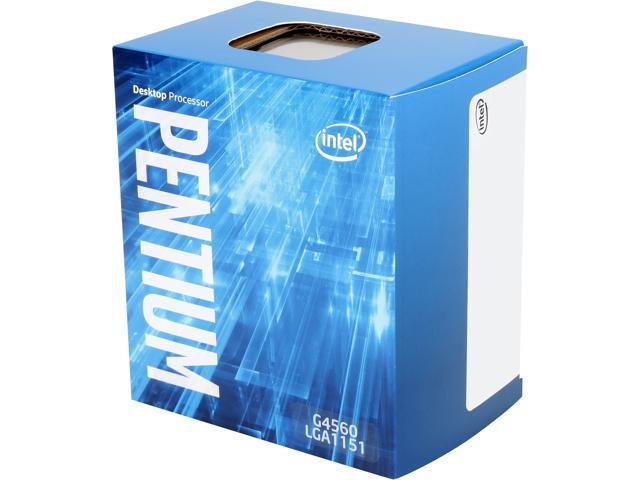
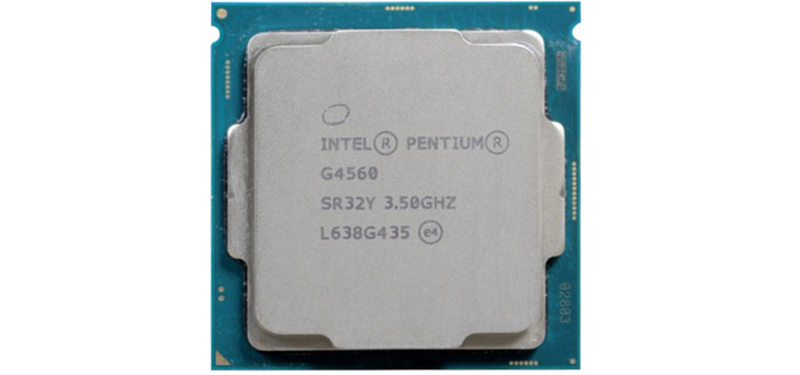
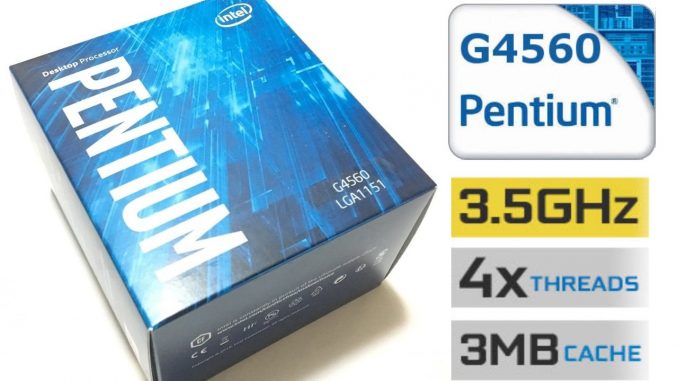
Intel Kaby Lake Pentium G4560 3.5 Ghz
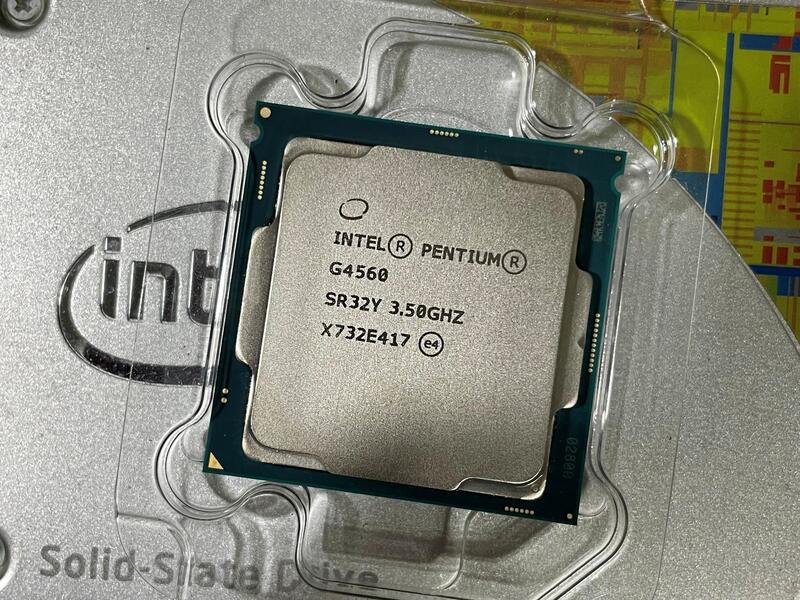
In the quiet, fluorescent-lit aisles of a 2017 electronics retailer, a quiet revolution was unfolding, hidden in plain sight among the glittering arrays of flagship CPUs. The protagonist of this story wasn’t the headline-grabbing, eight-core behemoth with a price tag that could fund a small vacation. No, it was a modest, unassuming chip tucked into the budget corner: the Intel Pentium G4560, a 3.5 GHz dual-core processor. To appreciate its impact, you must rewind the tape to the mid-2010s, a period where the PC enthusiast community was suffering from a stubborn, four-year-long stagnation. Intel’s iconic “Tick-Tock” model had slowed to a crawl, and the company, holding a near-monopoly on high-performance x86 silicon, had become complacent. The human necessity behind this chip was primal and simple: the desire for accessible computing. Gamers and everyday users on a tight budget were being left behind, forced to choose between the hollow performance of legacy dual-cores or taking out a loan for an i7. The G4560 was born from this friction—a calculated, almost accidental, stroke of genius that democratized performance in a way Intel hadn’t intended.
The very naming of the Pentium brand was an act of historical resurrection. In the 1990s, the Pentium was the crown jewel of computing, the chip that made 3D gaming a household concept. But by 2017, the name had been relegated to cheap, anemic dual-core parts that struggled with a dozen browser tabs, used primarily for office work and low-end laptops. When the Kaby Lake generation (Intel’s seventh generation) launched, the G4560 appeared as a sort of marketing misstep—a phantom limb of the past suddenly reattached. It boasted Hyper-Threading, a feature that had been ruthlessly excised from all previous budget Pentiums for over a decade. This single inclusion, the ability to process four threads simultaneously, effectively doubled its perceived power. It wasn’t just an incremental update; it was a philosophical shift. For the first time since the Pentium 4 era, the "value" nameplate was allowed to play with the big boys, blurring the lines between the lowly Celeron, the new Pentium, and the entry-level Core i3.
What made the G4560 so profoundly impacting was its context. It arrived during a bizarre and volatile period in the DRAM and GPU markets, with memory prices skyrocketing due to a global supply shortage. Every dollar saved on the processor was a lifeline. The G4560, priced at around $64 originally, wasn't just a cheaper alternative; it was a subversive tool. It exposed the artificial segmentation that Intel had perfected over two decades. Users who had previously been forced to buy a $120+ Core i3 to get decent gaming performance suddenly realized they could get 90% of that experience for half the price. The chip became a folk hero, sparking countless forum threads, YouTube videos, and Reddit communities dedicated to maximizing its potential. It was the ultimate underdog story—a symbol of consumer rebellion against a corporate giant that had grown fat on incremental upgrades, and a proof point that the magic of silicon was sometimes more about goodwill and smart engineering than raw die size.
Must Read
The Resurrection of the Underdog: A Technical and Cultural Shift
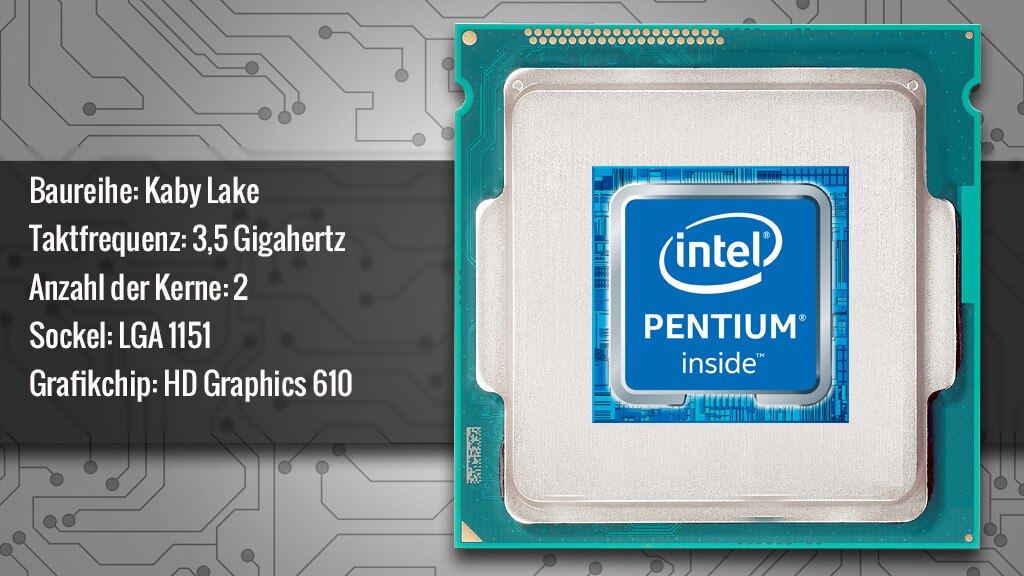
The G4560’s internal architecture, while based on the same Kaby Lake 14nm process as its pricier siblings, was a masterclass in creative binning. It featured two physical cores, running with a fixed 3.5 GHz clock, but its ace in the hole was the re-introduction of Hyper-Threading. To understand the bizarre nature of this move, one must look back at the previous decade. In the sandy era of LGA 775, Intel sold the Pentium D—a hot, power-hungry, dual-core disaster—that competed with AMD’s superior Athlon 64. After that wake-up call, Intel pivoted hard to the Core architecture. As a result, the "Pentium" brand was gutted, stripped of any capabilities that might cannibalize the lucrative Core i3 market. For years, a Pentium was a joke in gaming circles, a chip you’d apologize for owning. The bizarre twist of the G4560 was that it wasn’t a new die; it was a salvaged silicon that Intel originally intended to include in ultra-low-power Y-series tablets. When those products failed to launch in volume, Intel faced a surplus of excellent dual-core dies.
Instead of throwing them away, they fused the Hyper-Threading blocks that had been disabled for the cheaper Celeron line and launched the G4560. This was the first time in history that a Pentium processor officially offered the same instruction-level parallelism as the mainstream Core series. The forgotten vintage fact here is the massive overclocking community that grew around it via the BCLK (Base Clock) manipulation. Normally, locked multipliers on budget chips are a death sentence for enthusiast tinkering, but the G4560, on select H110 motherboards, could be overclocked via the PCIe clock generator, pushing it from 3.5 GHz to over 4.2 GHz, effectively making it a $64 i3-7300. This practice, resembling the early days of 2004 when you could unlock an Athlon 64 via a pencil trick, was a beautiful anachronism—a rebellious act against Intel’s strict silicon segregation.
However, the G4560’s era was not without its casualties. Its arrival in early 2017 sent shockwaves through the used market. The older Haswell and Skylake i3 processors, which used to hold a firm resale value of $100+, suddenly cratered to $50 as buyers rushed to grab the new Pentium. This created a bizarre ecosystem where a brand-new, warrantied chip could outperform a two-year-old "premium" part. The social impact was massive for the budget gaming segment. Build guides that used to recommend discrete GPUs paired with weak Athlon X4s suddenly pivoted, universally suggesting the G4560 paired with an NVIDIA GTX 1050 Ti or a RX 470. This pairing became colloquially known as the "Poor Man's Gaming Rig," and it allowed millions of people in developing countries, students, and young professionals to participate in the PC gaming renaissance—playing titles like PlayerUnknown's Battlegrounds and Overwatch at respectable settings, which was previously a privilege reserved for those with deep pockets.
Yet, the most bizarre treatment of the G4560 was its shelf life. Unlike modern CPUs that get microcode updates and security patches for years, the G4560 was thrown under the bus quite quickly. Intel, realizing the G4560 was eating into the low-end Core i3 sales by nearly 70%, executed a swift strategic retreat. They released the G4600 and G4620—identical parts with slightly higher clocks—but more importantly, they retroactively messed with the supply chain. They didn't do a recall, but they quietly pushed motherboard vendors to discourage usage of the G4560 with future BIOS updates, promoting instead the i3-7100. The chip became a cultural relic of "peak value," a snapshot of a time when a corporate giant briefly blinked. The forgotten vintage fact is that if you had a G4560 and an ancient GTX 650 Ti, you could play esports titles at 144 FPS due to the CPU’s surprisingly strong single-thread performance, a metric that enthusiasts obsessed over, even while the GPU bottlenecked it.
Hacking the Legacy: Modernizing the Pentium Gospel
In today’s fast-paced world of 16-core Ryzen 9s and Intel i9s with 24 threads, the G4560 would seem like a fossil. But its classic principles—specifically, the prioritization of threads over raw core count when memory bandwidth is high—are being brutally hacked by modern software. The modern gaming landscape, dominated by DirectX 12 and Vulkan, has thrown away the old "single-threaded renderer" model. Today, games like Cyberpunk 2077 and Starfield treat threads like separate workers in a busy kitchen. The G4560’s principle of "four threads is enough if your cache is smart" is now being modified in the cloud, where services like Xbox Cloud Gaming run emulated Ryzen CPUs that use the same philosophy: rapid, low-latency core-to-core communication over raw physical cores.

More interestingly, the G4560’s hacking legacy lives on in the "APU Emulation" community. Enthusiasts use old G4560s alongside modern, cheap Intel Arc A380 GPUs to recreate that 2017 budget balance. They hack the PCIe bus to enable Resizable BAR, a technology the CPU was never designed for, breathing new life into it for modern, low-VRAM gaming. The chip is also being repurposed as a server "spigot" for home labs, running lightweight Linux distributions like Alpine or FreeBSD, handling SMB shares, and acting as a firewall. It’s a testament to its efficient 54W TDP (Thermal Design Power) that it makes a perfect, low-noise router. The principle of maximizing the user's dollar, rather than the corporation's margin, is the chaotic, philanthropic heartbeat that keeps the G4560 alive in 2025—a beacon of "good enough" computing in an age of artificial scarcity and per-core licensing schemes that try to sell you power you don't need.
Frequently Asked Questions: The Curious Case of the Budget King
Is the Pentium G4560 still usable in 2025 for everyday and light gaming?
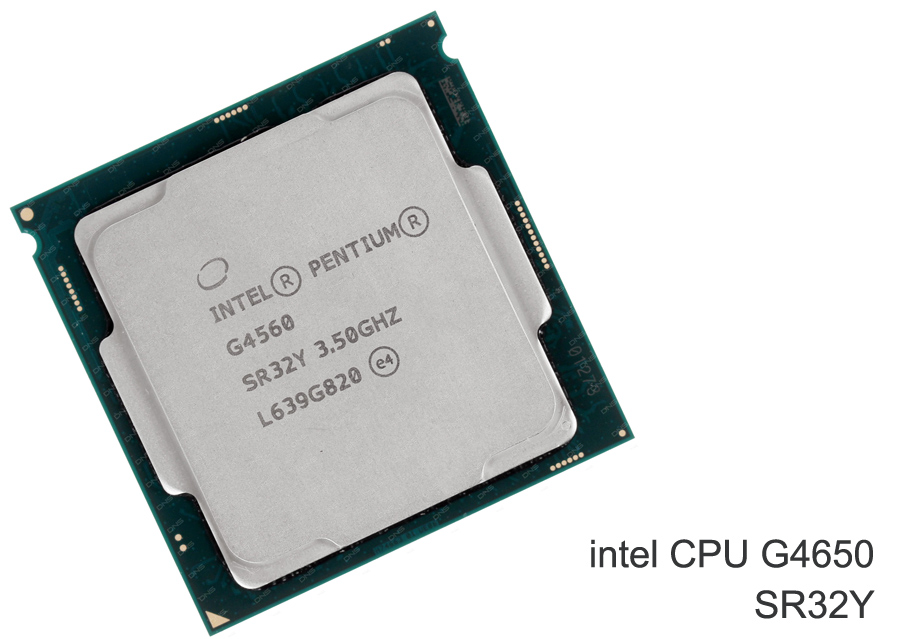
If we look back at the historical myth, the G4560 was often described as "the i3 killer," and in 2017, that was a valid assessment for 1080p gaming. However, fast-forward to 2025, and the landscape has shifted. The chip is severely bottlenecked by modern security mitigations (Meltdown/Spectre patches) that eat up roughly 15% of its already limited IPC (Instructions Per Clock). For everyday tasks like word processing, 4K video streaming (which relies on GPU decoding), and web browsing with multiple tabs, it remains a G-class champion. You won't feel the age unless you feed it a site with heavy JavaScript code, where it will struggle alongside any 2017 chip. The myth that it died instantly is false; it perseveres admirably.
However, for modern light gaming, you must be pragmatic. A G4560 paired with a modern Radeon RX 6400 will run Fortnite at 60 FPS on low settings and Counter-Strike 2 at 100+ FPS on low. But games like Baldur’s Gate 3 or Helldivers 2 will punish it. The four threads are simply insufficient for the heavy AI and physics calculations of these new titles, leading to stutter. To bridge this historical gap, you can hack the system: use Process Lasso to force game threads onto specific cores and disable background Windows telemetry, which can squeeze out a few more frames. It is not a modern gaming CPU, but it is a modern retro-gaming CPU, excellent for running emulators for PS2 and GameCube, where its fixed 3.5 GHz clock offers stable timing.
Why did Intel specifically disable Hyper-Threading on Pentiums before and after this chip?
This is the core mystery of the G4560’s existence. The historical myth says it was an oversight, but the analysis points to corporate greed and market segmentation. Intel has always used silicon binning to dictate tiers. In the pre-G4560 era, a Pentium die with Hyper-Threading was usually a failed Core i3 that had a defective cache or a slightly unstable core. Intel disabled the HT to ensure the product didn't compete with their own i3 line. The G4560 was a unique blip because Intel had a surplus of perfect dual-core dies from a delayed SoC contract, and they needed to liquidate them without dropping the i3 price. They untucked the HT feature to make them more appealing, accidentally creating a value monster.
The modern answer is even harsher. Since 2018, Intel has consistently disabled Hyper-Threading on all Pentium Gold and now Intel Processor (the renamed Pentium) parts. Why? Because in the new era of hybrid architectures, the E-cores (Efficient cores) are cheaper to produce than Hyper-Threading logic. A modern Pentium Gold uses two P-cores without HT and four E-cores, achieving multi-threading through physical cores instead of virtual ones. This saves die space and allows Intel to charge a premium for the base models because they are functionally "larger" chips but limited by software locks. Thus, the G4560 remains the only modern (14nm) Pentium to officially have HT, making it not just a great part, but a one-of-a-kind specimen that broke a rule that has since been cast in stone.
What is the best modern "G4560 equivalent" in terms of value?
The eternal spirit of the G4560—offering 80% of the mainline performance for 40% of the price—has evolved. In 2025, the closest spiritual successor is not a budget Intel, but the AMD Ryzen 5 7500F (a tray-only CPU), or more accessible, the Ryzen 5 7600 when it goes on sale. But if we are talking about the exact same budget tier, the answer is the Intel Core i3-13100F. It is a quad-core with Hyper-Threading (8 threads), just like the G4560 was a two-core with HT (4 threads). It adheres to the same principle: an unlocked and incredibly cheap entry point into the current socket (LGA 1700) that allows users to upgrade to an i7 or i9 later. It has the same "gateway drug" energy—it gets you into the ecosystem.

However, for a true hack of the legacy, the best value is found in the used market for the Xeon E5-2667 v3 (Haswell, 8 cores, unlocked). It offers a different philosophy than the G4560 but achieves the same result: massive performance per dollar on the old LGA 2011 platform. The modern myth is that you need a recent chip for good value, but that's patently false. In terms of pure "banger for the buck," a used G4560 for $10 in a $30 motherboard, paired with 16GB of DDR3 (using a modded BIOS), beats any modern low-end CPU in cost-to-boot-ratio. The modern reality is that the "G4560 equivalent" isn't a chip—it's the mindset of the enthusiast, seeking out the one part in a lineup that too-good-to-be-true because the manufacturer briefly forgot to pad the back.
Looking forward two decades, the G4560 will be viewed not as a footnote, but as a pivotal lawsuit-inducing artifact. We will see the commodification of AI accelerators follow the same curve: a company will release a cheap NPU (Neural Processing Unit) that accidentally outperforms their premium cloud AI services, offering local AI inference to the masses for a single day, before they lock it down in the next revision. The G4560 taught us that the power to compute is inherently democratic and that silicon is just a porous medium for logic. In the next 20 years, as we transition to optical computing and possibly biological processors, the memory of the G4560 will serve as a cautionary tale to corporations: you cannot contain the thirst for performance and fairness forever. Somewhere, buried in a queue of new chips, is the next "G4560"—a $64 part that will shatter the price-to-performance hierarchy and make the flagship champions of the future blush with embarrassment.
And that is the beautiful legacy of that small, plastic square with the metal heat spreader. It wasn't just a processor; it was a social statement. It proved that you didn't need to spend a fortune to experience the wonder of modern computing. It gave the enthusiast mainstream the middle finger to planned obsolescence. The G4560’s central processing unit might be slow by modern standards, but its heart—the one that beat for budget builders and broke the chains of forced segmentation—remains timeless, forever ticking at that humble 3.5 GHz, waiting to be rediscovered in a dusty drawer by a curious teenager who will wonder, "How did this tiny thing change the world?" The answer is simple: it gave everyone a seat at the table.