Identify Parts Of Speech In Sentences

You know that feeling when you’re texting a friend, and you type “I’m literally dying,” but you’re just sitting on your couch in sweatpants? That’s your brain doing a little dance with words, even if you don’t realize it. Identifying parts of speech is basically the same thing, except instead of decoding dramatic texting, you’re decoding the grammar behind your most passive-aggressive emails. It’s like being a detective, but the only crime is a misplaced modifier.
Why Bother? (Besides Passing That One Class)
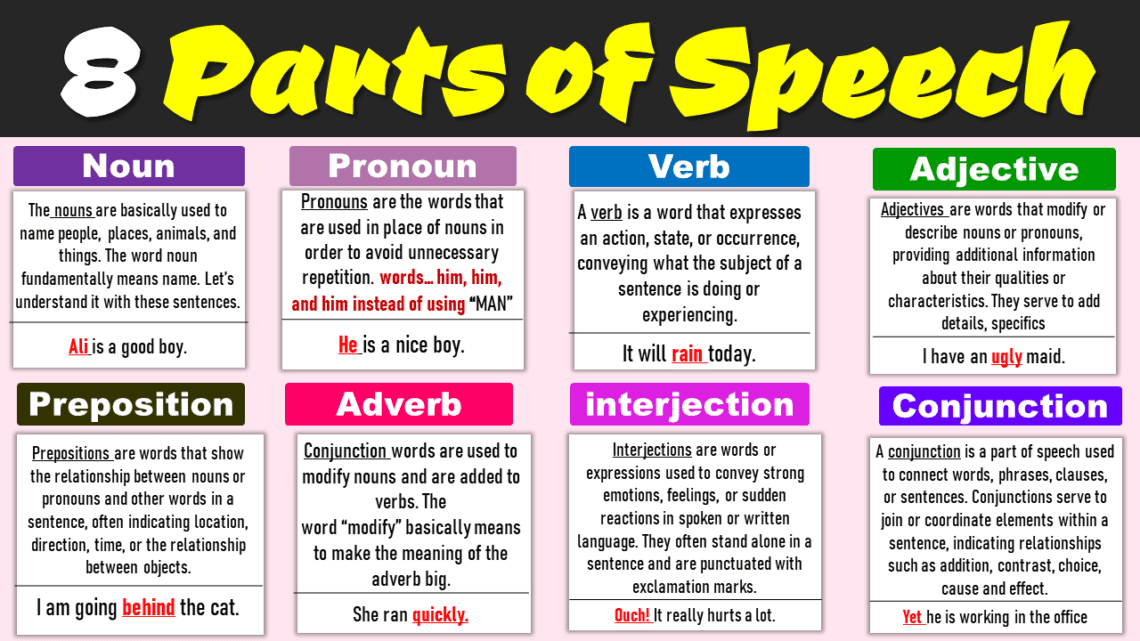
Think of parts of speech as the personality types at a party. You’ve got the nouns—the people who show up with the chips and dip, the solid, tangible things. Then you have verbs—the ones who are always dancing, moving, or spilling the dip because they’re too energetic. If you can’t tell who’s who, you’ll end up asking the verb to hold the guacamole and the noun to do the Macarena. Chaos.
I once wrote a work email that said, “I’m attaching the report for your review.” My boss replied, “Great, I’ll review it,” and I realized I had used “review” as a verb, but in my head, I had turned it into a noun-like object. See? Confusion even for the pros. Learning to spot them is like learning the house rules before you start a crazy board game—it saves you from flipping the table later.
Must Read
Nouns: The Heavyweights of Conversation
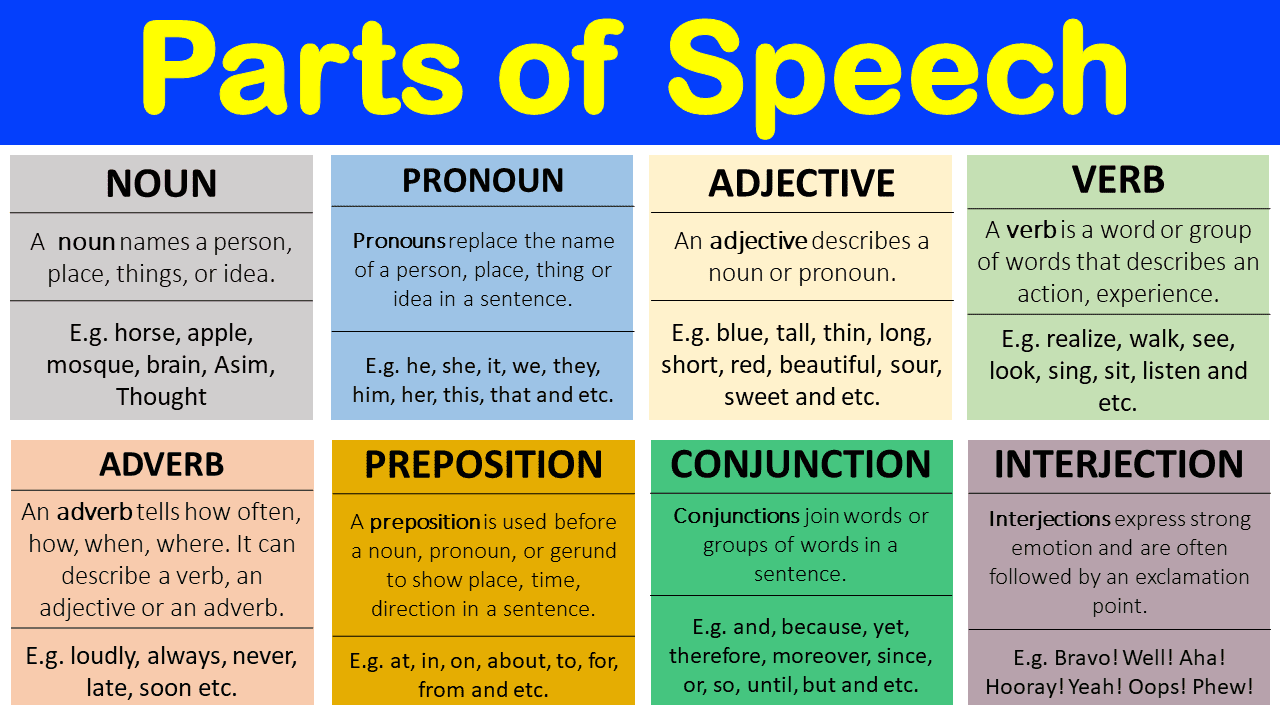
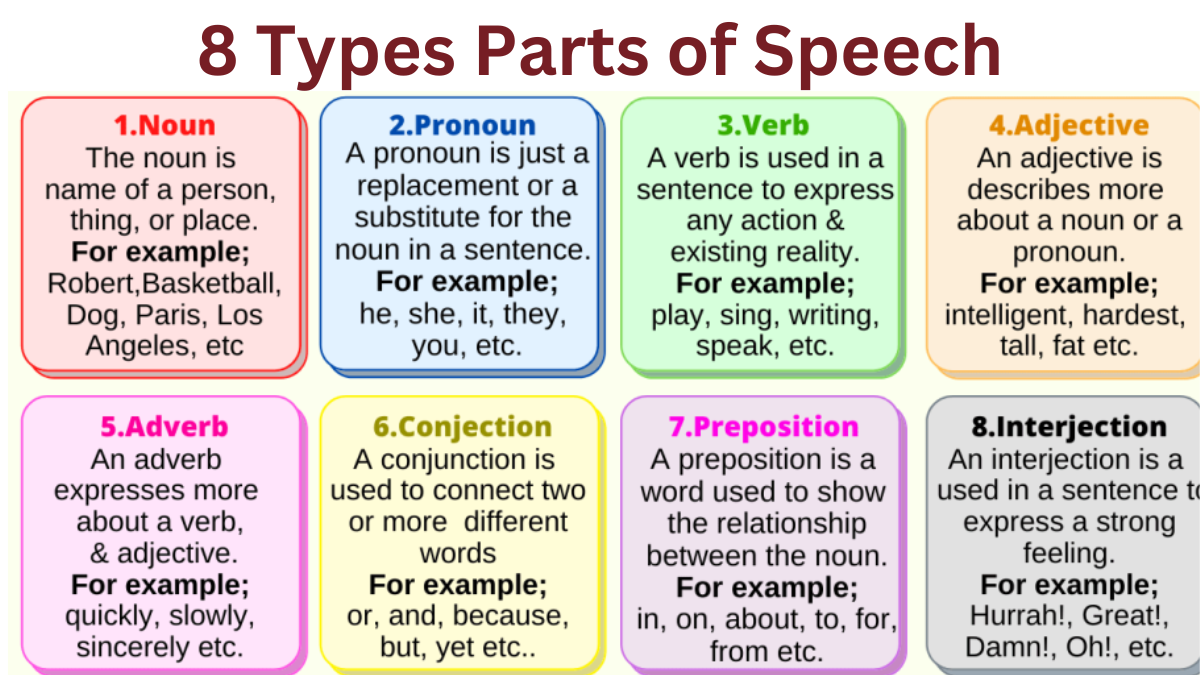
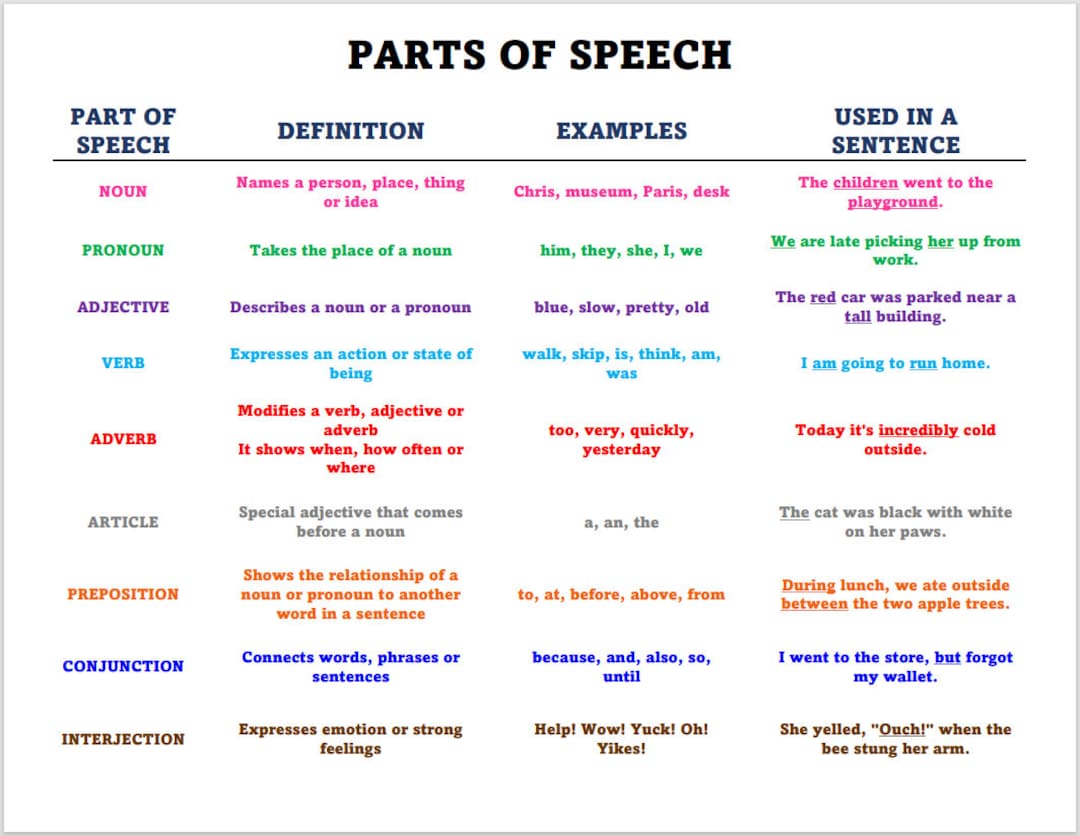
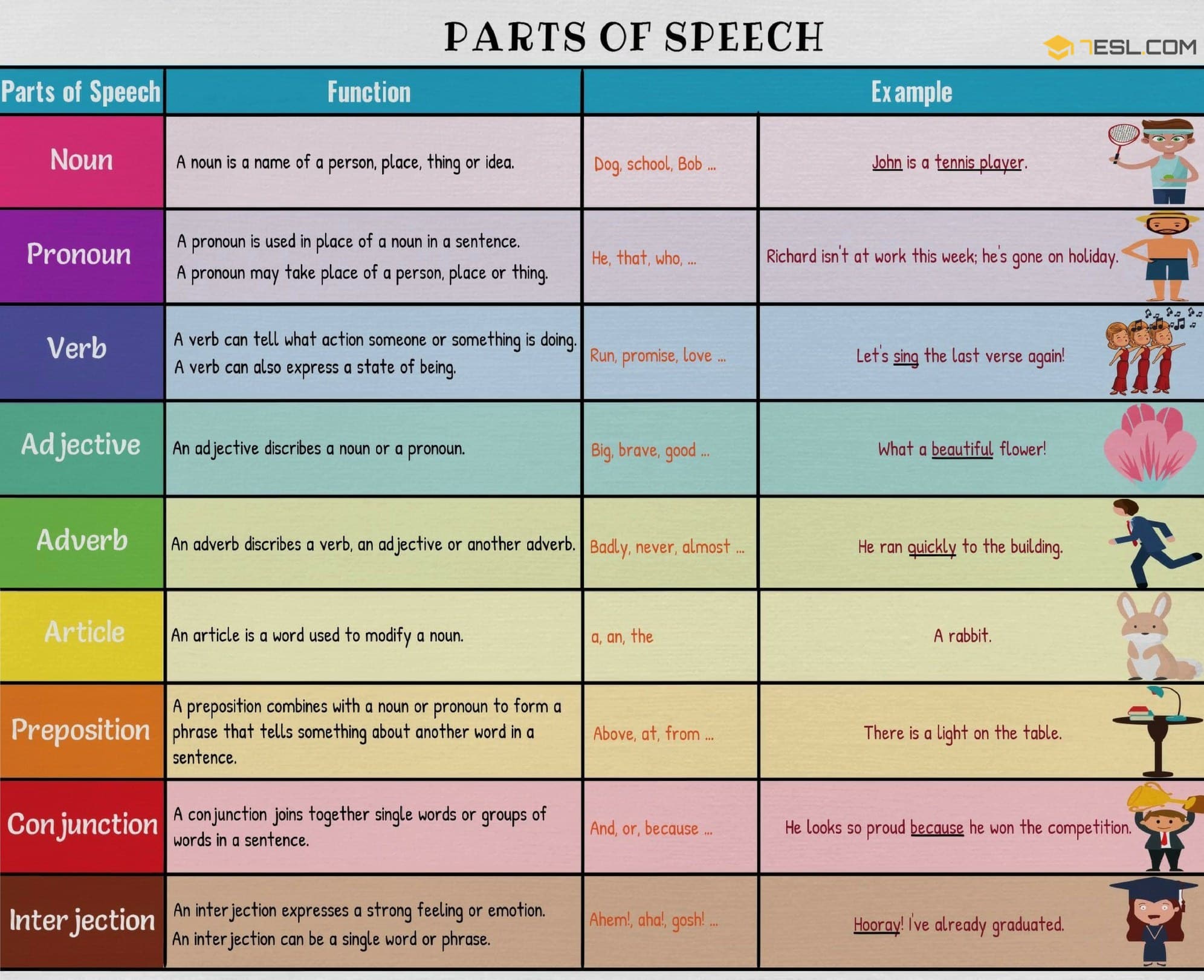
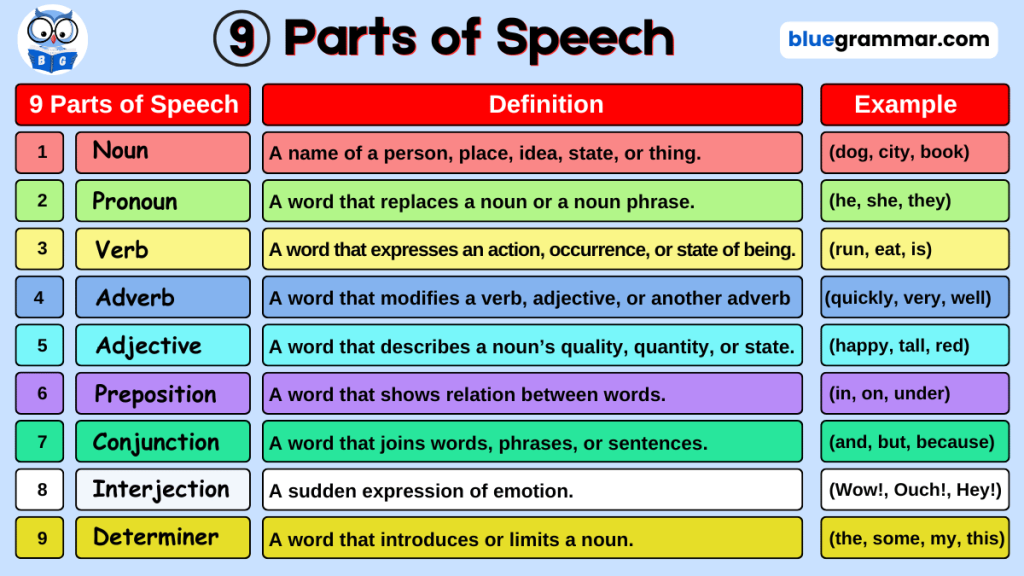
Nouns are the stuff of life: your dog, your rent, that weird Tupperware lid that has vanished into another dimension. They’re the concrete bricks and the abstract ideas like love or anxiety (especially Sunday-night anxiety). If you can point at it, or if it haunts you mentally, it’s probably a noun. When you say, “My car is making a noise,” both “car” and “noise” are nouns, and they’re both being absolute drama queens.
Verbs: The Action Heroes (and Villains)
Verbs are what you do, or what’s being done to you. Run, sleep, complain, overthink—it’s all verb territory. I have a friend who says, “I’m just going to vibe today,” and “vibe” is only a verb because she decided it was. That’s the beauty of English—it’s a living, chaotic mess where nouns can get a gym membership and become verbs. But in a standard sentence, the verb is the engine. Without it, your sentence is just a pile of nouns sitting silently, like a stand-up comic with no microphone.
Adjectives: The Goldilocks of Description
Adjectives are the friends who take “coffee” and make it “scalding, overpriced, morning-rescue” coffee. They describe nouns, giving them flavor or judgment. You know when you say, “That’s a solid idea,” and “solid” isn’t about physics—it’s an adjective giving a thumbs-up. Without adjectives, every meal would be “food,” every movie would be “film,” and every date would be “person.” Imagine swiping right on a profile that just says “Person.” Boring, right? Adjectives are the filters on your Instagram selfies.
Adverbs: The Over-Explainers
Adverbs modify verbs, adjectives, or other adverbs, and they usually end in “-ly.” They’re the people who say, “I totally, absolutely, definitely need to leave now,” and then stay for two more hours. You need them, but they can be a bit much. For example, “She sang beautifully” is an adverb doing its job. But “She sang quite beautifully” is an adverb modifying an adverb—that’s just showing off. It’s like wearing a belt, suspenders, and a rope to hold up your pants.

Pronouns: The Understudies
Pronouns are the stand-ins for nouns, like understudies in a play. You say, “I saw the mailman, and he gave me a bill.” “He” is a pronoun, saving you from saying “the mailman” fifty times. But here’s the kicker—pronouns are also where we trip up in real life. You’ll say, “Me and my friend went to the store,” and your inner grammar nerd winces. Techincally, it should be “My friend and I,” because “I” is the subject pronoun. But honestly, in casual texting, “me and my friend” is as common as finding a missing sock. Still, knowing the difference makes you sound like you own a thesaurus and a decent shower gel.
The Party Crashers: Prepositions, Conjunctions, and Interjections
Prepositions are the tiny words like on, in, under, with. They tell you where things are, like “the chips are under the couch.” They’re the GPS of language. Conjunctions are the connectors—and, but, or, because—they’re the glue that holds your rambling texts together. And interjections? Those are your Wow!, Oops!, and Dude!—the emotional outbursts that perfectly capture how you feel when you step on a Lego at 2 AM.
Here’s the real kicker: you already use all of these correctly every day without thinking. You’re a grammar wizard; you just don’t have the cape yet. The moment you start labeling them is the moment you feel like Neo seeing the Matrix code in “The Matrix”—except the code is just your grocery list.
So next time you write a sentence, take a second to play the game. Who’s the noun? What’s the verb? Is that “literally” an adverb or just you being dramatic? You’ll not only sound smarter, but you’ll also get a weird little thrill when you spot a participle dangling. And honestly, that’s the kind of party trick that never gets old—just don’t try it at a real party, or you’ll be left alone with the guacamole.