How To Write Film Story In Kannada
So, you want to write a film story in Kannada, huh? That’s like deciding to cook a massive, elaborate biryani instead of ordering takeout. It’s a beautiful, messy, and incredibly rewarding challenge that will test your patience, your spice tolerance, and your ability to handle a hot stove.
First things first, forget everything you know about “proper” writing. This isn’t a school essay. Your Kannada film story is not a police complaint, so don't make it sound like one. You’re not filing a report; you’re inviting people into a world, like when your neighbor drops by unannounced and you have to offer them coffee and some khara mixture.
Think of your idea as a saaru’s base—the essential lentil broth. Without a solid, flavorful base, your story will be bland, no matter how many vegetables you throw in later. What's the one thing you must see happen? Maybe it’s a rickshaw driver who dreams of becoming a classical singer, or a grandmother who starts a YouTube channel. That’s your base. Don’t overcomplicate it yet.
Must Read
Dialogue is King (or, More Precisely, Your Loud Uncle)
Now, dialogue in Kannada. This is where you bring the jhatka (punch). Listen to how people actually talk in Bengaluru, Mysuru, or even in your neighborhood bevarsi (hangout) spot. It’s a mix of pure Kannada, a bit of English, and a whole lot of attitude. Your characters shouldn’t speak like a news anchor unless the joke is that they are a news anchor.
Use the local slang. Don’t have a character say “Please come,” when they’d realistically say, “Baappa, banni” or better yet, just a grunt and a head nod. The head nod, my friend, is your greatest tool. Write the nod into the script as a pause. That’s where the comedy lives. It’s like that awkward silence after your friend asks for a loan—the pause says more than any rejection.
The Hero’s and Villain’s Everyday Fights
Don’t make your hero a god who can lift a bus with his pinky. Make him a regular guy who gets stuck in Silk Board traffic and whose biggest dream is to find a parking spot. His conflict isn’t fighting a dragon; it’s fighting with the BBMP office for a property tax receipt. That is drama! That's relatable.
And the villain? He doesn't need to smoke a cigar and laugh maniacally. He can be the annoying apartment secretary who rules with an iron fist over the parking slots. That practical villain is scarier than any guy in a leather jacket. Your audience will hiss at the screen because they’ve met that guy. They’ve argued with him at the society meeting.
Write scenes where your hero runs out of filter coffee at the worst moment, or when the power goes out during the finale of a big song. These tiny, everyday annoyances make the big drama feel real. It’s the difference between a painting and a photograph—the photograph captures the moment, but the painting captures the feeling of the mosquito buzzing in your ear.

The Anecdote of the "Idea"
I once decided to write a story about a guy who finds a lost lottery ticket. Sounded brilliant in my head. But my story was just him walking around asking, “Is this yours?” for 90 minutes. Boring! Then, I remembered my own uncle who got a wrong number call and talked to the stranger for an hour, sharing all his family secrets. That is a story. The lottery ticket is just the trigger; the phone call is the film.
So, find the trigger, then find the weird reaction. Your entire script can be about how a Kannadiga family reacts to a tiny problem. A dropped baagina (wedding platter) can lead to a multigenerational fight that takes up two acts. The plot isn't the event; the plot is the reaction to the event. The masala is in the shouting, the crying, and the eventual making up over strong coffee.
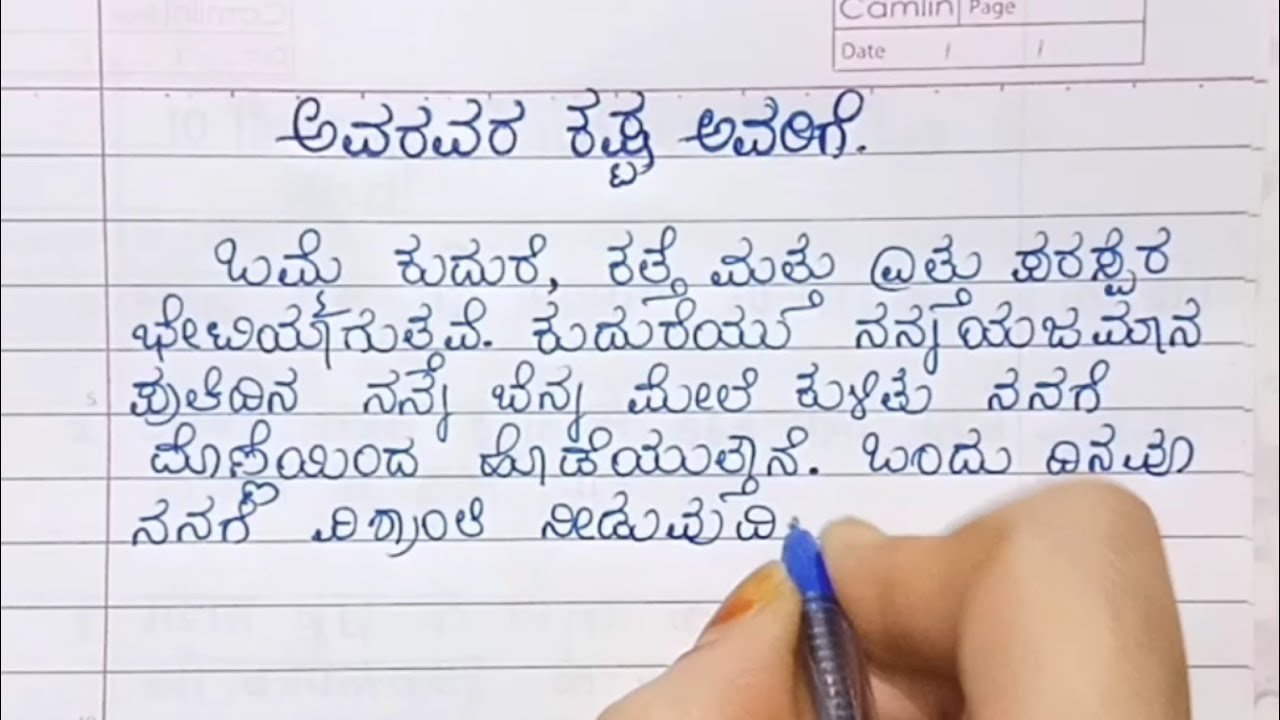
Don’t worry about writing perfect, literary Kannada. Write it the way you speak it. Mix in the English words naturally. “Hey, eno (what’s up)?” or “That’s not possible, maga (dude)!” This is how the streets talk. This is how your audience thinks.
Finally, just finish it. Even if it’s only ten pages. Even if it’s terrible. You can’t edit a blank page, just like you can’t re-fry a bajji that never got made. Treat it like a Sunday morning ritual—set aside the time, put on some filter coffee, and start typing that crazy idea down. The first draft will be messy, like your kitchen after that biryani attempt, but the aroma will be too good to give up on.
So, go on. Open your laptop, think about that insane auto driver you met, and write it down. Your story is waiting. And remember, if it feels like a chaotic family dinner, you’re probably on the right track.