How To Use 16 25 Railcard With Oyster

Picture this: you’re gliding through the electric veins of London, the city’s iconic rumble of the tube beneath your feet, and you’re suddenly struck by the quiet, almost absurd, beauty of the transaction happening in your pocket. You tap your Oyster card, hear the approving beep, and a tiny digital ledger updates itself, deducting a fare that—thanks to a piece of plastic you probably carry out of habit—is decidedly cheaper than it should be. For millions, the National Rail’s 16-25 Railcard is a passport to weekend escapes and intercity adventures, but for the uninitiated city dweller, it feels like a secret handshake that the Oyster system refuses to acknowledge. The truth, however, is far more nuanced. It’s not that the two systems are incompatible; it’s that they demand a specific, almost ritualistic form of digital courtship.
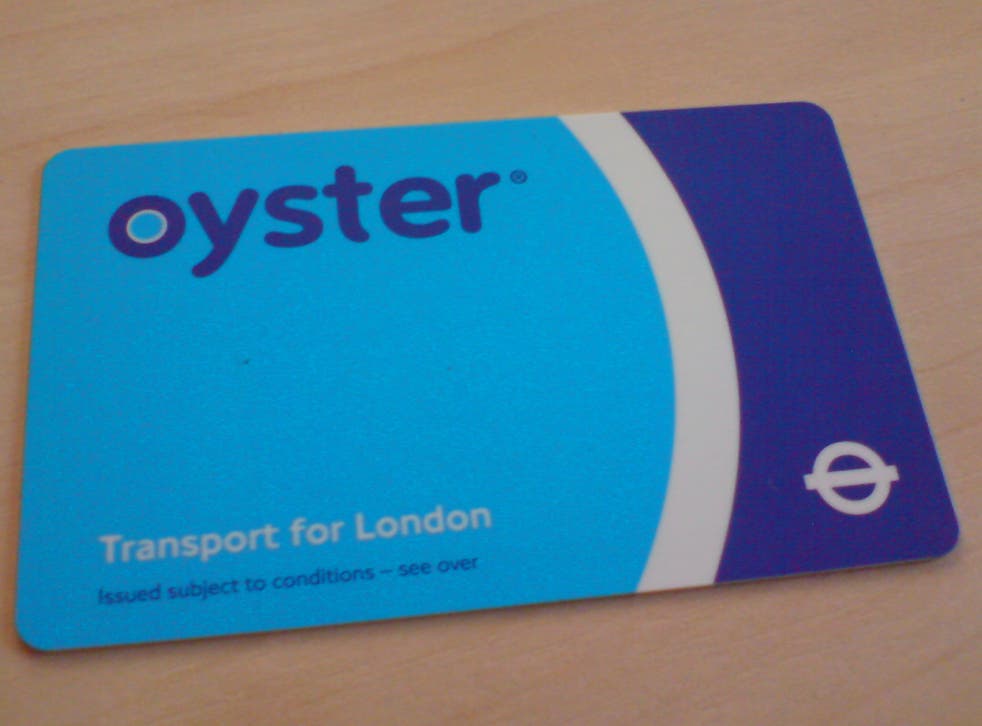
Historically, the 16-25 Railcard (formerly the Young Persons Railcard) has been the great equalizer for the perpetually broke but eternally curious. Born in the early 1970s as a way to fill empty off-peak trains, it evolved into a cultural totem of youth mobility. But when Oyster arrived in 2003, heralding a contactless, tap-and-go utopia, the Railcard was left standing on the platform, waving goodbye. The integration came later, but it arrived with a catch that feels characteristically British: a manual, bureaucratic handshake. To bridge these two worlds, you must visit a staffed ticket office—a physical pilgrimage in an increasingly digital age—and ask them to link your Railcard discount to your Oyster card. This is not a digital-native feature; it’s a legacy ritual, a nod to a time when human interaction was the API for complex systems.
The Alchemy of Off-Peak: Why Your Oyster Needs a Paper Trail
Here’s the deliciously dark irony of the system: your Oyster card, a marvel of modern micro-processing, is essentially a dumb terminal waiting for instructions. It does not know you own a Railcard. It does not care about your youth, your student status, or your deeply held belief that you’re still 25. The only way it learns of your discount is through a central database, updated manually by a human being who has to tap a few keys on a legacy terminal that looks like it survived the Blitz. This is a psychological marvel of friction. The barrier to entry—the sheer inconvenience of having to find a staffed ticket office with a working printer—acts as a filter. It ensures that only the truly determined, the ones who’ve read the blog posts, the ones who know, get the savings.
Must Read
Culturally, this reflects London’s peculiar relationship with infrastructure. The city is a palimpsest of old and new, where you can stand on a platform that was built by Victorians while a 5G signal pings through your skull. The Railcard-Oyster link is a microcosm of this. It works, but it works in the way a vintage Porsche might—beautifully, but with a peculiar ignition sequence. The discount itself is a generous 34% off off-peak single fares on TfL services (Tube, DLR, London Overground, and some National Rail services within London), but only when you’re travelling after 09:30 on weekdays, or any time on weekends. This time restriction isn't just a logistical detail; it’s a social engineering tool. It whispers, “Sleep in, wander later, and you shall be rewarded.” The system subtly nudges you towards a more leisurely, bohemian schedule, gently discouraging the frantic 8:15 AM scramble.
Moreover, the failure mode is a classic part of the lore. Forget to add the discount, tap in at 09:31, and your fare is calculated at the full, unforgiving rate. The Oyster system is ruthlessly efficient at collecting your money, but it is passively indifferent to your rights. You must proactively claim your discount, and even then, it’s only valid at specific times. The psychological impact is that you become hyper-aware of the clock. You’ll find yourself loitering by a coffee shop at 09:27, watching the seconds tick by like a heist movie countdown, just to save that extra £1.20. It’s a small, daily act of defiance against the commute, a tiny rebellion that makes the journey feel a little more like a game you’re winning.

The Strategy of Savings: Scenarios, Case Studies, and the Art of the Tap
Let’s get practical, shall we? Imagine you’re a 23-year-old postgraduate student, living in Zone 3, commuting to a library in Zone 1 three days a week. Without the Railcard link, a standard off-peak single is roughly £2.80. With the Railcard, it drops to around £1.85. That’s a saving of nearly £1 per journey, or £6 a week, £24 a month. It doesn’t sound colossal, but that’s a free book, two pints of craft ale, or a decent bagel with smoked salmon. Now, consider the weekend. You decide to take a spontaneous trip to the London Eye. With the Railcard, that entire journey across zones is cheaper. The savings compound not in the big splashy moments, but in the quiet, consistent taps of daily life. The trick is to always carry the physical Railcard with you, because though the Oyster knows, the inspectors do not. If you’re stopped without your Railcard, you face a penalty fare that will wipe out months of savings in one anxious moment.
Here’s a case study in strategic transit planning. Meet Tom, a 24-year-old graphic designer. Tom commutes every day from Zone 4 to Zone 1 for work, leaving at 9:00 AM. He arrives at the station at 9:31 intentionally, having a coffee en route. Because he uses the Railcard link, his weekly travel cost drops from £27.00 to approximately £17.82. Over a year, that’s a saving of nearly £477. Now, Tom doesn’t just stop there. He uses his Railcard for National Rail journeys outside London, but he also has a contactless bank card linked to the same discount! This is the pro move: you can only link the discount to one Oyster, but you can also link the Railcard to one contactless bank card. This allows him to tap in with his phone (via Apple Pay) and still get the 34% off, because the card itself is registered. This is the double-dip of urban mobility—the ability to have two separate physical methods of tapping, both carrying the same discount DNA.
Actionable takeaway number one: Never, ever link it to a card you share. The system is strictly personal. If your partner borrows your bank card, they’ll get the discount, but if the inspector checks their ID, you’re both in trouble. Treat your Oyster/Railcard link like a personalized prescription, not a family pass. Takeaway two: understand the boundary of the discount. The 34% off applies to single off-peak fares on TfL services. It does not apply to Peak fares, nor to the daily price cap. This is the hidden sting. The cap remains the same for everyone. So, if you’re making 5 journeys in a day on the Tube, you’ll hit the cap and the Railcard becomes irrelevant for that day. This means the discount is best used for light, infrequent travel, not for heavy metro usage. For heavy usage, the cap is your friend; for light usage, the Railcard is your angel.
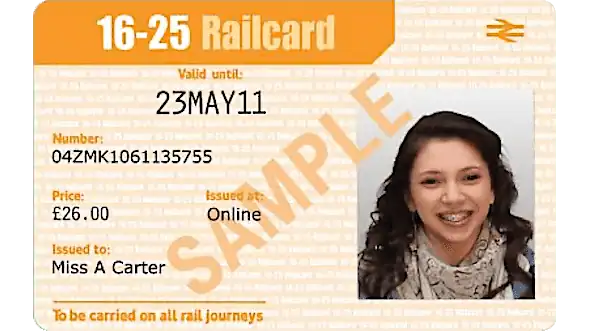
Finally, takeaway three: do this before your railcard renews. If your Railcard expires, your Oyster discount doesn’t auto-renew. It silently disappears, leaving you paying full price for weeks until you notice. Set a reminder on your phone. The renewal process requires you to go back to the ticket office, or call TfL. The digital seamlessness of Oyster is a lie; the maintenance is seasonal. Treat the expiration date like a dental check-up—annoying, but necessary for long-term health. And for the love of all that is urban, do not lose your physical Railcard. You can use the digital Railcard in the TfL app to prove your entitlement on the train, but the conductor terminal cannot read a QR code from the Oyster reader. It’s a two-device dance that requires constant vigilance.
The Fine Print: Five Frequently Asked Questions
1. Can I get the discount added to my Oyster card without a staffed ticket office?
Technically, yes, but it’s a bureaucratic odyssey. You can call TfL’s customer service line, but you will be placed on hold for a duration that rivals a Kafka novel. They will ask for your Oyster card number, your Railcard number, and the expiry date. The system will then silently update, usually within 48 hours. However, the physical staffed ticket office remains the gold standard for immediate gratification. The problem is that many smaller stations have phased out ticket offices entirely, following a controversial policy shift. This forces you to travel to a central hub (like King’s Cross or Victoria) just for this administrative act. It’s a test of commitment. In short, the phone route works, but bring a book to read while you wait, or a library of podcasts. The frustration is part of the charm, apparently.
2. Does the discount apply to the Thames Clippers river buses?
Here’s where Urban London and National Rail diverge. The 16-25 Railcard discount is valid on the River Bus services operated by Thames Clippers, but only if you tap in with your Oyster card that has the discount loaded. However, the discount is not a flat 34% on all River Bus fares. It’s applied to the off-peak fare only. River Buses have a peculiar pricing structure, with a different peak/off-peak split than the Tube. The off-peak on the river often starts at 09:00 or 10:00, depending on the pier. This means you could be paying the full rate at 08:55, but a discounted rate at 09:05. It’s illogical, but it’s London. Use the TfL journey planner to check the specific off-peak times for the pier from which you depart. The river is a beautiful commute, but it’s also a maze of temporal rules.

3. If I use a contactless bank card instead of Oyster, do I get the discount automatically?
No, and this is a trap for the modern traveler. You must link the Railcard to your specific contactless bank card via the TfL website’s "Manage Contactless" section. You enter the card details, then the Railcard details, and you must wait for a confirmation email. The catch is that you can only link one contactless card, and it must be the same card you physically tap with. You cannot link it to your phone’s Apple Pay if your default card is a different one. The system is rigid. Furthermore, if you have a weekly capping benefit applied to that card, the Railcard discount doesn't combine with certain travelcards. It’s a delicate ecosystem. The beauty is that you don’t need to carry a separate Oyster card, but the cost is that you are now tethered to that physical bank card for all your transit needs. Lose your wallet, lose your discount.
4. Why is the discount not valid on peak fares? Is there any way to bypass this?
The reason is brutally economic: peak trains are over capacity. TfL and National Rail use the Railcard as a demand-management tool. They don’t want to encourage more passengers during the crush of the morning rush, because they cannot physically fit them. It’s not about fairness; it’s about physics. There is absolutely no way to bypass this within the system. If you tap in during the peak window (Monday to Friday, 06:30 to 09:29), the Oyster reader will simply apply the full fare. Some urban legends suggest tapping in before 06:30 and exiting later—that works, provided you enter the system before the threshold. But you’ll be exiting during peak, which is allowed; the discount is based on the entry time. So a sneaky 05:58 entry for a 10:00 arrival is a legitimate hack. But still, that’s cheating your own sleep, not the system.
5. Do I need to carry my physical Railcard when using the linked Oyster?
Yes, unequivocally and always. The Oyster card is merely a token of the discount, but the Railcard is the proof. If you are stopped by an inspector (Revenue Protection Inspector, or RPI), they will scan your Oyster to check the discount, and then they will ask to see the Railcard. If you show a digital copy on your phone, some inspectors accept it, but they are not obligated to. The official rule is that you must be able to produce a valid Railcard. The physical card is best. The risk here is the penalty fare, which is currently around £80 (£40 if paid within 21 days). That is a catastrophic loss that negates the entire savings of the year. It’s a high-stakes game of show-and-tell. Never, ever, travel without it, even if you’re just popping to the corner shop. The universe will conspire to check you only on the day you forgot it.

The Railcard-Oyster connection is a meditation on the friction that builds character. In a world rushing towards full automation, this tiny, manually-linked discount forces a moment of reflection. It asks you to be present, to remember your physical cards, to plan your travel around the clock. It’s a small rebellion against the passive convenience of contactless payments. It reminds us that value is often hidden behind a small, annoying wall of bureaucracy. We are creatures who hate effort, yet we treasure the rewards that effort brings. The 34% off feels better because you had to work for it, because you had to speak to a human, because you had to remember the 09:30 rule. It’s the modern equivalent of a loyalty handshake—a knowing wink between you and the city.
This dual-card system also speaks to our deep human desire for ownership and control. By linking the cards, you are not just a passenger; you are a participant in a complex system. You understand the economics of your commute. You are a savvy navigator of a map that others simply endure. This knowledge gives you a subtle superiority complex, which, let’s be honest, is part of the fun of living in London. You are no longer a victim of the fare. You are a negotiator. You’ve made a deal with the transport devil, and you’ve got the better end of it.
Ultimately, the lesson extends beyond the Tube. It’s about noticing the fine print in life, the quiet discounts, the hidden off-peak hours of our emotional schedules. We rush through the busy times, paying full price in energy and attention, forgetting that the off-peak hours—the late mornings, the lazy Sundays—often offer the best value. The Railcard is a gentle nudge to embrace those slower rhythms, to travel a little lighter, and to always, always carry your proof of youth, even if it’s just a shiny piece of cardboard with a photo that’s two years old. In a city of eight million, it’s your little edge.