How To Trade Bonds On Thinkorswim
Let’s be real for a second: you’ve probably seen the TikTok “grid” flooded with guys in Patagonia vests screaming about the yield curve, or maybe you’ve scrolled past a meme about “bond vigilantes” that made you feel personally victimized by your 401(k). Fixed income used to be the financial equivalent of watching paint dry—something your grandpa did between naps. But then the Fed spiked rates faster than a matcha latte inflation at your local artisanal café, and suddenly, trading bonds became the mean-girl clique of the investing world. It’s the “quiet luxury” of Wall Street—less flashy than crypto bros, but infinitely more punishing if you mess up.
Today, everyone from former Robinhood day-traders to disgraced macro hedge fund interns is claiming they “scalped the 10-Year.” The cultural shift is real: we’ve pivoted from meme stocks to maturity dates, from dogecoin to duration risk. And at the center of this cerebral flex is Thinkorswim, TD Ameritrade’s God-tier trading platform (now under the Schwab umbrella, but let’s not unpack that trauma). If you want to participate in the most intellectually masturbatory corner of retail trading, you need to know how to navigate this beast. This isn’t just finance; it’s a personality trait.
So, why the sudden obsession? Because bonds are the new “canary in the coal mine.” When inflation data drops, the 2-Year Treasury moves faster than a Twitter/X apology tour. You can’t screenshot a stock chart and pretend you’re sophisticated; you need a platform that handles the gnarly mechanics of accrued interest and bid-ask spreads. Thinkorswim is the tool of choice for the chronically online trader who wants to feel like a quant but still wears cargo shorts. Let’s dive into the rabbit hole—and I promise, we won’t lose your principal.
Must Read
The Subculture: Where Geeks, Gurus, and Glitchy UI Collide
The bond trading subculture on Thinkorswim is a fascinating ecosystem, populated by three distinct species. First, you have the “Yield Chasers”—these are the retirees and early retirees who just discovered that money market funds aren’t the only game in town. They roam the forums asking why their T-bill ladder isn’t working and post screenshots of their paltry coupon payments as if they’ve won the lottery. They are harmless, but their obsession with "liquidity" is almost spiritual. Then, you have the “Macro Bros”. These are the guys who watch Bloomberg Terminal videos on loop, who use words like "convexity" and "belly of the curve" unironically. They treat every CPI report like the Super Bowl, and they’re convinced that the 30-Year auction is rigged by the primary dealers. They’re insufferable, but they often know their stuff—mostly.
Finally, there’s the “Wannabe Prop Traders”—the chaotic neutral group. They found a YouTube short that said "Zero Risk Arbitrage with ZT Futures" and now they’re trying to trade cash corporate bonds in micro-lots on Thinkorswim, only to be hit with a $2,000 bid-ask spread that makes them question their existence. The social dynamics here are toxic but hilarious. On Reddit’s r/bonds, they argue about whether ETFs like BIL are “cheating” versus actual Treasuries. On Discord, server mods scream at members for asking about "coupon dates" when the real play is duration hedging. The platform itself becomes a badge of honor; if you can navigate the clunky “Bond & CD” tab without throwing your laptop, you’ve earned a PhD in patience.
This isn’t just a subculture; it’s a lifestyle born from economic anxiety. We’ve shifted from YOLO equity calls to a defensive, hyper-nerdy posture. It’s the financial equivalent of wearing tactical gear to a farmer’s market—you look prepared, but you’re also a huge target for ridicule.

How to Actually Trade Bonds on Thinkorswim Without Losing Your Sanity (or Your Wallet)
Alright, put down the energy drink and listen up. Navigating Thinkorswim for bonds is like trying to use a 1998 MS-DOS program to order groceries—it’s powerful, but it’s deeply unintuitive. First, you need to locate the “Trade” tab, then click the dropdown that says “Bonds.” You’ll be greeted by a screen that looks like a spreadsheet written by a sadistic quant. Do not panic. Use the "Bond Scanner" feature. Think of it as the dating app for income securities. You can filter by maturity, yield, and credit quality. If you’re a beginner, stick to US Treasuries or high-grade municipals. Resist the urge to buy that 12% coupon junk bond from a bankrupt energy company—the “yield” is a trap.
Next, understand the “Lot” size. Unlike stocks where you buy 10 shares, bonds typically trade in units of $1,000 face value. On Thinkorswim, however, you can trade as low as $1,000, but beware: the spreads on small lots are wider than your ex’s hips after the holidays. To avoid getting rekt, look at the "Depth of Book" (Level 2) to see where the real liquidity is. If you see a huge wall at 99.75 and you’re trying to buy at 99.80, you’re paying the “idiot tax.” Also, pay attention to the “Yield to Maturity” (YTM) vs. coupon yield. The platform will calculate this for you, but you need to understand that if you buy a bond at a premium, your YTM is lower than the coupon. This is basic math, yet 90% of retail traders ignore it because they’re soured on reading.
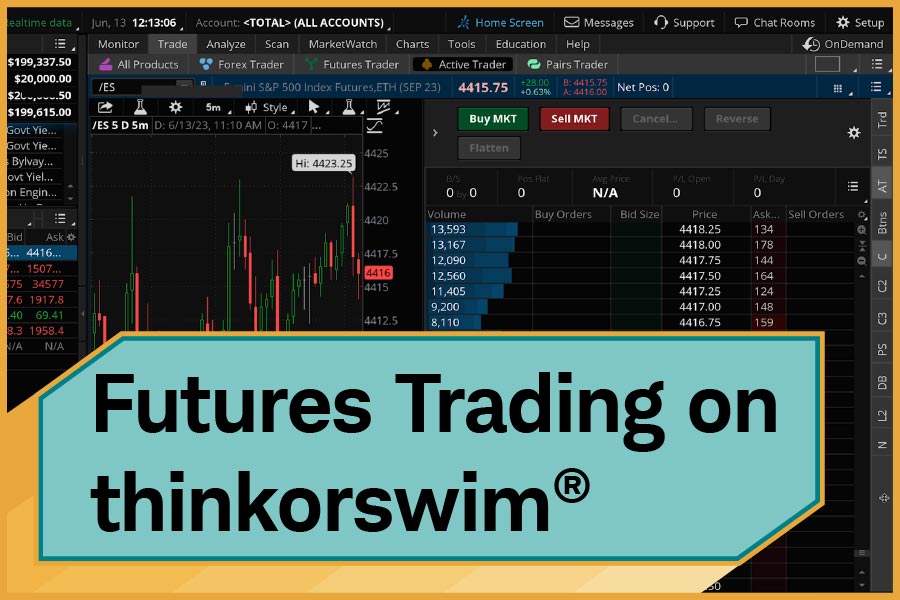
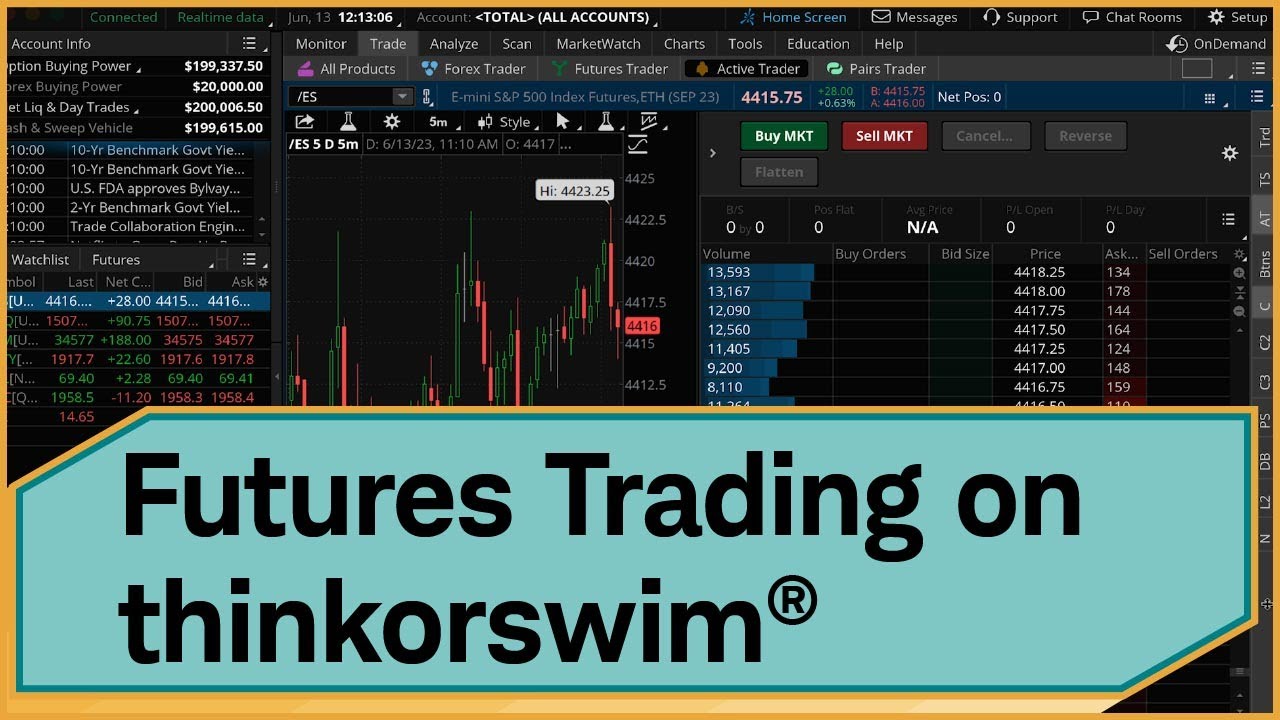
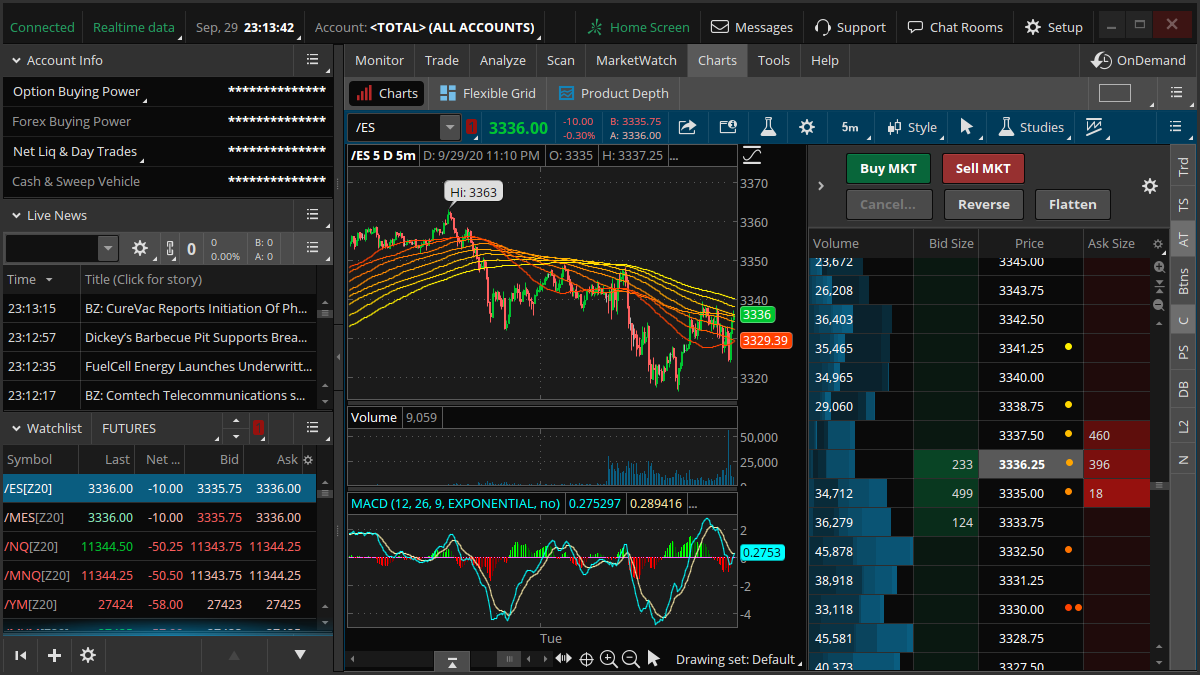
Here’s the pro-tip they don’t want you to know: Trade via the “Trade Grid” or the “Active Trader” ladder. You can set up a ladder for specific Treasury CUSIPs (that’s the ID number, look it up). This allows you to clip in and out of positions based on price action, just like you would with a stock. However, remember that bond prices move inversely to yields. If you buy a 10-year note at 4% yield and the Fed hints at a cut, the price goes UP. Do not confuse yield with price—that’s the rookie mistake that fills the “loss porn” sections of forums. Also, cancel any Stops you place immediately before the close; the bond market is illiquid after 3:30 PM ET, and you’ll get a fill at a price that makes you want to delete the app.

Finally, let’s talk about transaction costs. Thinkorswim allows you to trade new issue Treasury’s without commission, but the secondary market? They take a cut in the spread. Always use "Limit Orders" instead of "Market Orders." Market orders in the bond world are like giving your wallet to a pickpocket—polite, but devastating. And for the love of God, don’t trade corporate bonds unless you have $25k+ per position. The spreads will eat you alive. Stick to the “On The Run” Treasuries (the most recently issued), which are the most liquid. It’s not sexy, but neither is losing 2% overnight to a liquidity gap.
FAQ: The Unsolved Mysteries of Fixed Income Trading
1. Can I day trade bonds intraday like I do with tech stocks?
Technically, yes, and absolutely not. The bond market is a beast that moves slowly until it doesn’t. On Thinkorswim, you can trade Treasury futures (which act like leverage on the yield) for intraday moves—that’s your best bet for quick scalp action. However, if you’re trading cash bonds (the actual paper), you’ll be fighting a machine that thrives on institutional block trades. The bid-ask spreads widen during market hours, and you’ll often see weird prints that don’t make sense. Day trading cash bonds is like trying to sprint through a swamp—technically possible, but you’ll exhaust yourself and get nowhere.
Instead, if you want that fast-paced dopamine hit, switch to the “Futures” tab on the same platform. Trade the /ZN (10-Year Note futures) or /ZB (30-Year Bonds). These have real liquidity and move tick-by-tick. But remember—futures are leveraged. A 1% move in the yield can cause a 3-4% move in the futures contract. That’s how you go from “yield hunter” to “yield hunted.” Keep your size small, use stops (unlike with cash bonds), and treat it like trading SPY, not like holding a sleeping asset. The social media hype about “passive bond income” is a myth for intraday; you need to evolve or die.

2. Why does my Thinkorswim bond screen show garbage prices for certain issues?
This is the most common complaint in the Discord servers. Thinkorswim pulls its bond pricing from a mixture of broker-dealer quotes and exchange data. For actively traded Treasuries, the quotes are decent. But for anything weird—like a 2038 strip bond or a municipal bond from a small town in Ohio—the prices are indicative at best. These are often sourced from “shreds” or stale dealer inventories. If you see a price that says 98.5 for a bond that’s yielding 5% when the market is at 4%, it’s a trap. The actual tradeable price will be 105. This is called a “phantom quote,” and it’s designed to lure in newbies.
To combat this, you need to look at the “Trade Grid” and see the actual bid and ask from the market makers. If there is no bid or ask shown, just walk away. Or, you can use the platform’s "Bond Search" to filter by “minimum size 50” (that means $50k). If you see quotes for small lots, they are more likely to be real. Also, the pricing on Thinkorswim updates about every 15-20 seconds, so do not watch it like a ticker. It’s not a stock; it’s a slow-moving glacier. If you’re getting frustrated, check the time—if it’s between 2:00 AM and 7:00 AM EST, you’re trading against a sleeping market. Go to bed.
3. Is trading bonds on Thinkorswim tax-efficient, or am I wasting my time?
This is where the platform’s lack of hand-holding hurts. Taxes on bonds are simpler than you think, but the internet has convinced everyone they need a CPA to sneeze. Treasury interest is exempt from state and local taxes but fully taxable at the federal level. Corporate bond interest is fully taxable at all levels. Munis are usually tax-free at the federal level, and possibly state if you buy your own state’s bonds. Thinkorswim will show you a “Yield to Maturity” but it does NOT show you the “tax-equivalent yield.” That’s on you to calculate by dividing the yield by (1 – your tax bracket).

If you’re in a high tax bracket (over 30%), buying a 3.5% muni might be better than a 5% Treasury. The platform doesn’t do this math for you, which is infuriating. However, for the majority of retail traders, buying Treasury ETFs like GOVT or BND is more tax-efficient and easier to trade. The actual cash bonds on Thinkorswim are great for holding to maturity and clipping coupons, but if you plan to flip them within a year, any price appreciation is taxed as short-term capital gains, which is the same as your income tax rate. That kills the entire trade. So, use the platform to lock in a yield you’ll hold, not to trade around. Your future self will thank you.
Is this "bond trading era" just a fad—a temporary lull in an otherwise hyperspeed stock environment? Highly unlikely. We’ve seen a structural shift in how capital is allocated. The days of 0% interest rates are gone for this cycle, and the “I’ll just buy the dip in ARKK” mentality has been scorched earth. Bonds offer a legitimate, tangible return that can pay for your Starbucks habit or, you know, your rent. It’s a permanent addition to the retail toolkit because it’s the only asset class that provides a contractual promise. In a world of fake news and deepfakes, a legal contract is kind of refreshing, right?
However, the platform might not stay dominant. Charles Schwab has been slowly gutting Thinkorswim’s support to push its own, inferior UI. So, learn the ropes now while you can. Not because the system will vanish, but because your edge as a retail trader lies in knowing the mechanics better than the next guy who just saw a TikTok about “high yield savings.” Mastering bond trading on Thinkorswim is like learning to drive a stick shift in a world of automatics—it’s tedious, slightly embarrassing, but when the economy hits a pothole, you’re the one who can still evade the crash. Keep your yields high, your spreads tighter, and your ego in check.