How To Play Nuvole Bianche On Piano

So You Want to Play “Nuvole Bianche”?
First, let’s get one thing straight. You don’t play this piece. You survive it. It’s the musical equivalent of a beautiful, slow-motion car crash—except the car is your ego, and the road is your piano’s sustain pedal.
Everyone loves this song. It’s on every study playlist, every wedding video, every sad-boy Instagram reel. And you, brave soul, think you can just sit down and nail it.
Spoiler alert: You will cry. But that’s part of the fun.
Must Read
The Unpopular Opinion
Here’s my hot take: “Nuvole Bianche” is not hard because of the notes. The notes are easy. A toddler with good posture could find the right keys.
No, the real enemy is time. Not clock time. Musical time. You will lose it faster than a phone in a pillow fort.
Most beginners play it like a robot with a broken metronome. That’s fine. Robots have feelings too, but yours won’t.
Step One: Find the Right Feel
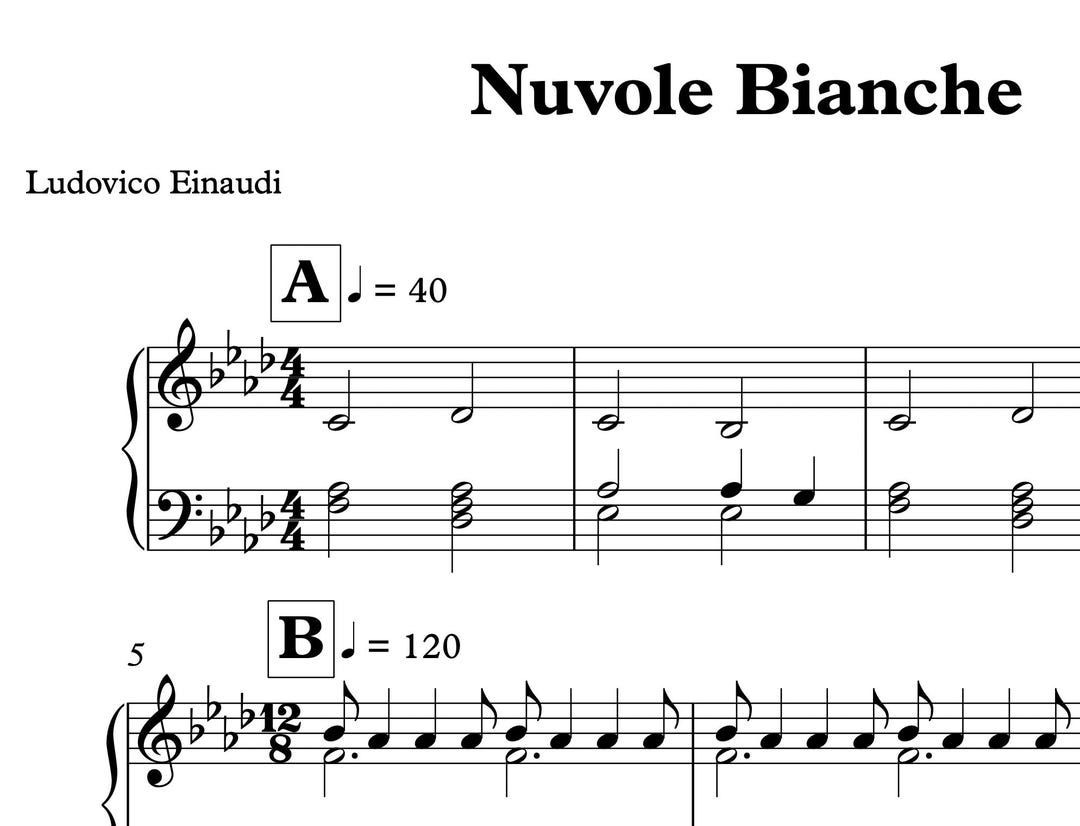
Ignore the sheet music’s tempo marking. It’s a lie. You need to play it like you’re falling asleep while standing up. Slow, wobbly, and vaguely melancholic.
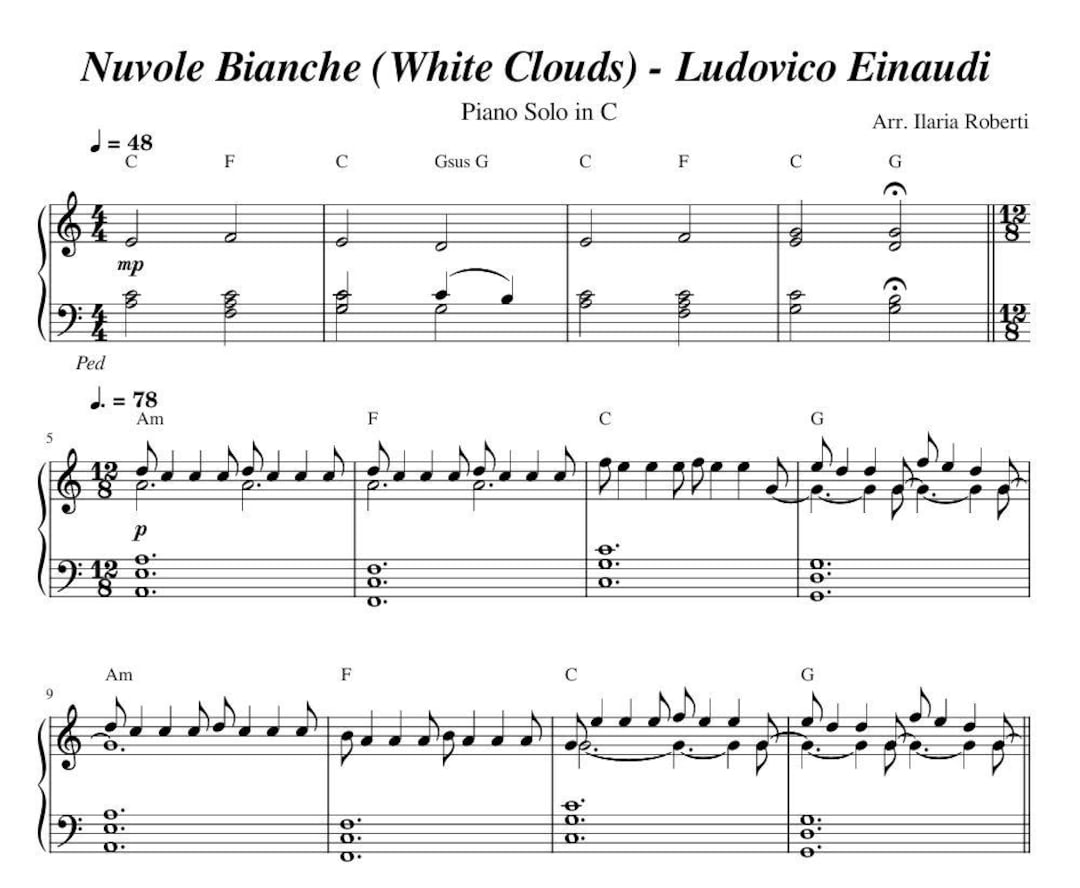
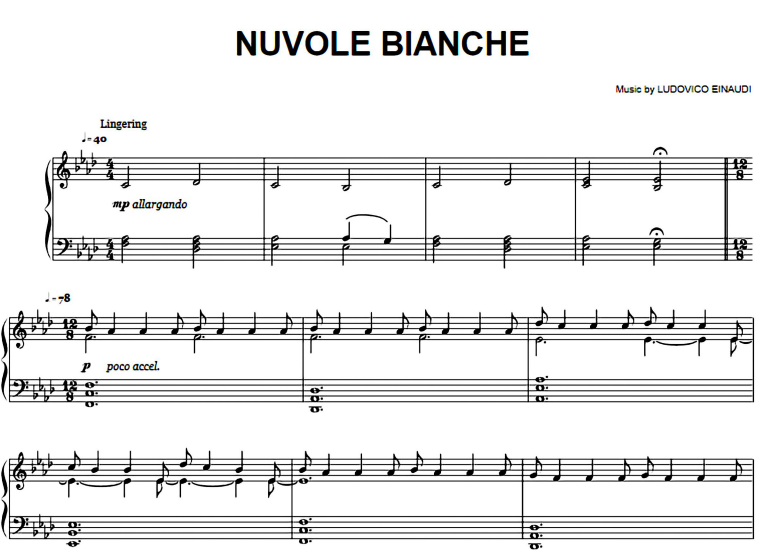
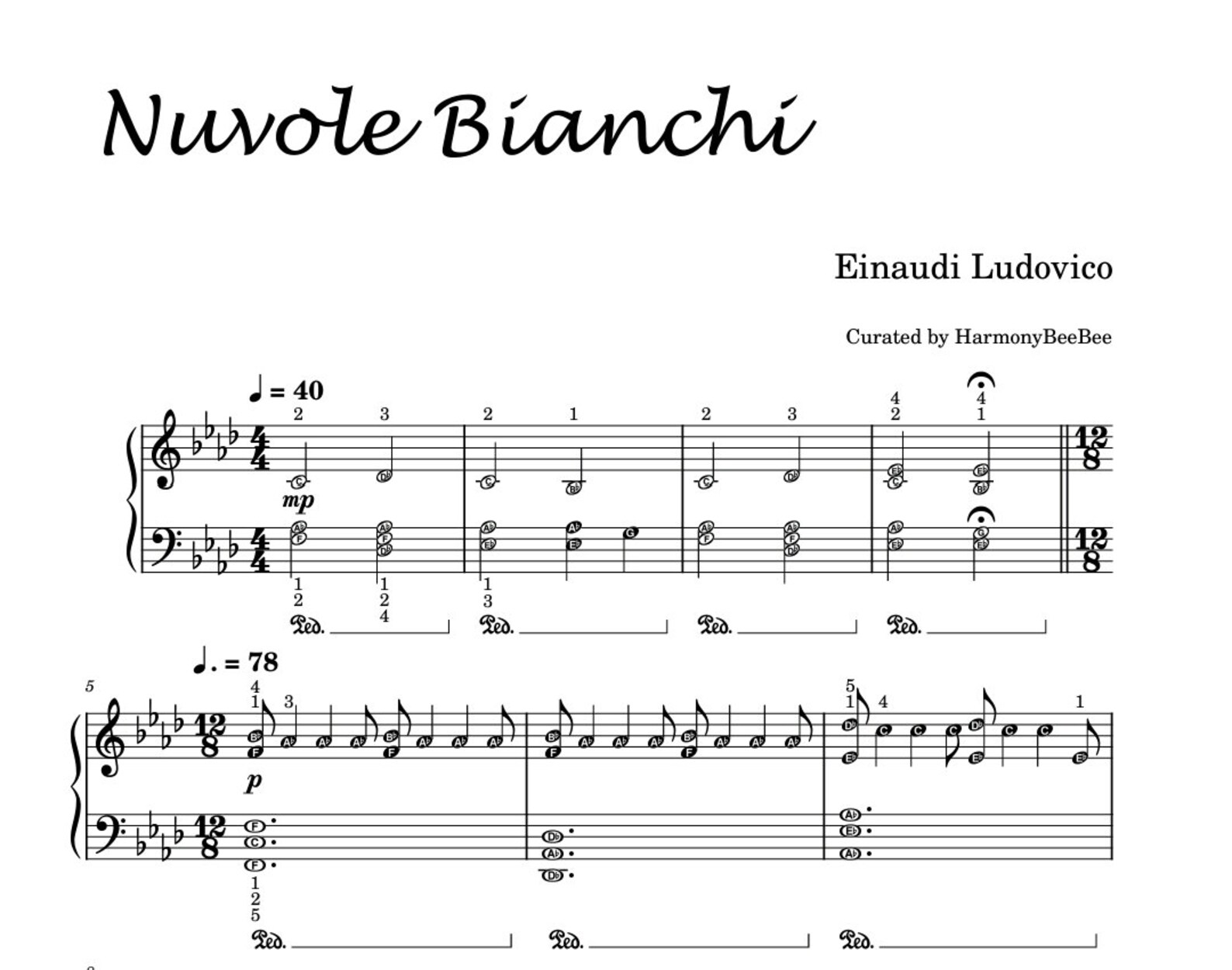
Start with the left hand. It’s just a few repeating notes. Boring? Yes. Essential? Also yes.
Keep your left hand loose. If your wrist is stiff, you’re doing it wrong. Pretend it’s a wet noodle that happens to have fingers.
Now add the right hand. It plays this sweet, wandering melody. It goes up, down, and then up again like it’s looking for a snack.
Do not try to sync both hands perfectly. That’s the trick. The magic is in the human flop.
Step Two: Embrace the Sustain Pedal
Here’s the unpopular truth: The sustain pedal does 90% of the work. Your foot is the real star. Your fingers are just backup dancers.

Press the pedal down at the start of each chord. Hold it. Hold it longer. Hold it until your leg cramps.
When you finally release, do it slowly, like you’re letting go of a grudge. This creates that dreamy, watery sound everyone loves.
If you forget to change the pedal, congratulations. You’ve made a beautiful mess—like spilled coffee on a wedding dress.
Step Three: The Middle Section (The Panic)
About two minutes in, the piece gets louder. More notes appear. Your heart rate spikes.

Don’t speed up. Seriously. Do. Not. Speed. Up. Speed is your enemy. Feelings are your friend.
Play those extra notes with the same lazy confidence as the opening. Imagine you’re walking through a fog, not running from a bear.
If you mess up a note, just stay in the rhythm. Nobody will know. I won’t tell. The piano won’t tell. The ghost of Ludovico Einaudi won’t tell.
Step Four: The Ending (The Letdown)
The final chords are soft. They repeat. They fade. This is the hardest part—not because it’s difficult, but because you want it to be over.
Resist the urge to hammer the last note. Play it like a whisper. As if you’re telling the piano a secret.
Lift your hands. Let the pedal ring out for three full seconds. Then, and only then, you may take a dramatic breath.
Final Thoughts (And a Confession)
In all honesty, half the battle is just looking serious while you play. Furrow your brow. Close your eyes occasionally. That’s worth ten points of musicality.
Also, record yourself. You’ll hate it. Then you’ll play it again and hate it less. That’s called progress.
Remember: “Nuvole Bianche” is not about playing the right notes. It’s about making your audience feel like they’re in a meditation app—while your own brain is screaming “WHERE’S THE BEAT?”
So go ahead. Sit down, press that pedal, and embrace the wobble. You’ll be fine. And if not, you’ll at least look very emotional while failing.
That’s a win in my book.