
How To Hack Imvu Credits On Phone
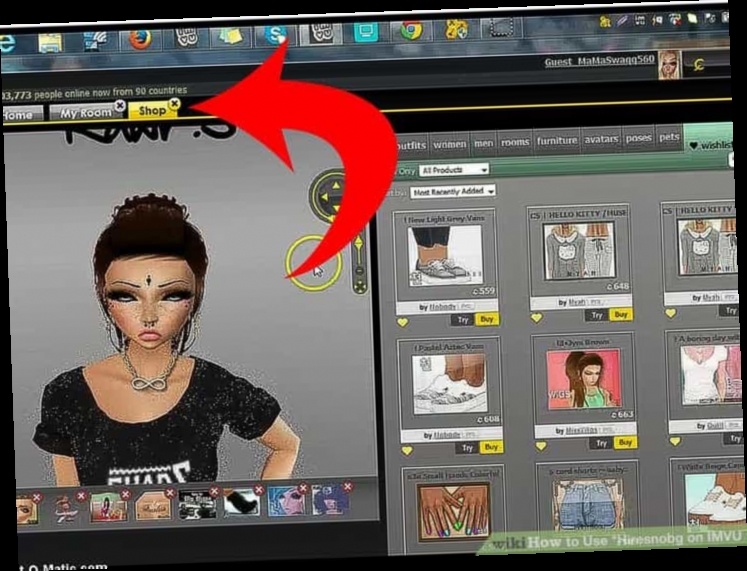
The glow of your phone screen in a dark room, the soft ping of a new message, and the sudden, visceral urge to refresh your IMVU credits balance—only to be met with that familiar, hollow zero. We’ve all been there. IMVU, the sprawling 3D social universe that’s been a digital playground since 2004, runs on a deceptively simple currency: credits. They buy your avatar’s designer threads, that penthouse suite, and the virtual cocktails that keep the party going. But while the platform has evolved from a desktop-only novelty to a mobile-first behemoth, the economics of status have remained stubbornly rigid. Credits cost real money, and for the average user, that’s the friction. This is where the shadowy folklore of the "credit hack" enters, a seductive whisper promising VIP status without the bill. But as with any tale of digital alchemy, the truth is far more complex—and far more dangerous than a simple cheat code.
Let’s be brutally honest from the outset: there is no legitimate way to "hack" IMVU credits on your phone in the way the dark web fantasy suggests. The vast majority of "hack generators" you see on YouTube or dodgy forums are malware-laced honeypots designed to steal your login credentials or hijack your device. However, the concept of hacking in this context has a rich history that predates smartphones. In the mid-2000s, "credits hacking" was a rite of passage for bored teens, often involving phishing fake login pages or exploiting third-party APK files on old Android tablets. Today, the mobile landscape has shifted the game entirely. The issue isn't about breaking encryption or rewriting code; it's about understanding the social engineering that fuels the desire for free currency. The real "hack" lies in recognizing that your craving for virtual wealth is a psychological lever that scammers pull with terrifying precision.
The Psychology of Digital Scarcity and the FOMO Economy
To understand why people fall for credit hacks, you have to look beyond the code and into the human brain. IMVU is a masterclass in digital scarcity. The platform thrives on limited-time items, exclusive "birthday" bundles, and seasonal sales that create a frantic, dopamine-driven rush. Your avatar is an extension of your identity, a carefully curated digital doll that reflects your aesthetics, mood, and social standing. When you see a friend’s avatar rocking the latest neon aura or a rare animated pet, your brain registers a status gap. This isn't just vanity; it's evolutionary. In our ancestral past, status signaled survival. Today, it signals a virtual badge, but your amygdala doesn't know the difference. The "hack" preys on this primal need, offering a shortcut to close the gap between your current reality and your aspirational self.
Must Read
Scammers exploit this with a surgical precision that would make a behavioral economist blush. The classic mobile hack tool—a fake website promising "10,000 credits for free"—doesn't actually try to hack IMVU’s servers. Instead, it asks you to enter your username and password, and frequently, a "human verification" step that downloads a malicious APK or signs you up for premium SMS subscriptions. The psychological trick is the illusion of agency. You feel like you're outsmarting the system, participating in a covert operation. This false sense of control is intoxicating. The cultural impact here is staggering; we've normalized the idea that digital wealth should be free, a bizarre entitlement that we don't apply to physical goods. You wouldn't walk into a Gucci store and demand a free bag because you saw a TikTok about a "store hack," yet thousands of users daily attempt the digital equivalent, often losing their actual accounts in the process.
The darker fun fact here is that some of these "hack" pages have been running for over a decade, unchanged in their design. They are digital fossils, a testament to the enduring power of a simple promise. They bait users with the allure of the "secret," knowing that the secret doesn't exist, but the fear of missing out—the FOMO—is so strong that it overrides rational thought. The most successful scams aren't those with sophisticated exploits; they are those that tap into a universal narrative of wanting something for nothing. The "hack" isn't a breach of IMVU's firewall; it's a breach of your better judgment, facilitated by a sleek, mobile-optimized interface designed to look just trustworthy enough to fool you while you're half-watching TV.
Real-World Scenarios: The Cautionary Tales and The Legit Workarounds
Let’s paint a picture: meet Sarah, a 21-year-old college student. She’s scrolling through IMVU on her iPhone, seeing a friend show off a $50 USD limited-edition motorcycle. The "Buy Credits" button mocks her. Her bank account is tight. She remembers a YouTube comment saying, "I got 5k free credits by using this app!" She clicks the link, downloads an APK (bypassing the App Store's restrictions), and enters her IMVU password. Two days later, she tries to log in and gets a "password incorrect" error. Her avatar is stripped, her account is banned for "suspicious activity," and she’s out her original purchased credits. This is the most common scenario: the disappointment loop. The worst-case scenario isn't just a lost account; it's identity theft. That same APK might contain a keylogger that harvests your email and banking details, turning a fun virtual shopping spree into a real-world financial nightmare.

Now, consider a different, more optimistic scenario. Meet James, a freelance graphic designer. Instead of seeking a hack, James decided to play the system using legitimate, albeit time-consuming, methods. He discovered the power of IMVU’s official mobile offers wall. While technically not a hack, these "Get Credits for Downloading Apps" portals are the closest to a legal loophole. On certain weekends, IMVU runs 2x or 3x credit multipliers for completing surveys. James spends a Saturday binge-watching a series, tapping through a few spammy survey links, and accumulating 3,000 credits. It's tedious, and it doesn't yield the 100k credits that scammers promise, but it's safe. The key insight here is patience. The "hack" isn't about magic; it's about exploiting the platform's own marketing budget. Additionally, James learned the art of the "trade." He buys low-ticket items during flash sales and resells them in the user marketplace a week later for a markup. This is the true meta-hack: understanding virtual economics.
A third scenario involves the dark side of social engineering. A group of users on Discord created a "credit generator" that actually worked—for a while. It didn't touch IMVU's servers. Instead, it used stolen credit card numbers to purchase credits and send them to a relay account. This is credit card fraud, a felony. The "hackers" enjoyed a brief period of luxury before law enforcement traced the IP addresses. The lesson here is that the barrier between a "fun hack" and a "federal crime" is virtually non-existent. The credits you receive from such methods are inevitably removed when the fraud is detected, leaving you with a charged-back account and potentially a permanent ban from the platform. For every "successful" hack story you hear, there are a thousand silent bans, and a handful of legal warnings. The actionable takeaway is to treat any promise of free credits with the same suspicion you would a stranger offering you cash in a dark alley.
Finally, the most practical "hack" for the mobile user is account recovery hygiene. Most people lose credits not to a hacker, but to their own flawed password management. Use a password manager to generate a unique, 16-character password for IMVU. Enable Two-Factor Authentication via your authenticator app. This prevents the easiest vector of attack: credential stuffing from other data breaches. The psychological angle here is that you must view your IMVU account as a financial asset. Even if you only have 500 credits, they have value. If you treat your virtual wallet with the same security as your real bank card, you cut off 90% of the "hack" attempts inherent to the platform.
The Ultimate FAQ: Unmasking the Myths
Is there actually a working IMVU credits generator for mobile?
No. Absolutely not. A "generator" that requires you to input your username and password is a phishing tool, plain and simple. When you use one, you're not generating credits; you're handing over your account keys. The code that runs those generators is usually a simple script that sends a "success" message to the browser while simultaneously logging your credentials to a server in a foreign country. If such a generator existed and actually worked, IMVU would patch it within hours, but more critically, the creators would likely be sued into oblivion by the parent company SULAKE, Inc.
From a technical standpoint, IMVU's credit ledger is backend-centralized with robust server-side validation. They don't store credit totals on your phone. Even if you successfully modified the app's memory on a rooted Android device to display 999,999 credits, the second you make a request—like buying a hat—the server checks the valid ledger, sees you have 0, and rejects the transaction. The only "generator" that works is the official "Earn Credits" page, which offers micro-tasks in exchange for small amounts, a system optimistically designed to prevent you from ever accumulating enough for a full set of furniture.
What happens if I use a hack and get caught?
The consequences are swift and severe. The most common penalty is a permanent account termination. IMVU's anti-fraud team uses heuristic analysis to flag accounts that suddenly gain large amounts of credits without a corresponding payment method. Once flagged, they will audit your transaction history. If they find a fraudulent chargeback or suspicious activity, they don't just ban your account; they may also ban your device ID, preventing you from making a new account on the same phone.
Beyond the ban, you risk your personal data. Hack tools often request "permissions" like access to your contacts, SMS, and storage. If you grant those, you're not just giving them your IMVU password; you're giving them a gateway to your entire digital life. They can use your SMS permissions to intercept two-factor authentication codes for your email, banking, or even your iMessage account. The "catch" isn't just losing a virtual avatar; it's the potential for real-world identity compromise that takes months to repair.
Can I hack credits using a VPN or changing my location?
This is a persistent myth. A VPN changes your IP address to make it look like you're in a different country. Some users believe this allows them to exploit regional pricing for credits (e.g., buying credits in a country with a weaker currency). While IMVU does have regional pricing, they use your payment method's billing address, not your IP address, to determine the price. If your PayPal account is US-based, a VPN won't change the price you see.
However, a VPN is not a hack; it's a privacy tool. Using one won't get you banned, but it won't get you free credits either. The only "location hack" that historically worked was using a foreign Google Play gift card to purchase credits at an old exchange rate, but IMVU has since closed that loophole by tying credit purchases to your account's registered currency. In short, you're wasting your time trying to trick the geo-location, because the system is primarily locked to your billing identity, which is much harder to fake.
Are there any legit mobile apps that offer IMVU credits as rewards?
Yes, but not the ones you see advertised in flashy banner ads on sketchy sites. IMVU partners with reputable reward platforms like Tapjoy and AdGem, which are integrated directly into the IMVU mobile app's "Earn Credits" section. These services offer credits for you to install other games, watch short video ads, or complete sign-up offers for services like streaming trials or snack boxes. This is a safe, sanctioned way to get a trickle of credits.
The catch is the "cost per effort" ratio. You might spend 30 minutes downloading and leveling up a random mobile game to level 10, only to receive 200 credits—which is roughly equivalent to $2 USD. Compared to the 10,000 credits that a fake hack promises, it feels laughable. But here's the dark fun fact: these reward offers are frequently fraud-checked. If you uninstall the game too quickly, the credits get revoked. If you use a burner email for the survey, they don't pay out. You have to treat these offers like a part-time job, with meticulous attention to the fine print, to actually profit.
Why do I see so many YouTube videos showing people with millions of credits?
Those videos are the modern equivalent of stage magic. They are either edited with screen-ripping software, or they use a private server emulator. A private server is a fan-made clone of IMVU's software, running on a local host, where the creator gives themselves admin tools to spawn infinite credits. They then record themselves buying everything, overlay a caption saying "How to hack IMVU in 2025!!" and link their bio to a malicious site.

The second, more sinister reason is that they are showing a "credit transfer" scam. They claim that if you send them a small "processing fee" (e.g., $20 via CashApp), they'll use their "hack" to send you 100k credits. They then take your $20 and either block you or vanish. The million-credit account you see in the video was likely bought with stolen credit cards, and the perpetrator is using it as bait. Remember, if someone has a magical way to generate infinite currency, they don't need your $20 fee. That logical inconsistency is the tell.
Reflecting on this digital microcosm, the pursuit of free credits is a mirror into our own relationship with effort and reward. We live in a world of instant gratification, where a swipe delivers a meal and a tap orders a car. It's no wonder we crave that same immediacy for virtual status. The desire to "hack" isn't about coding; it's about wanting to bypass the grind, to feel that we've outsmarted the gatekeepers of taste and wealth. Yet, the most profound truth of the IMVU economy—and perhaps life itself—is that the things we earn through persistence, even if they are just pixels, hold more value than those we steal. The anxiety of losing a hacked account is far worse than the slow tedium of saving up via surveys.
The "hack" you're truly looking for isn't a piece of software; it's a shift in perspective. The next time you feel the pang of envy seeing a rare item in a user's room, acknowledge that the feeling is a design choice, a gentle nudge to spend money. Recognizing that manipulation is your strongest defense. Instead of seeking a shortcut that leads to a metaphorical dead-end, embrace the long game. Use the official earn centers, trade wisely, and understand that the avatar you build over months of careful budgeting is a story—a testament to your dedication that no cheater can replicate.
Ultimately, your phone is a powerful tool, but the most powerful software on it is your decision-making. In the vast, neon-lit bazaars of IMVU, the only true security is your awareness. The digital ghosts of "free credits" will always haunt the forums, promising paradise, but they deliver only loss. So, keep your password strong, your skepticism sharper, and your avatar fashionable—but let your integrity be the rarest item you ever own. That is the only hack that ever truly works.


![[H#]IMVU Free Credits Hacks Generator 2021 No Verification - Asset Store](https://assetstorev1-prd-cdn.unity3d.com/key-image/166b8922-c058-4871-8936-1ec59d6b370b.png?v=1)