How To Exercise As A Truck Driver

The open road is a masterclass in applied physics. Every mile you log, every pound of freight you haul, represents a controlled transfer of kinetic energy, managed by torque, inertia, and friction. Yet, the very machine that commands your professional focus is a static environment for your biology. Your body, designed for locomotion and load-bearing, is suddenly subjected to a state of enforced sedentary posture for upwards of 11 hours a day. This isn't just an inconvenience; it's a physiological contradiction. The heart, a muscular pump, thrives on demand; the skeletal system, on compressive loading; and the metabolic pathways, on fluctuating glucose levels. A truck cab, however, offers none of that stimulus.
To counter this, you cannot rely on sporadic, heroic workouts. You must engineer a system of micro-dosing and strategic, high-efficiency training that works with the constraints of your schedule and environment. The data is unambiguous: prolonged sitting is associated with a 112% increase in the risk of diabetes and a 147% increase in cardiovascular mortality compared to those with less sedentary time. But here’s the empowering counterpoint: consistent, targeted exercise can completely negate these risks. This isn't about finding two hours in the day; it's about reprogramming the 23 hours you spend living in a metal box on wheels. We’re going to break down the biomechanics, the metabolic chemistry, and the logistical hacks to turn your cab into a functional fitness studio.
The core mechanism you are fighting is metabolic suppression. When you sit, the large muscles of your glutes and quadriceps are inactive. This inactivity shuts down GLUT-4 transporters, the insulin-dependent proteins on your cell membranes that allow glucose to enter the muscle tissue. With these transporters idle, blood sugar remains elevated, prompting the pancreas to over-secrete insulin. Chronically high insulin levels lead to insulin resistance, fat storage, and systemic inflammation. The antidote is muscle contraction. Every single contraction, no matter how small, signals the cell to open its glucose gates, effectively vacuuming sugar out of the bloodstream. Your exercise strategy, therefore, must prioritize frequent, low-intensity movement to 'switch on' these transporters, coupled with short, explosive bouts to stimulate growth hormone and mitochondrial density—the power plants of your cells.
Must Read
The Biology of the Idle Engine: Circulation, Pressure, and Joint Health
Beyond glucose, you are battling hydrostatics. The human circulatory system is heavily reliant on the skeletal muscle pump—the rhythmic squeeze of leg muscles that propels venous blood back to the heart against gravity. In a seated position for hours, this pump is offline. Blood pools in the lower extremities, increasing venous pressure. This leads to swollen ankles (edema) and significantly increases the risk of deep vein thrombosis (DVT)—a blood clot that can be fatal if it travels to the lungs. The venous return deficit also reduces stroke volume, forcing your heart to beat faster to maintain cardiac output, elevating your resting heart rate and placing unnecessary strain on the cardiovascular system.
Simultaneously, your intervertebral discs—the shock absorbers between your spinal vertebrae—are undergoing a process of osmotic compression. They lack a direct blood supply; instead, they absorb nutrients and expel waste through a process of imbibition, where fluid is squeezed out and drawn back in like a sponge. Sitting compresses these discs, squeezing fluid out. If you don't create extension and movement, the 'sponge' dries out, leading to disc degeneration and chronic lower back pain—the leading medical complaint among professional drivers. Furthermore, the static flexion of the hips from driving shortens and tightens the iliopsoas muscle group. This pulls your pelvis into an anterior tilt, overworking the lumbar erectors and creating a cascade of dysfunction that leads to sciatica and crippling discomfort.
The chemical price of this inactivity is a spike in cortisol, the stress hormone, and a suppression of BDNF (Brain-Derived Neurotrophic Factor). BDNF is a protein that acts like fertilizer for the brain, supporting neuroplasticity and memory. Without exercise, BDNF levels plummet, leading to mental fog, slower reaction times, and increased anxiety—critical liabilities for a driver. The good news is that this entire cascade is reversible. A single bout of high-intensity interval training (HIIT) can increase BDNF levels by up to 400% for several hours. You are not just fighting fat; you are fighting for your cognitive edge, your reaction time, and your long-term neurological health.
The Pragmatic Protocol: Micro-Bouts, Cab-Centric Calisthenics, and Resistance Bands
Forget the gym membership you'll never use during a cross-country haul. Your new gym is roughly 10 square feet, and it moves. The most effective strategy is the Scheduled Disruption Protocol. Set a vibrating alarm on your smartwatch or phone for every 45 minutes while driving. When it vibrates, do not ignore it. This is your cue for a 60-second 'disruption.' Your goal is to elevate your heart rate and stimulate the GLUT-4 transporters. While keeping your eyes on the road and hands on the wheel is non-negotiable, you can perform isometric core contractions. Simultaneously brace your abdominal wall as if about to take a punch, squeeze your glutes together hard, and press your upper back into the seat. Hold for 10 seconds, release for 5. Repeat 4 times. This isometric action raises intra-abdominal pressure, stabilizes the spine, and triggers a measurable spike in muscle activation, without sacrificing safety.

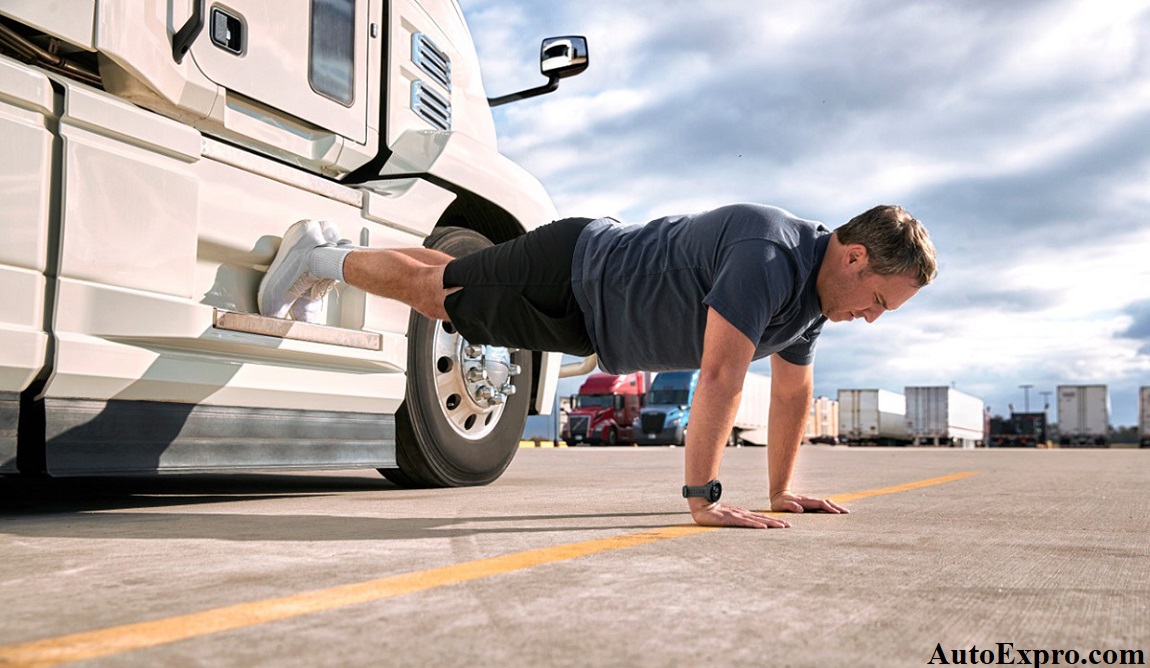
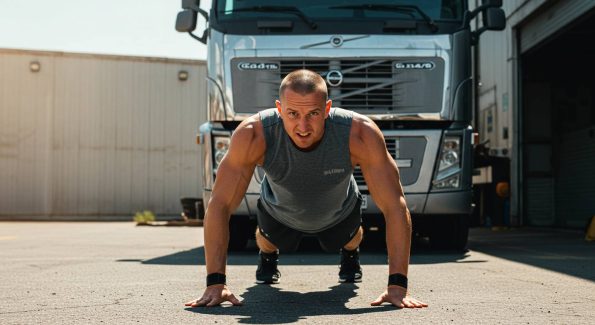
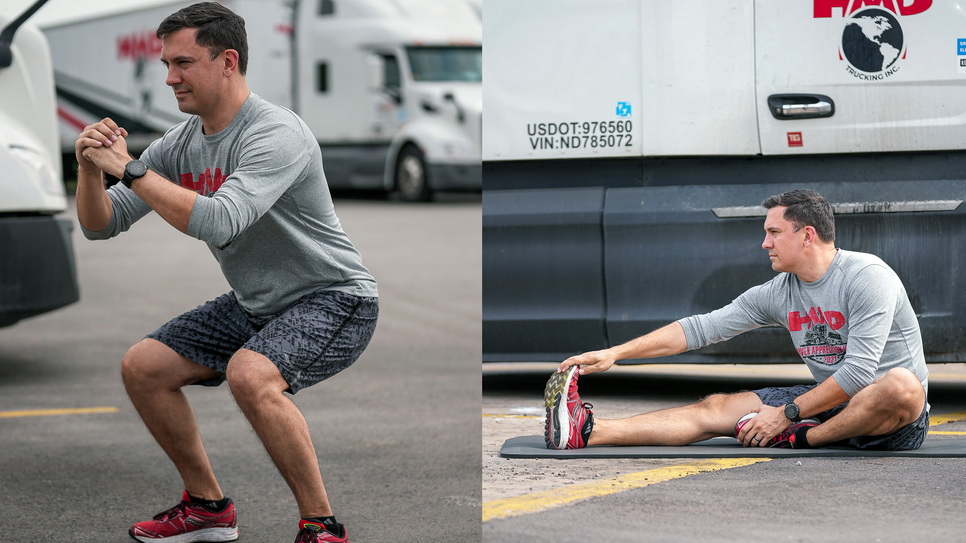
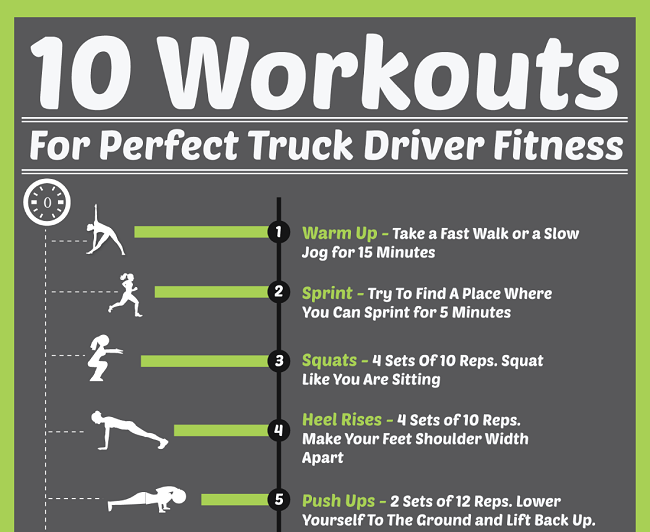
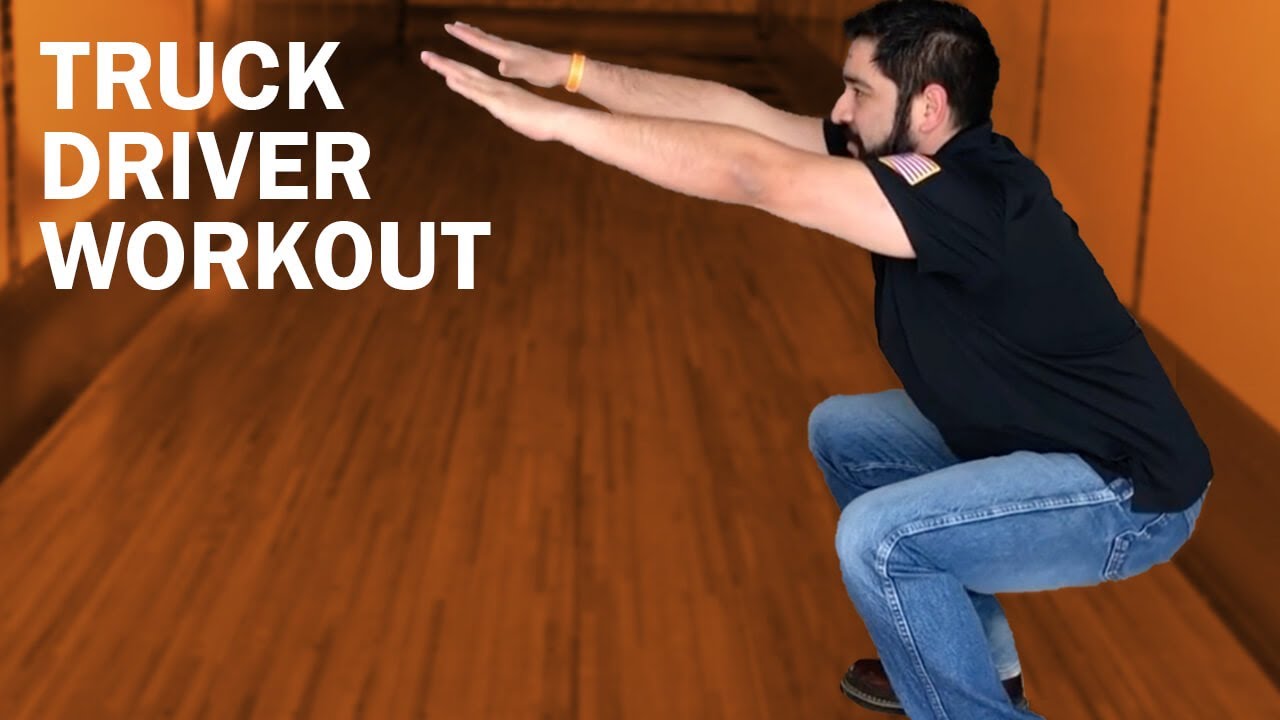
During your legally required 30-minute break, you have a mandatory window for metabolic magic. Do not spend this time only eating. Allocate 15 minutes to a circuit of cab-centric calisthenics. Stand outside the passenger door, using the sturdy side step for support. Perform 3 sets of 15 incline push-ups on the hood of the truck (check for heat after long drives) or the side of the trailer. This targets the chest, triceps, and anterior deltoids. Follow this with 3 sets of 20 bodyweight squats, driving your hips back and down as if sitting in a chair. The key is to lower yourself with a 3-second eccentric (lowering) phase to maximize muscle fiber recruitment. Finish with 3 sets of 10 step-ups using the cab step, focusing on driving through the heel of the front foot to engage the glutes. This entire session takes under 10 minutes but produces a significant hormonal response, increasing testosterone and growth hormone acutely.
The insecurity of a moving truck is history. To build serious strength and fix posture, you need resistance bands. These are the ultimate trucker's tool: they weigh less than a pound, pack into a glovebox, and provide variable resistance. During your break, anchor a band to a fixed pole or the truck's hitch (ensure it's secure). Perform seated rows: sit on the trailer edge, feet extended, pulling the band towards your navel, squeezing your shoulder blades together. This directly counteracts the rounded-shoulder posture of driving. Then, perform banded face pulls to target the rear delts and rotator cuff—crucial for shoulder health. For lower-body strength without impact, do banded lateral walks. Loop a band around your ankles and step sideways for 20 steps each way. This strengthens the gluteus medius, vital for knee and hip stability when you eventually get off the truck.
Nutrition becomes your exercise amplifier. Ingesting 20-30 grams of protein within 30 minutes after your micro-workout is critical. This protein synthesis spike repairs the micro-tears you just created. Stock a cooler with Greek yogurt, hard-boiled eggs, beef jerky, or protein shakes. Hydration is not just about water; it's about electrolyte balance. Dehydration by just 2% (which is common in air-conditioned cabs) decreases performance by 10% and significantly impairs cognitive function. Use an electrolyte tablet in your water bottle—particularly one with sodium and potassium—to ensure your muscles are primed to contract efficiently. Every contraction you perform is a message to your body that you are not a sedentary organism; it's a demand for mitochondrial growth, capillary density, and bone density.
Finally, optimize your sleep. Sleep is when the body repairs, and growth hormone is released. The deep slow-wave sleep is non-negotiable for muscle recovery. To maximize it in a moving cab, use blackout curtains or a sleep mask to suppress melatonin-destroying light. Wear earplugs to block out diesel hum and traffic noise. The goal is to get 7 hours of quality sleep, which directly correlates with increased insulin sensitivity and reduced cortisol the next day, making your exercise more effective. Remember, you are not training for a marathon; you are training to maintain the physical and cognitive capacity to do a dangerous job safely for decades.

Frequently Asked Questions: Troubleshooting the Road Fitness Protocol
1. I have a physical job unloading freight some days. Do I still need to do these exercises?
Absolutely, but your protocol must be modified to avoid overtraining. The acute physical labor of unloading is an anaerobic event, often involving heavy lifting and static holds. This is vastly different from the metabolic and cardiovascular stimulus of cardio and calisthenics. The exercises are designed to address the specific postural distortions caused by sitting, not just to "burn calories." The seated load puts a compressive force on the L5-S1 disc at a rate of 130% of body weight; unloading freight adds another layer of stress.
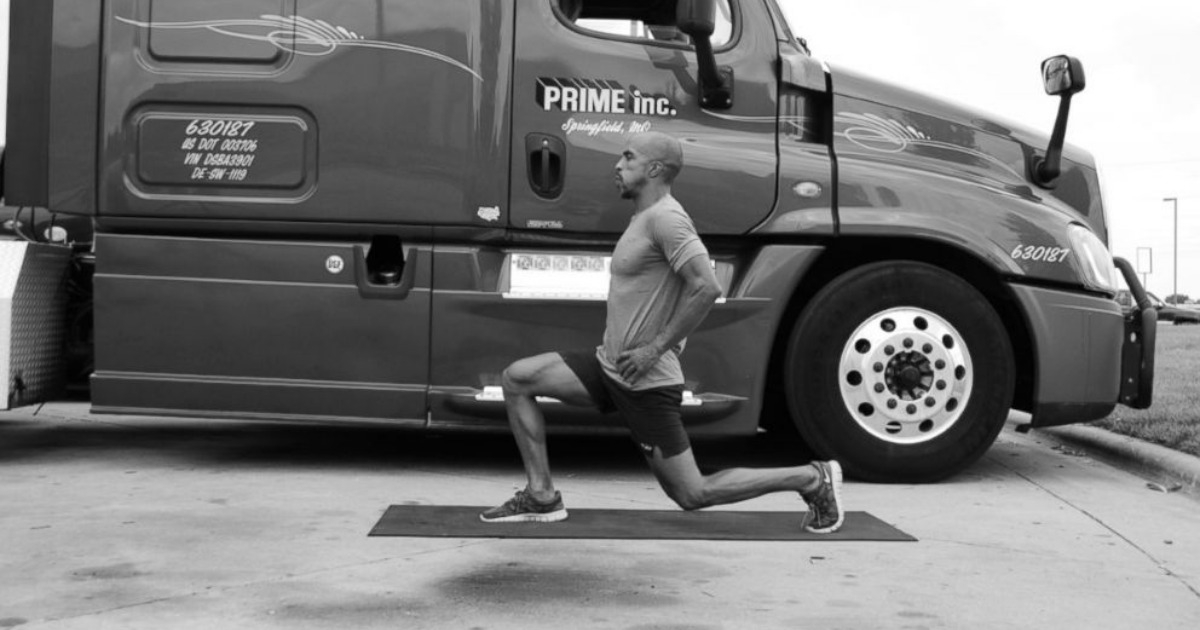
On days you work the dock, focus exclusively on mobility and isometric core work. Skip the squats and push-ups. Instead, perform the 45-minute isometric brace while driving, and use your break for 5 minutes of aggressive hip flexor stretching (lunges and pigeon pose) and thoracic spine rotations. This will help reset your posture and prevent the chronic back issues that come from combining static sitting with explosive lifting. Listen to your body's systemic fatigue; if your resting heart rate is 10 BPM higher than normal, your CNS is fried, and you need recovery, not more volume.
2. I'm worried about safety. How can I do squats and rowing next to a busy interstate without looking foolish or getting hurt?
Safety is paramount, and the "foolish" feeling dissipates quickly when you realize you are being more professional about your health than the vast majority of drivers on the road. Your priority is finding the quietest corner of the rest area or truck stop. Park at the far edge, closest to the fence or truck idling lane, offering a physical buffer against traffic. Ensure your engine is off, the parking brake is engaged, and you are well away from the path of incoming trucks.
When using resistance bands, always attach them to solid, immovable points like a concrete bollard or the heavy-duty steel hitch receiver, never a plastic bumper or a side mirror. Check for fraying on the bands before each use. Perform the exercises at a controlled tempo—no ballistic, jerky movements. If you are self-conscious, wear sunglasses and a hat; they provide practical eye protection and a psychological barrier. The 30-minute break is not just a regulation; it's your legal, protected workout window. Use it. Your health is worth 15 minutes of strategic effort, regardless of what others might think.
3. I can't do push-ups or squats due to a knee or shoulder injury. What is my alternative?
This is where the resistance band becomes your best friend. For knee issues, you can skip loaded squats entirely. Instead, perform banded terminal knee extensions. Anchor the band to a low point, loop it behind your knee, and repeatedly straighten your leg against the resistance. This hits the vastus medialis oblique (the teardrop muscle) which is crucial for knee stability and tracking, without compressing the joint. For lower body stimulus, perform seated banded hip abductions and adductions to work the glutes and inner thigh.
For shoulder injuries, avoid pressing movements entirely. Use the band for isometric external rotation. Hold the band with your elbow at a 90-degree angle and rotate your forearm outwards against the resistance. This strengthens the rotator cuff without aggressive impingement. For your cardiovascular system, instead of push-ups, do high-knee marching in place or chair stand-ups from the passenger seat ensuring the seat is fully reclined, using only your legs to press the floor. Always prioritize pain-free range of motion. The goal is to move the joint without sharp pain. If it hurts, stop and find a band exercise that targets the same muscle group without reproducing the pain.
4. I tend to retain a lot of water in my legs during a 10-hour shift. How does exercise help, and what's the quickest way to alleviate it?
The edema is a direct result of the hydrostatic pressure failing to return blood upward. The calf muscles are nature's second heart. When they contract, they squeeze the deep veins, forcing blood back to the chest. Your 45-minute isometric glute squeezes help, but a more direct solution is ankle pump sets. At every traffic light or while at a weigh station, perform 30 rapid calf raises with your toes on the floor—pointing and flexing the feet aggressively. This activates the soleus muscle, a powerful pump that specifically reduces venous pooling.
Beyond exercise, you must manage your sodium-to-potassium ratio. High sodium from processed road food causes fluid retention. Increase your potassium intake (bananas, unsalted nuts, spinach) to counter sodium. More critically, during your 30-minute break, take a brisk 5-minute walk immediately after the leg exercises. The rhythmic impact and contraction will rapidly re-circulate the pooled fluid, often causing an immediate need to urinate as the kidneys receive the surge in blood volume. Wearing compression socks (Grade 2, 20-30 mmHg) is the most effective scientific hack. They provide external pressure of 15-20 mmHg, reducing the vein's diameter and increasing blood flow velocity by up to 40%, significantly mitigating the swelling and DVT risk.
5. How do I maintain momentum when I'm driving nights and my circadian rhythm is inverted?
Night driving wreaks havoc on your anabolic hormones. Cortisol peaks in the morning and usually drops at night, but when you invert your schedule, this rhythm flips incorrectly, often leading to catabolic states where muscle breaks down. The most critical adjustment is to perform your exercise immediately upon waking, before you sit in the driver's seat. Do not eat first. A 10-minute blood-flow-focused circuit (jumping jacks, air squats, push-ups) upon waking stimulates cortisol to help wake you up, but it also signals your muscles to switch on for the day. After this, consume your protein, then start your shift.
Respect your body's recovery window. Your "deep sleep" will occur during the day. It is imperative that you treat this sleep with the same rigidity as a daytime sleep. The exercise will actually help reset your master clock in the suprachiasmatic nucleus (SCN) of the brain. Vigorous movement signals to the brain that it is 'day' time for your body (activity phase), making your post-shift sleep deeper and more restorative. Consistency trumps intensity. A 100% consistent 10-minute routine daily is infinitely better than a heroic 1-hour workout once a week, especially when managing a variable circadian rhythm. Track your daily steps and weekly workout frequency. Data shows that drivers who perform maintenance exercise at a consistent time each day have significantly lower sick days and fewer injuries.
Respecting the science of the sedentary, high-stress environment is the ultimate act of professional responsibility. You are managing a multi-ton vehicle; a single second of cognitive delay can be catastrophic. By systematically engineering movement into your schedule, you are directly optimizing your brain chemistry and reaction times. You are not merely exercising to look better; you are hedging against metabolic disease, disc degeneration, and mental fatigue. You are taking back control of the biological machine that operates the mechanical one.
This work isn't glamorous. It's a series of unseen, meticulous choices made in a 10-square-foot space. But these micro-decisions compound. The driver who finishes a 20-year career with intact knees, a functioning back, and sharp reflexes didn't get lucky. They understood that the resistance band is more valuable than the gear shift. They treated their body like the load-bearing engine it is—one that requires constant, intelligent maintenance to keep hauling across the miles. The road is long, but the science of strength is longer.