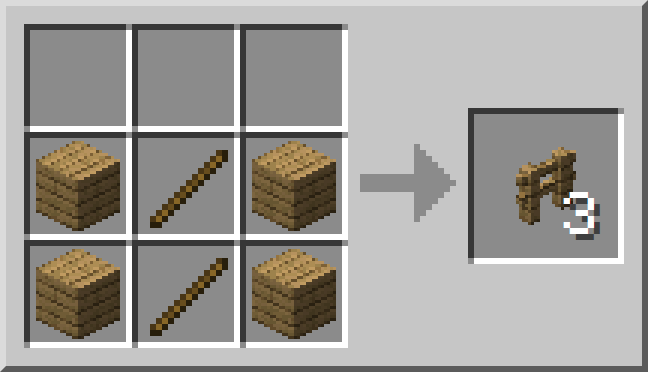
How To Build A Barrier In Minecraft

In the sprawling, procedurally-generated universe of Minecraft, where the sun rises over pixelated vistas and creepers hiss in the shadows, the concept of a “barrier” is more than just a building block. It’s a philosophical statement. For over a decade, players have carved out their territories, not just to keep the zombie hordes at bay, but to declare to the universe: this is mine. The barrier is the first act of civilization in a world that is fundamentally chaotic, a digital echo of the walls that protected our ancestors from the sabre-toothed tigers of the Pleistocene. Today, building a barrier isn’t just about stacking cobblestone; it’s about understanding the psychology of safety, the economics of resource management, and the subtle art of spatial domination.
But here’s the twist: a barrier in Minecraft is rarely just a wall. It’s a system. Whether you’re a redstone engineer crafting an invisible force-field of command blocks or a survival purist laying down a moat of lava, the barrier is a macro-decision with micro-consequences. It dictates how you experience the game, how you interact with the environment, and even how you sleep at night (virtual sleep, but still). As we delve into this guide, we’re not just looking at blueprints; we’re looking at the intersection of defensive architecture and human instinct, wrapped in a layer of 16-bit charm.
The Psychology of the Perimeter: Why We Build Walls
It’s a dark, funny fact that the most common cause of death in Minecraft isn’t a creeper explosion or a fall from a mountain—it’s a lack of foresight. Players die because they didn’t build a barrier. This mirrors a real-world cognitive bias known as the normalcy bias, where we assume the current peaceful state will continue until a hissing sound tells us otherwise. A barrier is a physical manifestation of planning for future catastrophe. When you encircle your base, you are essentially negotiating with your own anxiety, telling your brain that the pixelated wolves and skeletons are a solvable problem, not a constant threat.
Must Read
Furthermore, the type of barrier you choose reveals your playstyle personality. The minimalist who builds a single, thin oak fence is an optimist, believing the world is mostly safe. The paranoid architect who digs a 5-block deep trench, fills it with cactus, and then builds a wall on top of that is a pragmatist who has been burned (literally) by a zombie with a door fetish. There’s also a deeper cultural impact here: the concept of the “safe zone” in Minecraft is so potent that it has spawned entire server economies based on claiming land. The barrier isn't just a tool; it's a currency of trust. If you see a well-fortified base on a multiplayer server, you immediately assume the player has resources, time, and a strong will to survive.
Beyond the practical, there is a profound aesthetic psychology. A barrier made of mismatched blocks screams "I'm just trying to survive." But a barrier made of polished deepslate, with subtle gradient shading and a clean observation tower, whispers "I am the ruler of this domain." This is the Cornell Box effect in gaming—we judge the interior by the quality of the exterior. A good barrier isn't just about strength; it's about signaling. It tells the world (and any hostile mobs) that you are a force to be reckoned with, a player who understands that form and function are not opposed, but are two sides of the same diamond pickaxe.
Let’s not forget the griefers. In the dark underbelly of Minecraft culture, the barrier is a challenge, not a deterrent. A simple wall is a blank canvas for a TNT cannon. A complex wall is an invitation for an elytra flight-over. This creates a fascinating arms race where the barrier builder must think like an attacker to survive. It’s a digital game of chess, where the fortress is your king, and the redstone tripwires are your bishops. This psychological arms race is what keeps the game fresh, forcing you to evolve your defenses as your understanding of the game’s mechanics deepens.
The Blueprint of Impenetrability: A Tiered Approach to Defense
Let’s get practical. You’re not building a castle for a king; you’re building a fortress for a digital wanderer. We’ll break this down into three distinct, actionable tiers. The first tier is the Survivalist’s Stopgap. You’ve just spawned, you have 32 pieces of cobblestone, and night is falling. You cannot build a wall; you must build a hide. Dig a 2x1x2 hole into a hillside, block the entrance with dirt, and wait it out. This isn't a barrier in the traditional sense, but it's the seed of one. The takeaway here is that any barrier, even a temporary one, should be built with escape in mind. Always leave a block to break inward, never build a trap for yourself.

The second tier is the Classic Wall Plus Moat. This is where we start having fun. Begin with a perimeter of cobblestone, but make it three blocks high—two for the mobs, one for the aesthetic. On top of that, add a lip of fence posts to prevent spider climbing. Now, the moat. A dry moat is useless; fill it with water to push mobs away, or better yet, fill it with lava. But here’s the pro-tier tip: use a single block of water as a source, and then create a lip on the inside of the wall so the lava doesn’t burn your base. This is where the fun facts come in—endermen cannot teleport if they are in water or lava if they are affected by the block? No, they can teleport out, but they will take damage first. The true counter to endermen is a two-block overhang: they are 3 blocks tall, so they can’t walk under a 2-block high gap. A simple overhang on your wall turns them into impotent teleporters.
The third tier is the Redstone Fortress. This is for the engineer with a calculator. You’re not building a wall; you’re building a logic gate. Start with an outer layer of obsidian (blast-proof). Then, wire up a series of sticky pistons connected to a pressure plate that triggers a burst of lava from dispensers above the entrance. This is the "welcome mat." However, the most effective barrier in this tier is not physical; it’s the door. An iron door is good, but a wooden door is a hazard. The final step is the moat of the redstone era: the Pit of Slowness. Use Soul Sand lining a 4-block wide path, which makes mobs walk at a snail's pace, turning them into fish in a barrel for your bow. The key insight here is that your barrier should have a choke point—a single entrance that you control, rather than a wide-open wall.
Finally, let’s talk about the Invisible Barrier. In survival, this is built with glass—specifically, glass panes. They are cheaper than full blocks and have a lower profile. Place them on the top edge of your wall to prevent spiders, but leave a one-block gap to see out. This gives you a clear firing line. If you, feel like stepping into creative mode or using commands, the `/barrier` block is the ultimate flex—it shows a red texture to builders but is completely invisible to normal players. Using it around a nether portal is the classic trick, ensuring no zombie pigmen wander into your living room. The practical takeaway: always have a visual line of sight to your enemies. A barrier that blinds you is just a fancy coffin.
Common Pitfalls and Catastrophic Fails (And How to Avoid Them)
We’ve all been there. You spend two hours building a magnificent stone wall, only to realize you forgot to light the inside. You turn around to admire your work, and a creeper that spawned inside your perimeter detonates, blowing a hole in your precious barrier. This is the classic Internal Spawn Failure. The solution is a strict lighting policy: place torches on a grid of 8x8 inside your walls. Do not skip this. Mobs spawn in darkness, and your barrier is useless if the enemy is born within the womb of your defense. This is the dark humor of Minecraft—your best fortress is compromised by a shadow in the corner.
Another catastrophic fail is the Single Point of Entry. You built a huge wall, but you only have one door that leads directly to your chest room. A smart zombie (or a griefing player) will simply use that door. The fix is a two-door airlock system. Place one iron door, a small 3x3 room, and another iron door. Use pressure plates on the inside of each door, not the outside. This way, mobs can’t accidentally step on the outside plate and open the door, but you can exit easily. This adds ten seconds to your entry time but saves you from losing all your diamonds. As a fun fact, this is exactly how ancient castles used portcullises to create a killing zone—a trap for any enemy who managed to breach the outer gate.

The third pitfall is the Resource Over-Extension. You decide to build a wall around a 100x100 area out of diamond blocks. You spend days mining, only to realize you have no food, no weapons, and a wall that still has a 30-block gap. The barrier is useless until it is complete. The pro move is to build smaller, segmented chunks. Build one 20-block section, fortify it, light it, and move on. The mindset should be defense in depth—multiple layers of weak barriers are better than one incomplete strong barrier. A fence with a ditch behind it is more effective than a half-finished stone monolith.
Finally, the Watery Grave. You think, "I’ll just build my base on an island, that’s a natural barrier." While water slows down most mobs, you’ve forgotten the Drowned. These zombie variants swim, and they throw tridents. A 10-block water moat is their playground. The solution is to make the water flow—use signs to create a gentle current that pushes mobs away from you, or fill the moat with a single layer of lily pads to block their movement (they can't climb them). The greatest failing is assuming nature is a safe barrier. In Minecraft, nature is just another biome that wants you dead.
Frequently Asked Questions: The Deep Cuts
1. What is the absolute best material for a barrier in survival Minecraft?
The best material is paradoxically cobblestone. While obsidian is blast-resistant and deepslate looks gorgeous, cobblestone is abundant, renewable (thanks to generators), and has an honestly respectable 30 blast resistance. It will tank a creeper explosion easily. The real secret, however, is not the material itself, but the thickness. A 2-block thick cobblestone wall is functionally superior to a 1-block thick diamond wall, simply because it resists the shockwave of TNT better. For a truly impenetrable exterior, you layer the outside with regular stone bricks, then a core of cobblestone, then a smooth interior. The psychology is that you want to project an image of strength on the outside, but the inside should be a comfortable sanctuary. Don't waste diamonds on walls; save them for your tools and a cool beacon.
Furthermore, consider the enemy. Wolves (in certain packs), Vindicators, and the Wither can break blocks. The Wither will destroy any non-obsidian block with its blue skulls. So, if you are building a barrier specifically for the Wither fight, you must use obsidian or move the fight far away. But for 99% of your gameplay—skeletons, zombies, creepers—cobblestone is the undisputed king. It avoids the "shiny object syndrome" where you spend more time looking at your wall than actually playing the game. A good barrier is a background feature, not a tourist attraction.
2. Can I build a barrier that completely prevents mobs from spawning?
Yes, absolutely, but it requires a combination of lighting and slab placement. Mobs spawn on opaque, solid blocks with a light level of 0 (except for specific cave spawns). To create a spawn-proof barrier, you cannot just build a wall; you must "button-up" the interior. Place slabs (bottom half) on every square of the ground inside your perimeter. Mobs cannot spawn on bottom slabs because they are considered non-full blocks. You can also use glass for the floor, as it is transparent and blocks light, preventing spawns. This is a massive undertaking, but for a base that you want to be 100% safe, it is the holy grail. However, the cultural caveat is that this sterilizes your environment. You will literally never see a mob inside your base, which can be lonely and quiet.

The alternative is to use light. A light level of 1 or higher prevents spawning. Torches and lanterns are your friends. The trick is to light the edges of your barrier heavily, because mobs can spawn just outside and wander in. If you see a shadow near your wall, it's already too late. Use a grid of torches every 8 blocks, but place them near the wall. This creates a "dead zone" of light that extends outward, making your wall a beacon of safety in the dark. For the truly paranoid, use a combination of slabs for the floor and light for the walls—this is overkill, but it is the definition of impenetrable.
3. How do I deal with Endermen trying to breach my barrier?
Endermen are the bane of any perimeter builder. They can teleport, which means they ignore your walls entirely. The only true counter is to create a space they cannot physically enter. Endermen are exactly 3 blocks tall. If you have a roof over your base, they can’t get in. But if you have an open-air courtyard, they can simply teleport in and out at will. The first line of defense is the Overhang. Build your wall 2 blocks high, and then add a third block that sticks out over the edge (like a cap). Endermen will walk into the overhang and be blocked because they don’t have the clearance. This is a cheap and effective fix.
Interestingly, the second defense is water. While Endermen can teleport, they take damage from water. If you have a moat of just one block of water surrounding your wall, they will be hurt if they teleport directly into it. While they can teleport out, they won't do so maliciously if they are burning. The ultimate, dark, fun fact is that Endermen are neutral until you look at them. So, your barrier is not fighting them—it's fighting your curiosity. If you wear a pumpkin head, they are completely passive and will ignore you, making your barrier aesthetic rather than functional for them. It's a social hack, not a physical one.
4. Is a moat of lava truly the best defense?
Lava is dramatic, but it is a double-edged sword. It does massive damage, but it also burns all the drops. If a zombie falls in, you lose the rotten flesh, the iron ingots, and any enchanted gear it might have. In a resource-scarce early game, this is a waste. However, if you are late game and your goal is pure, unadulterated safety, a lava moat is excellent. The key is to carefully manage the drops. Place a fence of trapdoors over the lava at the base of your wall. Mobs will fall in, burn, but not drop items into the lava; they will drop them on the trapdoor lip. You can then hook up a redstone system to hoppers to collect the goodies.
A more effective alternative in 1.20+ is using Powdered Snow. It works like a trapdoor, breaking a mob's pathfinding. They fall in and start freezing. They don't die instantly, but they take damage over time, and you can easily finish them off with a bow. Crucially, it does not destroy drops. But there is a hidden danger: you can fall into it yourself. A lava moat is a commitment to never make a mistake. One misstep in your own defense is the most ironic and painful death in the game. So, the best defense is actually the psychological defense of a deep, dry pit with a single water source at the bottom for you to swim out of—mobs can't jump out, but they also don't burn. It acts as a prison, not an execution chamber.

5. How do I make my barrier not look like a ugly box?
Ah, the aesthetic question. A box is functional, but it's boring. To create an architectural barrier, you need to use depth. Do not just make a flat wall. Build a wall that is 1 block thick, but then add pillars on the outside every 5 blocks. Use a different material for the pillars (e.g., stone bricks for the wall, polished andesite for the pillars). This creates a rhythm, a visual beat. Next, add a "topping"—use stairs blocks to create a crenellation (like a castle battlement). This is a stylistic choice that screams "medieval," and it also gives you a peek-hole to shoot from. Finally, use gradients. Mix three shades of gray blocks (Cobblestone, Stone, Granite) randomly in the bottom half of the wall, and then use cleaner blocks (Smooth Stone, White Concrete) for the top half. This mimics natural weathering and creates a sense of history.
Do not forget the land around the barrier. Clear all trees and grass within a 10-block radius. This serves two purposes: it prevents mobs from hiding, and it makes your base visually pop against the landscape. Add paths leading to the gate. Use coarse dirt, then mix with path blocks. The secret to modern Minecraft design is context. Your barrier should look like it grew there, not like it was dropped. Use vines on the lower blocks for a mystical ruin vibe, or use terracotta for a desert fortress. The most successful builds are those that treat the barrier not as a forced necessity, but as a natural extension of the landscape itself, turning defense into art.
As we step back from the blocky trenches, it's striking how much this game reveals about us. Constructing a barrier in Minecraft isn't a chore; it's a deeply human act. It’s the same impulse that made us build fences for our livestock, walls for our cities, and passwords for our digital lives. We are hardwired to protect what we cherish, and the barrier is our love letter to our possessions, our pride, and our sanity. In a world that is procedurally infinite, the act of limiting a space is a powerful statement of self-identity.
This connection extends to our daily lives. We build barriers of time management to protect our focus, barriers of communication to shield our emotions, and barriers of habit to create stability in a chaotic world. But as any seasoned Minecraft player knows, the best barrier is the one that has a door—a controlled point of entry. The key is not to lock everything out forever, but to choose what we let in. It’s the balance between the safety of the wall and the horror of the endless wilderness beyond it that makes the game, and life, interesting.
Ultimately, your Minecraft barrier is a mirror. Is it flimsy and full of holes? Then you may need to inspect your own boundaries. Is it cold, oppressive, and isolated? Then you might be safe, but you are also alone. The most elegant barrier is the one that keeps the monsters out but leaves space for the flowers to grow, the paths to wander, and the friends to visit. So, mine your stone, craft your walls, but remember—the strongest barrier in Minecraft is the one you are proud to call home.