How Much Would An Exterminator Cost

At its most fundamental level, the cost of an exterminator is not a random number pulled from thin air; it is a direct reflection of the biological load you are asking a professional to neutralize. Think of your home not as a static structure, but as a warm-blooded, carbohydrate-rich ecosystem. Every crack in your foundation is a gateway, every unsealed food container an invitation. The price you pay is essentially a fee for externalized entropy—you are hiring someone to reverse the second law of thermodynamics as it applies to pest populations, which grow exponentially until they hit a carrying capacity defined by your crumbs and humidity levels.
Furthermore, the economics of pest control are dictated by species-specific metabolic rates. A German cockroach (Blattella germanica) reaches reproductive maturity in about 90 days and can produce thousands of offspring in a year, demanding fast-acting chemical interventions and multiple follow-ups. Conversely, a carpenter ant colony requires the strategic placement of slow-acting baits that workers must carry back to the queen—a process that takes weeks. Your quote reflects the time-to-kill ratio, the toxicity thresholds required, and the labor hours needed to disrupt the colony's pheromone trails. It is a complex equation of biology, chemistry, and logistical precision, not a service fee.
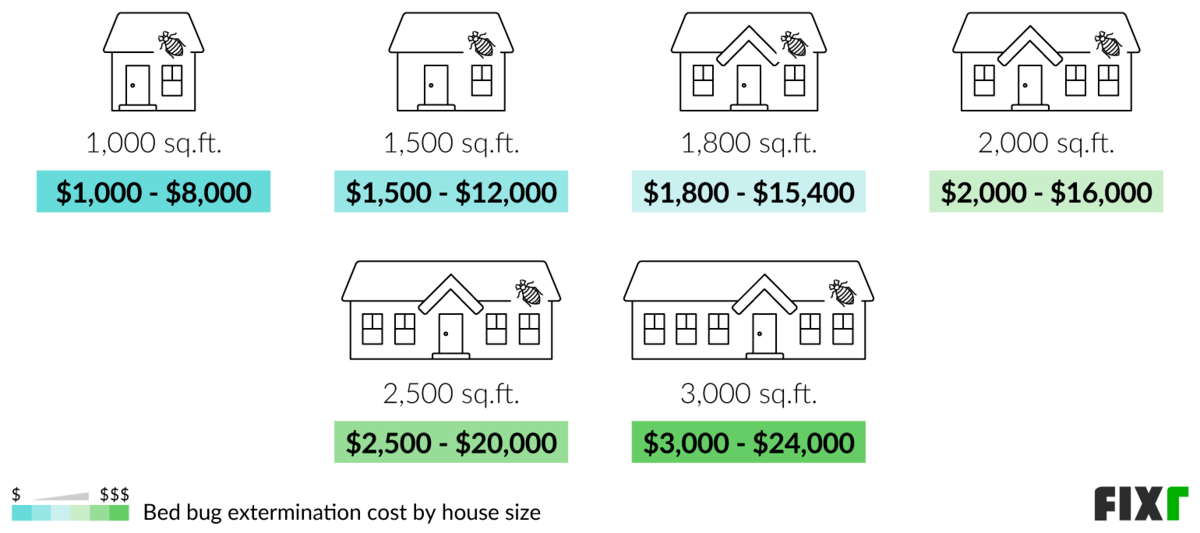
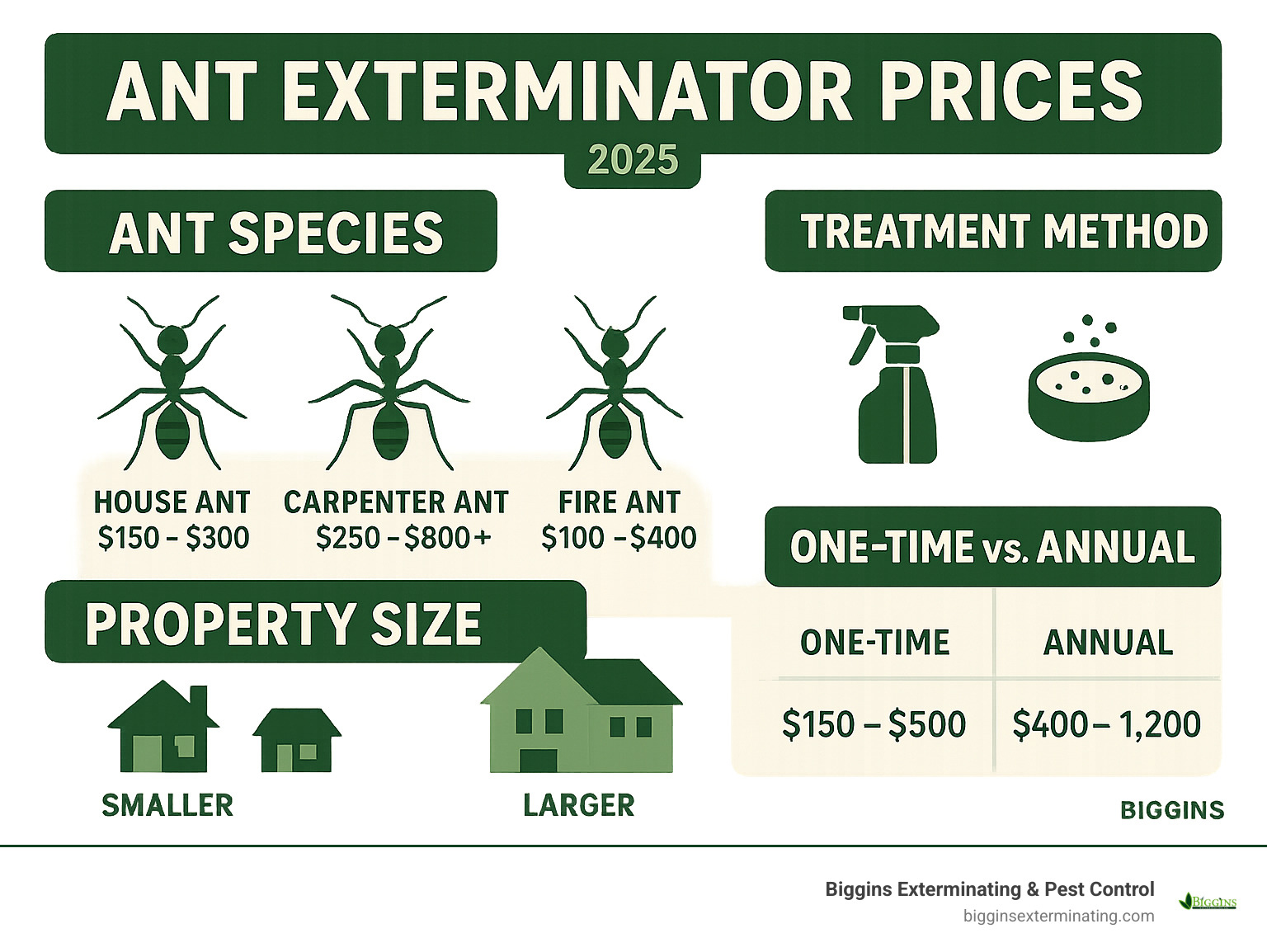
From a physics standpoint, the average one-time treatment cost, ranging from $150 to $400, is priced against the surface area of the infested zone and the diffusion rate of the active ingredients. A 1,500-square-foot ranch requires significantly less aerosolized pyrethrin than a 4,000-square-foot multi-level colonial with a crawlspace. Professionals measure the cubic footage of the treatment area because that determines the volume of product needed to achieve a lethal concentration in harborages—those microclimates of warmth and darkness where pests reside. You are, quite literally, paying for the volume of air and substrate that must be treated to achieve a statistical probability of eradication above 95%.
Must Read
The Hidden Chemistry of Your Invoice
Beyond the surface-level visit fee, your exterminator’s quote is a carefully calibrated breakdown of Mode of Action (MoA) chemistry. Modern pest control is shifting away from neurotoxic insecticides toward Insect Growth Regulators (IGRs) like pyriproxyfen. These chemicals do not kill adult insects instantly; instead, they disrupt the hormonal cascade that allows nymphs to molt into adults, effectively sterilizing the next generation. Because IGRs are slower, they require a service contract—typically $50 to $120 per month—to maintain consistent application over an entire breeding cycle, often 8 to 12 weeks. Your upfront cost is higher for a “one-time” treatment because the technician must use a broader-spectrum, faster-killing agent with a shorter residual half-life.
Interestingly, the cost also reflects the emerging resistance profile of local pest populations. In urban environments, the German cockroach has developed resistance to common carbamates and pyrethroids, forcing exterminators to pivot to newer, more expensive chemistries like indoxacarb or fipronil. These molecules are patented, more costly to manufacture, and require specialized handling. When you receive a quote for $450, you may be subsidizing the research and development that keeps your family safe from a vector that has out-evolved cheaper toxins. The technician is not just spraying; they are managing a pharmacological arms race at the microbial and enzymatic level of the pest.
Additionally, biological vectors like the Culex mosquito, which breeds in stagnant water, demand a different chemical category: larvicides such as Bacillus thuringiensis israelensis (Bti). This bacterium is highly target-specific and harmless to mammals, but it requires precise application to water surfaces, which increases labor time. The cost of a mosquito service is rarely about the chemical; it is about the geospatial analysis of your property—mapping every gutter, birdbath, and low-lying drain. This diagnostic labor, not the chemical, often accounts for 60% of your bill.
The science of synergistic formulations also plays a role. Many exterminators use a mix of a fast-acting knockdown agent with a slow-release bait. The price you pay covers the technician’s knowledge of how to time these applications to hit the peak foraging window of the species. For ants, this is dusk; for cockroaches, it is the first two hours after your lights go out. A technician who returns for a $99 “follow-up” is not doing you a favor; they are re-entering the environment precisely at the moment when the surviving population’s pheromone signature is highest, ensuring the maximum horizontal transfer of the poison through the colony.

Strategic Hacks to Optimize Your Pest Control Spend
To master this economic and biological challenge, you must move from a reactive to a proactive stance. The first hack is to isolate the species before you call. Do not let a technician arrive and perform a “blind spray.” Collect a specimen—place it in a ziplock bag or use a high-resolution photo with a coin for scale. Identifying the species against the NPMA (National Pest Management Association) charts allows you to demand a specific, targeted treatment plan. This reduces the likelihood of a broad-spectrum “shotgun” approach that costs 3x more than a targeted gel bait application. You are effectively removing the information asymmetry that plagues this industry.
Second, exploit the biology of starvation. Pests have a high metabolic rate and need constant access to food and water. Before any professional treatment, conduct a 72-hour “starvation protocol.” Vacuum every crevice, wipe down all counters with a 10% bleach solution to remove protein-based pheromone trails, and fix any dripping faucets. This is not cleaning; it is ecological disruption. By removing the food source, you force the pest population to cross the treated barriers more frequently, increasing their uptake of the insecticide. This can reduce the number of required follow-up visits from three to one, saving you $200 to $400 annually on service contracts.
Third, negotiate based on the residual half-life of the chemicals. Ask your provider for the specific active ingredient and its half-life in your climate zone. If you live in a high-humidity region, ask for a product with a longer residual surface life, even if it costs $20 more per application. Conversely, if you have pets or children, request a lower-toxicity boric acid or diatomaceous earth treatment. These are mechanically abrasive to the insect’s exoskeleton and physically desiccate them. They are cheaper, but they require a flawless application. Leverage your knowledge: ask for a written guarantee that explicitly states the re-infestation period and the chemical’s degradation curve under UV light.
Fourth, adopt a threshold-based scheduling system. Do not pay for monthly preventative treatments blindly. Instead, use glue traps as a passive monitoring tool. Count the number of captures per week. If the count is below five, spray nothing; simply replace the traps. If it exceeds ten, trigger a targeted treatment. This is the Integrated Pest Management (IPM) philosophy that commercial facilities use. You are paying for outcomes, not for the aesthetic comfort of seeing a man in a uniform. A data-driven approach allows you to skip three or four months of pointless treatments, cutting your annual pest control budget by up to 50%.
Finally, never pay for “fogging” as a sole treatment. A total release aerosol often costs upwards of $300 and has a low deposition efficiency—most of the chemical lands on non-target surfaces like your furniture. Insist on crack-and-crevice treatments or gel bait placements in harborages. The labor is higher, but the chemical cost is lower, and the effectiveness is exponentially higher because it targets the insect's thermal refuge. Ask the technician to take a photo of the bait stations before they leave. This provides proof of the spatial density of the application, ensuring you are not paying $350 for a substandard perimeter spray that ignores the biological core of the infestation.
Frequently Asked Questions on Exterminator Economics
Why do some quotes come in at $99 while others are $500 for the same pest?
The vast discrepancy is almost always a function of scope calibration. The $99 “special” is a loss-leader marketing tactic designed to get a technician inside your home. Once there, they will perform a “basic inspection” and then up-sell you on the actual treatment, which is usually based on square footage and infestation severity. This low initial price often covers only a one-room treatment with a low-efficacy over-the-counter spray. The $500 quote is typically a comprehensive service that includes a full perimeter barrier, interior crack-and-crevice treatment, and a 90-day warranty against re-infestation.
From a biological standpoint, the $99 quote often fails because it does not account for the fecundity of the pest. If you have a mature cockroach population, a low-cost spray kills only the exposed adults, leaving the oothecae (egg cases) unharmed. A week later, you are back to square one. The $500 quote includes the application of an IGR that sterilizes the next generation, effectively breaking the reproductive cycle. You are paying for the prevention of future generations, not just the elimination of current ones, which is a fundamentally different biological service.
Is it cheaper to buy diatomaceous earth and do it myself?
Yes, in the short term, buying a five-pound bag of food-grade DE for $15 is objectively cheaper. However, you must calculate your opportunity cost and your application efficacy. Professionals use dusters that create a fine, electrostatic mist that adheres to vertical surfaces and inside wall voids. Home DIYers typically sprinkle a thick layer, which is less effective because insects will avoid heavily piled dust—it is a physical irritant. A thin, almost invisible layer is actually more lethal because they do not avoid it.

Moreover, the cost shift is in the diagnostics. A professional charges for the initial assessment to locate the primary harborages—the nest sites inside your walls near water pipes. Without this thermal and moisture mapping, you are laying down a barrier but not treating the core colony. You will spend $50 on multiple product types, hundreds of hours of your own time, and still likely fail to control the population. The DIY route is only cost-effective if you have a minor, isolated infestation (e.g., a dozen ants in a single corner), not for a systemic issue.
How does home size and number of stories affect the price?
This is a direct function of building physics and stack effect. In multi-story homes, warm air rises, carrying pheromone plumes and humidity to the upper floors. This means the exterminator must treat not only the lower perimeter but also attic spaces, soffits, and vertical plumbing chases that serve as pest highways. The pricing scales with the linear feet of the foundation and the cubic footage of living space because the technician must physically access more locations to establish a chemical barrier.
Additionally, the cost increases with the complexity of the microclimate. A single-story slab foundation has easy horizontal access, whereas a home with a crawlspace or a basement introduces a subterranean ecosystem with different humidity levels and decaying wood. This requires different chemical formulations—dusts for dry crawlspaces, gels for moist basements—which adds inventory and labor costs. Expect to pay an additional 15% to 25% per additional story for the increased labor time and the higher volume of product needed to achieve lethal concentrations in these elevated zones.
Why do pest control companies want me to sign a quarterly contract?
The contract is not a scam; it is a seasonal population dynamics management strategy. Most pest species have multiple generational peaks per year. A quarterly schedule aligns with the average gestation-to-adulthood cycle of common pests (around 30-45 days for many ants and cockroaches). If you skip a quarter, you miss the window when young nymphs are becoming adults and mating. A single missed treatment can result in a population rebound that makes the previous treatment futile.

However, you can use data to game this system. Insist on a weather-adjusted contract. If you live in a cold climate, the pest activity in January is minimal. Negotiate to skip the winter quarter and make up for it with a heavy spring and autumn treatment, when behavioral thermoregulation drives pests indoors. Many companies will allow this “seasonal IPM” plan if you show them your glue trap data demonstrating no activity. This reduces your annual cost by 25% without sacrificing the biological coverage you need.
Does paying more guarantee a safer, more pet-friendly service?
Not necessarily. In fact, the opposite can be true. The most toxic chemicals (e.g., older pyrethroids) are often the cheapest because they are off-patent and mass-produced. Therefore, a low-cost service might rely on these, requiring less precision. Conversely, a premium service might use microencapsulated formulations that are safer because the active ingredient is enclosed in a polymer that prevents off-gassing and degrades slowly. The cost difference is in the delivery system, not necessarily the toxicity of the core molecule.
But you must verify the LD50 (median lethal dose) values. Ask for the Safety Data Sheet (SDS) before they apply anything. A higher price does not automatically mean safer; it might just mean they are using a larger quantity of a moderately toxic product. The real safety factor comes from application precision—using a caulk gun to apply gel inside a crevice versus spraying an entire baseboard. Demand a written protocol that specifies no treatment on open surfaces and request that all treatments are placed in inaccessible harborages. This is a free request, and any reputable company will comply, proving that safety is a factor of technique, not just price.
Understanding the biological and chemical cost structure of extermination is a profound act of resource optimization. When you recognize that you are paying for the disruption of a life cycle, not just the death of an adult insect, you stop wasting money on ineffective band-aids. You begin to see your home as a series of interconnected microclimates and entry points, and you realize that the most expensive intervention is always the one that is applied without knowledge. The $99 spray is a placebo; the $400 targeted baiting is a surgical strike.
Mastering this science makes you a more efficient human because it teaches you the value of diagnostic thinking over reactive spending. You learn to ask better questions, to demand data, and to measure outcomes against biological timelines. This mindset extends beyond pests—it applies to your health, your energy bills, and your investments. By respecting the hidden chemistry and physics that govern your living space, you stop being a passive consumer of services and become a competent manager of your environment, saving hundreds of dollars while simultaneously creating a safer, more scientifically optimized home.