How Much It Cost To Build A Hotel
Long before the glossy brochures and the infinity pools that appear to pour directly into the sunset, there was a simple, fire-lit transaction. The innkeeper, a farmer’s widow or a village blacksmith with a spare room, did not calculate square footage or the return on investment for marble en-suite bathrooms. The first hotel was not built; it was an act of shared vulnerability. Travelers on horseback, soaked by rain or dusted by the trail, required three things: a tether for their beast, a bowl of warm stew, and a flat surface upon which to collapse. The cost of that first "hotel" was measured in goodwill, a few copper coins, and the tacit agreement that the guest would not burn the thatched roof down. This was hospitality’s genesis—a barter system of safety, where the physical structure was an afterthought to the human need for rest. The capital required was negligible; the social capital, immense.
As the Roman Empire stretched its concrete veins across Europe, the tabernae and mansiones became state-sanctioned rest stops. Here, the cost calculus shifted from barter to imperial decree. Building a hotel in 12 AD meant sourcing Roman concrete—a recipe of volcanic ash and lime that, ironically, we are still trying to replicate today—and employing military engineers. It was expensive, but it was also a matter of strategic logistics. Yet, even then, the true cost was not the stone, but the water supply and the security against bandits. Fast forward to the Victorian era, and the "Grand Hotel" emerged as a declaration of industrial wealth. Think of the opulent St. Pancras in London or the Waldorf-Astoria in New York. In the 1880s, building a hotel was akin to building a small city. You didn’t just need guestrooms; you needed a ballroom large enough to fit a thousand guests, a palm court for afternoon tea, and a hydraulic lift system that terrified the patrons.
The cost, even then, was astronomical, often exceeding £1 million in an era when a laborer earned pennies a day. The return on investment was not just monetary; it was a societal status symbol. To own a hotel in the Gilded Age was to own a piece of the sky. But the hidden cost, the one that bankrupted many a venture, was the sheer operational inefficiency. You needed a staff of hundreds, from the scullery maids in the basement to the floor waiters who ran up six flights of stairs with a silver tureen of soup. The construction was the tip of the spear; the real financial hemorrhage was the daily-coal bill and the constant replacement of worn-out Turkish carpets. This is where our nostalgia often misleads us. We remember the opulence, but we forget the rusting pipes, the gaslight fires, and the sheer labor intensity that made a grand hotel a financial pyre waiting for a spark.
Must Read
The Golden Age of Booms, Busts, and Concrete Monoliths
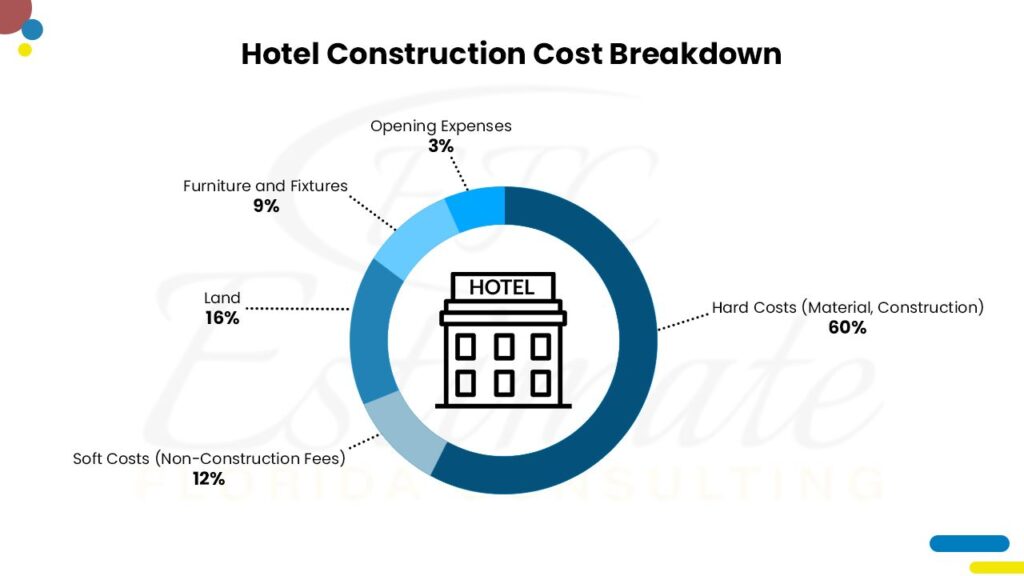
The 1920s brought the most dramatic shift in hotel construction costs: the vertical ascent. Land prices in city centers exploded, and the only way to make a hotel profitable was to stack rooms higher into the sky. This was the era of the steel-frame skeleton. The true cost of the hotel moved from the materials themselves to the logistics of engineering. The Sherry-Netherland and the Chicago Hilton were built with a speed that seems impossible today, but the costs were astronomical. Builders employed armies of riveters, thousands of glaziers, and a staggering amount of temporary timber for scaffolding. For every dollar spent on the beautiful limestone facade, three dollars were hidden in the complexity of the mechanical systems—the plumbing risers, the electrical conduits, and the massive boilers needed to heat a vertical city.
Forgetting the vintage facts, we often overlook the bizarre proportions of these costs. A staggering 40% of the budget in the 1930s was spent on the kitchen and laundry facilities. These were not merely rooms; they were subterranean factories where steam-powered potato peelers and giant mangles for sheets were installed. The cost of the guestroom furniture was minuscule compared to the cost of the plumbing infrastructure required to deliver hot water to the 20th floor in under three minutes. Hotels were built with huge water tanks on their roofs—hidden behind the cornices—to maintain water pressure. Today, we see those as pretty architectural details; in 1935, they were heavy, expensive, and ugly necessities that engineers begged architects to hide.
Then came the 1960s and the era of the "Motor Lodge." This was a revolutionary hack on the cost structure. We stopped building up and started building out. The day-rate was slashed, and the construction cost per key dropped dramatically. By removing the grand lobby, the ballroom, and the high-rise steel girders, developers could build a hotel for a fraction of the cost. It was the dawn of standardization. You could buy a functional, boxy room with a television and a double bed, and it cost the developer roughly $8,000 to $10,000 per room. It was not glamorous, but it was profitable. Suddenly, the "hotel" was no longer a destination; it was a utility. The romance died, but the balance sheet soared. This era taught us that the cost of a hotel is always a negotiation between the dream of the architect and the spreadsheet of the accountant.
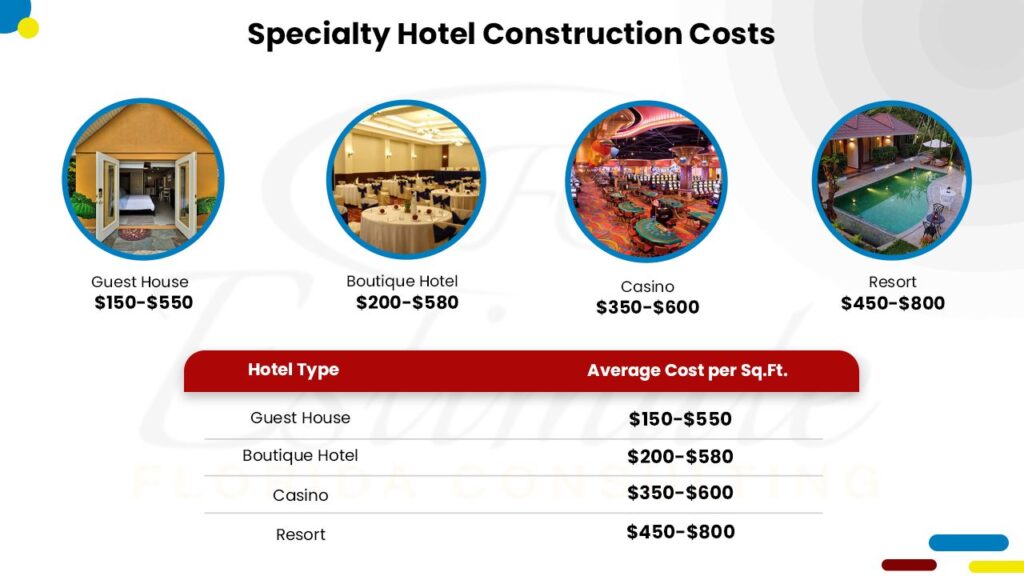
By the 1980s, the industry saw the rise of the mega-resort, where costs ballooned due to "amenities creep." It was no longer enough to have a bed. Hoteliers demanded water parks, 18-hole golf courses, and casinos. The cost to build a hotel in Las Vegas during this period was—and remains—bizarre and unprecedented. The MGM Grand cost over $1 billion in 1993, not for the rooms, but for the air conditioning, the fake volcano, and the legal licensing. The most expensive part of a modern hotel is no longer the bricks; it’s the MEP (Mechanical, Electrical, and Plumbing) systems that keep the building quiet, cool, and connected.
Hacking the Classic Playbook for the Modern World
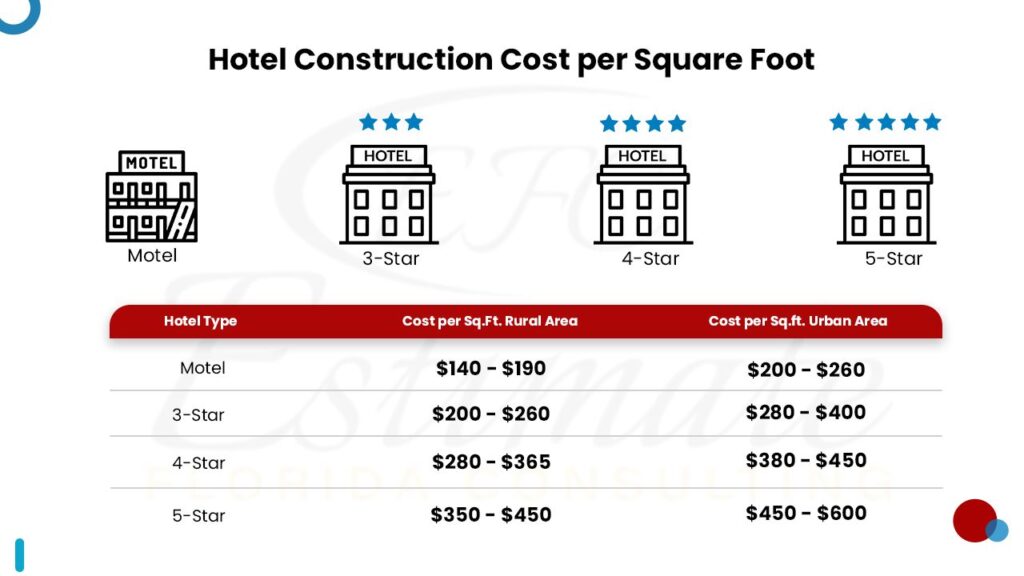
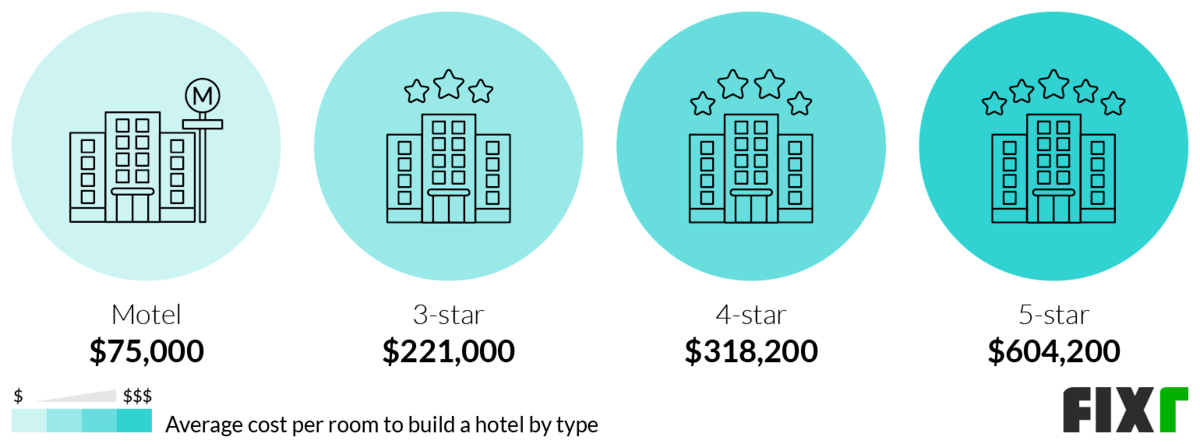
Today, the classic principles of "build, furnish, and staff" are being drastically hacked. The modern developer is obsessed with "lean construction" and "adaptive reuse." Instead of demolishing an old office building (which costs a fortune in asbestos removal and structural demolition), they are converting them into boutique hotels. This is the 2024 hack: stripping a building to its concrete skeleton to save on the massive carbon and material costs. We are also pre-fabricating bathrooms in factories in China and shipping them as pods. Instead of paying local union laborers to waterproof a shower over two weeks, a crane drops a fully finished marble bathroom into place in forty minutes. This cuts the construction cost per key from the traditional $300,000 in a luxury urban market down to under $190,000, while saving months of schedule.

Furthermore, the "cost" is now heavily weighted towards technology infrastructure. A hotel built in 2023 must include fiber-optic backbone, smart thermostats, and mobile-key Bluetooth readers. But the most significant hack is the "direct booking" revolution. The old cost model assumed a distribution cost of 20% to 30% paid to travel agencies. Modern hotels spend that money on their own app development and AI-driven revenue management. We are seeing the rise of the "micro-hotel" with rooms as small as 90 square feet, maximizing the land cost return. It’s a brutal, efficient compromise: we trade physical space for seamless digital services, effectively hacking the old adage of "location, location, location" into "algorithms, data, and yield management."
Frequently Asked Questions
How much does it actually cost per key to build a hotel in the current market?
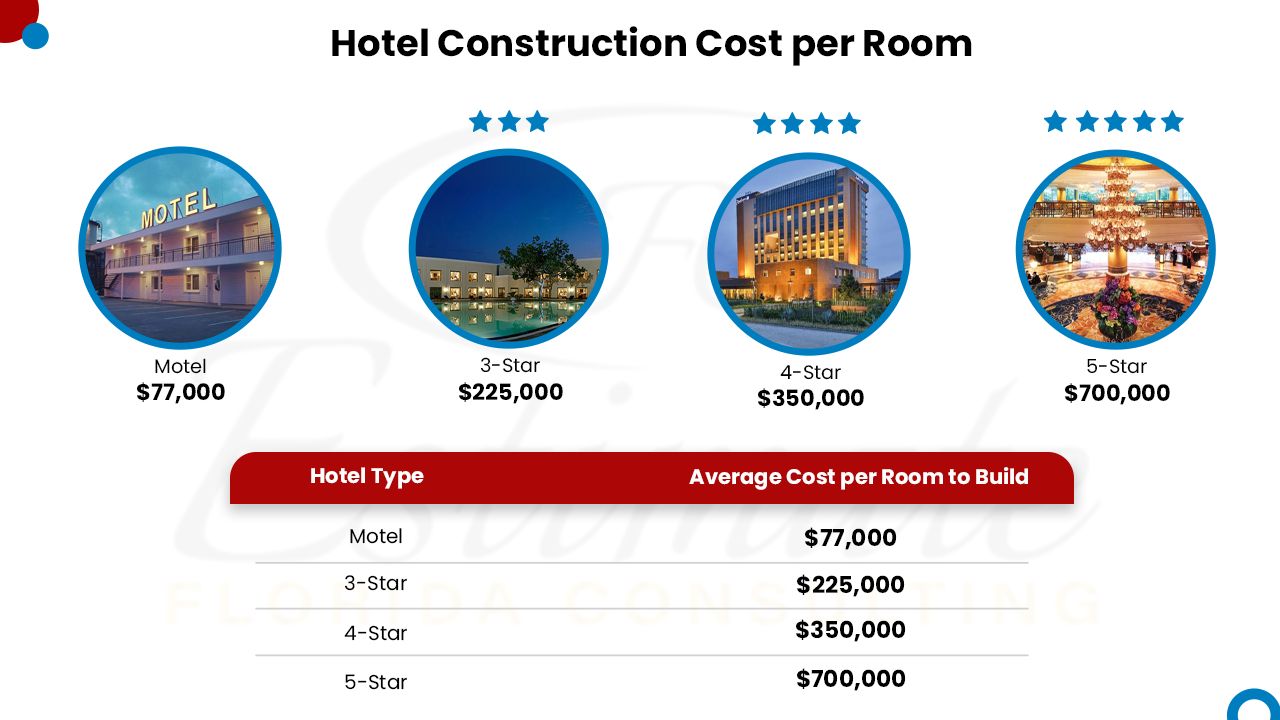
Looking back at the Victorian era, a luxurious room might have cost the equivalent of $50,000 (adjusted for inflation), but that was mostly due to the labor-intensive plasterwork and hand-carved furniture. The historical myth was that a hotel was a "cast iron" investment. Modern reality is different. In 2024, the "per key" cost is the industry’s obsession. For an economy select-service hotel (like a Holiday Inn Express), you are looking at $80,000 to $100,000 per room. For a mid-scale full-service property, the figure jumps to $200,000 to $250,000 per key.
However, luxury is where the math becomes frightening. A true five-star property in a major city like London, Dubai, or New York will now run between $450,000 and $700,000 per key. That does not include the land, which can often double that figure. The myth that we buy furniture and art is false; most of the cost is buried in the concrete, the ductwork, and the high-voltage electrical panels. For the modern developer, the financial leverage is the key—not the room size. You cannot just build a hotel; you must build a revenue-generating asset that can sustain a 65% occupancy rate just to break even.
Why is the construction cost of a hotel so much higher than a residential apartment building?
This is a question that has plagued developers since the 1920s. On the surface, both are boxes in the sky. But a residential building is a private container; a hotel is a public performance. The hidden costs are voluminous. In a residential apartment, you have one kitchen per unit. In a hotel, you have a central commissary kitchen that must generate hundreds of meals, requiring massive exhaust hoods, grease traps, and fire-suppression systems. The plumbing is also drastically different. A hotel’s infrastructure is built for peak usage—everyone showering at 7:30 AM—requiring larger booster pumps and massive water heaters.
Historically, the 1950s hotel boom hid these costs by using cheaper, thinner walls. But modern fire codes require robust sprinkler systems in every room and corridor that residential buildings of the same height often do not require at the same density. Furthermore, the code demands significantly wider hallways for wheelchair access and evacuation, which eats up leasable square footage. The most expensive difference is the laundry. A hotel must wash thousands of pounds of linens daily, requiring steam boilers that cost half a million dollars. In short, you are not paying for the room; you are paying for the 24/7 life-support system that keeps that room operational, clean, and safe.
How did historical hotel builders control costs without modern software?
The romantic notion is that Victorian builders were reckless with money because they were funded by railroad barons. That is only half true. In the 1880s, they used a brutal method of "sweated finance"—they paid their contractors slowly and forced suppliers to carry the debt. They did not use software; they used "the Bill of Quantities"—a massive, hand-written tome that listed every single nail and brick. The builder would have "measurers" who physically walked the site with tape measures and clipboards to verify the quantities of materials used.
Yet, they were masters of the "value engineer" centuries before the term existed. When costs overran, they would swap out the Italian Carrara marble in the back stairwells for painted plaster, saving thousands. They would reduce the ceiling height on the upper floors—where the servants and cheaper guests stayed—to save on brick and plaster. The biggest cost control was the "phased opening." They would open the ground floor restaurant and bar first to generate cash flow, even while the upper floors were still filled with scaffolding. This "fast-tracking" was pioneered back in 1907 and is still the industry standard. They weren't using algorithms, but they understood the flow of money as a fluid, and they diverted it to keep the project alive.
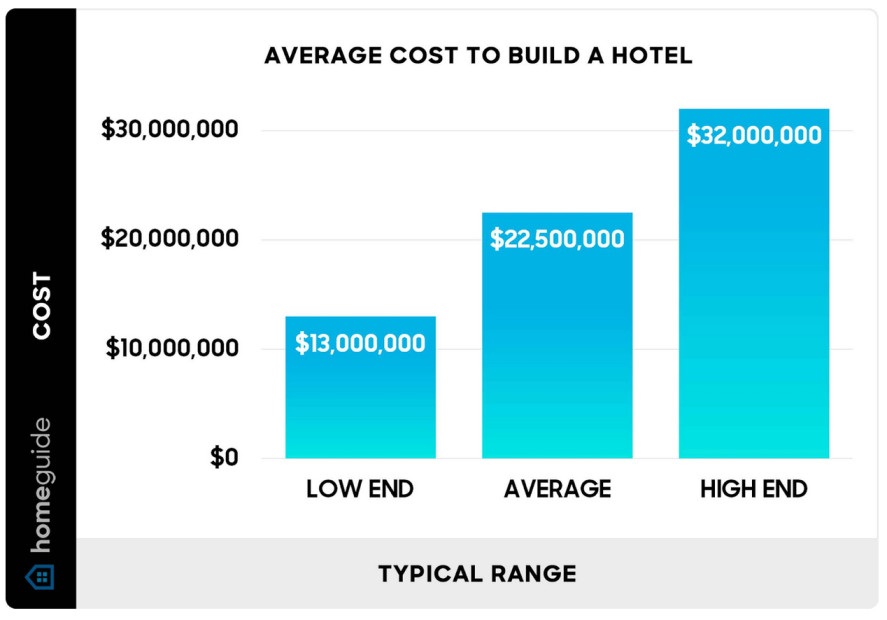
Looking to the next two decades, the cost of building a hotel will be less about physical material and more about "energy sovereignty." The future hotel will be a power plant. With solar integrated into every window pane and battery storage massive enough to support the grid, the capex will shift to photovoltaics and geothermal loops. Imagine a hotel that costs $500 million to build, but $1 million a night to run due to net-zero energy. We will see modular robotic construction, where AI-driven 3D printers extrude the entire structural frame in weeks, eliminating the labor scarcity that currently drives up costs.
In 2045, you will not "build" a hotel; you will "grow" it from bio-concrete that heals its own cracks. The cost will be in the digital twin that runs the building, not the bricks. Yet, we will continue the old tradition: regardless of the cost or the rotor-blade delivery of supplies, the last dollar spent will always be on the guest’s pillow. Because, as the innkeeper knew in 12 AD, you can automate the building, but you cannot automate the hospitality. The financial barrier to entry will drop, but the cost of maintaining human warmth will remain the only non-negotiable line item in the budget.