How Much Does A Gym Manager Make

Let me paint you a picture. It’s 6:45 AM on a Tuesday, and my friend Jake is already at the front desk of his gym, nursing a lukewarm coffee while explaining to a member why the squat rack is still occupied by a guy doing bicep curls. He’s got a headset on, he’s signing for a protein powder delivery, and he’s mentally calculating if he can fire the front-desk girl who called in sick—again.
By 9 AM, he’s mediating a dispute over a towel policy. By noon, he’s deep in Excel spreadsheets, trying to figure out why membership renewals dropped 4% last month.
And then, as he’s putting out yet another fire, I always ask him the same question: “Dude, is the money even worth it?” That’s when he gives me a tired smile and says, “It’s… complicated.” Today, we’re going to unpack that complexity. Because the answer to “how much does a gym manager make?” is about as predictable as a New Year’s resolution crowd in March.
Must Read
The Shocking Truth: It’s Not One Number
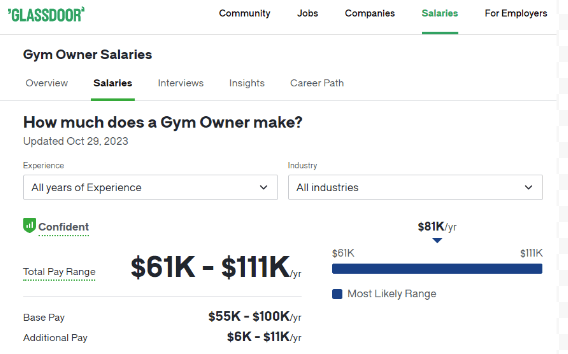
If you type that question into Google, you’ll get a base salary figure that looks clean—something like $45,000 to $55,000 a year. But that’s just the appetizer, my friend. The real answer is a buffet of variables that depend on where you work, who you work for, and how good you are at pretending you actually like the sound of clanking weights at 5 PM.
Here’s the kicker: Your paycheck often hinges on sales commissions and performance bonuses, not just a fixed salary. So, if you’re a natural-born closer who can sell overpriced personal training sessions to a grandma who just wants to do Zumba, you’re looking at a very different bank account than the manager who’s just “good with logistics.”

Let’s start with the national averages. The Bureau of Labor Statistics lumps gym managers under “Recreation Workers,” which is a crime against nuance, but the general median lands around $48,000 to $52,000 a year. But honestly, that’s the “safe” estimate.
The Big Box vs. The Boutique: A Tale of Two Wallets
If you’re managing a massive corporate gym—think 24 Hour Fitness or LA Fitness—your base salary might be slightly higher, but the pressure is relentless. You’re a glorified numbers-cruncher, and your bonus is directly tied to hitting monthly membership targets. Miss your quota three months in a row? Don’t be surprised if your job starts “restructuring” around you.
On the flip side, boutique studios—like CrossFit boxes or dedicated spin studios—often pay a lower base. We’re talking maybe $38,000 to $42,000. But wait! Before you scoff, these places often have profit-sharing or performance-based pay that can push you right back up to $50K or $60K. The culture is cooler, too, but you’ll be teaching classes, cleaning toilets, and dealing with the owner’s cousin who thinks he’s a “brand ambassador.”
Here’s the dirty secret: the commission structure is where the magic happens. A savvy manager can double their salary if they’re ruthless about personal training sales. I’ve seen managers pull in $70,000 to $80,000 in high-end urban gyms, but it’s rarely from their base pay. It’s from sniffing out corporate wellness contracts and upselling every single new member who walks through the door.
The “Hidden” Pay: Perks That Don’t Show Up in Your Paycheck
Now, let’s talk about the non-monetary side. You won’t see this on a tax form, but it counts for something. You’re going to get a free gym membership (obviously), and if you’re at a big chain, you might get discounted food and retail items. You’ll also get to know every single regular by name, which feels nice when you’re not being yelled at over a broken air conditioner.

But here’s the ironic part I’ve noticed: You will never be in better shape than when you’re working at a gym, yet you’ll also have the worst schedule. You’ll be working Saturdays, holiday Mondays, and the 5 PM-close shift when you’d rather be home. The energy is addictive, but the burnout is real. Let’s be real for a second—you’re essentially the captain of a ship that sails into a storm of sweat and ego every morning.
What Actually Moves The Needle?
If you want to know your number, stop looking at the average. Look at your location. A manager in New York City or San Francisco is going to hold out for $65,000 or more just to afford rent. A manager in a small Midwestern town might be thrilled with $42,000 because the cost of living is half that. Also, your educational background matters—a bachelor’s in sports management or business can get you an extra $3-$5K on the starting offer.

But the number one factor? Your ability to retain members. If you can build a community culture where people don’t cancel their memberships after the New Year, you’re gold. Gyms lose money on churn, and a manager who keeps people coming back is worth their weight in isotonic water.
So, back to Jake. Last month, he had a blowout quarter. He made about $58,000 on the year, but his bonus check was a hefty $6,000. Yet, when I saw him last week, he was applying for a job at a tech startup. Why? Because he realized that being a gym manager is like being a babysitter for adults with dumbbells—it’s fun, it’s chaotic, but the pay ceiling is a low, low ceiling.
If you’re thinking about this career, don’t do it for the cash. Do it for the free workouts and the stories. But if you do want the cash, remember this: your salary is just the starting weight. Your commission is the rep. And you better not drop it.