How Much A Mechanic Makes An Hour

There is a sound, metallic and rhythmic, that has echoed through the American century—a sound of ratchets clicking, of pneumatic wrenches stuttering, and of engines sighing back to life. It is the sound of the mechanic, a figure who has always existed in the oily liminal space between the horse-drawn past and the digital future. To ask “how much does a mechanic make an hour” is not merely a question of payroll; it is a question of how we value the hands that keep our world in motion. In the dusty garages of the 1920s, a mechanic was less a technician and more a blacksmith of the new age, a tinkerer who understood that the internal combustion engine was a temperamental beast requiring a certain sacrificial devotion. The wage was often a barter—a chicken for a carburetor rebuild, a bushel of apples for a brake job. The hourly rate was an abstract concept, secondary to the social contract of keeping a neighbor’s Ford Model T rolling down a muddy road.
Those early years were defined by a heroic improvisation. A mechanic’s knowledge was a closely guarded scripture, passed down through apprenticeship and trial by fire—quite literally, as fuel leaks were common. The work was dirty, dangerous, and profoundly localized. You knew your mechanic by name; he knew your car’s quirks like a doctor knows a patient’s chronic cough. The “hourly rate” was often imaginary, replaced by a flat fee for a specific job based on what the traffic could bear. A tune-up might cost a week’s wages for a factory worker, but the mechanic’s take-home was paltry. In 1930, the average auto mechanic earned roughly $0.50 to $0.75 per hour, a wage that seemed fair only in the context of a Depression-era economy where a loaf of bread cost a nickel. Yet, the pride was immense. To be a mechanic was to be a conjurer, a person who could coax motion out of chaos, and that prestige, not the paycheck, was the primary currency.
But nostalgia often paints a rosier picture than reality. The mechanic of the 1930s and 40s had no power steering, no diagnostic computers, and no OSHA regulations. They worked on cold concrete in the dead of winter, their hands cracked and bleeding, using tools that were crude by modern standards. The necessity was primal: without a working vehicle, a family had no income, no groceries, no connection to the outside world. Thus, the mechanic was a lifeline, a civic utility. Yet, the pay remained stubbornly low because the supply of shade-tree mechanics was high, and the barrier to entry was simply a willingness to get dirty. It was a brutal paradox—a profession essential to modernity, yet compensated like manual labor. This was the humble beginning, a foundation built on grit where the hourly rate was a silent negotiation, often overshadowed by the thrill of the fix and the gratitude of a relieved customer.
Must Read
The Golden Age of the Flat Rate: From 1950s Chrome to the 1980s Oil Crisis
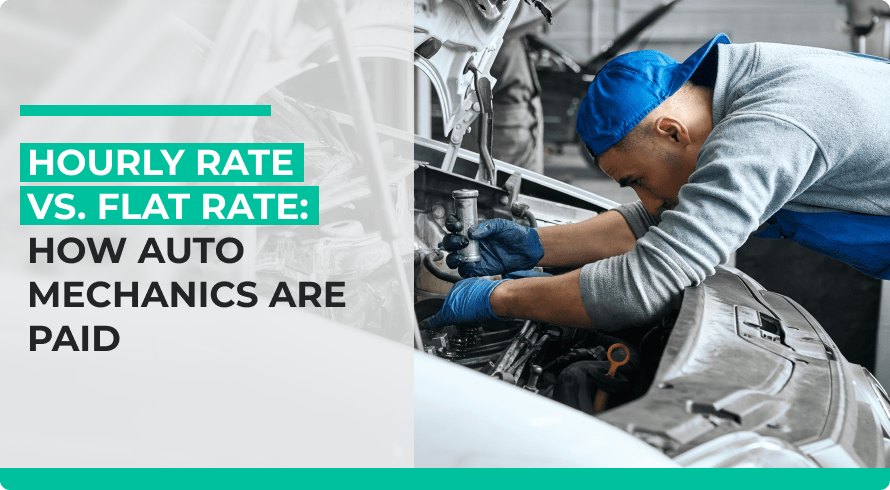
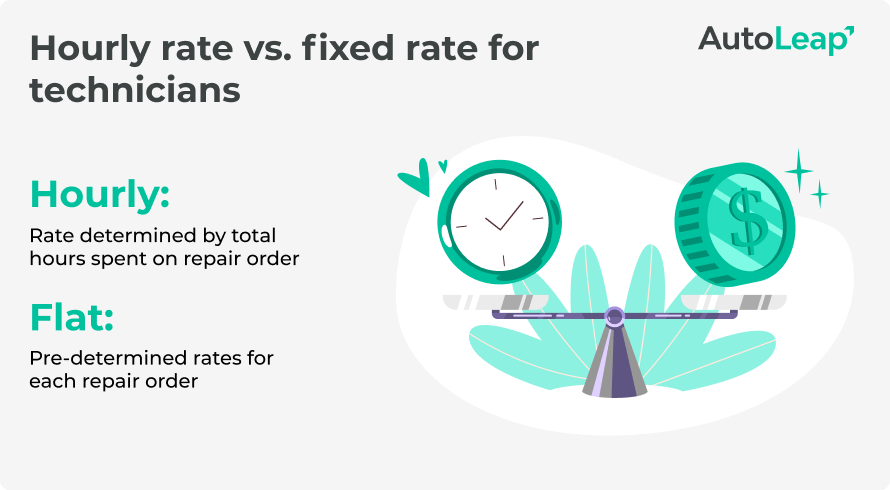
The post-war boom of the 1950s transformed the mechanic from a grease-stained handyman into a specialized craftsman. The automobile became a symbol of freedom, and with chrome fins and V8 engines multiplying on every street, the demand for skilled repair skyrocketed. This was the era when the flat-rate system was codified, a revolutionary yet divisive concept. Instead of an hourly wage, mechanics were paid a pre-set book time for each job—if a brake job was “rated” at two hours, the mechanic got paid for two hours even if he finished in one. This introduced a frantic, bizarre energy into the garage. The fastest, smartest mechanics could earn a small fortune, while the meticulous or slow ones starved. By 1965, the average hourly earnings for a mechanic had climbed to around $3.50 to $4.00, but the flat-rate meant actual take-home was a rollercoaster of feast or famine.
The 1973 oil embargo and the subsequent fuel crisis of the late 1970s was a seismic shift. Suddenly, the big-block V8s that mechanics knew inside and out were being traded for small, emissions-strangled compacts. The simplicity of the carburetor gave way to fuel injection, catalytic converters, and a spaghetti of vacuum lines that baffled even veteran technicians. The forgotten vintage fact is that during this era, many mechanics refused to work on foreign cars—they were considered too “exotic.” The wages stagnated in real terms, hovering around $6 to $8 per hour by 1980, even as the complexity of the job tripled. The public perception was that mechanics were crooks, largely due to the flat-rate system that incentivized finding extra work. The “hourly rate” became a battlefield, with shops advertising a low rate like $35.00 an hour on the sign, only to pad the bill with “diagnostic fees” and “shop supplies,” a dubious practice that lingers even today.

Forgotten in this era was the bizarre subculture of the “weekend warrior” mechanic. Men (and a few women) would buy a used car, canvas a repair manual, and spend their Saturdays in the driveway, hoping to save the exorbitant shop rates. The professional mechanic’s wage was caught in a downward spiral of public distrust, even as the technical knowledge required was approaching that of an engineer. By the late 1980s, the first wave of on-board computers arrived, and with it, a crisis of identity. The old-school gearhead who could rebuild a distributor by feel was suddenly lost, staring at a blinking check-engine light. Shops had to invest thousands in diagnostic scanners, and those costs were passed on to the consumer, yet the mechanic’s hourly rate saw only a modest bump to $10.00 to $12.00. The dichotomy was stark: the job was becoming more scientific, requiring more education, but the pay scale stubbornly refused to acknowledge the shift.
Despite the grime and the skepticism, the 1980s solidified the modern auto shop structure. The service advisor, the writer, and the tech were now distinct roles. The mechanic’s hourly wage was often capped by the shop’s “door rate,” which in 1990 stood at roughly $45.00 per labor hour, with the technician receiving only 30-40% of that. This meant a master mechanic with ASE certifications and a decade of experience might only see $15.00 to $18.00 per hour on paper. The system was antiquated, punishing expertise and rewarding speed over quality. It was during these decades that the term “flat-rate monkey” became a dark joke among technicians—a reference to the frantic, cage-like existence of trying to beat the clock, a reality that still defines the profession’s most stressful aspects.
Hacking the Oily Crypt: Modernization and the Data-Driven Mechanic
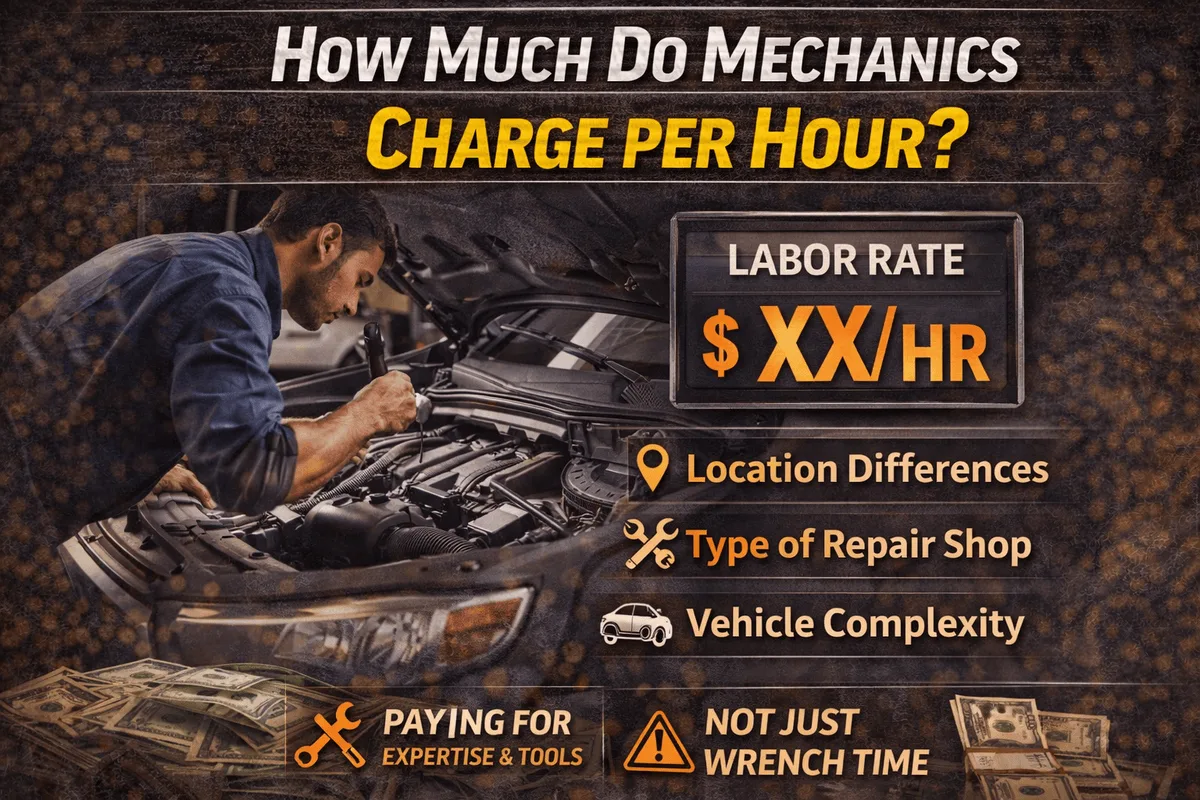
Today, the classic principle of the mechanic as a solitary problem-solver is being ruthlessly hacked by software and connectivity. The modern technician is less a wrench-turner and more a data analyst in work boots. The old flat-rate system is being challenged by the rise of telematics and subscription-based repair platforms. Now, a mechanic can plug a laptop into a vehicle’s OBD-II port and receive a live feed of hundreds of data points. The hourly wage—which has crept up to a national average of $25.00 to $35.00 per hour for a general technician, with master technicians in high-demand areas exceeding $45.00—is now being supplemented by performance bonuses tied to customer satisfaction scores and “fix-it-right-the-first-time” metrics. The hack is the rise of the “mobile mechanic” who prices their own labor, leveraging apps to skip the traditional brick-and-mortar overhead entirely, charging $100.00 an hour directly to the consumer via a digital marketplace.
Furthermore, the modern mechanic’s knowledge is no longer a secret scripture but an open-source ecosystem. YouTube tutorials and virtual reality training simulators have democratized repair knowledge, forcing professionals to specialize in high-voltage electric vehicle (EV) systems to justify their premium. The classic principle of “diagnosis before disassembly” has been modernized into “predictive analysis through machine learning.” A mechanic’s hourly rate is now tied to their ability to interpret data streams from the cloud, not just their proficiency with a torque wrench. The nostalgia of oily hands is fading, replaced by the sterile click of a mouse. Yet, this hacking of the old ways has brought a boon: the perception of the mechanic is shifting from a manual laborer to a high-tech professional, and with that shift, the hourly rate is finally beginning to reflect the immense cognitive load of the job.
Frequently Asked Questions About the Trade
Is the flat-rate system still the primary way mechanics are paid?
Yes, the flat-rate system remains the dominant, and often detested, model, but it has evolved. The ghost of the 1960s book-time still haunts the industry, yet modern shops are increasingly relying on a hybrid model. Instead of a pure commission, many dealerships now offer a guaranteed base hourly rate (e.g., $22.00 per hour) plus a flat-rate bonus. This was a direct response to the labor shortages of the 2010s, where young technicians refused to work solely on the gamble of the flat-rate. Historically, the flat-rate was designed to incentivize productivity, but in the 1980s, it became a tool for exploitation. Now, the most progressive shops have fully abandoned it for a straight salary plus a team-based profit share. The modern mechanic is more likely to negotiate a base pay that covers their guaranteed living, with the flat-rate becoming a performance-based supplement rather than the core of their income.
The critical difference is transparency. In the past, a customer was quoted a flat-rate time that bore little resemblance to the actual labor duration, creating a pervasive myth of the dishonest mechanic. Today, with digital time-tracking on tablets, the customer can watch the mechanic work in real-time, and the payroll system can be audited. The flat-rate is no longer a mysterious black box; it is a defined contract between the shop and the tech. For the mechanic, the key is to understand that the flat-rate still punishes the learning curve on new EV technology. A 20-year veteran on a traditional V8 might make bank on a 4-hour transmission job, but a novice on a Tesla battery pack might spend 10 hours on a job rated for 5, effectively slashing their hourly wage below minimum. The system is imperfect, but it is the historical pendulum swinging back towards a measure of fairness.

How does a mechanic’s wage compare to other skilled trades, like electricians or plumbers?
When we look back at the 1950s, an auto mechanic was considered the peer of any electrician or plumber; they all built the modern American dream. However, by the 1990s, a severe divergence occurred. Electricians and plumbers, protected by strong unions and licensing laws, saw their hourly rates surge to $40.00 to $60.00 by the early 2000s. Mechanics, fragmented and non-unionized for the most part, lagged behind, averaging only $18.00 to $25.00. The historical reason is simple: plumbing and electrical work are considered essential utilities with strict code enforcement, forcing customers to pay premium rates for licensed professionals. Automotive repair was seen as a discretionary expense, and the industry was flooded with unlicensed “backyard” mechanics undercutting professional rates.
Today, the gap is narrowing but still exists. A skilled master automotive technician in 2024 can earn $35.00 to $45.00 per hour, but a master electrician often commands $50.00 to $70.00. The modern mechanic faces the paradox of higher education costs—many are saddled with student debt from technical colleges—yet they lack the same market power as other trades. The historical myth is that mechanics are “just gearheads,” but the reality is that diagnosing a modern car requires reading schematics, understanding software architecture, and dealing with high-voltage safety protocols, which is arguably more complex than running a conduit. The future may correct this, as the shortage of EV technicians becomes critical, forcing shops to offer wages competitive with the most lucrative trades.
Will electric vehicles render the traditional mechanic obsolete, or make them more valuable?
This is the existential question of the decade. During the transition from the carburetor to fuel injection in the 1980s, we saw thousands of mechanics retire early rather than adapt. The same wave of panic is hitting today’s technicians regarding EVs. The nostalgic fear is that an electric car is a sealed box, requiring only tire rotations and software updates, eliminating the need for the oil-stained sage of the garage. However, the historical precedent tells a different story. The complexity of EV battery packs... actually demands a higher level of training and certification, particularly for high-voltage safety.

The mechanics who will thrive are those who pivot. An EV has fewer moving parts, meaning fewer transmission rebuilds and exhaust replacements, but it has thousands of sensors, complex thermal management systems, and a battery pack that is a structural component. The hourly wage for an EV-certified technician is already 20-30% higher than for a traditional mechanic, precisely because the pool of qualified labor is so shallow. The modern mechanic is becoming a hybrid—part electrician, part software engineer, part structural engineer. The value is not in the grunt work but in the precision of the diagnosis. The traditional mechanic must unlearn the habit of trusting the rumble of the engine and instead trust the digital waveform. The future will not see the mechanic disappear; instead, the wrench will be replaced by a tablet, and the hourly rate will soar to $50.00 to $75.00 per hour for those who master the electron, not the spark plug.
Looking ahead two decades, the mechanic’s role will be almost unrecognizable to those who remember the grease pits of the 1970s. The internal combustion engine will be a museum piece, and the hourly rate will likely be replaced by a subscription model—a monthly fee for access to a mechanic’s remote monitoring service. The physical workshop might become a ghost town, as over-the-air updates fix most software issues remotely. The mechanic of 2045 will work from a centralized operations center, diagnosing fleets of autonomous vehicles via 5G networks. The nostalgia of the local garage, with its calendar of pin-up cars and the smell of burnt oil, will be a quaint memory. Yet, the necessity for human intuition and that initial spark of troubleshooting brilliance will remain.
Humanity will always need someone to say, “I hear that faint clicking, and I know what it is.” The hourly wage will become a fluid, dynamic number, perhaps calculated by the minute, backed by AI-driven predictive maintenance that tells a driver to book a repair before the failure occurs. The mechanic’s income will be tied to uptime and efficiency, not hours logged on a lift. The greatest shift will be in perceived value. We will look back at the $30.00 per hour of the 2020s with the same disbelief we now hold for the $0.75 wage of 1935. The future mechanic will be a guardian of mobility, a digital shepherd for the autonomous flock, and their compensation will reflect the immense responsibility of keeping our world moving—not with brute force, but with elegant, silent precision.