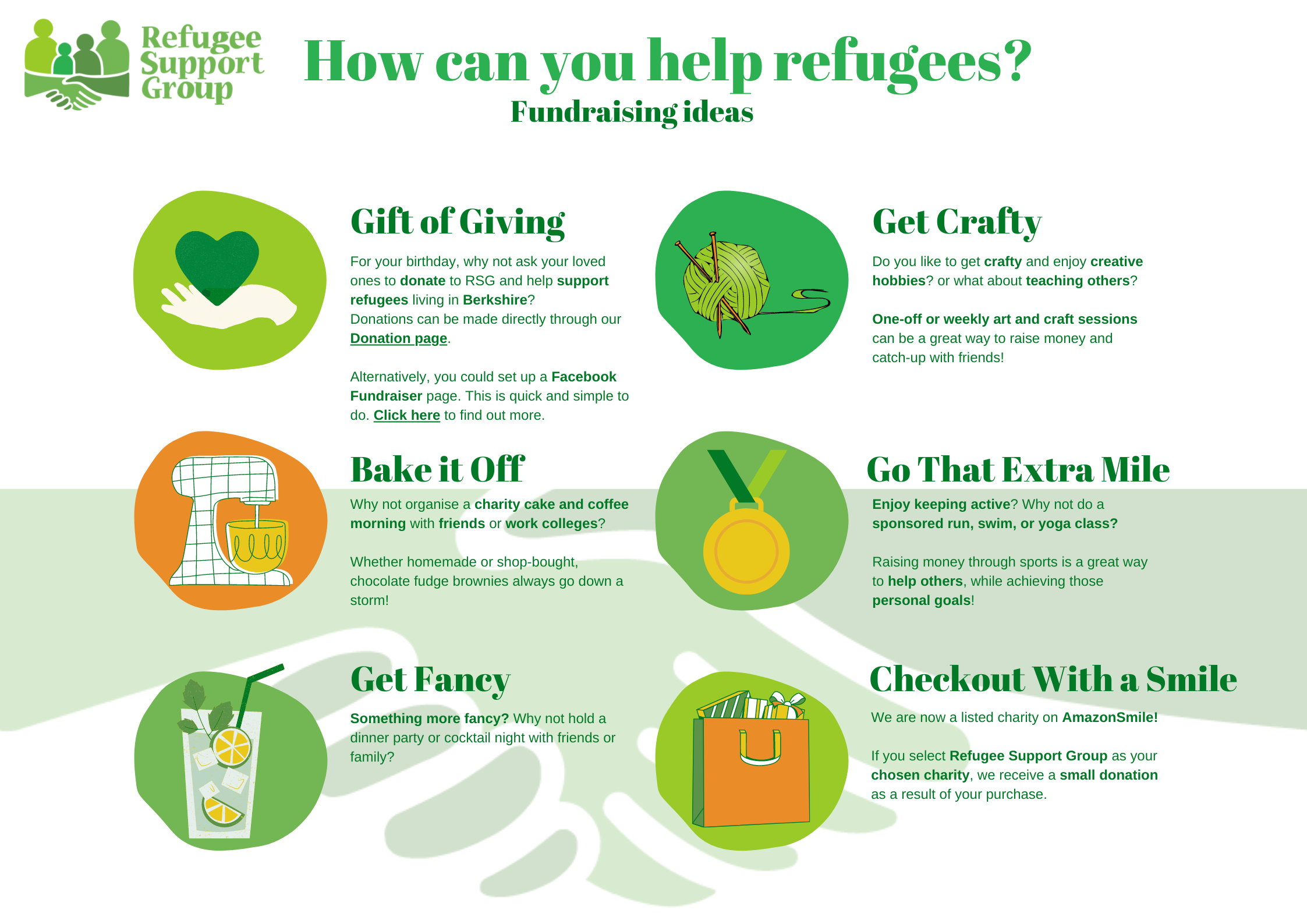
How Do You Raise Money For Charity

There is a peculiar alchemy in the act of asking for money on behalf of someone else. It is not quite begging, not quite business, and not quite altruism—it is a performance of vulnerability staged for the public good. The modern charity fundraiser is a hybrid creature: part diplomat, part carnival barker, part forensic accountant. We trace this lineage back to the medieval alms collector, who would roam parish roads with a relic and a tin cup, but the real transformation happened in the 19th century, when Victorian reformers turned moral outrage into spreadsheets. Today, raising funds for a cause is less about shaking a tambourine and more about engineering a psychological experience—one that makes a stranger feel like they are buying a piece of a better world, or at least a tax deduction.
Why does this matter now, in an era of crowdfunding fatigue and algorithmic compassion? Because the art of fundraising has split into two distinct species: the institutional behemoth with its donor-relations software, and the scrappy grassroots campaign that lives or dies on a single viral moment. The cultural stakes are immense. We are living through a paradox where giving rates have plummeted among younger generations, yet peer-to-peer fundraisers—think birthday pages on Facebook or marathon sponsorships—have exploded. The money is not disappearing; it is moving through different channels, demanding a new kind of storytelling. To master this, you must understand that people do not give to causes; they give to feelings of efficacy, to narratives where they can see themselves as the hero of a micro-drama.
The Psychology of the Open Wallet: Why We Give and Why We Don’t
Let us confront the uncomfortable truth first: humans are biologically terrible at abstract compassion. Studies from behavioral economics, including the famous “identifiable victim effect” discovered by Paul Slovic, show that a single named child with a face will generate more donations than a statistic about a million starving children. This is not a moral failing; it is a cognitive glitch. Our brains are wired for hunter-gatherer tribalism, where we could only care for about 150 people (Dunbar’s number). The result? A charity asking for funds to build a well in a village you have never visited is fighting against ten million years of evolutionary wiring. The successful fundraiser, therefore, does not fight this—they weaponize it. They zoom in on one story, one pair of shoes, one hospital bracelet, and they let that synecdoche carry the entire weight of the crisis.
Must Read
But there is a darker, more fascinating layer beneath this. It is called “moral licensing.” Psychologists have found that when people give money to a cause, they are statistically more likely to behave selfishly immediately afterward—sometimes within the same hour. A donor who contributes $100 to an animal shelter might then feel entitled to buy a leather jacket or drive a gas-guzzling SUV. As a fundraiser, you are not just extracting cash; you are purchasing a temporary indulgence for the donor’s conscience. This is why guilt-based campaigns are so effective yet so dangerous. They work, but they breed resentment. The modern master of the craft uses what marketers call “warm-glow giving”—the dopamine hit of generosity—rather than the cold shower of obligation. The best fundraisers, like the legendary Jerry Lewis telethons, understood this: they made giving feel like a party, a communal high, not a penance.
Culturally, we have also shifted from a paradigm of “charity as duty” to “charity as identity.” In the age of social media, your donation is a signal, a piece of personal branding. Consider the phenomenon of the “donation screenshot”: a person publicly posts proof of their contribution to a disaster relief fund, tagging the charity’s handle. Is this altruism or performance? The answer, of course, is both—and the savvy fundraiser knows to enable this performance by making donation amounts shareable, giving virtual badges, and creating a social feed of recent donors. A dark fact: NGOs have quietly discovered that donors who receive a “thank you” video from a beneficiary within 48 hours are 300% more likely to give again. The money is not the product; the gratitude is.
The Modern Playbook: From Bake Sales to Blockchain
Let us move from theory to practice, because raising money is ultimately a contact sport. Scenario one: you are organizing a local community fundraiser. The old-school approach—a bake sale with stale cookies and a raffle for a donated ham—is dead, or at least terminally ill. Replace it with a “micro-experience.” Instead of selling brownies, sell an experience: a “Dinner in the Dark” where guests eat blindfolded to understand visual impairment, or a “24-Hour Living Room Campout” where participants pay to pitch tents indoors while streaming a movie marathon. The key is that the donation is embedded in the experience, not appended to it. One case study: a small hospice charity in the UK raised £45,000 by hosting a “Sleepout” where executives spent a night in cardboard boxes in a parking lot. The discomfort was the product, and the money flowed because people wanted to buy the founders’ discomfort. It is dark, but it works.

Scenario two: the digital-native fundraiser using peer-to-peer platforms. Here, you must understand the brutal mathematics of virality. Most crowdfunding campaigns fail not because they are unworthy, but because they suffer from “the first 48-hour hump.” Platforms like GoFundMe show that campaigns that raise 30% of their goal within the first two days have a 90% success rate; those that don’t, wither. To cross this threshold, you do not appeal to strangers. You appeal to your “three-degree network.” Research from MIT shows that a contribution from a friend of a friend is worth more than a contribution from a random benefactor because it carries a social endorsement. So your strategy should be surgical: convert your five closest allies into aggressive fundraisers, each tasked with securing money from their own five closest allies, and so on. This is not networking; it is social GPS warfare.
Scenario three involves the corporate sponsorship dance. This is where the dark side gets truly fascinating. Corporations do not give away money; they purchase “reputational insurance.” A tobacco company funding a youth anti-smoking campaign, an oil giant sponsoring a climate conference—these are not philanthropic anomalies but public relations necessities. As a fundraiser, you must understand this transactional reality. Your pitch to a corporation should not be “help us end hunger” but “help us associate your brand with the solution to hunger, and we will provide you with measurable media impressions, employee engagement data, and a sustainability report that will make your shareholders clap.” The actionable takeaway: always create tiered sponsorship packages, from $5,000 (logo on a poster) to $50,000 (naming rights on a major initiative). Do not apologize for this; it is the engine of the non-profit world.
Finally, the emerging frontier: crypto and donor-advised funds. A $1 million donation via Bitcoin is now routine, but the nuance is tax optimization. Wealthy donors are increasingly using Donor-Advised Funds (DAFs), which allow them to get an immediate tax deduction while distributing the money to charities over years. As a fundraiser, you must learn to “ask for the DAF.” This means your donation page must have a DAF giving widget, and your thank-you letters must be DAF-compliant. Failure to do so means you are leaving millions on the table. The lesson is clear: modern fundraising is a low-margin, high-volume logistics game disguised as emotional appeal. You must be as comfortable discussing capital gains as you are discussing human dignity.
Deep-Dive: Frequently Asked Questions (The Unvarnished Truth)
1. How do I ask for money without feeling awkward or guilty?
Awkwardness is a social signal that you are violating a norm, but the norm against asking for help is a Western luxury that ignores our communal origins. To dissolve the guilt, reframe the interaction as an “opportunity to participate.” You are not taking; you are offering a person a chance to join a story that will make them feel powerful and benevolent. Practice the “specific ask.” Instead of saying, “Can you donate?” say, “Can you give $50 this month to provide 100 meals? I’m personally funding the first 10 meals.” When you have skin in the game, your ask becomes a testimony, not a panhandle. Furthermore, silence is your ally. In negotiation psychology, the moment after you state your ask, you should shut your mouth. The other person will fill the silence with a justification, a question, or a commitment. Awkwardness is not a sign of failure; it is a sign of a real question being asked.
Secondly, remember that you are asking on behalf of a mission, not for yourself. This detachment is crucial. If you feel guilty, you are likely conflating the cause with your ego. Write a short script that you memorize, but deliver with spontaneity. For example: “I’m helping the local food bank. We need $5,000 to keep the fridge running. I’ve already got $3,000. I’d love for you to be the person who helps cross the finish line.” Notice the “we” and the specific number. Guilt often stems from vagueness; specificity gives the potential donor a clear target. Finally, practice the “gratitude pivot.” If someone says no, respond with, “Thank you for considering it. Is there another way you might be able to help, like sharing our post?” This removes the pressure and often opens a different door.
2. What are the legal pitfalls I need to avoid when fundraising?
The legal landscape for charity fundraising is a minefield disguised as paperwork. The primary pitfall is “fiduciary misappropriation.” In most jurisdictions, you cannot simply collect money and disburse it as you see fit. You must either be a registered non-profit (501(c)(3) in the US) or be fiscally sponsored by one. If you solicit donations under a cause that is not a registered charity, you may be committing fraud, even if your intentions are pure. A classic mistake is using a personal bank account for a charity fundraiser. This commingling of funds can lead to severe fines and, in extreme cases, criminal charges. The rule of thumb: if you are collecting over a small threshold (often $5,000 or more), you must have formal legal structure capable of issuing tax receipts.
Another significant pitfall is the “cause marketing” trap. If you partner with a for-profit company that says, “$1 from every purchase goes to charity,” you must have a written contract specifying the guaranteed minimum donation. Many corporate partners have been sued for raising false hope. Additionally, be wary of the “matching gift” claims. If falsely promised, they constitute deceptive advertising. Always keep meticulous records of every donation, even small cash ones. In many countries, if you cannot produce record of a $20 donation, and there is a discrepancy, you can be personally liable. The darkest legal humor in the sector is the “founder’s syndrome,” where the charismatic founder realizes they are legally indistinguishable from the charity—meaning their personal assets are at risk. Consult a non-profit attorney before you launch, not after a complaint. It costs a few hundred dollars to save you thousands in legal fees and your reputation.
3. How do I run a successful auction or gala event?
Galas are the gladiator arenas of fundraising, and they are dying. People are exhausted by rubber chicken dinners and live auctioneers who yell into a microphone. The secret to a modern successful event is to eliminate the “event” and replace it with “moment theater.” First, auction items are not about the item; they are about the status of bidding. The “travel package to Tuscany” is a terrible auction item unless you add a local wine maker who will host a private dinner. The psychological principle is “loss aversion”—people bid more when they feel they are losing an experience, not buying a thing. Use a silent auction app that allows remote bidding and shows a public leaderboard. This taps into social comparison.
Second, the “fund-a-need” segment, where you ask for direct cash donations during the event, is where the real money lies. Do this immediately after a powerful video, and do it with a “matching donor” who pledges to double every dollar raised up to $50,000. The anchor effect is powerful: if you announce a $50,000 matching gift, the average giving amount jumps. Third, avoid the “dinner and dancing” format. Instead, host a late-afternoon cocktail hour with high-top tables, no seating, and a strict 2-hour schedule. People give more when they are standing, slightly hungry, and engaged—not when they are full and sleepy. Finally, train your board members to “work the room” with a specific script: “I’m raising $500 tonight. Who can help me get to the first $250?” The most successful galas are not parties; they are high-pressure, high-social-accountability microstock exchanges.
4. How do I build a sustainable donor base, not just a one-off campaign?
Anyone can ask for money once. Building a donor base is about creating a relationship that survives the dopamine crash of initial giving. The biggest mistake is treating donors as ATMs. The rule of “the 80/20 principle” holds true: 20% of your donors give 80% of your money. Your entire strategy must be about upgrading those 20% from “transactional donors” to “investment donors.” The first step is a rigorous thank-you system. A generic email is insufficient. Send a handwritten note for any donation over $100. Record a voice memo or a personalized one-minute video. This is not kindness; it is retention science. Studies show that donors who receive a phone call from a board member within 48 hours of their first gift are twice as likely to give a second gift.
Next, shift your communication from “what we need” to “what we did with your money.” Send impact reports with photos, graphs, and specific stories. But do not just send updates; send exclusive information. Invite mid-level donors to a “virtual coffee” where you share a new challenge before it is public. This creates a sense of insider status. Use the “ladder of engagement.” Start with a $20 monthly gift, then invite them to a volunteer activity, then ask them to host a small house party. Each step increases their commitment. The dark truth is that most donors lapse not because of the cause but because of the silence. They give, they hear nothing, they feel used, they leave. Sustainable fundraising is a communication business, not a money business. You must be in the inbox at least once a month, not just when you want something.
5. What about the ethics of using emotional manipulation in fundraising?
This is the most uncomfortable question, and the honest answer is that all fundraising is manipulation—the question is whether it is “manipulation with consent.” Using a picture of a starving child is emotional manipulation. Using a picture of a smiling child who was saved is also emotional manipulation. The difference is the dignity of the subject. The modern ethical standard is called “guardianship of storytelling.” You should never show a beneficiary in a state of crisis without their explicit consent, and you should always show the solution, not just the problem. The “poverty porn” of the 1980s is rightly condemned, but the pendulum has swung too far toward sterile data, and data does not move hearts.

Ethical fundraising uses a principle called “the loving demand.” You are truthful about the scale of the problem, you are truthful about the cost of the solution, but you are also honest about the fact that your charity might not be the most effective at solving it. This transparency paradoxically builds trust. If you tell a donor, “Here is our overhead cost, here is our failure rate, and here is why we still believe,” you sound more credible and generate more loyalty. The ethical line is crossed when you lie by omission, when you bury the fact that the charity is run by paid executives while claiming to be volunteer-only, or when you use a crisis for your own marketing. The test is simple: show your fundraising material to a beneficiary. If they feel empowered, it is ethical. If they feel exploited, it is not. And remember, guilt works in the short term, but trust works in the long term. The richest charities are those with the lowest ethical controversies, because they are not constantly defending themselves.
Ultimately, raising money for charity is a mirror held up to our own contradictions. We are generous yet stingy, compassionate yet forgetful, tribal yet aspiring to universality. The act of giving is the one human behavior that simultaneously centers the self and dissolves the self—you give to feel good, but you feel good because you have diminished your own ego. In our daily lives, we practice this in tiny ways: picking up the tab for a friend, tipping a barista, donating to a coworker’s 5K. These are the training grounds for the grander act of philanthropy. We are all fundraisers, whether we realize it or not, because we are constantly pitching causes, projects, and dreams to the people around us.
What separates a successful fundraiser from a failed one is not charisma or wealth, but the ability to listen to the donor’s own story. People give to people, not to abstract entities. When you ask for money, you are asking that person to join you in a narrative where they are the co-author, not a checkbook. The dark fact is that most money is raised not by the brilliant pitch, but by the sincere follow-up call three weeks later when you ask, “How did that donation feel? What did it change for you?” That question is rare, and it is magic.
So, whether you are baking cookies, shaking a can, or launching a cryptocurrency-backed foundation, remember this: you are not moving money. You are moving meaning. And in a world that feels increasingly fragmented, the simple act of asking on behalf of another human being is a revolutionary form of connection. It proves that scarcity is not the final truth—that generosity is a muscle we can train. The next time you feel the weight of the ask, smile. You are not a beggar; you are a bridge. And bridges, by their nature, support weight.