How Do You Combine Songs Together
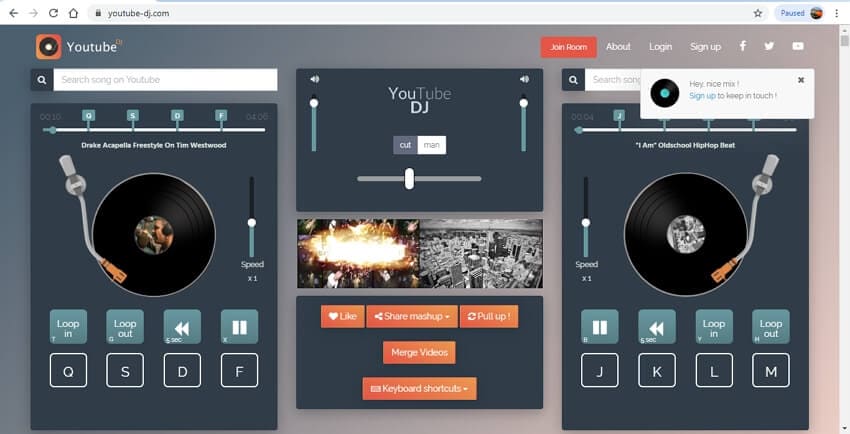
Remember when your coolest mixtape move was fading out “Bohemian Rhapsody” into “Ice Ice Baby” and calling it a day? Yeah, neither does the algorithm. In 2025, song-mashing—or more accurately, hyper-sequencing—has evolved from a bedroom DJ hobby into a full-blown cultural obsession, fueled by TikTok’s relentless appetite for sonic whiplash. One second you’re crying to Phoebe Bridgers, the next you’re twerking to a sped-up Tems acapella, and your brain doesn’t even have time to file a complaint. It’s chaos, but it’s our chaos, and the internet has decided that a song is no longer a complete artwork—it’s a raw material for the next 15-second dopamine hit.
The current status? Blasphemous brilliance. We’ve moved past the era of the DJ taking requests. Now, the listener is the curator, the editor, and the saboteur. Apps like Spotify and Apple Music have thrown their hands up and added AI-assisted transitions, but the real alpha move is downloading stems, flipping BPMs, and stitching together “Murder on the Dancefloor” with a drill beat just to see if the world explodes. And it usually does. This isn’t about technical skill anymore; it’s about vibe-matching with the precision of a surgeon and the reckless abandon of a toddler with a drumstick.
Why is everyone talking about it? Because it’s the ultimate flex. In a world where attention spans are measured in milliseconds, the ability to take two disparate songs and force them into a forced, beautiful marriage is the only remaining proof that you understand the current thing. It’s not about harmony; it’s about cognitive dissonance as a feature, not a bug. You aren’t just listening to music anymore; you’re orchestrating a psychological experiment on yourself and your followers. Welcome to the wild west of audio collage, where the only rule is that there are no rules—unless you count “don’t let the beat drop die.”
Must Read
The Rabbit Hole: Where Mashups Go to Get Weird
Dive deep enough into this subculture and you’ll find a toxic, wonderful ecosystem divided into two warring tribes: the Purists and the Chaos Goblins. The Purists lurk in niche Discord servers, meticulously analyzing key signatures and BPM grids with the obsessive detail of a Renaissance art restorer. They will write you a 500-word essay on why mixing a 6/8 time signature track with a 4/4 house beat is a crime against humanity. Meanwhile, the Chaos Goblins—who run most of the viral meme pages—don’t care if the key is off. They care if the meme lands. They’ll splice a Gabber kick drum under a Lana Del Rey bridge, add a sound effect of a cash register, and call it avant-garde. And you know what? They’re right.
Social media has weaponized this practice. On TikTok, the “Wait for it…” transition is the bread and butter of engagement bait. You build tension with a slow, melancholic intro, then slam into a phonk remix of a 2009 ringtone. It’s not about musicality; it’s about the violation of expectation. The comments section becomes a battlefield: “This hurt my soul” versus “This changed my brain chemistry.” There’s a performative aspect to it, too. You aren’t just sharing a mix; you’re announcing your personality type. Are you the one who blends K-pop with dubstep? You’re a chaotic neutral. Are you the one who seamlessly segues from Frank Sinatra to Meg Thee Stallion? You’re a psychopath with excellent taste. This isn’t about finding a "best of both worlds"—it's about creating a third, entirely unfamiliar world where reality is slightly off-kilter, and we are all just NPCs reacting to the glitch.
How To Mash Without Losing Your Sanity (Or Your Shazam History)
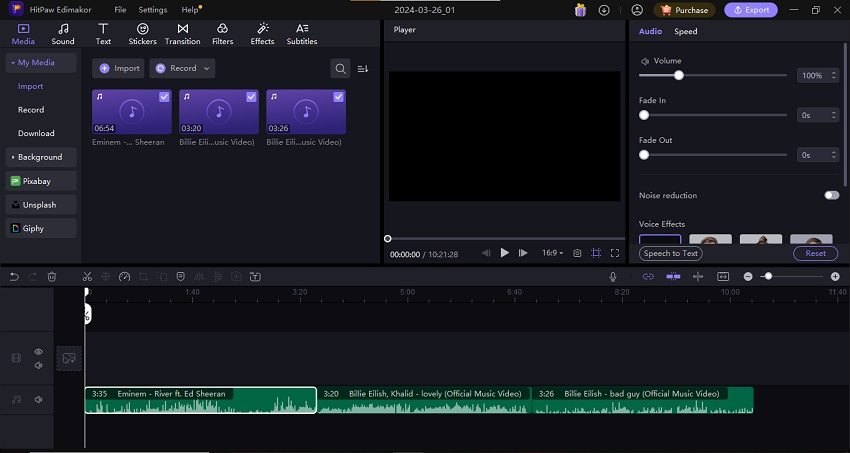
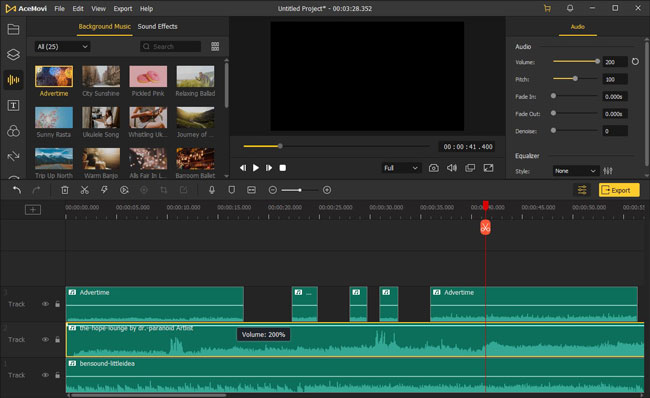
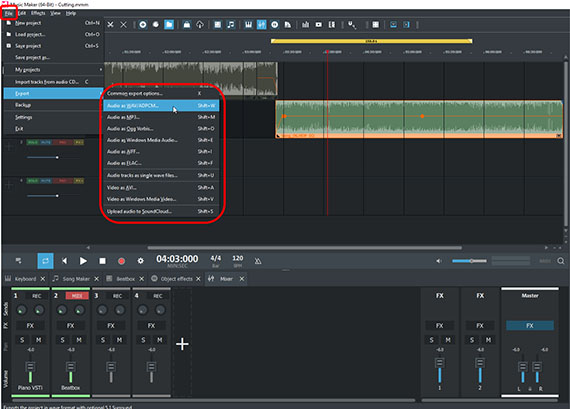
Listen, we know you want to get in on the action, but nobody wants to be the person who posts a cringey, off-beat transition that gets ratioed into oblivion. Let’s be pragmatic. First, stop relying on your phone’s microphone to record your speakers. That’s 2019 behavior. Get a simple Digital Audio Workstation (DAW). You don’t need Pro Tools; even a free tier of GarageBand or the mobile version of BandLab will do. The goal isn’t studio-quality production; it’s to have the ability to time-stretch a track so it doesn’t sound like a dying hamster on a treadmill. Cut your clips manually. Snap the transients to the grid. It takes ten minutes, but it’s the difference between "viral" and "why is this on my FYP?"
Second, master the art of the “drum roll into beat drop”. The easiest way to bridge two completely different keys is to use a riser, a cymbal crash, or a silence gap. Silence is your best friend. A half-second of dead air before slamming in a high-energy track makes the brain reboot, allowing you to get away with murder. Don’t try to blend two vocals simultaneously. That only works if you’re a professional with pitch correction. Instead, use the “one ends, the other begins” approach, but make sure the ending instrument of the first track is the starting instrument of the second. If your first song ends with a piano note, find a second song that starts with a similar piano note. Boom. Instant cohesion. Look, you aren’t making a symphony; you’re making a smoothie. The fruit doesn’t have to have the same texture, just the same sweetness.
Third, be aware of the “viral psychosis” trap. Just because a mashup is popular doesn’t mean it’s good. The algorithm rewards the weird, but it also rewards the lazy. If you see a mashup trending, run in the opposite direction. Instead, look for “sample packs” on platforms like Splice or looperman. These are pre-made vocals and drum loops that are literally designed to be combined. You can take a dry vocal and drop it on any beat without it clashing awkwardly, because you didn't have to time-stretch the original instrumental. This is the cheat code of the digital age. It’s like using a stencil to paint a mural—you still get the credit, but you skipped the hard part.

Finally, and this is crucial, curate your output for retention, not completion. The game isn't to make a 4-minute seamless mixtape anymore. It’s to make a 30-second loop that could theoretically go on forever. Think of it like a cocktail. You only need one sip to know it’s fire. Post a snippet where the transition occurs at the 8-second mark. Hook them immediately with a weird chord change. If they get to the 20-second mark and don’t see the payoff, you lost them. Keep it punchy, keep it percussive, and for the love of god, don’t use a fade-out. Fade-outs are for cowards.
The FAQ Of The Unhinged
Is it legal to mash up copyrighted songs and post them?
Ah, the million-dollar question that keeps lawyers awake at night. Technically, remixing and mashups exist in a legal gray zone. On one hand, you are creating a derivative work, which requires permission from the original copyright holders. On the other hand, the public performance and remix culture on social media have created an unwritten rule of “sue me if you can find me.” For smaller creators, you are largely protected by the de minimis concept—meaning the use is so trivial or transformative that it doesn't infringe. But if your mashup blows up to a million plays, you can bet your bottom dollar that a music publisher is going to send a takedown notice.
The practical answer is: Don't use it to make money directly. If you’re doing it for clout and engagement, you’re safe. If you try to sell the track on Bandcamp or use it in a paid ad, you’re toast. Also, beware of the platform itself. Spotify and Apple Music have systems that aggressively scan for unlicensed samples and will mute or remove your upload instantly. The best strategy? Post to YouTube and TikTok where the DMCA is more of a “catch me if you can” vibe. Consider it a fan art. You’re not stealing the song; you're doing free marketing for the original artist. They might hate it, but they also might love the royalties from the exposure.
Why do some mashups sound "off" even when they are in the same key?
This is the classic “harmonic rub” that plagues novice mixers. You see, having the same root key (e.g., both are in C Major) is just the bare minimum check. The issue lies in the chord progression and the melodic phrasing. Even if two songs are in the same key, one might be heavily grounded in the I chord (C), while the other is swinging through the vi chord (A minor) or the IV chord (F). When you slam them together at the wrong point, the bass lines clash, creating a muddy, dissonant rumble that sounds like a generator dying. You need to match not only the key, but also the modal center—meaning the emotional gravity of the track.
Furthermore, the “off” feeling often comes from tempo drift. You might have matched the BPM precisely, but if the original song has a slight humanized swing (like live drums or a lazy hi-hat), it won’t align with a rigid, quantized drum machine beat from another track. The grid is a lie. It’s a super-tight quantized grid on which to snap everything together. To fix this, you need to use “warp markers” or “flex time” to stretch and compress the audio so the downbeats align perfectly. It’s tedious, but knowing that the difference between a “fire mashup” and an “ear-bleeding mistake” is often just a 10-millisecond nudge on the snare drum is crucial. It’s not magic; it’s micro-surgery.
Should I use Spotify’s built-in crossfade feature instead of doing it manually?
Using Spotify’s crossfade is like using a hammer to perform a heart transplant. It’s the wrong tool. Yes, the “crossfade” function—where the end of one song blends into the beginning of the next—creates a seamless listening experience, but it does absolutely nothing for the musical key or beat matching. It’s a volume envelope trick, not a creative tool. When you do it manually, you can choose where the transition happens. You can let a vocal line finish while the next track’s bass enters. You can cut abruptly at the apex of a build for maximum impact. Spotify just overlaps the silence of one with the intro of the other, which often results in a messy wash of frequencies where neither track is clearly defined. It’s the audio equivalent of a bad Photoshop cutout.

Furthermore, relying on the platform’s crossfade kills your individuality. Everyone can set their crossfade to 12 seconds. But the person who manually produces a mix that goes from a jungle breakbeat into a baroque string section with a perfectly timed vocal sample? That’s chef’s kiss. That requires skill. It’s the difference between wearing a tailored suit and wearing a garbage bag with a belt. The manual approach allows you to curate the narrative arc, the tension and release, the controlled chaos. Using the automated feature is the equivalent of admitting that you are a passive consumer, not an active creator. And in this economy, nobody wants to be that.
So, is this just a fleeting obsession? Will we look back at this era of aggressive song-stitching and cringe like we do at frosted tips? Unlikely. The reason why this method of consumption is sticking is that it aligns perfectly with how our brains process media now. We don't stream albums; we stream vibes. We don't want a 3-minute introduction; we want the peak, the climax, and the immediate next hit. The mashup culture is accelerating the fragmentation of music into atomic, digestible moments. It’s not about the song itself; it’s about the connection between songs. And that connective tissue is the new intellectual property.
This is permanent, but it’s evolving. The next stage isn't just mixing two songs; it's using AI to generate the perfect bridging section that doesn't exist yet. We are moving toward a world where music is a fluid, malleable substance that we shape in real-time to our mood. The DJ is dead; long live the editor. So go forth, make your weird, jarring, brilliant combinations. Be the reason your neighbor’s bass rattles their windows with a bluegrass/jungle hybrid. Because in the end, it’s not about the music. It’s about the audacity to rearrange the universe to your liking. And that, dear reader, is the only vibe worth chasing.