How Can I Remove Words From A Picture
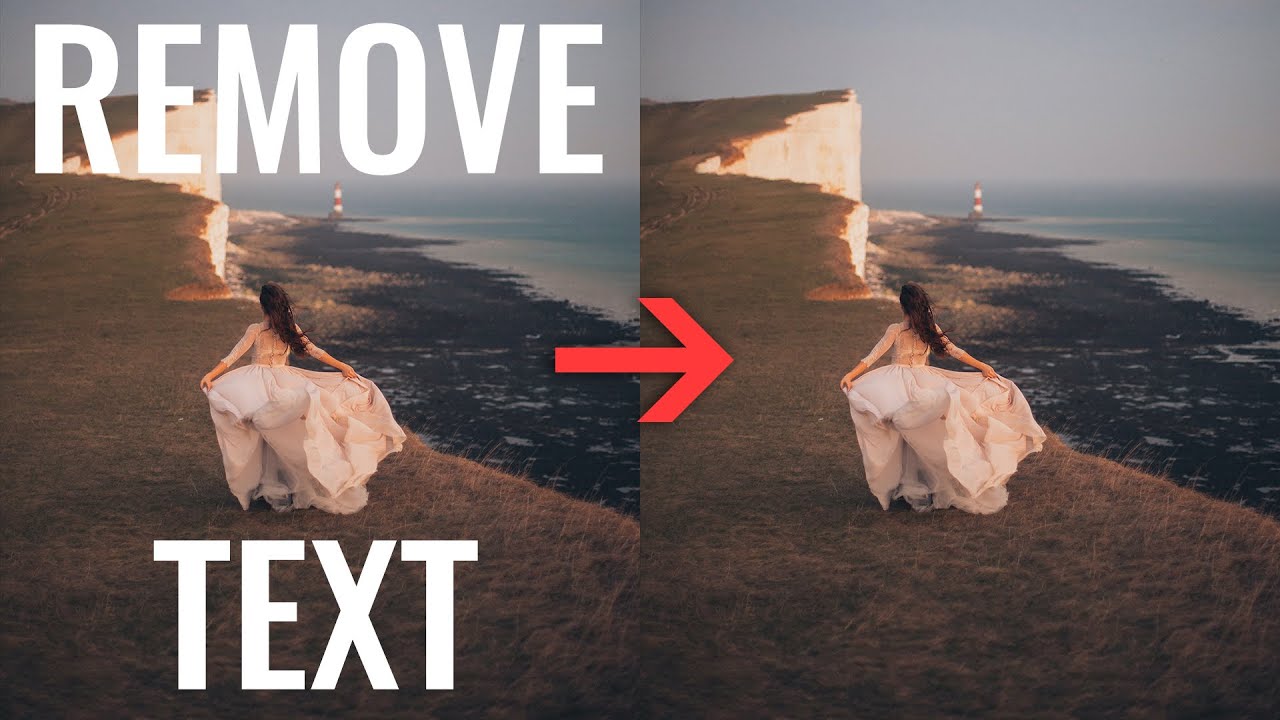
There is a peculiar kind of grief that clings to a photograph you wish were different. Perhaps it is a family portrait from the late 1980s, where your grandmother’s hand, blurry and intrusive, rests on the shoulder of your father, obscuring the perfect symmetry of the shot. Or maybe it is a scanned Polaroid from the summer of 1997, where a stranger’s shadow falls across the sandy beach, ruining what would have been a postcard-perfect memory of your first love. For most of human history, this grief was permanent. A photograph was a physical artifact, a chemical truth baked into silver halide crystals. To remove an unwanted element—a photobomber, a stray utility pole, a ghostly double exposure—was to commit an act of physical violence against the object itself. We used razor blades to scrape the emulsion, india ink to drown the intruder in blackness, and scissors to simply amputate the offending corner. The image was a locked door, and we only had a hammer. The need to erase, to revise our visual past, is as old as photography itself, but the tools we used to do it have evolved from a desperate, manual art into a sorcery that feels almost like time travel. The initial human necessity behind this obsession was not vanity, as one might assume, but rather a deep-seated need for control over narrative. In the 1840s, when Louis Daguerre’s polished silver plates captured the world in exquisite, mirror-like detail, they also captured the dirt, the grime, and the accidental passerby. For the Victorian elite, a portrait was a statement of moral and social standing; a stray dog or a blurry servant in the background was a breach of etiquette. The earliest retouchers were often the photographers themselves, using fine brushes and a mixture of pigment and gum arabic to paint over unwanted details directly onto the glass negative. This was a painstaking, high-stakes surgery where one false stroke could destroy the entire sitting. By the 1920s, the airbrush had become the weapon of choice for magazine editors, allowing them to erase a double chin or a wrinkled lapel with a fine mist of dye. Yet, this was still additive—you were adding pigment to cover, not truly removing the pixels beneath. The underlying structure of the lie remained, waiting for the right technology to expose it.
The Alchemy of Erasure: From Darkroom Rabbits to Digital Cloning
The shift from physical manipulation to digital wizardry did not happen overnight, but rather in a series of seismic, often overlooked, jolts. The first major transformation began in the 1980s with the advent of the Adobe Photoshop paradigm, specifically the release of version 1.0 in 1990. Before this, the only way to remove a person from a group photo was to literally cut them out of the print and re-photograph the composite, a process that required a darkroom, a steady hand, and an almost occult understanding of light and shadow. I remember the forgotten vintage fact about the "cloning stamp," which was once affectionately called the "rubber stamp" tool. Its earliest iterations were crude; they simply copied a patch of pixels and stamped them over the problem area, leaving behind a tell-tale repeating pattern that looked like a wallpaper seam. A discerning eye could spot these "clones" in a second—the same leaf repeated twice on a tree, the same grain of sand duplicated in a desert. It was a digital faux pas that we all learned to forgive because the alternative was living with the offender. The bizarre treatment of this topic in the 1990s and early 2000s was defined by its limitations. We were not removing words from pictures; we were losing a war against texture and geometry. To remove a street sign from a wall, you had to meticulously sample the brick pattern around it, pixel by pixel. It could take an hour to clean up a single, tiny blemish. The process was a Zen meditation on symmetry and chaos. We developed strange workarounds, like using the "healing brush" (introduced around 2002) which attempted to blend the texture of the sampled area with the lighting of the target area. But it was still a game of smoke and mirrors. The real revolution, the one that turned this from a tedious chore into a near-instantaneous miracle, came with the rise of machine learning and neural networks in the mid-2010s. Tools like Content-Aware Fill, first seen in Photoshop CS5, analyzed the entire image to invent plausible background texture, essentially guessing what the wall looked like behind the sign. It was a profound philosophical leap—the software was now interpreting your intent, not just your clicks.Hacking the Past: How Classic Principles Are Modernized for the Instant Generation
Today, the classic principles of retouching—sampling, blending, and preserving texture—have been hacked into a seamless, predictive engine. The modern user does not need to understand luminosity or color channels; they simply draw a lasso around the unwanted text or object, press a button, and watch as the algorithm reconstructs the void with astonishing accuracy. The old "clone stamp" fidelity is now a fallback, a legacy mode for purists. The modern iteration, powered by generative AI models, goes further: it understands context. If you ask it to remove the word "COFFEE" from a chalkboard sign, it doesn't just fill the letters with chalk texture; it looks at the handwriting style of the other words and generates a plausible continuation of the board's background, complete with the faint smudges of eraser marks that would logically be there. This modernization is both liberating and disquieting. It respects the classic principle of "non-destructive editing"—we work on layers, always preserving the original file—but the speed has changed our relationship with mistakes. In the 2000s, a photographer would plan a shot for hours to avoid a distracting background element, knowing the cleanup would be a pain. Today, we shoot first and ask for forgiveness from the AI later. We are hacking the very concept of photographic truth. The technology has been democratized; it is no longer confined to expensive desktop software. Free apps on smartphones perform feats of erasure that would have been the envy of a National Geographic retoucher in 1995. This instant gratification, however, numbs us to the historical effort that was required. We swipe our finger over a photograph and demand that a century of technical evolution obey.Frequently Asked Questions: Bridging the Myth of the Darkroom with the Reality of the Cloud
Is it "cheating" to remove words or objects from a picture, and was this considered unethical in the past?
The ethical weight of photo manipulation is a story of shifting goalposts. In the early days of photography, during the 1850s, there was a fierce debate about whether a photograph represented objective truth or artistic interpretation. When a photographer like Oscar Rejlander used multiple negatives to create a composite scene, he was celebrated as an artist, not condemned as a liar. However, by the 1930s and 1940s, when photojournalism became a major news source, the removal of a single detail—like a Coca-Cola bottle from a battlefield—was considered a cardinal sin, a falsification of the news. The myth that "the camera never lies" persisted into the digital age, even as darkroom technicians were constantly airbrushing for glamour magazines. In the modern context, removing a word from a picture (like a watermark or a license plate) is generally deemed acceptable for creative or privacy purposes, while altering a news photograph is still a fireable offense. The evolution is not about the tool used, but the context of the publication. We have moved from a strict legalistic view of the image as evidence to a more nuanced view of it as a subjective composition.
The modern "cheating" argument is less about the removal itself and more about the transparency of the intent. If you remove a stray tourist from your vacation photo, it's a convenience. If a magazine removes a wristwatch from a celebrity's forearm because of a sponsorship dispute, they are rewriting the fabric of a public event. The historical myth that vintage photos are "pure" is false; they were heavily curated in the darkroom. The modern fact is that we are all aware of the eraser, but we value the story over the letter of the image. We now ask, "Why was it removed?" and not just "Was it removed?" This reflexive questioning is a step towards media literacy that our ancestors, who had no tools for comparison, could never achieve.
Can the software truly "imagine" what is behind the text, or does it just copy and paste?
This is the most common misconception. The legacy tools, like the clone stamp, did just copy and paste—they took a selection of pixels and transferred them verbatim. This often failed with complex backgrounds like a chain-link fence or a dense pattern of leaves, because the repetition gave away the trick. The modern Content-Aware and generative fill algorithms, however, do not copy. They analyze the latent space of the image—a mathematical representation of the colors, textures, and structural edges. They identify the parallax, the vanishing points, and the lighting gradients. When you ask it to remove the word "SALE" from a brick wall, the AI does not hunt for a clean brick elsewhere; it generates a synthetic brick that matches the specific color shifts of that specific wall at that specific angle of sunlight.
Must Read
Bridging the historical myth to this modern fact, consider the darkroom technique of "dodging and burning" in the 1930s. Photographer Ansel Adams would selectively lighten or darken areas of a print to emphasize a mountain's detail. He was not copying the mountain; he was interpreting its form. The modern AI does the same, but at a scale of billions of calculations per second. It synthesizes new information based on observed patterns. It is a ghost in the machine that understands the grammar of a scene. The older tools were translators; the new tools are authors. They take the sentence "a wall with a hole in it" and write a plausible continuation: "that wall is perfectly flat and filled with brick." This generative capability is what makes the removal of words (which are highly structured geometric symbols) so shockingly effective, as the AI separates the text from the background texture completely.

Is there a risk that I lose the original data or degrade the image quality when removing a word?
Yes, but the risk has diminished dramatically. In the 1990s, every edit was destructive. You saved the file, and the pixels were permanently altered. If you made a mistake, you had to re-scan the original negative. This was a serious technical hazard. The introduction of layers and non-destructive editing in the early 2000s was the first safeguard. Today, the risk lies not in the edit itself but in the resolution of the source. If you are working with a compressed JPEG, the algorithm has to estimate the data lost during compression. When it "fills in" the area behind the text, it might create a slightly softer blur or a subtle color shift. But if you are working with a RAW file or a high-resolution TIFF, the algorithm can sample the surrounding data with high fidelity, and the erasure is nearly imperceptible.
The historical myth is that "every edit ruins the photo." The modern fact is that a well-executed removal on a high-quality file will produce a result that is visually indistinguishable from an original photograph. The key is to keep the original master file untouched. Professionals save a "virgin" copy and work on duplicates. This is a practice that dates back to the 1880s when negatives were varnished to protect the emulsion before retouching. The principle is the same: protect the source, and your edits are just temporary varnish. However, if you repeatedly save a highly compressed file as a JPEG, you will cause "generational loss" — a mathematical degradation where the file loses subtle color data with each save. The future, thankfully, is pointing toward neural compression formats that store images as abstract descriptions, making deletion a pure act of logic rather than a pixel-by-pixel loss.
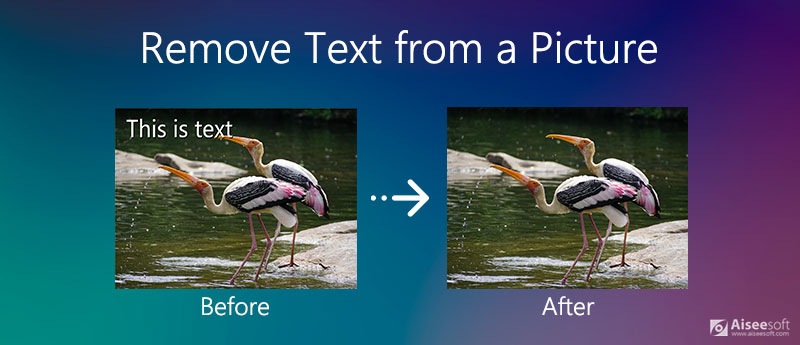
Looking forward, the next twenty years will dissolve the line between "removing" and "re-authoring." We are already seeing generative AI that can not only remove a word from a billboard in a photo, but also alter the reflection of that billboard in a wet street, and adjust the shadows cast by a pedestrian to match the new lighting. The technology will become proactive; your camera roll will suggest "cleanup" actions for your photos, removing street signs and crowds automatically before you even ask. We will move from a paradigm of "edit this image" to "idealize this moment." The paradox is that as we gain the power to erase the unwanted, we may lose the historical texture that made the photograph authentic. The stray dog in the background of the 1840s daguerreotype, the blurred hand of a grandmother in the 1980s photo—these were the accidental poetry of life. In our quest for a perfectly sanitized visual record, we must carefully consider what we erase, because the AI will happily rewrite the past, but it cannot restore the feeling of the accidental moment we chose to delete.
The eraser is mightier than the pen, but it is a blunt instrument for our memories. As we hurtle toward a future where the visual past is as malleable as clay, the true nostalgia we should protect is not the flawless image, but the flawed photographer who captured it. We will soon be able to remove not just words, but entire chapters of our visual narrative. The responsibility will weigh on us more heavily than the technical difficulty ever did. In 1996, we obsessively cleaned up a pimple with a pixel brush; in 2046, we might clean up an entire morning. The human need to curate our own image will forever remain, but so will the quiet, stubborn ghost of the original, untouched picture—the one that reminds us that perfection is a procedure, but truth is a fingerprint.