Hackerrank Data Science Challenges
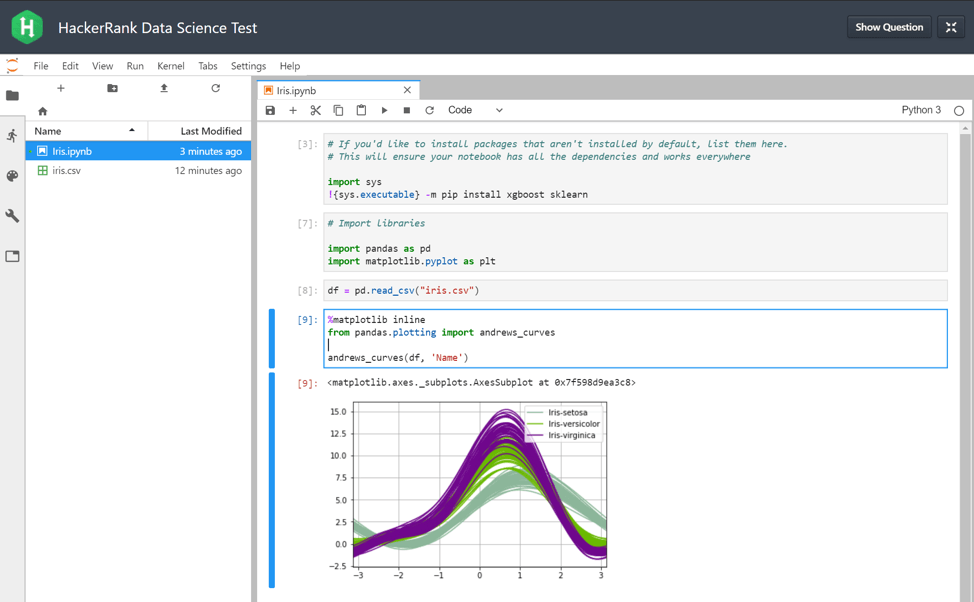
Remember when your coolest flex was a three-day Duolingo streak? Yeah, those were simpler times. Now, the algorithmic elite are flexing something far more intimidating: HackerRank Data Science Challenges. It started as a niche corner of the internet for CS grads with crippling impostor syndrome, but it has since mutated into a full-blown cultural phenomenon, a digital coliseum where Gen Z and burnt-out millennials go to prove their intellectual worth in the most public way possible. TikTok isn't just for dance trends anymore—it’s for “POV: You just solved a Medium-level SQL problem during a coffee break” videos that rack up millions of views.
Let’s be real: the current status of Data Science in pop culture is this weird hybrid of "sexiest job of the 21st century" and "entry-level position requiring 10 years of experience." HackerRank has become the unofficial gatekeeper, the bouncer at the club of high-paying remote jobs. It’s where the hype meets the hard reality. You can’t just say you’re a data wizard anymore; you have to prove it by dissecting a messy dataset about customer churn at 2 AM while your friends are out living their lives. The platform has become a litmus test for the modern workforce, and frankly, it’s a little unhinged how much emotional stock we put into a green checkmark on a web page.
Why is everyone suddenly talking about it? Because the job market is a dumpster fire, and HackerRank promises a ladder out. It’s the gamification of desperation, wrapped in a sleek UI with leaderboards that feed our dopamine cravings. Viral LinkedIn posts about “grinding 100 challenges” have turned this technical exercise into a lifestyle aesthetic. It’s the new hustle culture, minus the kale smoothies—replaced instead by endless coffee refills and a deep-seated fear of JOINS.
Must Read
The Algorithmic Thunderdome: Inside the Toxic Grind Culture
Peel back the shiny layers of badges and streaks, and you’ll find a subculture that is equal parts fascinating and terrifying. There’s the “Lebron James of Python” archetype—the user who has solved 1,500 challenges and posts their monthly achievement graph like it’s a flex. They dominate the discussion forums with overly complex, one-liner solutions that are technically brilliant but utterly unreadable. Then you have the “SQL Shepherds,” a quieter breed who exclusively grind database challenges and treat SELECT statements like sacred scripture. These communities exist in a weird echo chamber where Big O notation is a valid topic for small talk and where asking for help is seen as a sign of weakness unless you also submit a 3-page explanation of what you tried.
Social media has amplified the toxicity to eleven. On Twitter/X, the discourse is split between people bragging about their percentile ranks and those cynically posting “HackerRank isn’t real Data Science” memes. Reddit’s r/datascience is a warzone of arguments about whether grinding these challenges actually helps you in the field or just turns you into a human compiler. The cultural shift here is that perceived intelligence is now transactional. You earn clout through brute-force repetition. The forum answers are often riddled with gaslighting, where a simple question about pandas gets a response like, “You shouldn’t use pandas for that, use a data warehouse, noob.” It’s a digital Lord of the Flies, but with sanitized datasets instead of conch shells.
The weirdest part? The rise of "HackerRank ASMR" and study-with-me live streams. People will stream their 4-hour grinding sessions on Twitch, complete with ambient lo-fi beats and a camera pointed at their furious typing. Viewers tune in not for entertainment, but for motivation by osmosis. It creates a parasocial relationship with productivity, where you feel like you’re learning just by watching someone else struggle. It’s a weird hyper-competitive yet communal vibe, a juxtaposition that only makes sense in the digital age where we are simultaneously lonely and surveilled.
How to Grind Without Grinding Your Gears: A Survival Guide
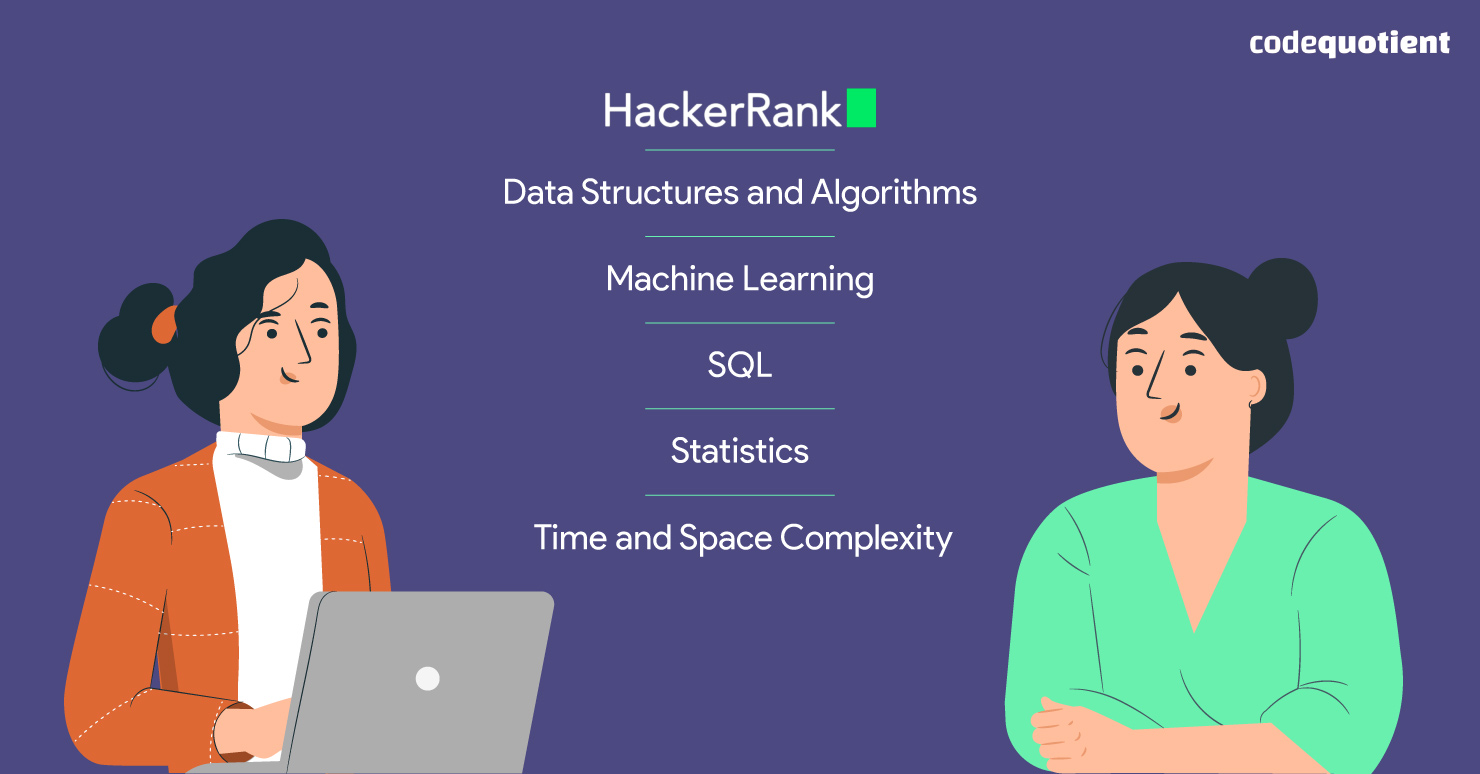
First things first: stop treating HackerRank like a video game that you need to “beat.” That mindset is for the birds. The platform is a tool, not a trophy. Before you even log in, define what you’re actually trying to achieve. Are you prepping for a FAANG interview? Are you trying to learn pandas and numpy? Or are you just trying to feel something other than existential dread? Your strategy depends entirely on the answer. If you’re chasing interview prep, focus on the top 40 questions, not the 400 obscure ones about graph theory that you will literally never use in a business setting.
Here’s the step-by-step guide to staying sane: Upskill vertically, not horizontally. Don’t jump around from arrays to machine learning to regex. Pick a domain—let’s say data structures—and drill it until the concepts feel like muscle memory. Use the "Editorial" tab religiously. After you inevitably fail a problem, read the editorial, understand the logic, then close the tab and redo it from scratch. Rote memorization is for actors; conceptual understanding is for data scientists. If you can’t explain your solution to a rubber duck, get back to the drawing board.
Wallet preservation is key. Do NOT pay for the premium subscription unless you have a very specific reason. The free tier has enough challenges to keep you busy for a decade. The mock interview feature is cool, but the free third-party interview simulators on YouTube are just as good. Also, beware of the “course-selling” gurus on Instagram who claim to have the “secret HackerRank hacks.” There are no hacks. It’s just practice. Spend your money on a decent notebook and an ergonomic keyboard instead. Your wrists and your bank account will thank you.

Another pragmatic tip: curate your feed or log off. The "grind culture" on LinkedIn is absolutely toxic. People flexing their 100-day streaks are professionals at wasting time. You need to adopt a "lurk mode." Solve your problems, check your score, and log off. Do not read the comments section on hard problems—it’s a cesspool of ego and unhelpful sarcasm. Find a study buddy or a Discord server where the vibe is supportive, but even then, establish boundaries. If the conversation devolves into debates about the best programming language, leave. Install a site blocker for HackerRank after 8 PM. You need sleep. Your brain needs sleep. The algorithm will still be there in the morning.
Finally, embrace the “Minimum Viable Progress” rule. Don’t try to solve 5 problems a day. That’s for unemployed maniacs. Aim for 45 minutes of focused, high-intensity problem solving. Set a timer. When it dings, you close the laptop. This prevents the “spiral of doom” where you spend 3 hours on a problem and start questioning your life choices. Consistency beats intensity every time in this game. Treat it like going to the gym—you don’t see gains on day one, but you’ll feel the difference in a month. And never, ever compare your Chapter 1 to someone else’s Chapter 20.
The FAQ: Settling the Internet’s Most Heated Debates
Is HackerRank "real" Data Science, or just a glorified coding test?
This is the holy war of the data community. The purists will tell you that HackerRank is 90% software engineering cruft—lots of string manipulation and algorithmic puzzles—and only 10% actual data science (the SQL and basic statistics). They argue that real Data Science is about messy data cleaning, feature engineering, and communicating insights to stakeholders, none of which HackerRank tests well. They aren’t entirely wrong. If you spend all your time grinding binary trees, you won’t know how to handle a dataset with 50% missing values and duplicate entries that you actually find in the wild.
However, the counter-argument is that HackerRank serves as a basic cognitive filter. It proves you can write clean code, handle edge cases, and think logically under pressure. In a world where AI can generate boilerplate code, these challenges show that you understand the why behind the what. For junior roles, it’s a necessary evil because hiring managers can’t trust your GitHub portfolio (because it’s usually just a collection of unfinished tutorials). So, is it real Data Science? Not really. But is it a useful stepping stone? Absolutely. Treat it as the SAT for tech—not a measure of your career potential, but a flawed gate you need to pass to get to the good stuff.
Should I use HackerRank to "learn" Data Science from scratch?
If you are a complete beginner, HackerRank is like learning to drive by entering a Formula 1 race. It is not designed for teaching. It assumes prerequisite knowledge. If you don't know the syntax of Python already, you will spend more time debugging syntax errors than learning data science concepts. The challenges are phrased quite cryptically, and the editorials often skip over fundamental logic leaps, assuming you know how the language works. It’s a recipe for frustration and burnout if you don't have a baseline.
Instead, use HackerRank as a verification tool, not a pedagogical one. Start with a course on Coursera or watch a YouTube crash course. Learn what a DataFrame is, see how joins work, understand basic statistical distributions. Then, come to HackerRank to test if you actually absorbed the material. The gap between "I watched a video about regressions" and "I can write a regression query from scratch in a timed environment" is massive. HackerRank will expose that gap quickly and ruthlessly. Use it to figure out what you don’t know, and then go back to the textbooks. It’s a feedback loop, not an origin story.

Does a high HackerRank score guarantee a job offer?
Absolutely not. In fact, resting your entire career strategy on a high score is a one-way ticket to disappointment. Many companies use HackerRank tests as a screening tool—meaning you need to pass a threshold to get an interview. However, once you’re in the interview, your score becomes irrelevant. Nobody sits in a panel and says, “Wow, this person has a 5-star badge, let’s hire them immediately.” They will still grill you on system design, ask about your past projects, and see if you’re a human being they can tolerate in a stand-up meeting.
Furthermore, the correlation between high HackerRank scores and on-the-job performance is astoundingly weak. The challenges reward fast, isolated coding; real jobs reward collaboration, debugging legacy code, and navigating corporate politics. A high score can get your resume looked at, which is valuable in this brutal market. But treat it as a foot in the door, not the key to the executive washroom. Spend equal time building a portfolio, writing blog posts, and practicing communication. The market is looking for unicorns, and a HackerRank score is just the horn—you still need the whole horse.
So, is this HackerRank obsession a passing fad or a permanent scar on our modern lifestyle? It’s leaning heavily towards the latter, but in a mutated form. As AI tools continue to write code for us, the value of these timed coding challenges is shifting. They are becoming less about whether you can write the code and more about whether you can direct the AI to solve the problem correctly. HackerRank is already adapting, adding AI-assist features to their challenges. This doesn’t signal the death of the platform; it signals its evolution. The culture of gamified learning isn’t going anywhere—it’s just getting a robotic upgrade.
The permanent change is that continuous assessment is now baked into our professional DNA. We won’t stop proving ourselves through micro-challenges. The “grind” is a lifestyle now, for better or worse. But remember, the algorithm doesn’t care about your happiness. It only cares if your solution passes the test cases. The real challenge isn’t solving the data problem; it’s maintaining your humanity while the internet watches you try. So, log on, grind, but leave the streak notifications off. Your mental bandwidth is a finite resource—spend it wisely.