Flights From Oslo To Lofoten Islands
There is a moment, suspended somewhere between the bite of a strong Oslo coffee and the first glimpse of a peak that rises sheer from a fjord, when the journey from Norway’s capital to the Lofoten Islands ceases to be mere transport and becomes a pilgrimage. It is a hop, skip, and a jump across the Arctic Circle that compresses a universe of dramatic geography into a few hours of flight time. In an age of hyper-connectivity, this route remains a paradox: a whisper of distance that delivers you to a place that feels impossibly otherworldly, a jagged archipelago where the sun doesn't set in summer and the aurora borealis crackles in winter. To fly here is not just to change locations; it is to change your perception of light, time, and scale.
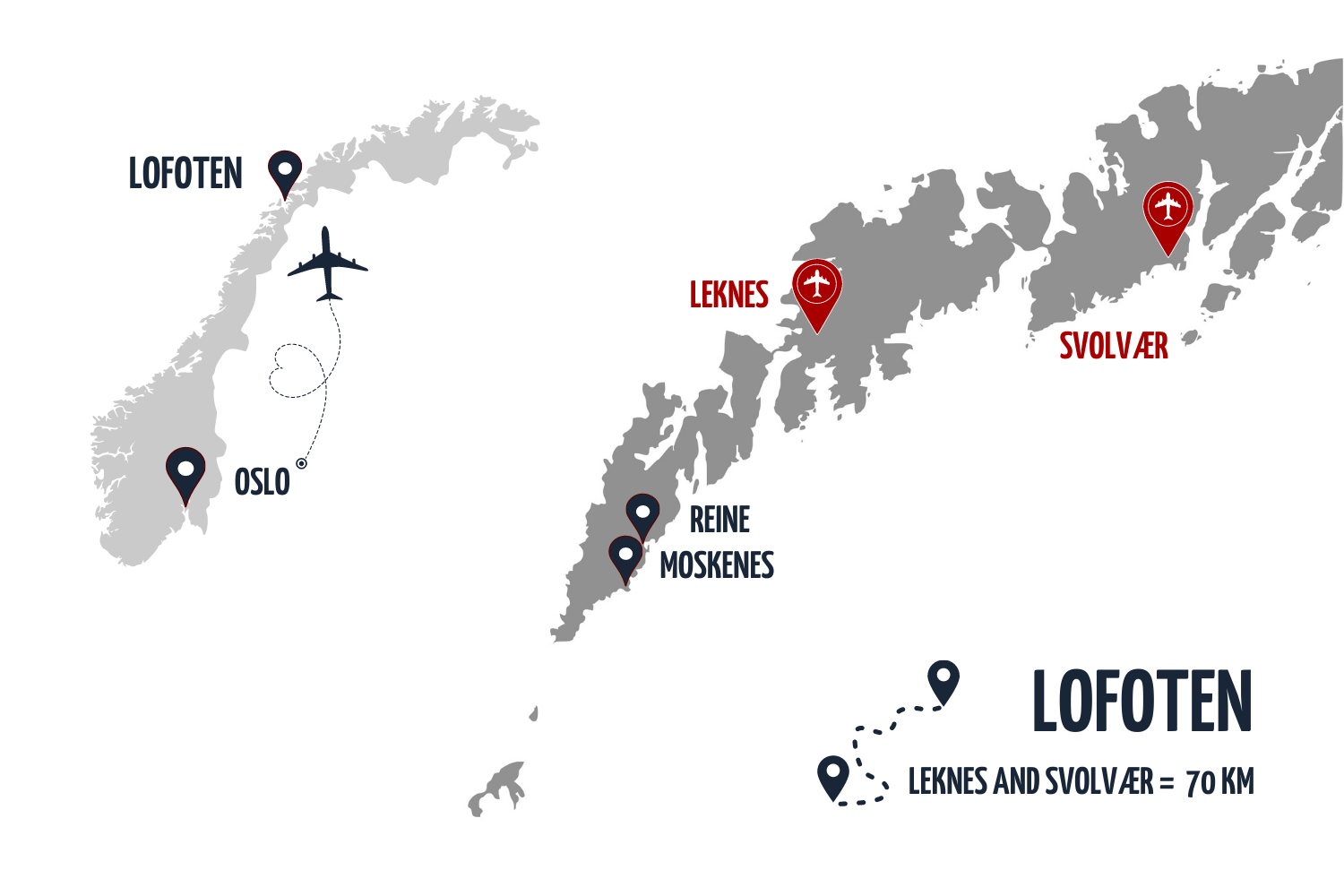
The history of this connection is as much about human stubbornness as it is about aviation. Before the commercial flights, the Lofoten Islands were as isolated as a lunar base, reachable only by a treacherous multi-day coastal steamer or winding, unpredictable roads that often became impassable. The arrival of the first scheduled flights in the 1960s, landing on the short, remote strips of Svolvær and Leknes, didn't just shorten travel time; it rewired the region's economy and its psyche, turning a remote fishing outpost into a global stage. Today, the flight from Oslo is the great equalizer. It allows a weekend warrior from Grünerløkka to sip espresso at the base of the Trollfjorden one morning and be back at their desk in the capital by lunch the next day, all while carrying a memory that feels half-fever dream, half-geology lesson.
The Quirks of the Arctic Airstrip: Where Landing is an Extreme Sport
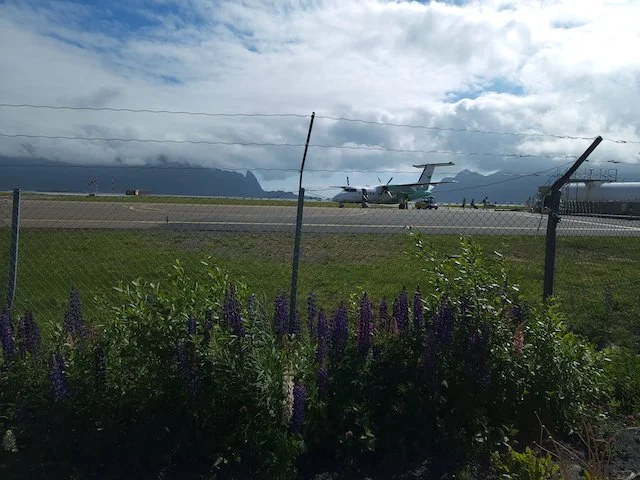
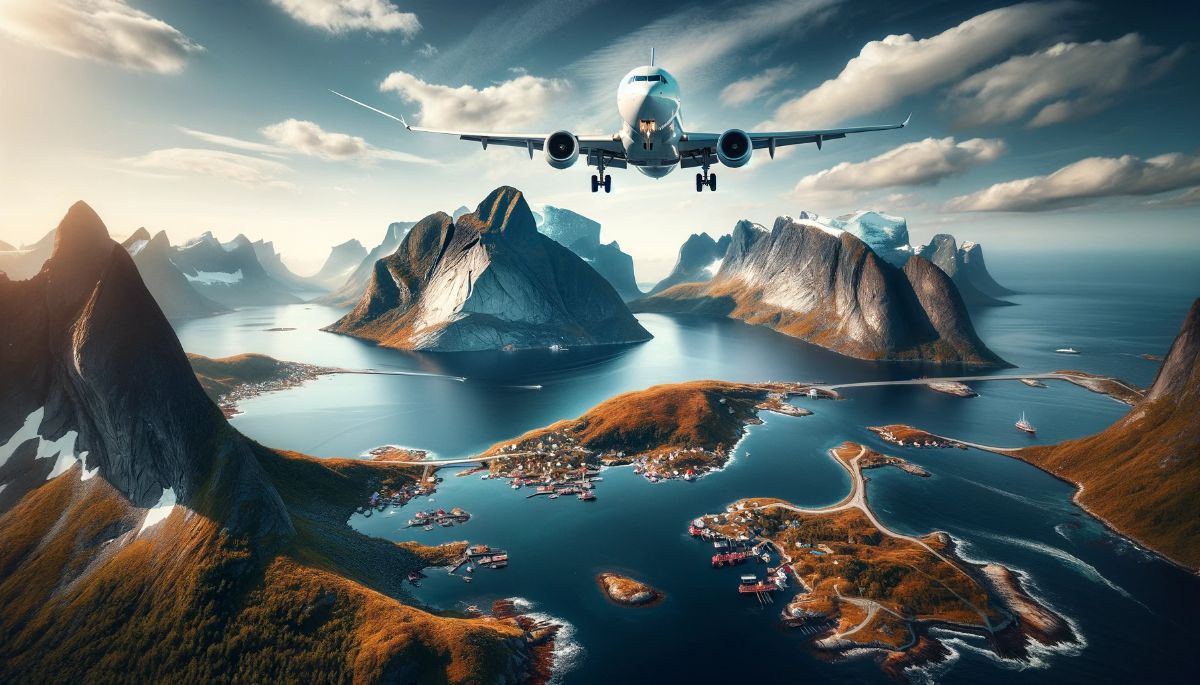
Let’s be honest: flying into Lofoten is not your standard glide path over rolling green fields. The approach to Svolvær Airport (SVJ) or Stokmarknes (SKN) is a masterclass in piloting audacity. As your aircraft descends, you are not looking at sprawling suburbs or distant motorways; you are staring directly into the granite face of a mountain. The runways are notoriously short, hewn from the very base of the fjord, and the winds, especially in the autumn months, can shift from a gentle sea breeze to a screaming katabatic gust that would make a lesser pilot break a sweat. This is not a flaw; it is a feature. It adds a layer of visceral theatre to your arrival, a silent, shared acknowledgment among passengers that you have indeed arrived somewhere special. The descent feels less like landing and more like a controlled, precise embrace with the earth itself.
Must Read
For the frequent flyer, the psychology of this route is fascinating. Typically, a "short-haul" flight from a capital is about efficiency and boredom—a time to catch up on emails or read a magazine. But on this specific route, the cabin buzzes with a different energy. You see it in the way passengers press their faces to the windows, ignoring their phones entirely. There is a primitive neurological response happening. The sheer verticality of the landscape—the sea level to 800-meter-high peaks in a matter of meters—triggers a sense of awe that psychologists call a "self-diminishing" experience. It makes your own problems feel wonderfully insignificant. This is the hidden value of the flight: it is a cognitive reset button disguised as a commute. You don't just land in Lofoten; you land with a recalibrated sense of your own place in the natural world.
Culturally, this aerial bridge has created a fascinating new identity for the Lofoten dweller. Once seen as hardy, isolated fisherfolk, they are now equally likely to be a remote software developer, a guide for epic surfers, or a chef at a Michelin-starred restaurant sourcing sea urchins. The flight has gentrified the imagination of the North. The infamous “Lofoten” cod-fishing heritage is now intertwined with a hyper-modern tourism economy, and the airplane is the conductor of this hybrid symphony. It allows the old world to persist—the drying racks of cod heads (the hjell) still litter the coastline—while simultaneously feeding a pipeline of curious, cash-rich visitors who crave the isolation that the locals now have to actively work to find. The flight is the axis on which this cultural tension spins.
Your Tactical Guide to the Skies: From Gate to Gaze
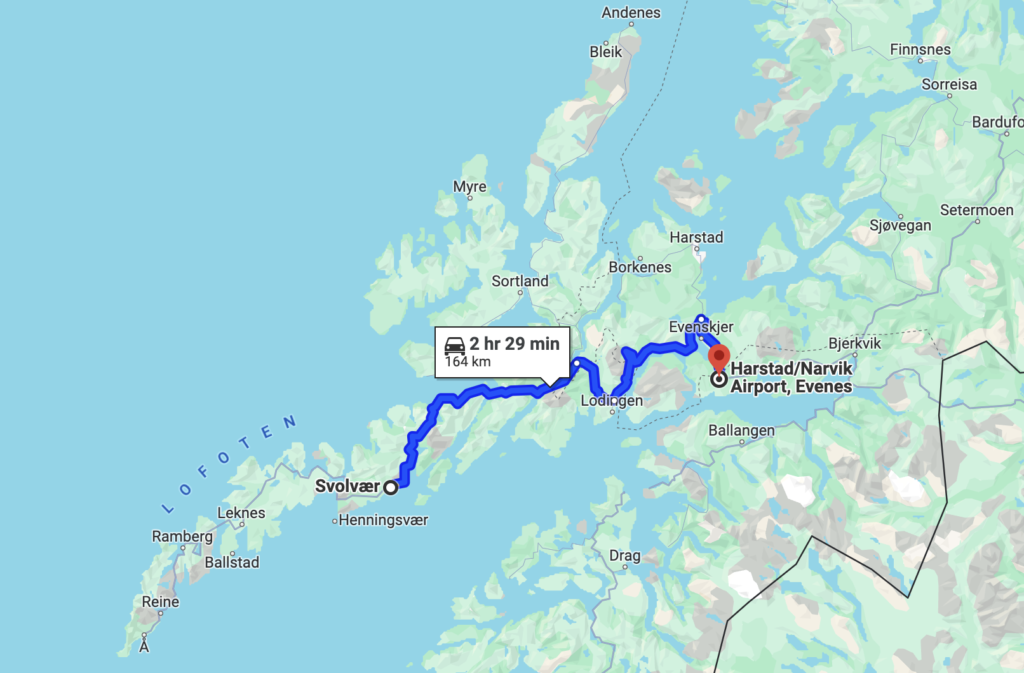
Let’s talk logistics, because the difference between a good trip and a great trip often lies in the details of the ticket. You have two primary options when flying from Oslo Gardermoen (OSL). The first is a non-stop connection to Evenes (EVE) in Harstad/Narvik, operated primarily by SAS and Norwegian. This is the "gateway" approach. You land at Evenes, which is actually on the mainland, and then you must tackle the remaining distance—either a two-hour drive over the mountain road to the Lofoten interior or a scenic bus ride. This is a smart choice if you plan to rent a car and want to experience the dramatic entrance over the bridge to the islands at sea level, with your jaw on the steering wheel.
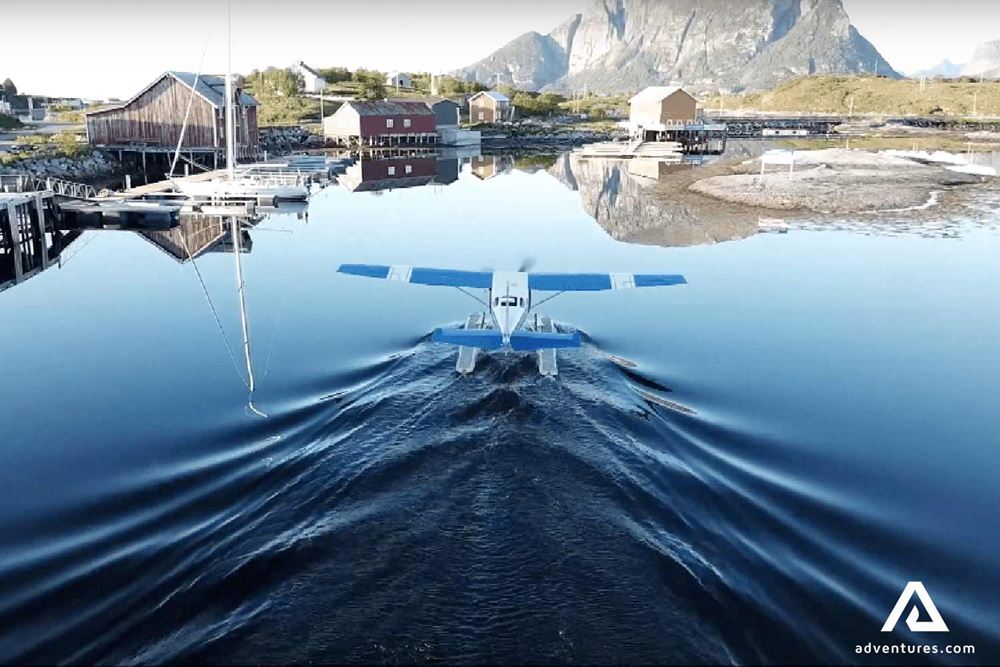
The second, and more seamless, option is to fly directly into the heart of the archipelago. Widerøe operates the "hop" from Oslo to Svolvær (SVJ) and Leknes (LKN), often via Bodø. While this involves a quick change of planes in Bodø—a charmingly small airport where you can buy slightly overpriced vafler (waffles) with brown cheese—the final flight is the real magic. It is a low-altitude, small-propeller journey that weaves between the islands, flying so low you can count the sheep on the beaches. Booking this direct route is worth the potential for weather delays because it saves you the ground transfer the same day. However, a word to the wise: if you suffer from motion sickness, sit near the front of the aircraft and look at the horizon, not the wing. The prop wash and thermal updrafts from the mountains can make the approach feel like a theme park ride.
For the photographer or the planner, the timing of your flight is your secret weapon. If you are visiting in the summer months (May-August), do not take a mid-day flight. Instead, book the first departure of the morning from Oslo. The reason is pure photographic gold. As you cross the Arctic Circle, the low-angle sun (which is perpetually hanging near the horizon) casts long, amber shadows across the fjords, making the mountains look like they are on fire. Conversely, in the winter (November-February), the "polar night" means your afternoon flight is almost certainly in the dark. But this is when you want to be watching the left side of the plane. If the solar activity is high, you might catch the green and violet ribbons of the aurora borealis dancing against the snowy peaks below—a view from the window that costs you nothing but your attention.
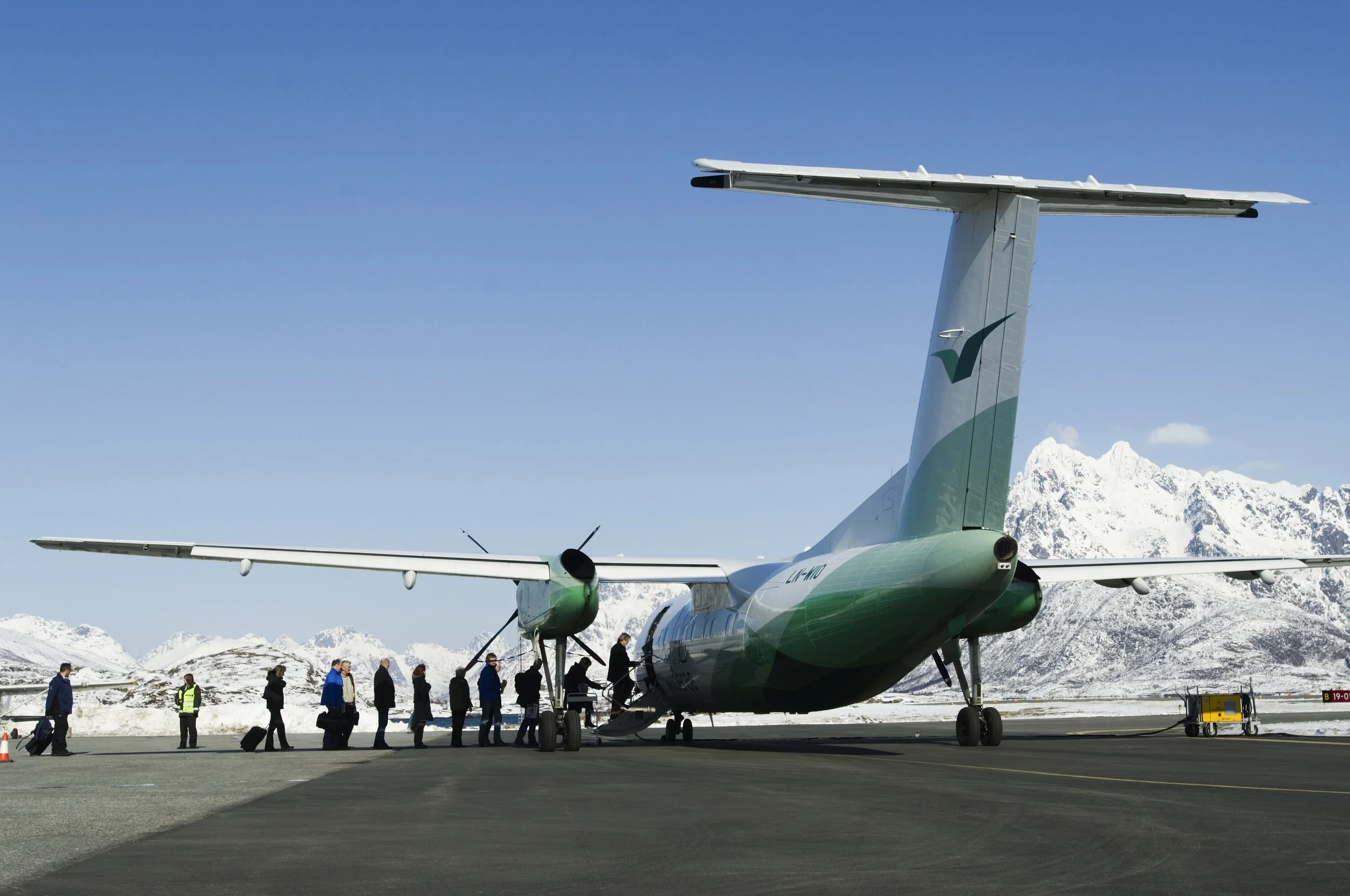
Finally, consider the "fly-fish-fly" scenario. A common mistake is to do a round-trip to the same airport. Instead, look at an "open-jaw" ticket: Fly into Svolvær (in the east), explore for a week, and then fly out of Leknes (in the west), or vice versa. This not only saves you hours of backtracking along the E10 highway but also gives you two completely different aerial perspectives of the archipelago. Coming into Svolvær, you are greeted by the iconic Svolværgeita (The Goat) rock formation; leaving from Leknes, you skim over the white-sand beaches of Haukland and the infamous Reinebringen mountain. You buy two flights, but you get two entirely different scenic masterpieces. When checking baggage, pack light. The overhead bins on the Widerøe Dash 8 are small, and a hard-shell suitcase bigger than a "cabin max" will be taken from you at the gate, only to be placed on a trolley that sits on the open tarmac. Bring a sturdy backpack; it keeps your hands free for grabbing the handrails on those windy airport walkways.
The Frequents: Questions, Answered with Nuance
How long is the actual flight duration from Oslo to Lofoten?
The raw flight time is deceptively short. A non-stop flight to Evenes (EVE) takes roughly 1 hour and 45 minutes. However, if you are flying via Bodø to Svolvær or Leknes, you are looking at a total block time of around 3.5 to 4.5 hours, depending on the layover. The clever traveler understands that the total time is less important than the "transition time"—the time it takes to disembark and be standing on a Lofoten beach. With Evenes, you land and then have a two-hour drive. With Svolvær, you land and you are essentially in the center of the action within 20 minutes. For the majority, the latter is a better use of your day, despite the longer flight time.
The psychological duration is a different story. A one-hour and forty-five-minute flight to Evenes feels like a standard domestic hop, but the moment you cross the coastline, the landscape changes so violently that it feels like you had a two-hour nap and woke up on a different planet. There is a known phenomenon among pilots that flying in the high North requires constant recalibration of spatial awareness because the lack of human infrastructure (few roads, scattered lights) makes depth perception trickier. For the passenger, this translates to a sense that time is stretching. You are not just traveling distance; you are traveling into a dimension of light and stone. The clock says it was short, but your spirit feels like it took a week.
Is it better to fly into Svolvær or Leknes?
This depends entirely on your itinerary and base camp. Svolvær is the unofficial capital of the east. It is larger, has more hotels, a bustling harbor, and serves as the best launchpad for exploring the Trollfjorden and Trollfjell. If you want nightlife, sausage stands, and the famous Magic Ice bar, Svolvær is your port of call. However, Svolvær Airport is technically on an island (Hinnøya) and requires a short bridge crossing to reach the main town center, which can be annoying in a rental car during heavy snow. Leknes, on the other hand, is in the—you guessed it—Leknes area, which is the commercial hub for the outer, western parts of the islands. It is the best hub if you are heading to the world-famous beaches of Ramberg, Flakstad, and the postcard-perfect village of Reine.
A key tactical difference: the Leknes runway is slightly longer and less exposed to crosswinds than Svolvær’s, making it marginally more reliable in marginal winter weather. However, local legend suggests that Svolvær’s approach is more "spectacular" as you fly directly into the narrow Raftsundet. If you are a photographer obsessed with the classic "Reine" view, fly into Leknes to cut your drive time to Reine down to 50 minutes. If you dream of hiking the Svolværgeita, fly into Svolvær and you can begin your hike 15 minutes after retrieval. Decide based on your hotel, not the flight price.
Can I use my SAS EuroBonus or Norwegian reward points on this route?
Yes, but with a caveat. SAS operates the Oslo to Evenes (EVE) route and is part of the Star Alliance, meaning you can redeem points. However, the availability of award seats on this high-demand route is often sparse, especially during summer's midnight sun and winter's aurora season. You will frequently find that the cheapest cash fare is more economically advantageous than using 20,000 points, because the cash fare is often subsidized. For the internal legs via Bodø, you will be flying on Widerøe.
Widerøe is not a full member of Star Alliance, but they have a codeshare agreement with SAS. This means you can earn SAS points, but booking a "classic" reward seat on the Widerøe-only operated Svolvær segment is notoriously difficult. You will often have to call the SAS customer service desk to book it, as the online system may not show the connecting availability properly. A better strategy is to book the entire ticket as a single SAS ticket from OSL to SVJ—even if the second leg is a Widerøe flight—so that your points calculation applies to the total distance, and your baggage is checked through. Do not try to "mix and match" separate airlines on your own. The weather delay risk is too high, and you will lose your layover protection.
What is the baggage situation on the small planes, and can I bring my skis or fishing rod?
This is the rubber-meets-runway (or fiberglass-meets-fjord) issue. The landing gear and cargo holds on Widerøe's Dash 8 aircraft are small. The standard checked baggage allowance applies (23kg), but a standard 158cm linear bag will fit easily. The issue arises with sports equipment. Skis, snowboards, and surfboards are usually accepted, but you must declare them at check-in, and there is often a hefty oversize fee ranging from 50 to 100 Euros one way. More importantly, there is a strict weight limit per piece (often 32kg), and the baggage rollers are manual—there is no automated conveyor belt at Svolvær. You will often see your skis handed to you outside on the tarmac after landing.
For fishing rods, you are in luck. Given the deep connection to the cod fisheries, locals fly with rods all the time. They are handled with relative care, but you must put them in a solid, hard case. The practical, insider tip is to dry your fishing gear before packing. The cargo hold is unpressurized, and if your reel is wet, it will freeze solid during the flight and may be damaged. Also, remember that some of these small airports have a 10kg carry-on weight restriction, not just a size limit. Bring a daypack that is feather-light, as the attendant at the gate will often weigh your carry-on with a hand-held scale. Be kind to the staff; they are dealing with wind gusts, minus-20-degree temperatures, and your panic. A smile goes a long way to ensure your bag gets priority placement.
What happens if my flight is cancelled due to weather? Is there a Plan B?
This is the Goliath of questions. Lofoten is infamous for "weather-bound" cancellations, particularly in the autumn and winter. The short answer: flights are frequently delayed, but rarely cancelled for days on end. However, if the wind exceeds 38 knots crosswind component, they will not land. If you get stranded, the first rule is to remain calm. The airlines (Widerøe) have a legal obligation to reroute you, but the options are limited. If Svolvær is closed, they might send buses to Bodø to catch a ferry, or they will ask you to take the ground transport to Evenes to catch a larger SAS jet back to Oslo.
Your best personal Plan B is to never squeeze Lofoten into your final day before another international flight. Always build in a "buffer day"—an entire 24-hour buffer. If you miss your connection, you are not just late; you are stranded for potentially another two days. Have a local contact number for a hotel in Svolvær. Also, understand the Norwegian "fair weather" clause: if the airline cancels due to weather, they do not have to pay for your hotel in all cases—though they usually provide vouchers for local guesthouses. Pack a change of underwear and a book in your carry-on. You might as well enjoy the forced slow-down. In this place, the weather is the boss, and a cancelled flight is simply the universe reminding you that you are still a guest in its domain.
In our daily lives, we are conditioned to crave speed and efficiency—to reduce the journey to a necessary evil on the way to a destination. But the flight to Lofoten dismantles this utilitarian logic. It reminds us that the journey itself can be a form of landscape consumption, a visual appetizer that prepares the palate for the main course. It forces us to look out the window, not at the screen. In a world where we often take the friendship of the sky for granted, this route is a recalibration of respect for the elements and for the pilots who thread the needle between peaks.
Ultimately, this flight connects to a deeper human longing: the need to feel small in a good way. We build our lives in glass towers and digital grids, but the soul still craves the sublime—the feeling that the world is bigger and more beautiful than our own anxieties. The descent into Lofoten offers that in spades. The jagged teeth of the mountains, the black mirror of the sea, the isolated red cabins—they are not just scenery; they are a narrative about resilience and beauty existing in the harshest of conditions. And we, from our seat at 20,000 feet, get to witness it all.
So, the next time you find yourself in Oslo, looking at the departures board, consider the allure of the north. Booking that ticket is more than a purchase of a seat—it is an investment in a memory, a test of your adaptability, and a love letter to the untamed edges of Europe. The coffee will taste stronger up there, the air will smell cleaner, and the flight back will carry the sweet, melancholic weight of having seen something profound. Take the flight. Let the runway rush by, feel the wheels lift, and trust the pilot with your awe.