Finger Placement On Guitar Chords

There is a moment, frozen in the amber of memory, when the guitar ceases to be a piece of wood and becomes a portal. For many of us, that moment was not a soaring solo, but the clumsy, painful press of an index finger against a steel string, the metallic bite of the fret leaving a divot in our soft skin. We were not playing music; we were negotiating with physics. We were learning, in the most tactile way imaginable, that the distance between a dull thud and a crystalline chime is measured in millimeters—and in the stubborn integrity of our fingertips. This primal negotiation, this first contract between human muscle and inanimate tension, is the true origin story of guitar playing. Long before the internet, before tablature apps, and even before the electric guitar’s seductive hum, there was only the hand, the fretboard, and the brutal, beautiful necessity of finding a place to put your fingers so that the silence would break.
In the twilight of the 19th century, the guitar was a parlor instrument, a voice for the drawing-room romance. Its gut strings were forgiving, but the technique was rigid. The classical school, codified by figures like Fernando Sor and later Francisco Tárrega in the 1880s, treated finger placement as a form of geometry. The thumb was tethered to the bass strings, a metronome of the lower register, while the index, middle, and ring fingers danced a precise ballet over the trebles. There was no "hacking" it; you did not tuck your pinky for comfort, you anchored it for leverage. The initial human necessity was not speed or distortion, but clarity—the need to make a fragile instrument project in a candle-lit room without amplification. This meant the left hand had to adopt a posture of aristocratic grace: the thumb placed squarely behind the neck, the wrist arched, the fingertips landing perpendicular to the fretboard, like a pianist’s on ivory. It was a discipline born of acoustic necessity, a world away from the slouched, thumb-over-the-neck grip that would define a century of rebellion.
But the evolution of that geometry is the evolution of our own desires. In the 1920s, the blues—a music of the Delta, of juke joints and porch stoops—began to pull the classical hand apart. The players, avatars of a raw, unvarnished truth, had no time for curatorial precision. Their necessity was economic and physical: they needed to be loud, they needed to bend notes that the classical repertoire never dreamed of, and they needed to do it while singing about a broken heart or a runaway train. The thumb, once a prisoner behind the neck, slipped over the top of the fretboard, muting the low E string to create a percussive drone. The fingers, instead of hovering perpendicular, flattened slightly to allow for the slide and the smear. This was the genesis of the “box” shape, the pentatonic cage that still cages most of us, but in a good way. The finger placement was no longer a pristine seal; it was a strategic load-bearing structure designed to absorb the energy of the slide and the bend, often muting adjacent strings to create that signature, muddy, humanizing noise. This was the first great hack—sacrificing classical purity for visceral power.
Must Read
The Fretboard as Map: From Vinyl Grooves to Visual Glyphs
By the time the 1960s arrived, the guitar had become a loudspeaker for the soul, and the finger placement problem had metastasized from a matter of efficiency into a matter of identity. Jimi Hendrix, perhaps the most radical hacker of ergonomics, did not just play chords; he treated the fretboard as a battlefield of thumb pressure. His notoriously long thumb wrapped over the neck to frett the low E and A strings, allowing his other fingers to remain free for melodic fills on the top strings, a technique previously considered sloppy amateurism. He, along with contemporaries like Jeff Beck, used the whammy bar not as a novelty, but as a signal to the fretboard that the rules had changed. The hand was no longer just pressing; it was vibrating, screaming, and pleading. The careful architecture of classical placement was turned into a wrecking ball of sound, where the intention of the finger was more important than its location.
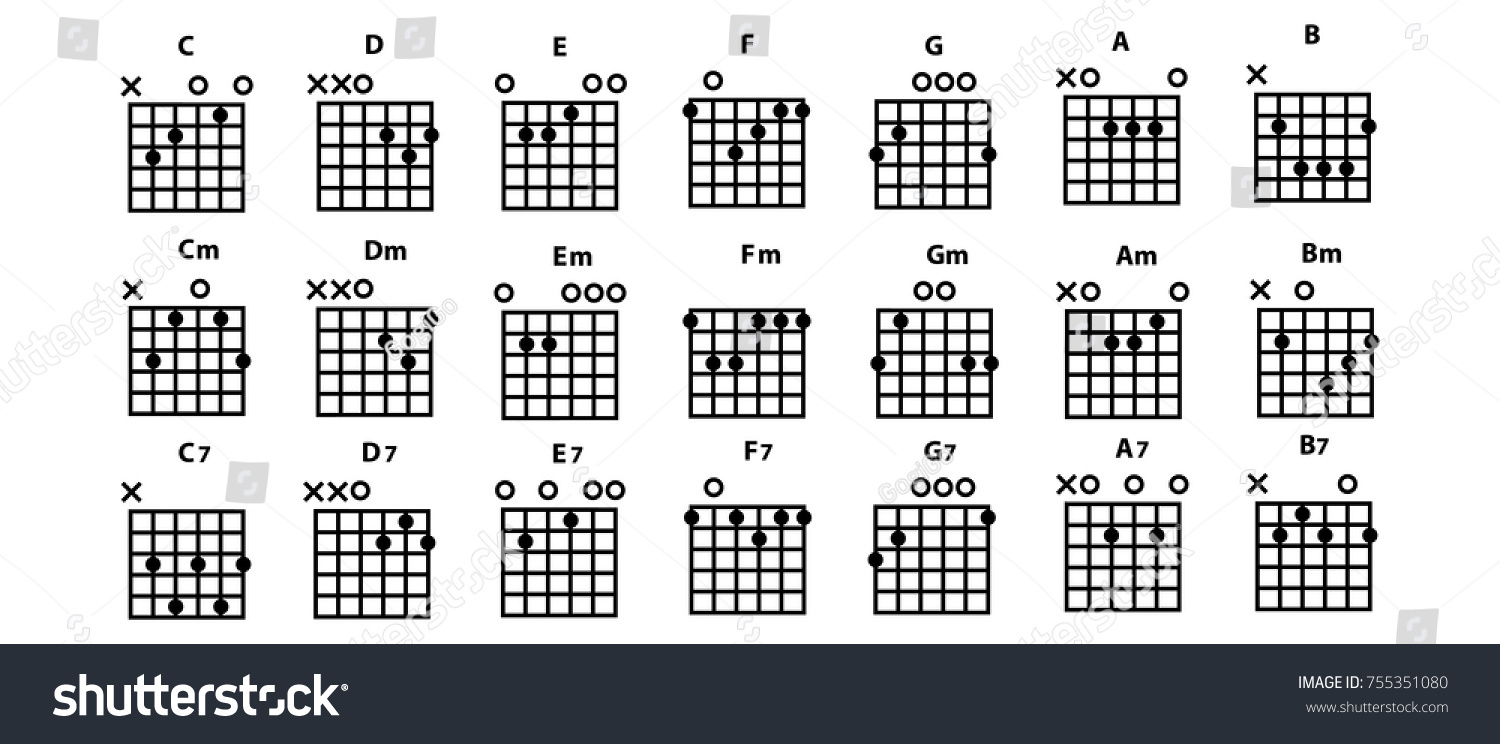
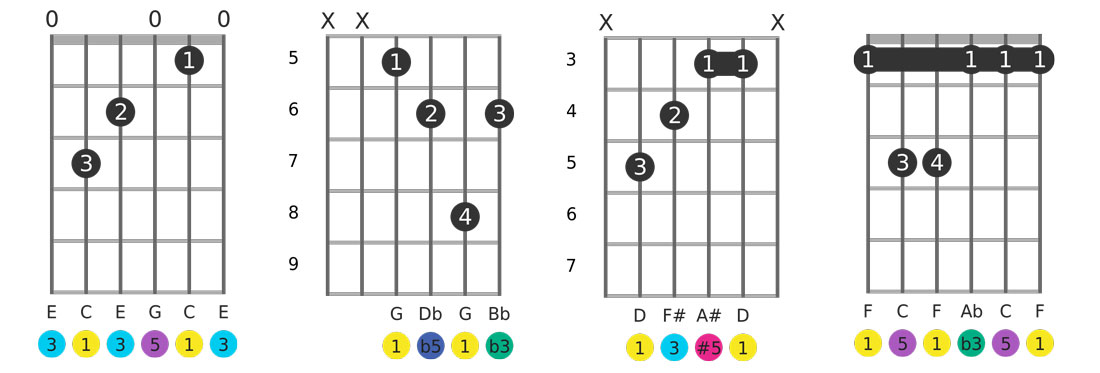
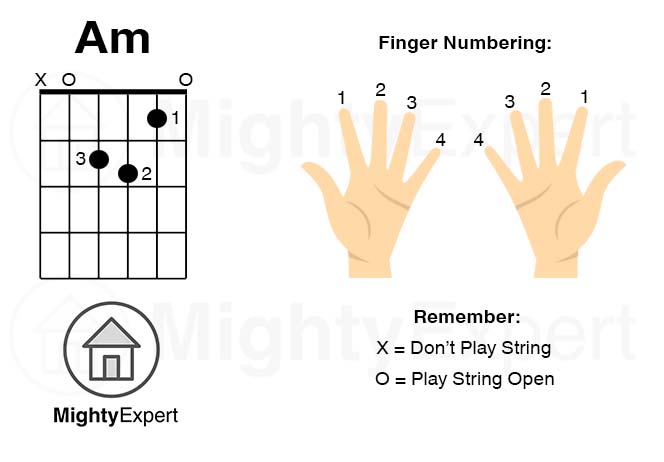
This period also saw the birth of the visual tablature revolution. In the 1970s, the glossy rock magazines, the “guitar hero” monthlies, began printing chord diagrams that looked like blueprints for a miniature city. They stripped away the rich, contextual knowledge of the classical era—the why, the musical theory—and replaced it with pure, urgent where. You did not need to know that a C major chord contained a C, E, and G; you only needed to know that your index finger goes on the first fret of the B string, your middle on the second fret of the D string, and your ring finger on the third fret of the A string. This democratization was the greatest gift and the greatest curse of the guitar. It allowed millions of teenagers, myself included, to play “Smoke on the Water” within an afternoon. But it also created a generation of players who viewed finger placement as a set of static icons, rather than a dynamic, fluid system. The bizarre treatment of the previous decades—the strict, unquestionable authority of the teacher—gave way to the equally bizarre notion that the diagram was the gospel, and the hand was merely a slave to the ink.

Another forgotten vintage fact: the use of surgical tape and liquid bandage. Before the modern era of polished, super-coated strings, the 1950s and 1960s were rife with callus-building pain. Many amateur players treated their fingertips with a concoction of rubbing alcohol and spit tobacco to harden the skin, while others, like the session players of the Motown scene, would cut the fabric of their leather gloves to create a “half-glove” that protected the fingers while allowing the fingertips to touch the string. This was a bizarre, deeply physical relationship with the fretboard, a union of blood and nickel. The finger placement was not just an intellectual act; it was a dermatological one. These unsung heroes of the studio, knowing that a barre chord required equal pressure across all six strings, would often file their nails to a specific, curved profile that matched the radius of the fretboard—a precision tooling of the human body for the sake of sonic consistency.
In the 1980s, the rise of the shredder (think: Yngwie Malmsteen and Eddie Van Halen) forced another mutation. The necessity now was velocity. Finger placement became less about the chord shape and more about the "sweep" and the "hammer-on." Books like Speed Mechanics for Lead Guitar dissected the mechanics of the hand, isolating the pivot of the wrist and the angle of the finger pad, turning the fretboard into a math problem. The pinky, which classical players had strengthened but often kept reserved, was now a full-blown offensive weapon. This era vaulted the index finger into a role of rigidity, often serving as a pivot bar for wide stretches, while the other fingers were trained to fall independently, like hammers in a steel mill. It was a violent, mechanical reinterpretation, stripping away the organic folk-ness of the blues for a cold, clinical precision that was equally mesmerizing and, to some, soulless.
The Modern Alchemy: Pressure, Rest, and the AI of the Hand
Today, in the age of the YouTube guitar guru and the mobile app, we are witnessing a strange reconciliation. The information is endless, but the sensorial connection is being lost. Modern players are now obsessed with “light touch” and “setup”—lowering the action, using 9-gauge strings—to compensate for a lack of physical conditioning. The classic principle of the barre chord, where the index finger must act as a uniform steel capo, is being hacked. We see players using "Zombie Chords"—shapes that only use the 1st and 2nd fingers, leaving the third and fourth to wave in the air, because the modern alternative music scene relies on dissonant intervals and open strings rather than the full six-note beef of a major chord.

The most profound modernization is the concept of pressure mapping. We now know, through high-speed cinematography and pressure sensors, that the finger’s force is never static. The fingers pulse, adjusting micro-tensions to accommodate vibrato and release. The modern "hack" is the use of the thumb as a vivo muscle. Modern instructors push the "CAGED" system harder than ever, but they are now marrying it to the physical reality of the hand’s asymmetry. We are learning to let the natural curve of the fingers fall not perpendicular to the fretboard, but slightly parallel to the string—rotating the wrist to allow the fleshy pad of the finger to barre multiple strings with less torque. It’s a gentler, more biomechanical approach than the rigid classical past, acknowledging that the hand is not a static sculpture but a living, breathing lever system.
The Fingerprint of the Future: FAQs on the Anatomy of Sound
1. Why does my barre chord still buzz, even when I press "hard"?
Ah, the eternal plague of the novice. The historical myth, codified in the 1960s folk revival, was that you needed "bear claws" of steel—that you must press down until the fretboard splinters to achieve a clean sound. This is false. The buzzing is often not a matter of pressure, but of placement geometry. In the 1930s, the great jazz guitarist Django Reinhardt was renowned for playing with only two functional fingers on his left hand, using a mutilated and fused index and middle finger. He could not press hard; he had to find the dead center of the fret, the exact bisecting line between two metal wires. When you press the string directly on the fret wire, you get a dull thud. When you press a few millimeters behind it, you get the clean pitch. The modern fact, confirmed by luthier analysis, is that you need only enough pressure to overcome the string’s vibration amplitude. A lighter touch, combined with rolling the index finger slightly onto its side to use the harder bone-like side of the finger, is the true key. You are not crushing the string; you are interrupting its path with the precision of a surgeon, not a butcher.
Furthermore, the myth persists that the left-hand thumb must be wrapped over the top for all chords. In the 1950s, this was strictly a rock’n’roll technique, used by players like Chuck Berry to free up the index finger. But for the standard barre chord shape, the correct alignment is a low thumb, placed behind the neck, pointing upward toward the headstock, to allow the index finger to lie flat. The modern "hack" is to perceive the barre chord not as squeezing the neck, but as hooking the weight of the arm into the neck, letting gravity do the work. As you pull the elbow back and toward the body, the weight of the arm rotates the hand, pressing the index finger down without engaging the thumb muscles at all. This is the forgotten secret of the classical era, resurrected for the modern player who suffers from carpal tunnel: the arm is the engine, the finger is just the piston.

2. Is the “one finger per fret” rule a modern invention or an ancient law?
It is a relatively modern invention, and arguably a tyrannical one. The stringent "one finger per fret" rule was codified in the late 19th century classical pedagogy, specifically by the great French-Cuban guitarist and composer Emilio Pujol, who standardized the left-hand position to facilitate stretching for complex arpeggios. But it was never a law; it was a guideline for playing in higher positions. In the 1920s blues tradition, players frequently used a "slide-style" approach, keeping the index finger flat across three frets to play a dominant seventh chord in open position, defying the rule. The rule was also broken by jazz players in the 1940s, who used "pivot" fingers, often lifting the index and middle finger as a single block to shift positions rapidly during bebop heads.
The modern counter-argument is that the rule is useless for the guitar’s natural tuning. Unlike the piano, which is perfectly chromatic, the guitar’s standard tuning often allows for "skipping" positions. The 1970s fusion guitarists, like Al Di Meola, proved that using a "safe seat" grip—where the index finger stays on the fifth fret for a long period while the other three fingers dance within a four-fret span—is vastly more efficient. The true modern hacking of this rule is the "segway" technique, where you shift an entire chord shape up the neck, keeping the same finger topology, rather than re-assigning a new finger to each new fret. The anatomy of the hand does not want to contort; it wants to maintain a shape and move it like a brick. So, the rule is truly a relic of classical piano training, applied arbitrarily to a non-linear, multi-string instrument. The new rule is: find the shape that fits your hand’s natural relaxation, and then turn your hand into a transportable birdcage.
3. Why do some players mute strings intentionally, while I try to avoid it at all costs?
This is the most profound shift in the philosophy of finger placement. For the classical era, finger placement was exclusively about clarifying the note. The goal was a pristine, isolated tone. Muting was a mistake, a sign of sloppiness. But in the mid-1960s, with the advent of psychedelic music and the fuzz pedal, players began to realize that the noise between the notes was the music itself. Jimi Hendrix famously used his left thumb to mute the low E string while playing an E major chord, creating a tight, percussive static. He used the edge of his palm to mute the high strings while bending, creating a "chipmunk" yelp that was all attack.
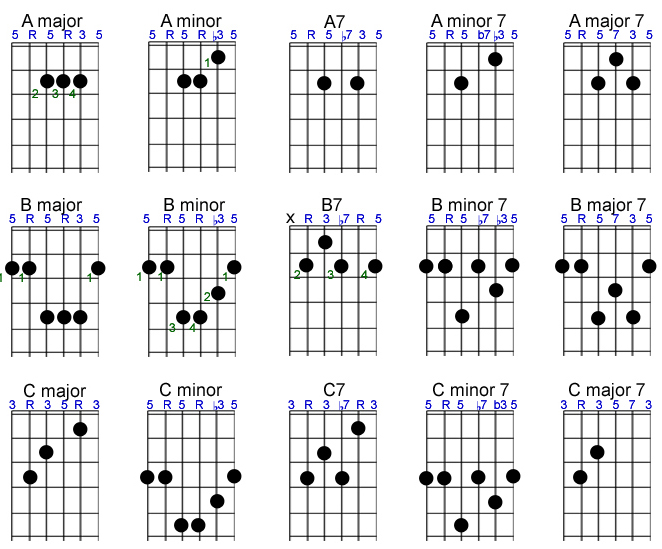
This concept, called "deadening" or "ghost notes," has become the cornerstone of modern funk and neo-soul. Players like Prince and John Mayer have codified the technique of unintentional intentionality: you place your fingers on the strings with the same shape as the chord, but you release the downward pressure just enough so that the strings slap against the fretboard, producing a pitched percussive thump rather than a sustained note. The finger placement is no longer a static destination; it is a kinetic, dynamic state. The modern fact, proven by studio session players, is that 70% of a great rhythm guitar track is the muting and the release, not the attack of the chord. You are not just a player of notes; you are a sculptor of silence. The fingers become mutes, dampeners, and drums, placed on the strings not to sound them, but to shape the air around them. The magic lies in the almost-pressing, the quarter-press that creates the ghost, turning the guitar into a rhythm machine that exists as much in the negative space as in the positive sound.
Looking ahead twenty years, the fretboard is becoming a sensor array. We are already seeing experiments with optical and electromagnetic pickups that can detect finger position without contact. The finger placement will no longer be a pressure-based interaction but a proximity one. You will not need to press the string to the fret; you will simply hover your finger over the correct zone, and a synth engine will do the rest. This will free the hands from the physics of tension, allowing for unimaginable speed and chordal density. However, this raises a chilling, nostalgic question: if you don’t feel the string under your pad, will you still feel the music? The human brain is wired to learn through resistance. The pain of the callus, the ache of the stretch, these are the doors to expression.
In the 2040s, I believe we will see a renaissance of the true tactile. The children of the AI generation, raised on zero-friction virtual reality, will yearn for the weight of a real guitar. Finger placement will become an artisan’s craft, a form of manual rebellion against the ethereal. We will see a re-embrace of the 1880s classical posture, not as a restriction, but as a heritage. The future will be a fusion: cybernetic teaching guides that project the ideal finger angle onto the fretboard in augmented reality, combined with the ancient, muscle-memory ritual of the stretch. The guitar will become a physical anchor in a digital ocean, a place where we go to touch metal, to feel the wire cut our skin, and to prove, with our own two hands, that we are still human. The finger placement will be the last solid, verifiable truth in a world of shape-shifting code—a final, romantic act of translation from the soul to the wire.