Do Air Force Reserves Get Benefits

The question “Do Air Force Reserves get benefits?” sounds like the setup to a punchline about weekend warriors and free lunches. But peel back the layers of acronym-laden bureaucracy, and you’ll find a surprisingly rich, often misunderstood ecosystem of perks that rivals—and in some ways outperforms—the active-duty experience. It’s a story about leverage: how a part-time commitment (typically one weekend a month, two weeks a year) can unlock a full-spectrum suite of healthcare, education, and retirement advantages that most civilians would assume require a 24/7 uniformed lifestyle. The history here is telling—the Reserve component was formalized in 1948, born from a post-WWII realization that America needed a standby force that wasn’t just a skeleton crew, but a deeply embedded, skilled second skin of the military. Today, with the Air Force facing pilot shortages and cyber threats, the Reserve isn’t just a fallback—it’s a strategic asset, and the benefits package reflects that shift.
But here’s the darkly funny twist: most reservists don’t join for the dental plan. They join for identity, for purpose, for the chaos of a drill weekend that feels like a fever dream of PowerPoint slides and flight-line runs. Yet the benefits are the quiet engine that makes that lifestyle sustainable. It’s a Faustian bargain that actually pays off—if you know how to navigate it. The civilian world talks about “side hustles” and “gig economy” perks; the Air Force Reserve invented that concept decades ago, but with a security clearance and a pension attached. The real question isn’t if you get benefits—it’s whether you can stomach the administrative maze to actually claim them.
The Hidden Lattice: Beyond the Obvious Health and Pay
Everyone knows about the TRICARE Reserve Select (TRS) health insurance—the affordable, civilian-friendly medical plan that costs a fraction of COBRA or marketplace rates. But scratch the surface, and you’ll find the true psychological gem: the Reserve’s tuition assistance and GI Bill transferability. Unlike active duty, where funding often evaporates with unit budgets, Reserve education benefits are staggeringly flexible. You can use the Post-9/11 GI Bill part-time, or transfer it to a spouse or child after six years of service. This isn’t just a perk—it’s a multigenerational asset. Think of it as a reverse inheritance: you serve, your kids skip student debt. That’s a cultural shift, a quiet rebellion against the $1.7 trillion student loan crisis that’s crushing Gen Z and millennials alike.
Must Read
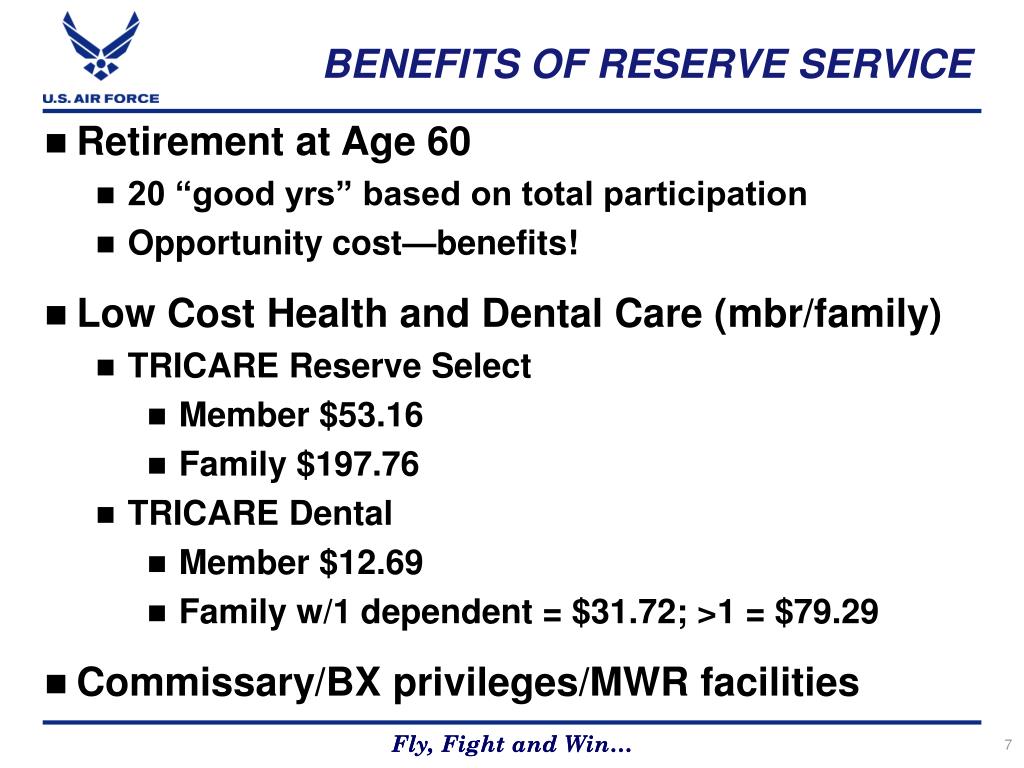
Then there’s the Retirement Pay at 60—a bizarre, almost James Bond-like quirk. Unlike active duty (which pays immediately after 20 years), reservists accrue points and must wait until age 60 to collect, unless they have qualifying deployments that shave off three months per 90-day stint. This creates a bizarre subculture of “point chasers”—reservists who volunteer for odd missions in Djibouti or Greenland just to nudge their pension early. Dark fun fact: there’s a known loophole where a reservist can work for 20 years but only have 6 years of “good” time, then claim a pension based on partial points. It’s a game of nested spreadsheets, and the winners are the ones who treat their own benefits like a chess match, not a form to sign.
Culturally, the Reserve benefits package has created a new archetype: the “dual-career warrior.” You know this person—the Air Force cyber analyst who also runs a boutique whiskey bar in Austin, or the C-130 loadmaster who’s a certified nurse midwife. The Reserve’s retirement plan, combined with low-cost life insurance (up to $400k under SGLI) and the Montgomery GI Bill top-up, enables a staggeringly entrepreneurial life. It’s like having a safety net woven from titanium. However, the psychological cost is real: the “Sunday night dread” that every reservist knows, the guilt of missing family events for a drill weekend, and the subtle resentment from civilian employers who legally must hold your job but often create informal friction. The benefits mitigate the financial anxiety, but they can’t solve the existential tension of being a part-time soldier with full-time responsibilities.
Scenarios and Playbooks: How to Weaponize Your Benefits
Scenario one: Meet Sarah, a 29-year-old graphic designer from Portland. She joins the Reserve to escape her dead-end freelance gig. Within 18 months, she’s using Tuition Assistance (TA)—which covers 100% of tuition, up to $4,500 a year, for a master’s in UX design. She also mows through the Reserve Education Assistance Program (REAP), which gives her a monthly stipend just for being enrolled. Her drill weekends are a grind, but her civilian salary jumps 40% because she has a free degree and a Top Secret clearance that her agency desperately needs. Her key takeaway: the Reserve is a subsidized graduate school with a uniform attached. The actionable move is to never pay for a certification—everything from PMP to AWS Solutions Architect is reimbursable if you file the right forms through the Virtual Education Center.
Scenario two: James, a 45-year-old airline pilot who joined the Reserve for one reason—TRICARE Reserve Select. His civilian airline’s health plan would cost him $1,800 a month for family coverage; TRS costs roughly $280. That’s a $20,000 annual savings, which he dumps into a Roth IRA. He doesn’t love the drill weekends, but he’s calculated that his 20-year Reserve pension, even if he only gets 40 points per year, will give him roughly $1,200 a month at age 60—a solid hedge against the airline industry’s boom-bust cycle. His tip: never skip a drill, but also never volunteer for “make-up” drills. The points system rewards consistency, not heroism. Also, he uses the Commissary and Exchange access (yes, the Reserve gets it) to save 15% on groceries, and he’s learned the bizarre trick of using the military’s MWR (Morale, Welfare, Recreation) program for discounted Disney World tickets and ski resorts.
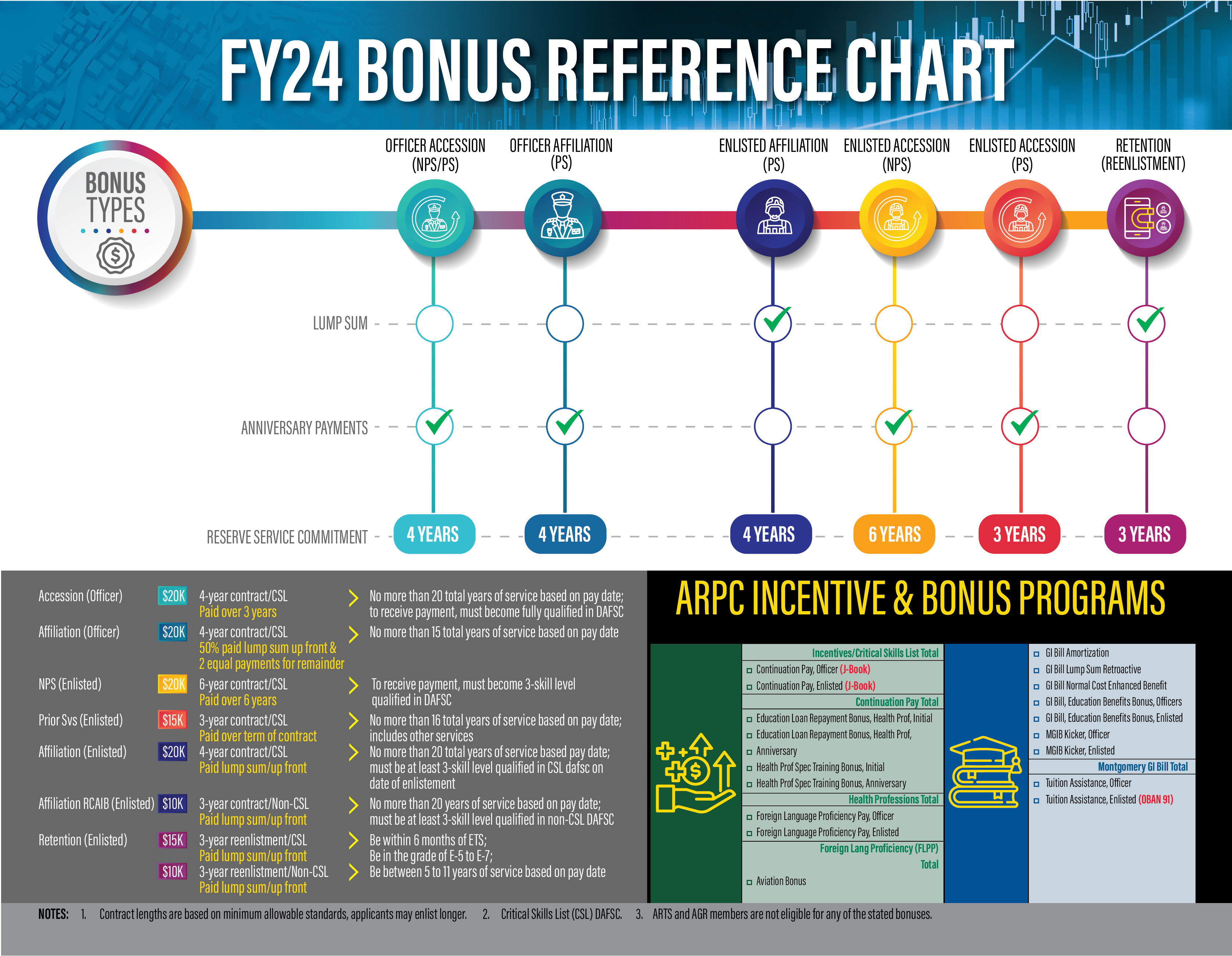
Scenario three is the cautionary tale: Priya, a logistics officer, signed up during a post-9/11 signing bonus frenzy. She never read the fine print on her Critical Skills Retention Bonus (CSRB), which required an eight-year commitment. By year four, she was burnt out but trapped—resigning means paying back the full bonus plus interest. Her lesson: treat every bonus like a prenuptial agreement. The benefits are fantastic, but they are also contracts. For the average reader, the actionable takeaway is to use the Reserve Component Transition Assistance Program (RC-TAP) before you even sign—it’s a free class that breaks down the exact monetary value of your benefits, and no one takes it because it sounds boring. It is boring. But knowing your “true hourly wage” (including benefits) changes your outlook. For example, a typical drill weekend for an E-5 with six years of service pays about $350 for 2 days, but when you add the value of health insurance, life insurance, and retirement accrual, it’s closer to $700. That’s not chump change; that’s a weekend rental property mortgage.
Critical Queries: Five FAQs Everyone Asks (But Few Answer Well)
Can I use the GI Bill while on active Reserve orders?
Yes, but it’s a delicate dance. The Post-9/11 GI Bill has a tiered structure—if you serve at least 90 cumulative days of active duty post-9/11, you become eligible for a percentage of the benefit (e.g., 60% for 90-179 days, up to 100% for 36 months). The tricky part is that Title 32 orders (like initial training or annual training) do not count toward that 90-day threshold; only Title 10 (federal active duty) orders do. So, if you’re a reservist who only does weekends and AT, you might be ineligible for the GI Bill entirely—that’s a harsh shock. The workaround is to volunteer for voluntary active duty, like a deployment or a long-term mobilization, to build those qualifying days. Also, note that while on orders, you can use Tuition Assistance (TA), but you cannot use the GI Bill concurrently with TA for the same course—that’s a double-dip that the system will flag and claw back.
Furthermore, the Montgomery GI Bill–Selected Reserve (MGIB-SR) is a separate, smaller benefit for reservists who don’t qualify for the Post-9/11 version. It pays a monthly stipend (roughly $466 for full-time study) for up to 36 months. Many reservists mistakenly think they can use both MGIB-SR and Post-9/11—you cannot. You must choose one, and the choice is irreversible. My advice: work with a Veterans Affairs counselor before committing, because the interaction with your federal student aid (FAFSA) can also alter your civilian financial aid package. It’s a bureaucratic Jenga puzzle, but the payoff is a debt-free degree.
Do reserves get free dental and vision?
No—and this is the most annoying gap in the benefit package. TRICARE Reserve Select covers medical and prescription drugs, but it explicitly excludes dental and vision for the reservist and their dependents. This drives people crazy, because active duty has free dental at the base clinic. For reservists, you have two options: purchase the TRICARE Dental Program (TDP) separately (costs about $12-$40 per month for a single, more for family), or rely on your civilian employer’s plan. Vision is even worse—TRS covers an annual eye exam for certain conditions like diabetes, but it does not cover routine glasses or contact lenses. You’ll need a separate vision plan through your civilian job or pay out of pocket. This is a classic “test of loyalty”—the military gives you the big things (hospital, surgery) but makes you sweat the small stuff (a cavity, a new pair of Ray-Bans). The dark fun fact here: many reservists who are also veterans with a VA disability rating above 50% get free VA dental, which fills the gap. So, if you have any post-deployment aches and pains, get them documented—it’s your loophole to a free root canal.
Will my civilian employer have to pay me during drills?
This is a binary answer wrapped in a legal gray area. Federally, under the Uniformed Services Employment and Reemployment Rights Act (USERRA), your employer is required to hold your job and re-employ you, but they are not required to pay you for days you miss for military duty. Some states (like New York, California, and New Jersey) have their own laws that require partial pay for shorter absences (typically under 30 days). Practically, most white-collar employers offer “military leave” as a separate paid leave bucket, or they allow you to use vacation days to cover drill weekends. The real cultural friction is the “gig worker” problem—if you’re an independent contractor, USERRA doesn’t protect you at all. This is a massive blind spot that affects reservists in tech, consulting, and the trades. My tip: disclose your Reserve status during the interview process, not as a liability but as a strength—you bring discipline, security clearance, and resilience. Then, get every accommodation in writing. A good employer will see the benefit as a public relations win for them (they love bragging about hiring veterans).
Can I get a security clearance as a reservist?
Absolutely—and it’s often easier than you think. In fact, the Reserve is a fantastic backdoor to a clearance because the military covers the investigation costs (typically $5,000-$10,000) and prioritizes reservists for many roles, especially in intelligence, cyber, and logistics. The catch is that you need a military job (AFSC) that requires it, and you need to maintain it by periodically logging onto the Joint Personnel Adjudication System. The psychological burden is real: the clearance process digs into your finances, foreign contacts, and even your therapy history. But the payoff is staggering—a Top Secret clearance in the civilian world can add $15,000-$25,000 to your annual salary, and many defense contractors will hire reservists specifically because they have an existing clearance and can deploy. The dark fun fact: a “lapse” in clearance is not a disaster; it’s often just a paperwork delay. I’ve seen reservists with a DUI that was adjudicated favorably simply because they were honest on their SF-86 form. The lesson: don’t lie, and use a security clearance lawyer (the military provides free JAG assistance for this) if you get a “Statement of Reasons.”
What happens to my benefits if I get deployed?
Deployment changes the game entirely—mostly for the better. The moment you go on Title 10 orders for more than 30 days, you switch from Reserve benefits to active-duty benefits. That means you get full TRICARE Prime (no premiums, dental, vision, no copay), your pay jumps to active-duty rates, and you start earning active-duty retirement points at a much faster rate (one point per day vs. a max of 78 points per year for drilling). You also get Imminent Danger Pay (if deployed to a combat zone), Family Separation Allowance, and a big tax break—combat pay is excluded from federal income tax. Deployment also enhances your civil rights: USERRA gives you extra protection against layoffs and protects your health coverage for up to 24 months. The wild card is the TRICARE Reserve Select—your family keeps it, but it automatically switches to active-duty coverage at no extra cost. The downside is that your civilian career takes a hit, and if you have a 401(k), you’ll miss contributions. But here’s a pro move: deposit your combat pay directly into your Roth TSP (Thrift Savings Plan), because the tax-free nature of the income means you’ll never pay taxes on the gains. That’s the most powerful retirement hack in the entire military system.
Another overlooked aspect is the Post-Depolyment/Mobilization Respite Absence (PDMRA)—unofficially called “comp days” for extra long deployments. If you deploy for more than 365 days, you earn up to 120 days of no-drill, no-attendance time. Use it wisely—bank it for a job interview period or a family move. And finally, deployment triggers the Veterans Preference for federal civilian jobs—you get a 5-point boost on federal hiring exams, and if you deploy for 180 days or more, a 10-point boost. This makes you competitive for roles at the TSA, FAA, and NSA. The real takeaway is that deployment is not a punishment; it’s a benefits amplifier. The more you understand the order types, the more you can manipulate your timeline to maximize benefits for a specific life event (like buying a house—a VA home loan is available to reservists after six years of service, or after 90 days of Title 10 orders, whichever comes first).
In the end, the Air Force Reserve benefits package is a mirror of human nature—we are drawn to security, but we fear the fine print. Every benefit is a negotiation between individual freedom and collective duty. The weekend you spend in a humid hangar in Texas is the same weekend your neighbor spends hiking. But your weekend pays you in invisible assets: a pension accrual, a healthcare safety net, and a slowly building federal seniority that could resurrect you in a recession. The Reserve teaches us that benefits aren’t given; they are assembled, like a LEGO fortress built one late-night memo at a time.
What connects this to our daily lives is the concept of deferred gratification—the same muscle that says “eat the broccoli now, run the marathon later” also says “drill this weekend, own a house at age 35.” The Reserve also highlights a dark truth about modern America: the social safety net is fragmenting, and the military Reserve is one of the last places where a middle-class citizen can access affordable healthcare and a semblance of a pension. That’s not a patriotic platitude; it’s a socioeconomic observation. The person who signs up is often not a flag-waving zealot, but a pragmatic parent calculating the cost of braces versus the cost of a uniform.
Finally, the Reserve benefits speak to our deep psychological need for options. The ability to say “I can leave anytime” is itself a benefit—even if you never use it. It changes how you negotiate with a civilian boss, how you view your own mortality (life insurance), and how you plan for a retirement that might not come from a Silicon Valley IPO but from a series of two-day drills. So, do Air Force Reserves get benefits? Yes—if you define benefits as the quiet power to choose your own path, insulated by a system that will catch you when you fall. The rest is just paperwork, coffee, and the occasional adrenaline rush of a red-eye flight to a desert you can’t name on the map.