Difference Between Kumon And Mathnasium
The world of math education is filled with various programs and methods, each claiming to offer the best approach to learning mathematics. Two popular programs that have gained significant attention in recent years are Kumon and Mathnasium. While both programs aim to provide students with a strong foundation in math, there are significant differences between them. In this article, we will delve into the core mechanics of each program, exploring the science behind their approaches and providing practical strategies for optimizing math education.
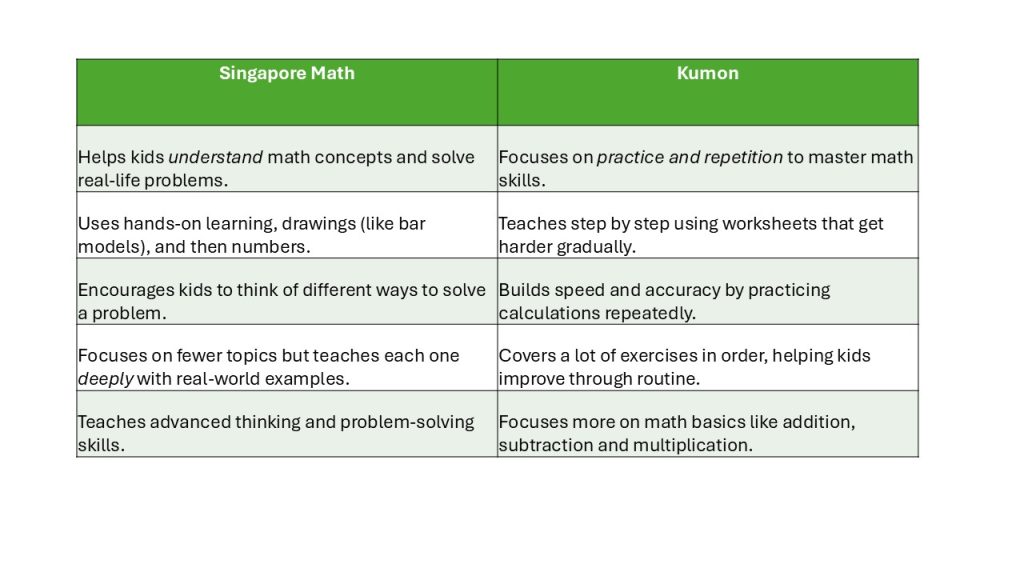
At its core, math education is about developing problem-solving skills, critical thinking, and logical reasoning. Both Kumon and Mathnasium recognize the importance of these skills, but they differ in their approach to achieving them. Kumon focuses on repetition and routine, using a standardized curriculum that emphasizes mastery of basic math concepts through repeated practice. In contrast, Mathnasium takes a more personalized approach, using diagnostic tests to identify individual strengths and weaknesses, and then tailoring instruction to meet the unique needs of each student.
Understanding the biology of learning is crucial in appreciating the differences between Kumon and Mathnasium. Research has shown that the brain processes information more effectively when it is presented in a contextual and meaningful way. Mathnasium's personalized approach takes this into account, providing instruction that is tailored to the individual's learning style and pace. Kumon, on the other hand, relies on a more structured approach, which can be beneficial for students who thrive in a routine-based environment.
Must Read
Exploring the Science of Math Education
When examining the science behind math education, it becomes clear that both Kumon and Mathnasium have their roots in cognitive psychology. Kumon's emphasis on repetition and routine is based on the idea of habits and automaticity, where repeated practice leads to long-term retention and mastery of math concepts. Mathnasium, on the other hand, draws on the concept of working memory and cognitive load, recognizing that individualized instruction can help reduce cognitive overload and promote deeper understanding.
The neuroscience behind math education also plays a significant role in understanding the differences between Kumon and Mathnasium. Research has shown that math processing is distributed across multiple brain regions, including the parietal lobe and prefrontal cortex. Mathnasium's personalized approach may be more effective in engaging these brain regions, as it takes into account the individual's unique cognitive strengths and weaknesses. Kumon, on the other hand, may be more suitable for students who benefit from a more structured and routine-based approach.
In addition to cognitive psychology and neuroscience, the sociology of math education also plays a crucial role in understanding the differences between Kumon and Mathnasium. Both programs recognize the importance of social interaction and collaboration in the learning process, but they differ in their approach to implementing these principles. Mathnasium's focus on individualized instruction may be more effective in promoting a sense of community and belonging among students, while Kumon's emphasis on routine and repetition may be more suitable for students who thrive in a more structured environment.
Optimizing Math Education: Practical Strategies
So, how can parents and educators optimize math education for their students? The first step is to recognize the importance of individualized instruction. By tailoring instruction to meet the unique needs and learning style of each student, educators can promote deeper understanding and retention of math concepts. This can be achieved through the use of diagnostic tests and progress monitoring, which help identify individual strengths and weaknesses.
Another crucial strategy is to make math relevant and meaningful. By connecting math concepts to real-world applications and scenarios, educators can promote a sense of context and purpose. This can be achieved through the use of project-based learning and real-world examples, which help students see the value and importance of math in their everyday lives.
In addition to individualized instruction and real-world applications, technology can also play a significant role in optimizing math education. By leveraging digital tools and resources, educators can provide students with personalized feedback and real-time assessment, helping to identify areas of strength and weakness. This can be achieved through the use of adaptive software and online learning platforms, which provide students with a self-paced and flexible learning environment.
Finally, it is essential to recognize the importance of parental involvement in math education. By engaging with their children's math education and providing support and encouragement, parents can help promote a sense of confidence and motivation. This can be achieved through the use of parent-teacher conferences and progress reports, which help keep parents informed and involved in their child's math education.

Frequently Asked Questions
What is the difference between Kumon and Mathnasium?
The main difference between Kumon and Mathnasium is their approach to math education. Kumon focuses on repetition and routine, using a standardized curriculum to emphasize mastery of basic math concepts. Mathnasium, on the other hand, takes a more personalized approach, using diagnostic tests to identify individual strengths and weaknesses, and then tailoring instruction to meet the unique needs of each student. While both programs recognize the importance of developing problem-solving skills, critical thinking, and logical reasoning, they differ in their approach to achieving these goals.
In practice, this means that Kumon may be more suitable for students who thrive in a structured and routine-based environment, while Mathnasium may be more effective for students who benefit from individualized instruction and a more flexible learning approach. Ultimately, the choice between Kumon and Mathnasium depends on the unique needs and learning style of each student, and parents and educators should carefully consider these factors when making a decision.
How do I choose between Kumon and Mathnasium for my child?
Choosing between Kumon and Mathnasium depends on several factors, including your child's learning style, strengths, and weaknesses. If your child thrives in a structured and routine-based environment, Kumon may be the better choice. On the other hand, if your child benefits from individualized instruction and a more flexible learning approach, Mathnasium may be more suitable. It is also essential to consider your child's goals and motivations, as well as their current level of math proficiency.
Parents should also consider the cost and time commitment required for each program. Kumon and Mathnasium differ in their pricing and scheduling, and parents should carefully evaluate these factors when making a decision. Ultimately, the most important thing is to find a program that aligns with your child's unique needs and learning style, and provides them with the support and instruction they need to succeed in math.

What are the benefits of using Kumon or Mathnasium for math education?
The benefits of using Kumon or Mathnasium for math education are numerous. Both programs provide students with a strong foundation in math, helping to develop problem-solving skills, critical thinking, and logical reasoning. Kumon's emphasis on repetition and routine can help build confidence and fluency in math, while Mathnasium's personalized approach can promote a deeper understanding and retention of math concepts.
In addition to these benefits, both Kumon and Mathnasium can also help students develop time management and organization skills, as well as self-discipline and motivation. By providing students with a structured and supportive learning environment, both programs can help students achieve their full potential in math and develop a strong foundation for future success.
Can I use Kumon or Mathnasium in conjunction with traditional math education?
Yes, it is possible to use Kumon or Mathnasium in conjunction with traditional math education. In fact, many parents and educators find that supplementing traditional math education with Kumon or Mathnasium can provide students with a more comprehensive and well-rounded math education. By providing students with additional support and instruction, Kumon and Mathnasium can help fill gaps in understanding and promote a deeper appreciation of math concepts.
When using Kumon or Mathnasium in conjunction with traditional math education, it is essential to communicate with teachers and educators to ensure that the programs are aligned and complementary. By working together, parents, educators, and Kumon or Mathnasium instructors can provide students with a seamless and effective math education that supports their unique needs and learning style.
How do I measure the effectiveness of Kumon or Mathnasium for my child?
Measuring the effectiveness of Kumon or Mathnasium for your child requires a combination of quantitative and qualitative metrics. Parents should track their child's progress and achievement in math, using metrics such as grades, test scores, and progress reports. They should also consider qualitative factors, such as their child's confidence and motivation in math, as well as their overall attitude towards learning.
In addition to these metrics, parents should also consider seeking feedback from instructors and educators, as well as their child's self-assessment of their math abilities. By combining these metrics and feedback, parents can gain a comprehensive understanding of their child's progress and achievement in math, and make informed decisions about their child's math education.
By respecting the science behind math education, we can become better, more efficient humans. By understanding how our brains process information, and how we can optimize our learning environment, we can unlock our full potential and achieve greater success in math and other areas of life. Whether through Kumon, Mathnasium, or traditional math education, the key is to find a approach that aligns with our unique needs and learning style, and provides us with the support and instruction we need to succeed.
In the end, the difference between Kumon and Mathnasium is not just about the programs themselves, but about the science and research that underlies them. By understanding the biology, psychology, and sociology of math education, we can make informed decisions about our child's math education, and provide them with the best possible foundation for future success. Whether through repetition and routine, or individualized instruction and personalized feedback, the goal is the same: to help our children develop a deep understanding and appreciation of math, and unlock their full potential as learners and thinkers.
sd.png)