David's Bridal Average Dress Cost
Let’s be real for a second: if you’ve so much as glanced at a wedding TikTok or Pinterest board in the last six months, you’ve been algorithmically ambushed by the Great David’s Bridal Discourse. It’s not just a store; it’s a cultural Rorschach test. Is it a sacred, budget-friendly sanctuary for brides who refuse to remortgage their homes for a scrap of tulle? Or is it the fast-fashion graveyard of matrimonial dreams, where the lighting is somehow both fluorescent and sepia-toned, and the sample sizes defy the laws of physics? The internet has chosen sides, and the war is messier than a smashed cake.
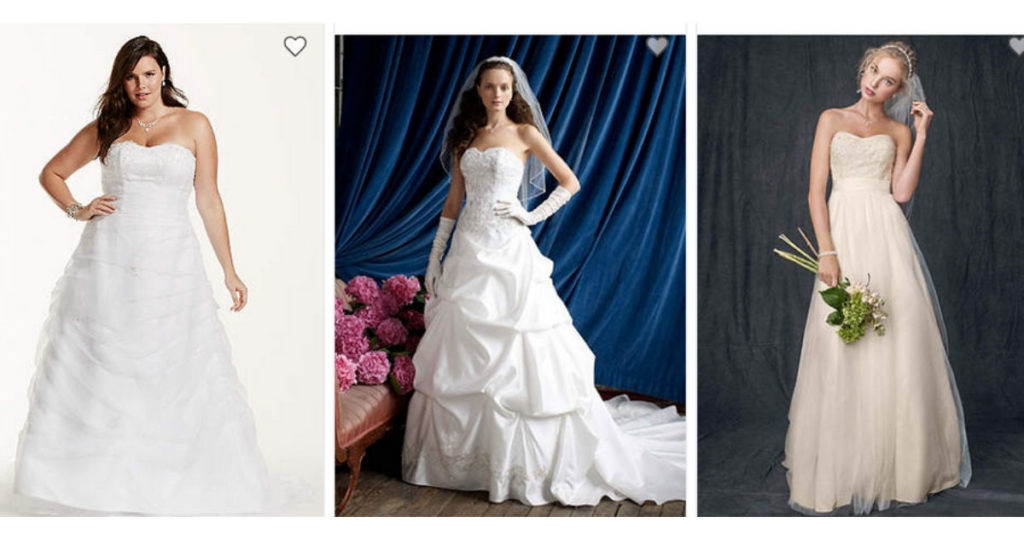
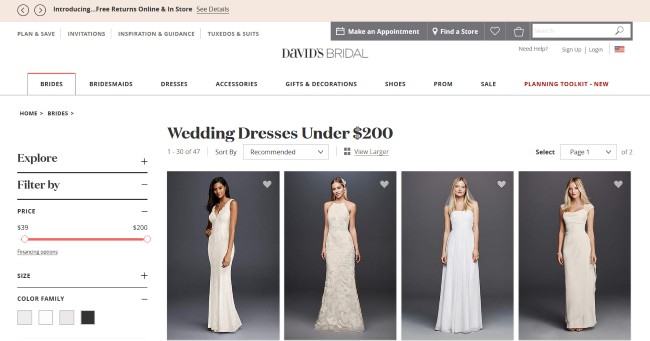
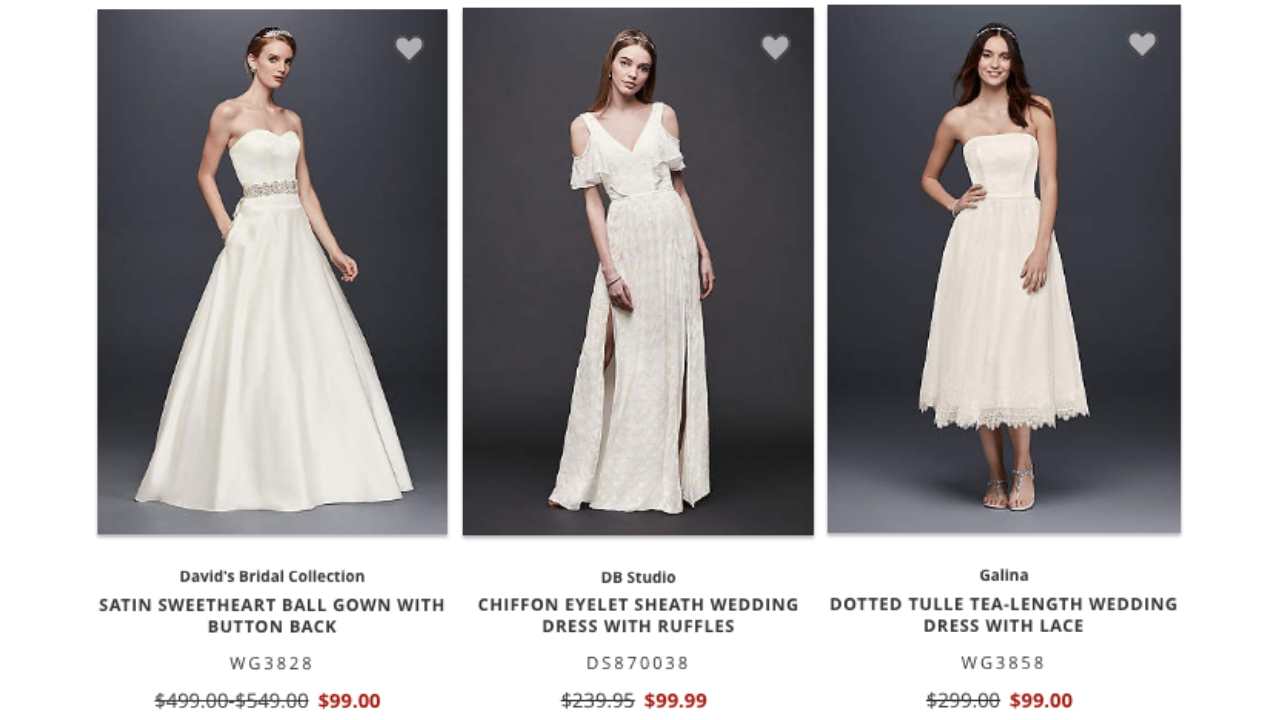
The current obsession isn't just about the dresses themselves—it’s about the price tag. Viral videos of women finding $9,000 gowns hidden next to $99 clearance rack specials have turned the average cost conversation into a full-blown investigative thriller. We’re talking deep-dive spreadsheets, Reddit threads with 4,000 comments, and influencers doing “price reveal” videos with the dramatic gravitas of a True Crime documentary. The reality? The average David's Bridal dress hovers around $600 to $1,800, but that number is a Jedi mind trick. It’s a range so wide it’s practically a canyon, and navigating it requires a survival guide, a stiff drink, and a healthy dose of skepticism about “retail value.”
Why is everyone suddenly so obsessed with the math? Because we’ve entered the era of the “Recessionista Bride.” With inflation eating our avocado toast and rent, the idea of dropping a down payment on a wedding is giving the collective collective a panic attack. David’s Bridal, with its massive footprint and perpetual “MEGA SALE” banners, has become the symbol of the struggle between aesthetic fantasy and financial reality. It’s the battleground where your mother’s vision of a pristine ballgown meets your friend’s very loud opinion that you could buy a used car for that price. And honey, the car has better air conditioning.
Must Read
The Wild, Weird Ecosystem of the Bridal Industrial Complex
Let’s talk about the subculture that has formed around the mere existence of this store. There’s a specific, almost fetishistic niche on social media dedicated to “David’s Bridal Hauls.” Creators will film themselves sifting through the infamous “clearance wall” like archaeologists digging for dinosaur bones, only to pull out a size 2 floral abomination from 2011 that smells faintly of mothballs and regret. The comments section is a feeding frenzy: “OMG it’s the dress from my sister’s wedding,” “I had that for prom,” “Why does it look like a shower curtain?” This is toxic nostalgia at its finest—we’re not just buying a dress; we’re buying a piece of shared cultural trauma, packaged with a side of polyester.
Then you have the “Sample Size Shaming” phenomenon. This is the dark underbelly of the bridal experience that fuels the online rage. The store stocks mostly size 8 or 10 samples, which means the average American bride (size 14-16) is often asked to squeeze into a garment that is clearly not designed for human breathing. The result? A viral TikTok trend of brides doing the “David’s Bridal Strut”—walking out of the fitting room with the dress half-zipped, holding it closed with their elbows, looking like they’ve been wrestling an octopus. It’s a masterclass in how a brand can simultaneously sell you a dream and remind you that the dream only fits a specific, outdated mould. The discourse is loud, but the message is clear: the fight for size inclusivity is being fought one unflattering mirror selfie at a time.
The weirdest part? The psychology of the “Bridal FOMO.” You’ll see a dress online for $1,200, but in-store, it’s marked $1,500. But you’re already there, the lights are buzzing, and your bridesmaids are holding champagne flutes. The pressure is immense to just buy the damn dress. The store relies on this sensory overload—the overwhelming scent of artificial vanilla and the sheer volume of sequins—to short-circuit your rational brain. It’s a rabbit hole of cognitive dissonance, where you convince yourself that spending $200 on “rush alterations” for a dress that is 90% nylon is a sound financial investment. We watch it happen to strangers on live streams, and we laugh, but deep down, we know we’re all one bad day away from that same fate.

How to Navigate the Tulle Minefield Without Losing Your Mind (or Your Rent Money)
First things first: Ignore the "Retail Value" sticker. That number is a work of fiction, a fantasy created by the marketing department to make you feel like you’re getting a deal when you pay $900. The reality is that David’s Bridal runs sales so frequently that the actual average price paid is significantly lower than the MSRP. Your strategy is to play the long game. If you have time (think 4-5 months minimum), wait for the major sale cycles: Black Friday, the January “Bridal Clearance,” and the random “Friends & Family” events that seem to happen every other week. Patience here is not just a virtue; it’s a $300 discount.
Next, go in with a “Spy Pics” Folder. Do NOT walk in cold. Scroll through Instagram, Pinterest, and TikTok, and screenshot the specific dress names (they all have names like “Monica” or “Denise”). When you arrive, ask the stylist to pull exact names, not “something similar.” This prevents the classic bait-and-switch where you fall in love with a $2,000 gown because the $800 one you asked for was “temporarily unavailable.” If they bring out the expensive one, you’re in the danger zone. Stop them. Politely, but firmly. Say, “No, I specifically asked for ‘Denise,’ and if she isn’t available, we will reschedule.” You are the CEO of your wedding, not a passive passenger in a sequin spaceship.
Here’s the pragmatic hack that nobody talks about: Embrace the “Unfinished” Look. Many brides assume they need the dress to fit perfectly off the rack. You don’t. You need the bones to be right. Factor in the cost of alterations (often an extra $100-$300) before you buy. Look for dresses that are too big, not too small. Taking a dress in is magical—it creates a custom fit that celebs pay thousands for. Letting a dress out because it’s tight at the seams is a gamble and a traffic jam of stress. If the sample has a lot of beading, ask about alteration fees upfront. A simple slip dress will be your wallet’s best friend.
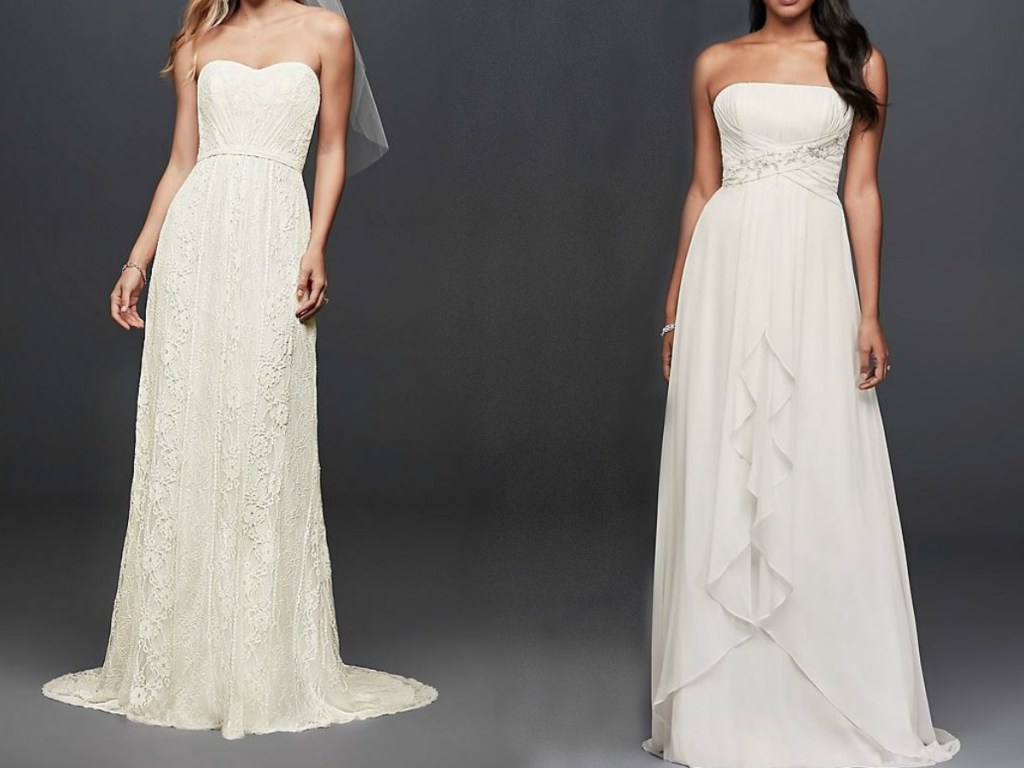
Finally, Audit the Accessories Pit. The trap is real. You’ll buy a $700 dress, and suddenly the stylist is holding a $300 veil that looks like a mosquito net, a $150 tiara that looks like a discarded Coke bottle, and a $200 slip that is literally just a piece of nylon. Politely decline, of course, and then leave the store. Go to Amazon or Etsy for the veil. Buy a plain crinoline skirt from a dance supply store for $20. The dress is the star; the extras are the tax. If you can walk out of there having only bought the dress, you are winning at capitalism. You are the trickster god of nuptials. And if you’re feeling risky, check out the “As-Is” rack; those dresses have shredded inner linings, but who’s looking under there? Not your guests, that’s for sure.
Your Internet-Burning Questions, Answered
Is it true you can get a designer dress at David's Bridal for under $100?
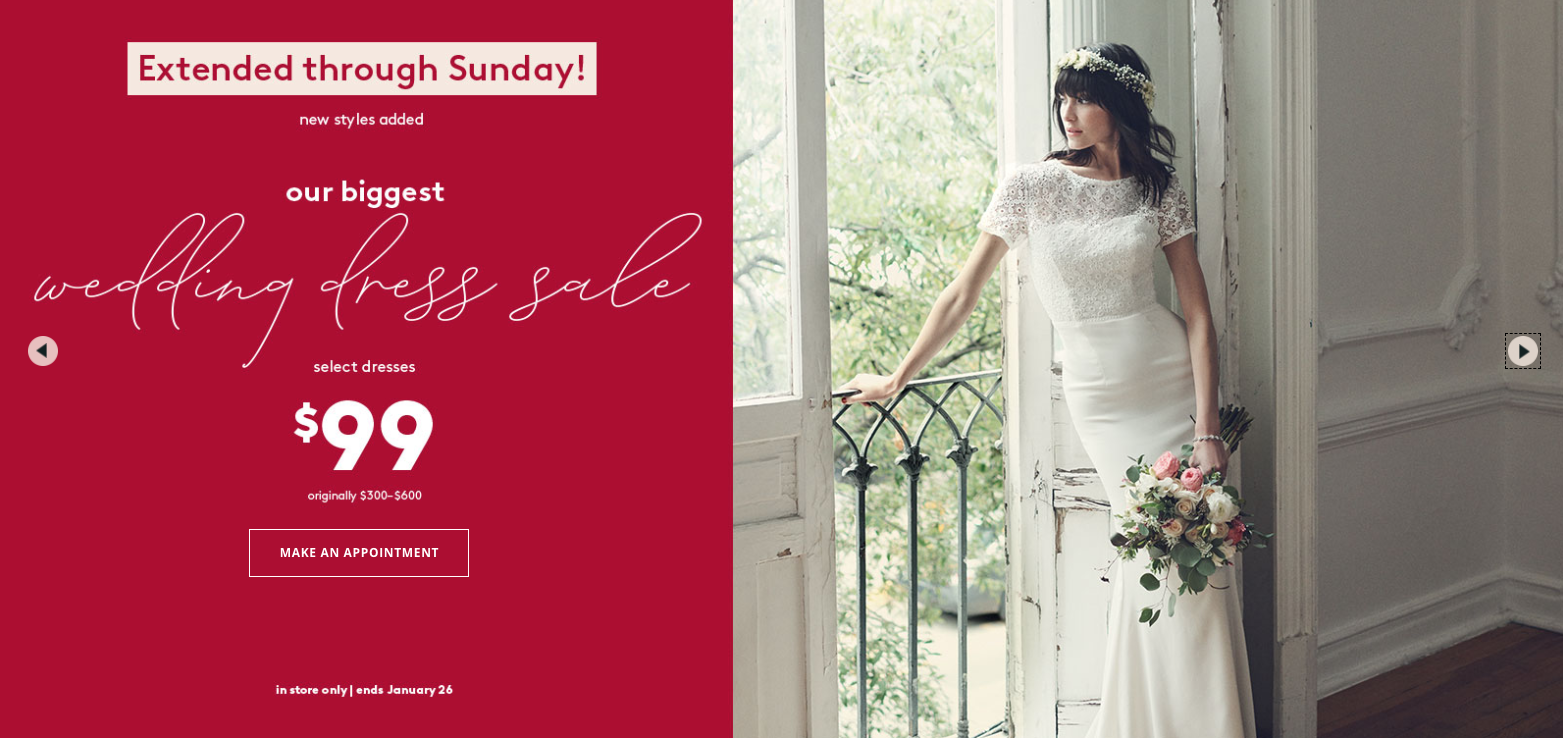
Yes, but with the caveat that it’s like finding a truffle in a swamp. The “under $100” category is real, but it’s usually populated by discontinued colors, massive sample sizes that have been manhandled by a thousand sweaty hands, or dresses that look better on the hanger than on a human body. They are often the “bridesmaid rejects” that didn’t sell. However, the viral “!00 Dollar Dress Challenge” is based on a truth: the clearance section is chaotic, but it does yield gold. The key is to go with zero expectations and a willingness to dry-clean the hell out of whatever you find. You’re not buying a dress; you’re buying a project.
The deeper issue is the psychology of the “score.” Finding a $99 dress that looks like a million bucks gives you a dopamine hit that a $1,500 dress never will. It becomes a status symbol of financial intelligence on social media, which is arguably more valuable than the dress itself. So yes, it’s possible, but it requires a flexible vision. If your dream is a specific silhouette in ivory, you’re likely leaving with something. If your dream is simply “to be married and look great,” the $99 rack is a treasure trove. Manage your expectations, and you might just walk out with the bargain of the century.
Why are the alteration costs at David's Bridal so notoriously high?
Because it’s a classic captive market move. The sticker price of the dress is artificially lower to get you in the door, but the profit margins are in the tailoring. They know that taking your $700 dress to a local independent seamstress will cost you $80, but if you use their in-house team, it’s $250. Their justification is “expertise with our fabrics,” but the real reason is that they have you cornered. Once you’ve bought the dress, you’re emotionally invested. The timeline is tight. The fear of ruining it is high. So you pay the premium for the convenience and the supposed safety net.
The viral discourse around this is loud and justified. Reddit is full of horror stories about $500 alterations that resulted in a crooked hem or a bustle that broke mid-reception. The advice from seasoned brides is to get a quote from the store, then take that quote to three independent seamstresses. In 90% of cases, you’ll get a better price and arguably better work. The only time to use their in-house service is if you’re dealing with complex beading that requires specialty materials. Otherwise, walk. Your wallet and your peace of mind will thank you. You are not married to the store just because you bought the fabric.
Are the dresses at David's Bridal "good quality" compared to salons?
Let’s get real: the quality is highly variable. You are buying a mass-produced product. The construction is often decent for the price, but the fabrics are frequently synthetic (polyester, nylon, tulle) that don’t breathe and can feel plasticky against the skin. A $1,500 David’s dress is not equivalent to a $1,500 dress from a high-end boutique that uses silk charmeuse or imported French lace. The boutique dress is paying for materials; the David’s dress is paying for logistics and market share. That isn’t inherently evil, but it means you are paying for the look of luxury, not the feel.
For the price, you’re getting durability that lasts exactly 12 hours. It’s the fast fashion of the bridal world—built for a single, glorious, sweaty night. The seams might not be finished with couture precision on the inside, but who cares? You will not be wearing it again. The real metric of quality is how it photographs and how it moves on the dance floor. If the dress makes you feel like a goddess and the cost allows you to hire a better photographer, the “quality” is a wash. The dress is a costume for a performance; prioritize the performance, not the stitching.
So, is this obsession with the David’s Bridal price tag a fleeting TikTok trend, or a permanent shift in how we view bridal shopping? The answer is both. The specific hashtag will fade, but the underlying cultural shift is cementing itself. We have entered a post-postmodern bridal era where the instagrammable moment matters more than the heirloom quality. The aesthetic of the wedding is the product, and the dress is merely a delivery vehicle. David’s Bridal, with its harsh lighting and cluttered racks, is the perfect backdrop for this irony; it strips away the magic to reveal the pure, unadulterated transaction.
However, the growing demand for transparency in pricing is here to stay. The modern bride is too online to be duped by fake sales. We’ve seen the hacks, we know the tricks, and we have no problem calling out a bad business practice in a Tweet that gets 2 million impressions. David’s Bridal isn’t going anywhere, but its dominance is being challenged by the very community it created. The average cost is no longer a secret whispered in the fitting room; it’s a data point to be conquered. And in that sense, the bride emerges victorious—she might still be wearing a Zara-esque gown, but she paid the exact price she wanted to pay, and she has the algorithm to prove it.