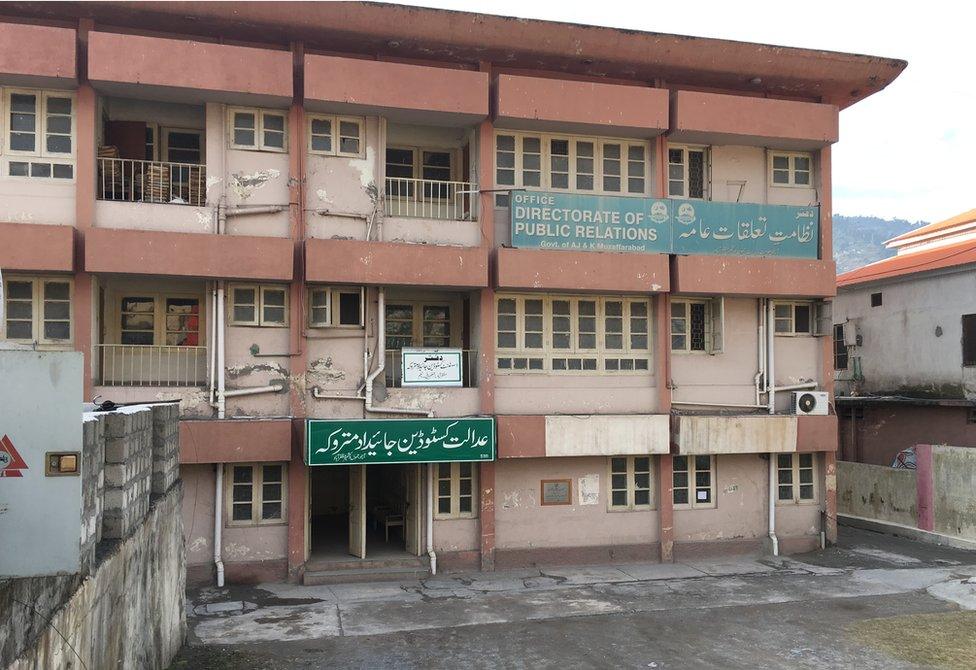
Custodian Of Evacuee Property Mumbai

In the sprawling, chaotic, and gloriously ambitious metropolis of Mumbai, where every square foot of land is a contested prize and property prices defy gravity, there exists a shadowy custodian of forgotten dreams. This is not a real-estate tycoon or a Bollywood star, but a governmental office known as the Custodian of Evacuee Property. It is a bureaucratic relic of one of the subcontinent’s most traumatic episodes—the Partition of 1947—yet it still holds immense, almost mystical, power over prime real estate today. To the uninitiated, it sounds like a bureaucratic footnote; to the initiated, it is a labyrinth of legal intrigue where the ghosts of displaced families clash with the ambitions of modern developers.
The term “evacuee” is a euphemism steeped in historical pain. It refers to individuals who, due to the violent upheaval of Partition, were forced to leave their homes in India and migrate to the newly formed Pakistan (and vice versa). Their properties—from opulent mansions in Malabar Hill to modest chawls in Byculla—were left vacant, or "evacuated," and were subsequently taken over by the government. The Custodian’s office was set up to manage these assets, ostensibly to protect them, but over the decades, it has morphed into a complex legal entity that decides the fate of billions of rupees worth of property, often involving heirs who are now citizens of Pakistan, the UK, or the US, and who are fighting for claims that their grandparents never resolved.
The House of Forgotten Names: A Glimpse into the Archives
Step into the Custodian’s office, and you are immediately struck by a sensory overload that feels more like a noir film than a government institution. The corridors smell of aging paper, dust, and the faint metallic tang of old iron filing cabinets. Inside these cabinets lie files with handwritten names in fading blue ink—Mohammed Ali, Fatima Begum, Abdul Rashid—names that once echoed in the vibrant bazaars of the old city. These are not just documents; they are gravestones of entire family histories, meticulously cataloged and preserved in a state of legal limbo. The sheer volume is staggering; there are thousands of such properties across Mumbai, ranging from entire buildings to small vacant plots, all perpetually under the watchful eye of the Custodian.
Must Read
What is less known is the psychological weight of this office. For the descendants of those who emigrated to Pakistan, this address is a symbol of loss and betrayal. But for the tenants who occupy these properties—many of whom have lived there for three generations—the Custodian is their protector, shielding them from eviction by overseas claimants who they see as opportunistic. This creates a deeply fractured social fabric. There are neighborhoods in Mumbai where the ground floor is a thriving garment shop run by a family whose grandfather was a refugee from Sindh, while the upper floors are sealed, empty, and haunted by the legal inability to transfer ownership. The office, therefore, acts as a time capsule, freezing social dynamics and family grievances in a state of suspended animation, a silent witness to the city’s relentless drive to rebuild itself over the rubble of the past.
Culturally, the Custodian’s existence has permeated Mumbai’s psyche in unexpected ways. In the Marathi theatre of the 1970s and 80s, the "evacuee property" plot was a classic trope for drama—a tense confrontation between a poor tenant and a rich, foreign-based heir, often resolved by a saintly lawyer. In modern Bollywood noir, these properties are often depicted as haunted bungalows in Pali Hill, their true ownership obscured by a web of conspiracies. This cultural fascination is rooted in a real, palpable fear: the fear of the land itself being untrustworthy. In a city where everyone is an immigrant, the very notion of a "settled" property is an illusion, and the Custodian’s office is the bureaucratic proof that even the most solid-looking building in Mumbai can have a fractured title deed, a hidden owner, or a court order pending for decades.
Navigating the Legal Labyrinth: Scenarios and Practical Insights
For the average Mumbaikar, the Custodian’s office might seem as remote as the Supreme Court, but its shadow falls on everyday life more than one might think. Consider the story of a mill worker’s family in Parel who purchased a chawl room in the 1980s. Unbeknownst to them, the building’s original owner had evacuee status. The sale was conducted by a cooperative housing society, but when the society tried to register the building under the state’s redevelopment scheme, they hit a wall. The Custodian’s office sent a notice claiming legal ownership of the land, halting a multi-crore redevelopment project indefinitely. The residents, who had paid their hard-earned money, were caught in a legal crossfire that required the intervention of the Bombay High Court to resolve their rights as bonafide tenants versus the Custodian’s claim over the "evacuee" share of the land.
Another scenario involves the “unnotified” properties. There is a common misconception that the Custodian holds only properties owned by people who left for Pakistan. However, the law also covers properties of those who moved to other parts of India but left behind specific assets that were managed by erstwhile "managers" who later abandoned them. For a savvy homebuyer, this is a critical due-diligence point. Before purchasing any older property in South Mumbai, a title search must include a visit to the office of the Custodian to obtain a "No Objection Certificate" (NOC). Without this, a buyer might find themselves squaring off against a sea of paperwork that pre-dates the Indian Constitution. The takeaway is clear: never trust a property's official documents without verifying its evacuee status, as the official records might have been generated during a time of administrative chaos.
Furthermore, the office is now dealing with the modern headache of data digitization. In recent years, the Custodian has begun uploading records, but the digitization is plagued with errors—misspelled names, incorrect plot numbers, and scanned documents that are illegible. This creates a Kafkaesque scenario where a claimant might find their ancestor's name but cannot prove the exact address. For NRI families seeking to reclaim property, the practical advice from legal experts is to engage a local advocate who specializes in this niche area. These lawyers often act as translators, not just of the Urdu and Persian documents, but of the informal, unwritten rules of the office—the need to bribe a clerk for a photocopy, the exact quarter of the year when the Custodian is lenient, and the specific phrasing required in a legal petition to be heard. It is a legal subculture that thrives on insider knowledge, a far cry from the clean, user-friendly world of online property registries.
Finally, there is the angle of "current pending claims" by the heirs of the evacuees. If you are a descendant claiming a Mumbai property, you are likely facing a dual hurdle. First, you must prove your lineage and the original ownership. Second, you must contend with the terms of the Evacuee Interest (Separation) Act of 1951, which states that the property was to be used for the rehabilitation of refugees from Pakistan. This means that even if you win a legal battle, the state might argue that the property has since been lawfully vested for public purposes. For those pursuing this path, the practical takeaway is to never approach this as a simple inheritance case. It requires a public interest litigation angle, lobbying for the return of property on humanitarian grounds—a strategy that has seen limited success but has created a rare glimmer of hope for families with deep emotional ties to their ancestral homes in the city.
Frequently Asked Questions
1. Who exactly is considered an “evacuee” under this law?
Under the Administration of Evacuee Property Act of 1950, an evacuee is defined as a person who leaves India for Pakistan, or who, because of the fear of communal violence, leaves their home to a place outside the "territories of India" after March 1, 1947. This definition also includes individuals who were residing in the territories now part of Pakistan and, during the partition chaos, abandoned their property in India even without formally settling in Pakistan. The definition is incredibly broad, and over the years, it has been stretched to cover individuals who merely left their property for a few months to go on a pilgrimage and were caught up in the border movements, making the category far more diverse than just "migration to Pakistan."

The nuance here is that the status isn’t permanent. Over the decades, the office has conducted "inquiries" to determine if a person indeed left for Pakistan or if they were just temporarily displaced. A person could be declared an evacuee only if the Custodian issued a formal declaration. If a family managed to return to India within a few years and prove their residency, they could usually get the property restored. However, the vast majority did not file these claims in time, and their properties were permanently vested in the Custodian, leading to the massive backlog of files we see today.
2. Can I buy a property that is currently under the Custodian's management?
Technically, yes, but with a massive caveat. The Custodian is empowered to sell or lease such properties to "displaced persons" or to the general public for the purpose of rehabilitation. However, in practice, the Custodian rarely auctions these prime properties today. Most of the properties are either occupied by long-term tenants, litigated in civil courts, or are under a lock-and-key state due to ownership disputes. You cannot simply walk in and buy a flat. If the property is deemed "vacant," the Custodian can advertise a sale, but the bidding process is often opaque and is subject to state government approvals, which can take years.
Furthermore, any sale by the Custodian comes with title risk. The buying process involves a "declaration" that the property was viable for sale, but the buyer will have to handle the eviction of existing tenants, which is a Herculean task in Mumbai. For the average investor, the only feasible path is to purchase a property that has been disposed of by the Custodian in the past and has since been regularized. Always ask for the "Sanad" (title deed) from when the Custodian sold it, and ensure that the current title is not subject to a re-claim by a refugee who might have been displaced during that specific sale, a legal loophole that keeps many title insurance companies awake at night.
3. What happens to the rent that the Custodian collects from the tenants?
This is where the job becomes fascinatingly bureaucratic and a hotbed of financial mismanagement. The tenants residing in evacuee properties pay a monthly rent, often at rates fixed in the 1950s and 60s—which for some large apartments in prime areas can be as low as ₹200 to ₹5,000 per month. This rent is collected by the estate manager and deposited into the "Evacuee Property Fund." This fund is managed by the central government. But what is the money used for? Officially, it is earmarked for the "maintenance of the properties" and for the rehabilitation of other refugees. However, because the rental amount is so paltry compared to market rates, the maintenance is usually non-existent, and the buildings crumble.

More scandalously, the fund has reportedly been the subject of various audit reports noting unaccounted withdrawals and investment delays. The surplus, if any, is technically credited to the central government’s exchequer. But here’s the dark fun fact: many of these tenants have not paid rent in decades, and the Custodian, ironically, has a "property caretaker" status but fails to enforce rent recovery for fear of mass tenant revolts. This has led to a scenario where the Custodian is a landlord with a bookshelf full of unpaid rent ledgers, holding onto properties that are bleeding money, while the actual owners (the disputed heirs) are begging for a slice of the pie.
4. Are these properties still considered “Indian” property if a Pakistani national claims them?
This is a deeply sensitive legal and political question. The Evacuee Property laws were framed at a time of intense animosity between India and Pakistan. The default position of the law is that any property vested in the Custodian becomes the property of the Indian government, and the original owner loses all title rights post the "vesting" date. This means that a Pakistani national cannot directly claim the property in an Indian court of law. However, the law provides for a "right to compensation." This is not a return of the property, but the promise of an equivalent value of property in India, which is virtually impossible to actualize due to lack of funds.
There have been landmark judgments where the Supreme Court has upheld the separation of the property, ruling that it is now a part of the Indian state's public trust. The human implication is heart-wrenching: a family in Karachi might possess the original keys and registration papers to a magnificent penthouses on Marine Drive, but in the eyes of the Indian legal system, they have no proprietary right, only a theoretical claim against the state for monetary compensation. This aspect makes the office of the Custodian a geopolitical arena frozen in time, where legal title is weaponized and humanity often loses to the letter of the Partition-era law.
5. What is the current status of the “evacuee property” litigation in Mumbai, and is there hope for resolution?
The current status is a logjam. The office of the Custodian is overloaded with litigation, and the Bombay High Court often lists several evacuee property matters every week, most involving identity disputes or the right to tenancy. The central government has, on occasion, proposed a policy to "delist" certain properties from the evacuee category, especially the ones held by non-resident Indians from other countries, but the proposal is politically volatile, as it is seen as a concession to Pakistan-based claimants. There is hope in the form of the "Auqaf" rules and special tribunals, but they are ineffective.

However, the most pragmatic hope lies in the process of "de-notification." Properties that were originally under the Custodian but were later legally acquired by private citizens through valid auctions or government grants are being slowly cleared by the courts. The window of opportunity is opening for families who have a "bonafide" document trail showing that their ancestors were not evacuees but were merely squatting during the chaos. For those inside the legal system, the advice is to keep appealing to the High Court, not for the return of the property, but for a declaratory relief that the Custodian’s claim has lapsed due to efflux of time. The Supreme Court has recently held that a property cannot remain under the Custodian's control indefinitely if there is no active claim for 30 years, opening a tiny crack in the massive iron door of historical bureaucracy.
As you walk past the dilapidated facades of the old Kala Ghoda district or the towering skyscrapers of Nariman Point, it’s easy to forget the invisible layers of law that hold this city together. This office of the Custodian, though an administrative anachronism, is a mirror to our own human nature—our desperate need for roots, our fear of displacement, and our stubborn insistence on holding onto a piece of land even if it belongs to someone else who is no longer here. It reminds us that the city we walk on is not just concrete and steel; it is a palimpsest of sorrows and legalities, written by the fevered hands of history.
This connection to our daily lives is more profound than we acknowledge. When we sign a property deed, we are not just signing a contract; we are signing a promise to the past. The Custodian’s office forces us to consider the fragility of ownership. It whispers that every lock on a door is a test, and every title is a battle. It challenges the modern myth of "clean ownership" by showing us that in a city like Mumbai, the truth of ownership is often buried under the debris of a forgotten war, a mispronounced name, or a stamp from a ruler who has long since died.
Ultimately, the story of the Custodian of Evacuee Property is a story about grace and the inability to let go. It is a narrative that speaks to the human heart’s capacity to animate objects with memories. Whether you are fighting to claim your grandfather's mansion or refusing to evict a tenant in a building that was once your temple, you are participating in a collective drama of survival. In that office, amidst the dust and the despair, lies the silent, pulsing heart of Mumbai—a city that has always known how to own, but has never truly learned how to mourn its losses without clinging to the paperwork.