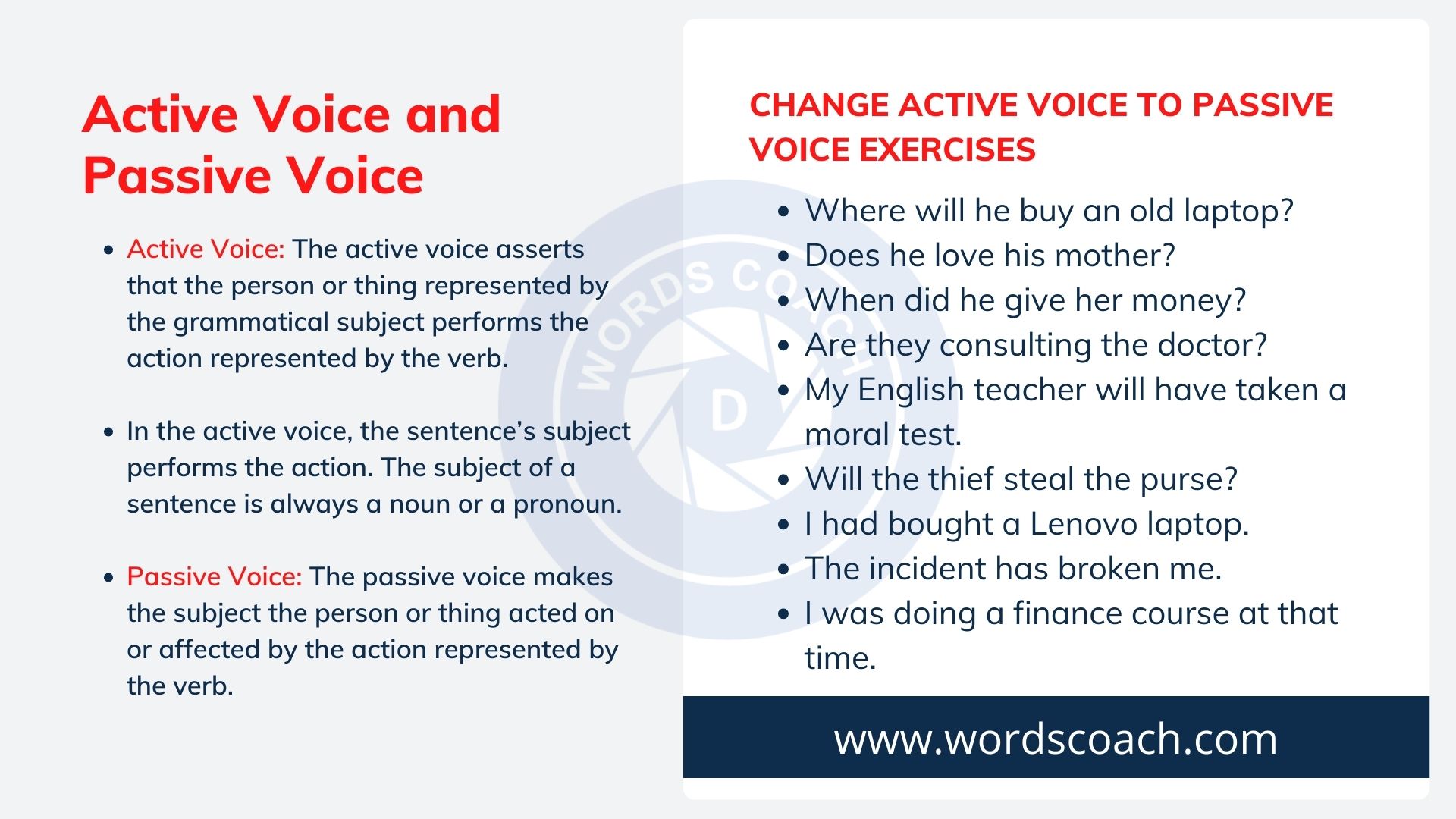
Change Active Voice To Passive Voice
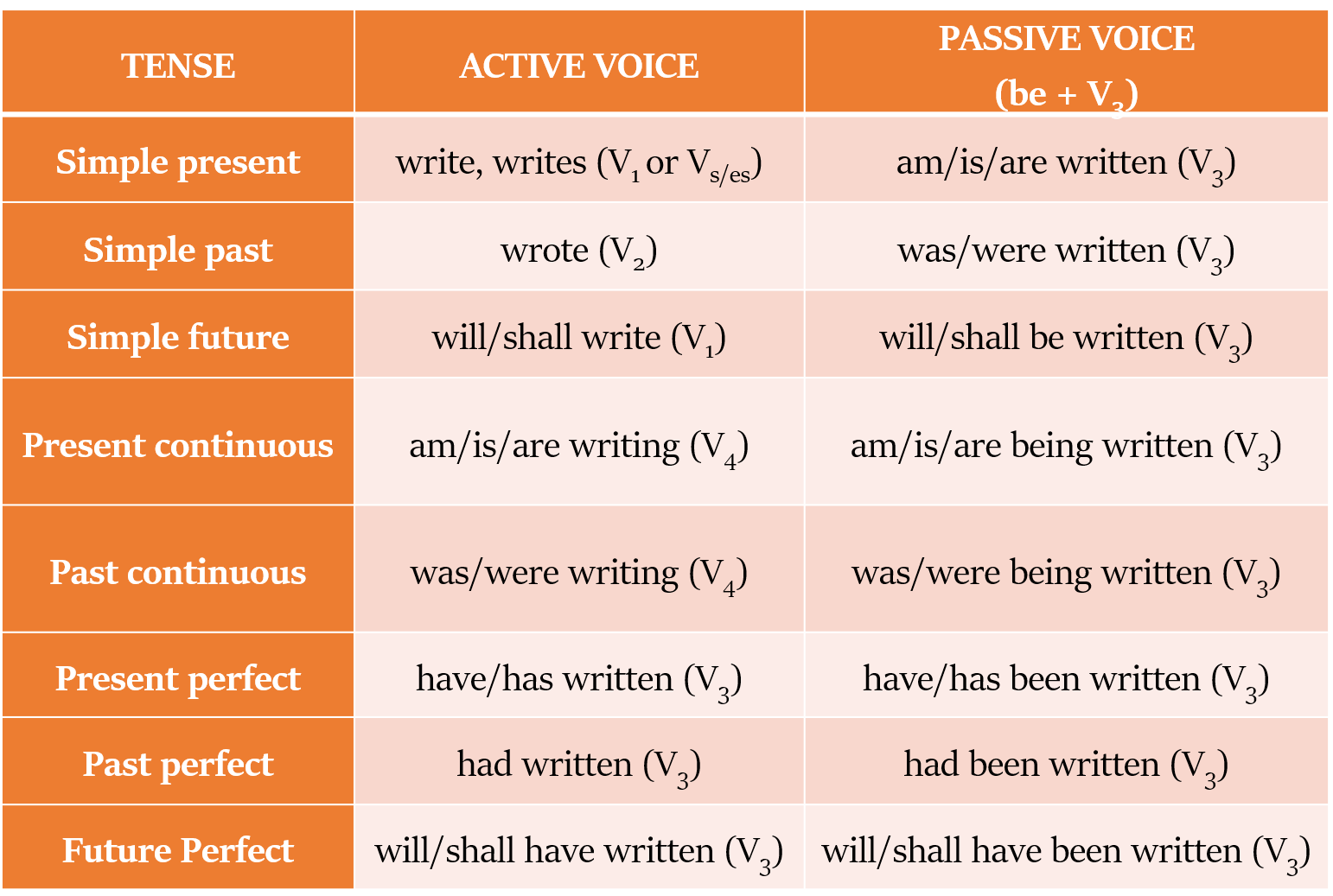
There was a time, long before the algorithmic hum of grammar-checking software, when the English sentence was a more stately, deliberate creature. In the musty classrooms of my childhood—rooms that smelled of raincoats and mimeograph ink—we were taught to write in a way that felt almost ceremonial. The object of the sentence often took the lead, the actor receding into a graceful, mysterious background. “The letter was written by the trembling hand,” we’d recite, and it seemed to carry a weight of melancholy that the blunt, modern “She wrote the letter” could never hope to match. This was the era of the passive voice’s quiet dominance, a time when its use was not a grammatical sin but a hallmark of scholarly decorum, a subtle way of saying, “I have considered the action, and the actor is not my primary concern.”
The initial human necessity behind this stylistic preference was, paradoxically, one of both humility and authority. In the great Victorian and Edwardian eras of formal communication, the passive voice offered a shield of objectivity. Scientific papers, legal documents, and diplomatic correspondence required a voice that could report the world without the messy fingerprints of personal bias. “The experiment was conducted,” not “I conducted the experiment,” because the former suggests a universal truth, a fact that exists independently of the observer. It was a linguistic technology of distance, a way to make the ephemeral seem eternal. We didn't just need to describe events; we needed to curate them into a narrative of established, unassailable fact, and the passive voice was our dutiful curator.
Yet, as with all human tools, this quiet workhorse carried a shadow. By the mid-20th century, the passive voice had been co-opted by a system that was less about objective truth and more about evasive comfort. The corporate memo and the governmental white paper began to wield it like a fog machine. “Mistakes were made” became the universal idiom of the unapologetic, and “It has been decided” erased the decision-makers entirely from the historical record. I remember in the 1980s, watching my father, a middle-manager, draft a layoff notice at our kitchen table. He didn’t say, “We are letting you go.” No, the memo read, “Your position has been eliminated.” The human being was gone; only the position remained, a ghost in the corporate machinery. It was in this era that the passive voice began its long, slow fall from grace, shifting from a tool of elegance to a weapon of obfuscation.
Must Read
The Great Inversion: From Academic Embrace to Writer’s Heresy
The transformation was not overnight; it was a cultural coup d'état waged in the trenches of 1970s and 1980s composition textbooks. The turning point is often credited to the publication of William Strunk Jr. and E.B. White’s The Elements of Style, which, while first published in 1918, gained its fervent, almost evangelical following in the post-war decades. White, in his characteristic witty and direct prose, declared the active voice the superior vehicle for writing, arguing that it is “vigorous and definite” while the passive is “weak and evasive.” This wasn’t just a stylistic preference; it was a moralistic crusade. The passive voice became the boogeyman of freshman composition classes, blamed for everything from bureaucratic bloat to a lack of critical thinking.
The bizarre twist in this linguistic history is that the very people who were exiled from the sentence—the actors, the subjects, the doers—were now being metaphorically reinstated with a vengeance. The 1990s, with its explosion of internet startup culture and "personal branding," demanded a new kind of prose. We were told to “take ownership” of our actions, to assert ourselves in every sentence. The passive voice, once the language of kings and scientists, was now the language of the powerless. Think about the vintage business writing manuals from the 1950s, which encouraged phrases like “The shipment is expected to be received by Tuesday.” By the year 2000, that same sentence was a professional death sentence. You were expected to write, “We will receive the shipment by Tuesday.” The shift mirrored a broader cultural move from a hierarchical, top-down society to one that celebrated individual agency and self-promotion.

But let us not forget the fascinating, forgotten corners where the passive voice refused to die, thriving like ivy on an abandoned mansion. In the realms of beat poetry and literary modernism, the passive voice was cherished for its ability to create mood and atmosphere. Think of the opening of a Raymond Chandler novel—the world was something that happened to the character, not something the character did. “The street was wet with the ghost of rain.” Who cares who or what made it wet? The beauty lies in the state of being. The passive voice here is a masterful tool of cinematic framing, a slow, panning shot across a scene where the human will is subservient to the melancholy environment. This is a vintage fact that modern grammar purists often overlook: the passive voice is not always clunky; it is often profoundly lyrical.
The final, most bizarre turn in this evolution is the advent of the grammar police and the dreaded red squiggly line. Microsoft Word, the digital arbiter of our prose, was trained in the 1990s to flag passive constructions with a green squiggly underline, treating them as errors on par with subject-verb disagreement. This algorithmic judgment was based on a simplified, automated interpretation of the Strunk & White gospel, and it created a generation of writers more terrified of the passive voice than of plagiarism. I recall a student of mine in 2015 who was nearly in tears because her beautifully rendered, evocative paragraph about the aurora borealis had been "corrected" to active voice. She had written, “The sky was illuminated by the dancing lights.” The software wanted, “The dancing lights illuminated the sky.” She lost the awe, the sense of the sky being an active participant in a cosmic event. We had, in our quest for clarity, accidentally banned poetry from the machine.
The Modern Hack: Reclaiming Agency Without the Bureaucratic Grief
Today, in 2025, we are witnessing a sophisticated, nuanced revival. The dictatorial rule of “never use passive voice” has been mercifully dialed back. Modern style guides, from the increasingly influential Reuters Handbook to the AI-writing prompt manuals of Silicon Valley, now speak of passive voice not as a cardinal sin but as a strategic choice. The hack is not to eliminate it but to tag it, to consciously select the passive when the actor is unknown, irrelevant, or deliberately being shielded. We are learning to use it as a scalpel rather than a blunt instrument.

In the fast-paced world of social media and breaking news alerts, the passive voice has been rehabilitated to handle the ethical dilemma of mass reporting. We hear “Three people were killed in the explosion” because the journalist is reporting the event in real-time and has not yet confirmed the perpetrator. To force an active voice in that instance would require false attribution. The modern hack is knowing that “the window was broken” is the only grammatically honest choice when you have no idea who threw the rock. This is the strategic utilitarianism of the 21st century: we do not use the passive to hide, but to remain accurate about the limits of our knowledge.
Bridging the Past and the Present: Three Lingering Questions
1. Does the passive voice actually make you sound more intelligent?
The historical myth, deeply rooted in the Victorian era, suggests that a passive sentence lends an air of academic gravitas and intellectual distance. In the 1800s, the Royal Society and other scientific bodies mandated it as a way to separate the discovery from the discoverer, presenting findings as universal laws of nature. This belief persisted well into the 20th century, with many doctoral theses requiring it, leading later critics to call it the “meat-cleaver” of scholarly prose. The modern reality, however, is starkly different. Decades of psycholinguistic research have shown that passive constructions take the human brain slightly longer to process, thus creating a perception of complexity that is often mistaken for profundity. In today’s fast-paced cognitive environment, a clear, active sentence is seen as a sign of high intelligence and executive function, whereas a string of passive sentences often reads as cognitive overload or, worse, intentional obfuscation.
However, the myth is not entirely dead. In specific fields like law and international relations, the passive voice remains the lingua franca of caution. “The treaty was ratified” is a more powerful statement than “The Senate ratified the treaty” when the emphasis is on the legal status of the treaty itself. The intelligence comes from knowing when to break the rule—the modern expert uses the passive sparingly and purposefully, not to sound smart, but to highlight the action rather than the actor. The true intelligence is in the discernment of the context, a skill that old-school grammar rules simply cannot teach.
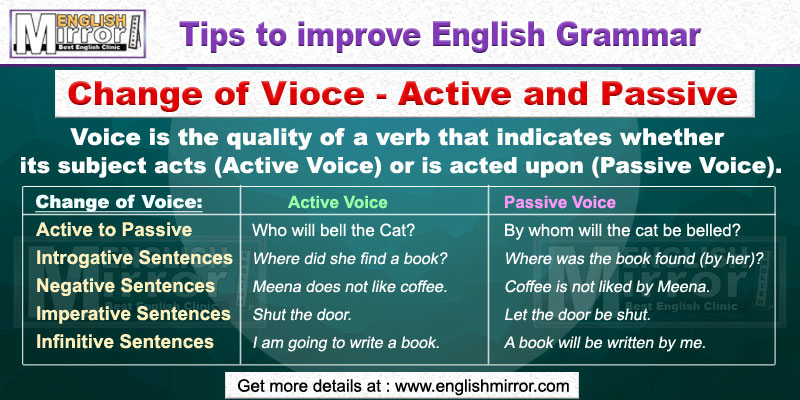
2. Is it true that the passive voice is always lazy writing?
This is the most notorious accusation leveled against the passive voice, largely popularized by the stringent rules of 1980s writing workshops. The perception of laziness stems from the fact that it is often easier to construct a passive sentence than a precise active one. When we are tired, we write, “The ball was thrown,” because we don't want to expend the mental energy to think about who threw it. The legacy of the 1970s “back-to-basics” education reform movement, which emphasized traditional grammar drills, cemented this idea of the passive being a shortcut for the undisciplined mind. Yet, the forgotten vintage truth is that some of the most painstakingly crafted literary masterpieces are largely passive, notably the works of Henry James and Virginia Woolf, who spent thousands of hours perfecting a prose style that actively resists the active voice.
In the modern lens, the accusation of laziness is refuted by the rise of AI content generation. When a human writes in the passive voice, it is often a deliberate, evolved choice to control the narrative flow. For example, in screenwriting, the passive voice is used for stage directions to maintain a sense of cinematic neutrality—“The door was opened to reveal a dark hallway”—which is far more efficient and cinematic than “He opened the door to reveal a dark hallway,” which redundantly implies he is doing the revealing. Lazy writing is not a matter of voice, but of imprecise word choice and illogical structure. A single, perfectly placed passive sentence after three active ones is the opposite of laziness; it is the mark of an attentive stylist.
3. Will AI and grammar software ever fully understand the nuance of passive voice?
This is the existential question of our time. The earliest grammar checkers were simple pattern-matching algorithms. They looked for the presence of a "to be" verb and a past participle and flagged it. This led to the infamous false positives of the early 2000s, where the software would flag perfectly legitimate sentences like “She is thinking about the problem” as passive (they were actively finding the linking verb “is”). The historical evolution here is fascinating: these early tools were built on a rule-based linguistic model, which is insufficient for language’s inherent ambiguity. They treated grammar as a mathematical proof, not as an art form.
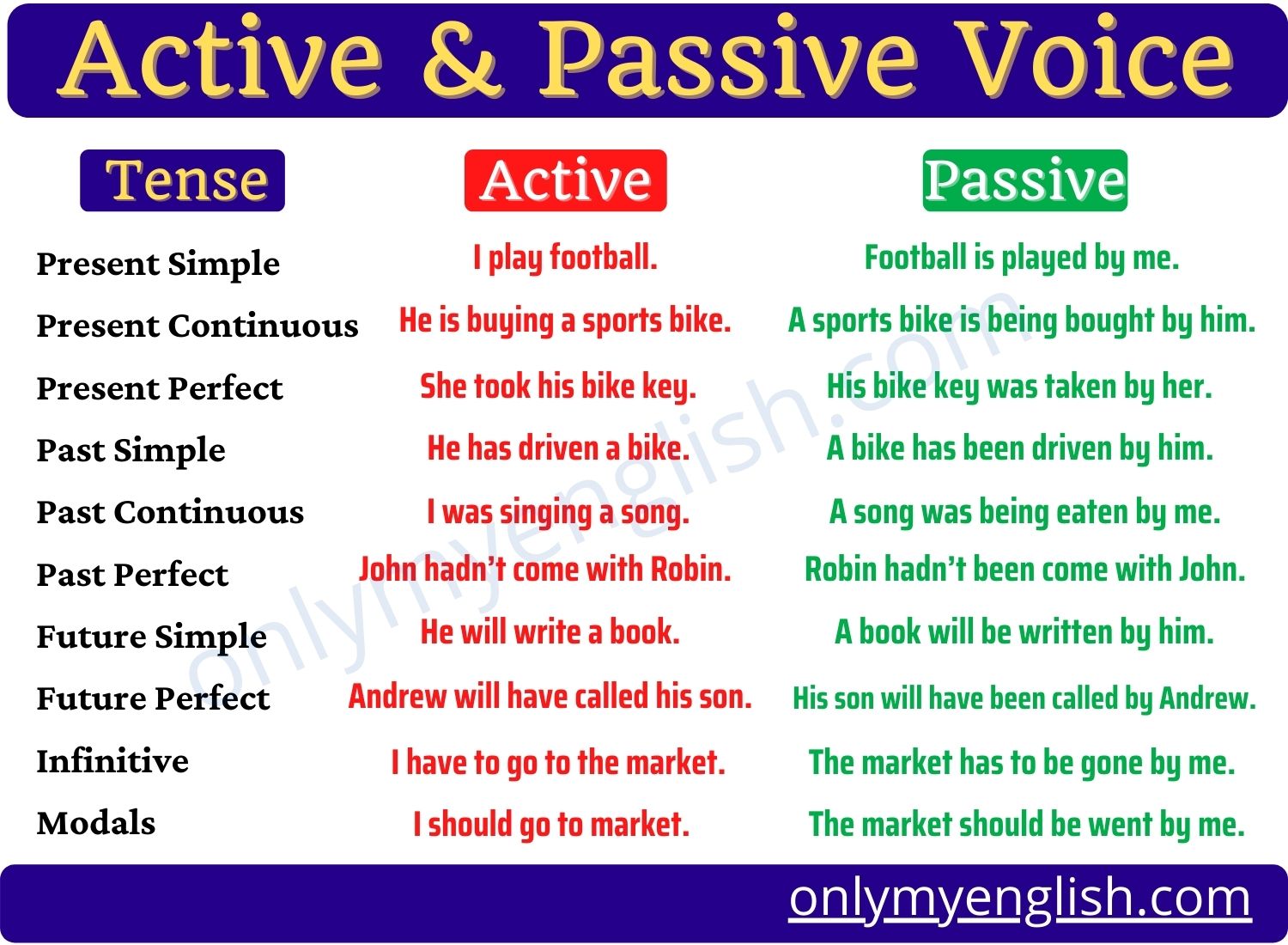
However, the latest Large Language Models (LLMs) like GPT-5 and beyond have shifted to statistical semantics. They don't just look for patterns; they interpret context. Today’s advanced AI can distinguish between the evasive passive of a politician—“The decision was regretfully made”—and the narrative passive of a novelist. These modern engines are even being trained to suggest active constructions only when the user’s intent appears to be clarity and directness, while leaving poetic passives untouched. Yet, even now, they fail at the highest order of nuance: they cannot understand the feeling of a sentence. An AI can tell you that “The vase was broken” is passive, but it cannot tell you that it sounds more gentle and sad than “John broke the vase.” The human soul’s understanding of the passive voice remains a bastion of organic intelligence, a core piece of our linguistic software that not even the strongest silicon chip can fully replicate.
Looking forward twenty years, I see the passive voice not disappearing, but becoming a tool of intentional harmony in a world of artificial noise. As our communication becomes increasingly mediated by virtual assistants and holographic interfaces, we will need to program them with a deeper understanding of linguistic tone. Imagine asking your AI concierge to deliver a sensitive apology. If you instruct it to be empathetic, it will likely use the passive to soften the blow: “Your package was delayed due to an unforeseen systems error.” This is the language of emotional safety. The passive voice will become the primary mode of negotiation between human fallibility and digital perfection, allowing us to take responsibility without unnecessary personal exposure.
Furthermore, the next two decades will see a renaissance of the passive voice in creative writing, precisely because it is so rare in daily digital banter. When every tweet, every email, every standard text message is aggressively active and direct, the passive will become a mark of literary sophistication, a way to slow the reader down in a world moving at the speed of light. We will use it to evoke nostalgia, to paint atmospheric landscapes in our AI-generated novels, and to create a sense of timelessness in a culture obsessed with the immediate. The passive voice, the old grammarians’ pariah, will be reborn as the poetic pause, the quiet room in the frantic house of modern language, proving that even in grammar, the old ways always find their way back to beauty.