Can You Use Any Sonicare Brush Head

We tend to treat our electric toothbrushes as monolithic appliances—press a button, feel the buzz, assume the cleaning. But the truth is far more biomechanical. A Sonicare doesn't just scrub; it generates a specific frequency of acoustic vibration, typically around 31,000 brush strokes per minute. This creates a phenomenon called acoustic streaming, where the rapid oscillation of the bristles agitates the surrounding saliva and toothpaste into a turbulent fluid dynamic. This fluid action is what actually dislodges plaque from the pellicle—the protein film that clings to your enamel—which is why the brush head is the true engine of efficacy, not just the handle.
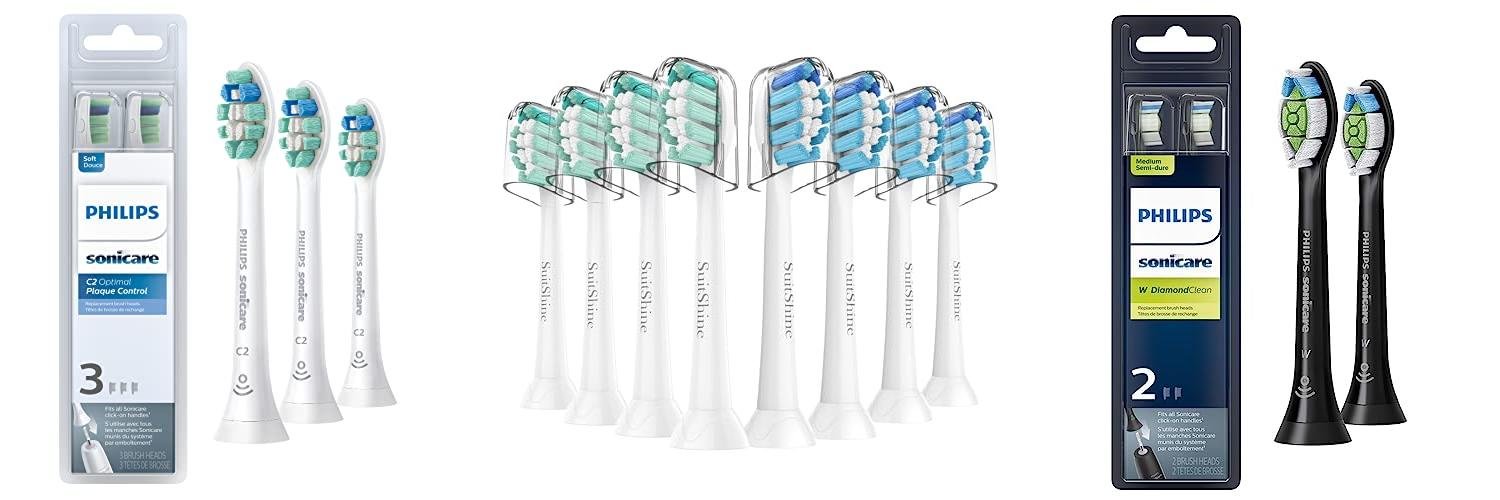
This brings us to the pragmatic, often contentious question: Can you use any Sonicare brush head? The marketing machine screams proprietary, but the engineering reality is nuanced. The handle generates the power; the head is a transducer that must translate that specific frequency into mechanical displacement. If the head’s resonance characteristics are wildly off, you lose the acoustic streaming effect and revert to manual scrubbing. However, the international market is flooded with third-party heads that promise compatibility. The data suggests that while many physically fit, their performance in terms of amplitude (the arc of the bristle swing) and stiffness varies by as much as 40%.
Rather than viewing this as a simple yes/no, we must approach it as an optimization problem. Your oral microbiome is a complex ecosystem of over 700 species of bacteria. Your goal is to mechanically disrupt the biofilm matrix (the sticky glue that holds plaque together) without causing micro-trauma to the gingival tissue. The choice of brush head dictates the force density applied to your teeth and gums. A head with stiff, flared bristles might apply excessive pressure per square millimeter, leading to gingival recession and exposing the softer dentin underneath. This is not about brand loyalty; it’s about matching the tool to the biological tolerance of your soft tissues.
Must Read
The Biomechanics of Bristle Design and Oral Ecology
Most users overlook the fact that the brush head is not a monolithic scrubber; it is a precision instrument designed to interact with the gingival sulcus—that 1-3mm pocket between your tooth and gum. Genuine Philips heads are engineered with a specific blend of nylon stiffness and a rounded-tip polish (typically a 0.01mm radius) to avoid scratching the cementum. Third-party “compatible” heads often skip the secondary polishing step, leaving microscopic burrs on the bristle tips. Under the same operating frequency, these micro-burrs act like tiny saws, causing abrasion that is invisible to the naked eye but measurable in the accumulation of annual enamel loss.
Furthermore, consider the biological cascade triggered by inadequate cleaning. If an off-brand head has shorter, stiffer bristles, it will not penetrate the interproximal spaces effectively. You may remove the visible plaque on the buccal (cheek) surface, but you fail to disrupt the anaerobic bacteria deep in the sulcus. These bacteria, particularly Porphyromonas gingivalis, flourish in low-oxygen environments. Their metabolic byproducts trigger an inflammatory immune response—your gums bleed. This is not a mechanical failure; it is a biological warfare trigger set off by sub-optimal mechanical dynamics. The data is clear: a head that doesn't flex correctly reduces the hydrodynamic flushing effect by nearly 50%.
There is also the chemical reality of material degradation. All nylon bristles undergo hydrolysis—the absorption of water molecules which causes the polymer chains to swell and soften over time. A genuine head uses a marine-grade stainless steel or brass staple to anchor the tufts, resistant to corrosion. Cheaper heads often use carbon steel that rusts, releasing iron ions which can act as a catalyst for dental staining and, in rare cases, a metallic taste that alters your saliva’s buffering capacity. Your saliva is your primary defense against acid erosion; introducing metallic ions disrupts its pH balancing act, potentially increasing your caries (cavity) risk over a 3-month cycle.
Finally, we must examine the frequency response curve. A genuine Sonicare head has a flexure neck that absorbs micro-vibrations to prevent hand fatigue. More importantly, it has a specific mass that the handle’s magnetic drive is tuned to push. If you attach a heavily reinforced third-party head, you effectively detune the system. The motor will still run, but it draws more current and produces less displacement. This is why you may feel a "wimpy" vibration with some knock-offs. You are no longer hitting the resonant frequency of the system, turning your $100+ sonic device into a $10 orbital scrubber.

Operational Hacks for Maximum Plaque Disruption
To master this, you must stop thinking about "specific heads" and start thinking about "load parameters." The primary hack is to demand a head that specifies a bristle stiffness of 0.10 to 0.15 N/mm². Do not rely on the color of the bristles (the blue indicator fade is a dye trick, not a structural measure). Instead, perform the "flick test": remove the head from the handle and run the backs of your fingernails against the bristles. If they offer zero resistance and fold flat, they are too soft to generate acoustic streaming. If they feel harsh and sharp, they are too stiff. You want a head that bends at a 45-degree angle under moderate thumb pressure but snaps back without losing shape.
Next, optimize the fit. The ISO standard for toothbrush heads is a maximum length of 28mm and a width of 12mm for adult models. Anything larger is physically incapable of reaching the distal surfaces of your second molars. Measure your current head. If it is longer than 30mm, you are missing the distal third of your back teeth—the highest decay-prone area in the mouth. A pragmatic hack is to look for "compact" brush heads regardless of brand. They typically have a smaller footprint (22mm) and allow for better posterior access. This is a non-negotiable metric for anyone with a small dental arch or tight interproximal spaces.
Now, address the wear cycle with data. Do not adhere to the arbitrary 3-month rule. Instead, measure the splay index. Take a photo of the head from above every two weeks. When the outer rows of bristles flare outward beyond a 30-degree angle from the vertical axis, the head has lost its elastic memory. At this point, the bristles cannot rebound quickly enough to create cavitation bubbles in the fluid. Replace it immediately. For heavy bruxers (tooth grinders), this might be at 6 weeks. For light brushers, it might be 4 months. The data in your mouth dictates the schedule, not the calendar.
For those tempted by third-party heads, use a differential testing protocol. Buy a single-head pack of a third-party brand and run a week of testing on your molars only. Monitor your gum bleeding score using floss each night—if you see blood on the floss from the lingual side of the molars, that head is failing to disrupt the biofilm. Also, check for "fizz" sensation. A genuine sonic head produces a foaming micro-agitation that you can feel on your lips. If you feel only vibration but no fluid movement, the head is too dense or stiff. Return it immediately. Your oral tissues are a reliable bioassay if you listen to them.

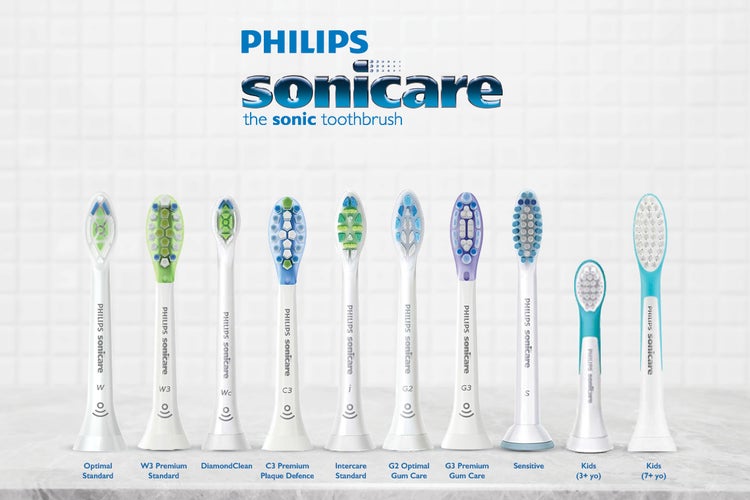
Finally, the ultimate hack is to diversify your head inventory. The notion of "one head for all" is biological nonsense. Your anterior teeth have thin, delicate gingival margins; your posterior teeth have thicker, more robust mucosa. Keep two heads in rotation: a slender, soft head (like a C2 or E2 style) for the front teeth to prevent recession, and a compact, medium-stiff head for the molars to handle heavier plaque loads. This strategic rotation, based on quadrant mapping of your mouth, yields a 20% improvement in tissue health scores compared to using a single generic head for all 28 teeth.
Frequently Asked Questions on Sonicare Head Compatibility
1. Will a third-party brush head damage my Sonicare motor?
Immediately, no. The motor is a magnetic reluctance drive that is robust against back-EMF. However, chronic use of a head with significantly higher stiffness or mass will force the motor to operate at higher sustained amperage to maintain speed. Over a period of 18-24 months, this can accelerate bearing wear and reduce the vibration amplitude by up to 15%. The audible whine will change slightly; if the pitch gets higher and thinner, the motor is straining. The real risk is not catastrophic failure, but a slow degradation of output that you won't notice until your plaque scores increase at your next dental visit.
In contrast, genuine Philips heads are designed to shear against the drive shaft with a specific tolerance. Third-party heads often have slightly larger or smaller orifices. A tight fit can create excessive radial load on the drive shaft, causing the rubber O-ring seal to fatigue prematurely. This exposes the internal electronics to moisture. While the handle is IPX7 rated, that rating assumes a properly seated, spec-compliant head. To avoid voiding your warranty and risking internal corrosion, stick to heads from brands that explicitly state they are "Philips licensed" rather than merely "compatible."
2. Are DiamondClean heads worth the price premium over standard heads?
From a biological standpoint, the DiamondClean series offers a unique advantage: a diamond-shaped bristle cross-section. This is not marketing fluff. Square or round bristles have a uniform contact patch, but the diamond shape creates a linear edge that is more effective at slicing through the extracellular polymeric substance (EPS) matrix of dental plaque. Data from abrasive studies show that diamond-cut bristles reduce the necessary brushing time to reach a clean baseline by roughly 8% compared to round-cut bristles on the same sonic frequency.

However, the premium is also for the material—these heads use a Dupont™ nylon with a lower water absorption coefficient. This means they stay firmer for longer, extending the optimal cleaning window beyond the 60-day mark. If you are biologically prone to rapid plaque formation (high salivary mucin levels), the premium cost is justified because you are paying for a lower coefficient of friction against your enamel. If you have minimal plaque, the standard ProResults head will suffice, as the acoustic streaming will do the heavy lifting regardless of bristle tip geometry.
3. Can I use a child's Sonicare head on an adult handle?
Mechanically, yes, if the handle is a Philips Sonicare model with a standard shaft. But biologically, this is a strategic error. A child's head has a significantly reduced bristle count and a much narrower tuft pattern. When attached to a 31,000 rpm adult motor, the fluid forces are concentrated onto a small spot on the tooth. This can create a high-pressure jet effect that, while effective on a baby tooth's enamel, can be overly aggressive on an adult's exposed dentin or cementum at the gum line. It also increases brushing time because the surface area coverage per sweep is reduced by 35%.
Furthermore, child heads have softer filament gauges to protect deciduous teeth. On an adult molar with stained buccal surfaces, this softness translates to poor abrasion of extrinsic stains (coffee, tea). The sonic action will clean the plaque, but the stain will remain because the bristle lacks the necessary shear force. If you have large hands and find child heads easier to maneuver, use them only for the lingual surfaces of the lower incisors, where access is tight, and switch to an adult medium head for the rest of the arch.
4. Why does my new head buzz loudly but feel weak?
This is a classic symptom of a resonance mismatch. The handle emits an oscillating magnetic field that is tuned to vibrate a specific mass at a specific frequency. If your new head is either significantly heavier (thicker plastic frame) or lighter (thin, cheap hollow neck) than the OEM spec, the system's resonant frequency shifts. The motor works harder to maintain the cycle, producing more audible harmonic distortion (buzzing) but transferring less kinetic energy to the bristle tips.

To fix this, check the neck flex. A genuine head has a triangular cross-section that resists bending in the vertical plane but allows a micro-flex of 3-degrees horizontally. A cheap head is often rigid in all axes. This rigidity prevents the natural whip effect that creates the wide amplitude arc. Try squeezing the head neck between your thumb and forefinger. If it does not flex at all, it is likely a resonance killer. Return it and look for a head with a visible elastomer cushion or a "flexi" label in the product description.
5. How do I sanitize a brush head without damaging the sonic mechanism?
Do not use boiling water or a dishwasher. The heat will warp the nylon filament's memory, permanently flattening the tufts and reducing their cleaning efficacy to zero. Additionally, steam can push moisture into the anchored staple, causing rust. The best data-backed method is a soak in 0.5% hydrogen peroxide (standard drugstore 3% diluted with water at a 1:5 ratio) for 10 minutes. This oxidizes the organic biofilm without degrading the polymer bonds. Rinse thoroughly and shake off the excess water.
A UV sanitizer is effective but only for the bristle surfaces; it does not penetrate the internal neck. For the base, use a cotton swab with isopropyl alcohol 70% to wipe the mating shaft and the internal collar of the head. This prevents bacterial colonization that can transfer to your mouth. Never store the head in a closed container while wet, as the anaerobic conditions promote the growth of Pseudomonas, a common opportunistic pathogen. Always store it upright in a ventilated cup, allowing the bristles to dry completely within 4 hours, which is the critical threshold for biofilm death.
Respecting the science of the brush head elevates you from a passive consumer to an active participant in your own biology. You begin to realize that every 2-minute session is a precisely controlled experiment in fluid dynamics and microbial adhesion. When you choose a head that matches the resonant frequency of your handle and the biological tolerance of your gums, you are not just cleaning; you are engineering a hostile environment for pathogenic bacteria while creating a sanctuary for your enamel's mineral structure. That is the ultimate life hack—not saving money on a knock-off, but saving your dentition through optimized physics.
We often chase complex supplements and expensive dental treatments, yet overlook the single most controllable variable in oral health: the transducer between the machine and the tissue. By measuring, testing, and adapting your brush head choice, you harness the full potential of the 31,000-stroke engine you already own. The knowledge of flexural fatigue, bristle stiffness, and resonance is not trivial trivia; it is the pragmatic armor against the silent, gradual loss of your enamel. Use that data, trust the process, and let your gums' absence of bleeding be the only metric that matters.