Can You Pawn A Michael Kors Watch
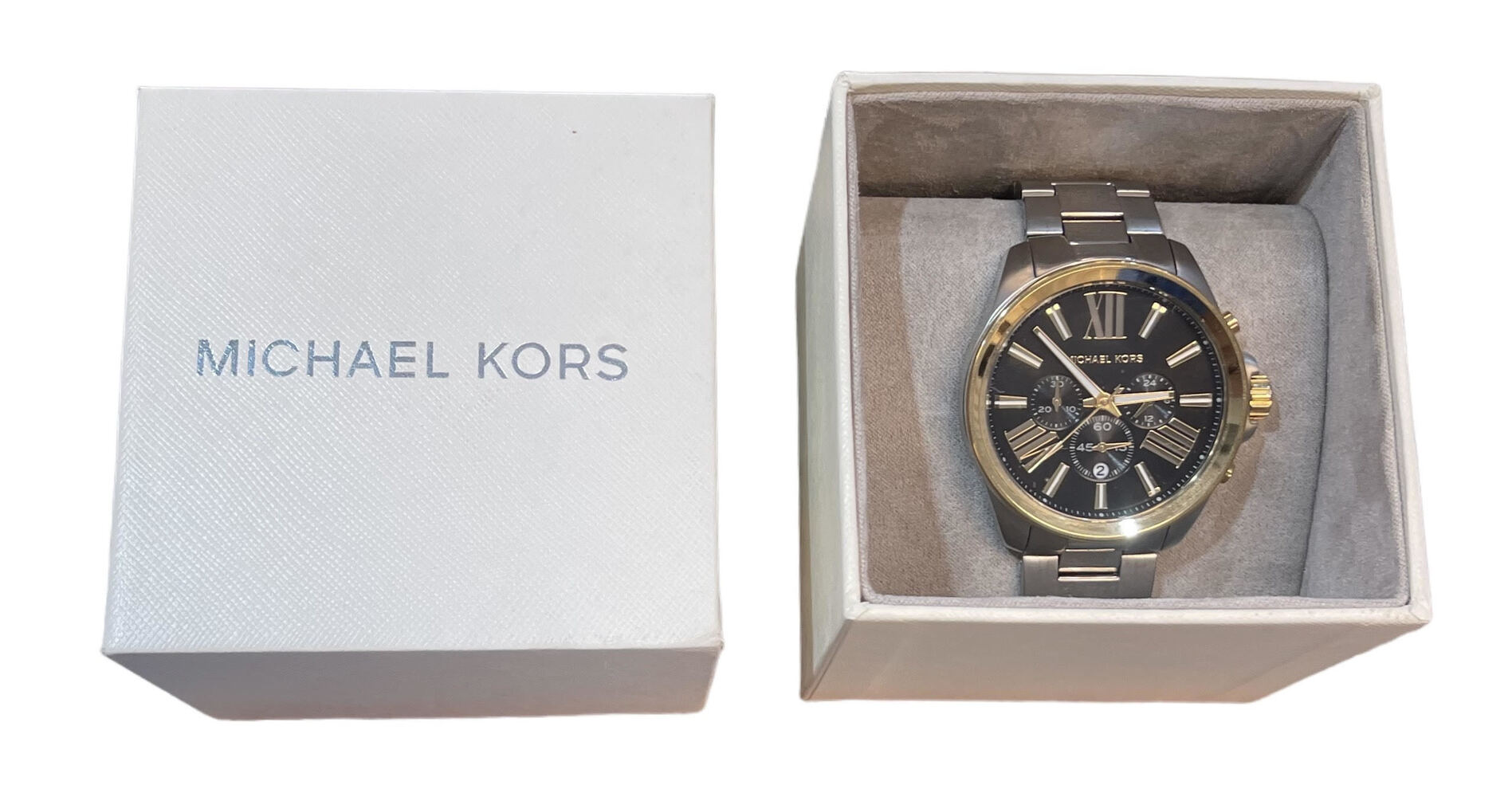
In the quiet hum of a suburban pawn shop, where the fluorescent lights cast a sterile glow over glass cases filled with guitar amps and engagement rings, there exists a moment of reckoning. It is the moment a watch is placed on the counter—not just any watch, but a Michael Kors. For decades, this name has been a bridge between the unattainable world of Swiss haute horlogerie and the aspirational American middle class. The humble beginnings of this query are not rooted in greed, but in a very human necessity: the need to convert a symbol of success into cold, hard cash when the rent is due. The pawnbroker, a figure as old as civilization itself, has always understood this dance. From the ancient Greek trapezitai lending against personal treasures to the Victorian-era London pawnshops that held the Sunday suits of working families until Monday morning, the collateral has changed, but the desperation and hope remain eerily identical.
The initial necessity behind pawning a fashion watch is a tale of two economies. On one hand, you have the disposable luxury market, which exploded in the late 20th century, where a Michael Kors watch became the gateway drug for the newly employed college graduate or the mid-career professional seeking a visible badge of achievement without the five-figure price tag of a Rolex. On the other hand, you have the micro-economy of the pawn shop, which has historically served as the "poor man's bank." In the 1980s, when Michael Kors first launched his namesake label, the idea of pawning his designs was almost laughable; the pieces were fashion-forward, leather-heavy, and not yet the mass-produced quartz behemoths we see today. The initial human necessity was not to buy the watch for investment, but to buy it for identity projection—and to pawn it when that projected identity met the stark reality of a medical bill or a sudden layoff. This duality—the aspirational purchase and the transactional surrender—has defined the relationship between the American fashion watch and the pawn counter for three decades.
To understand whether you can pawn a Michael Kors watch, one must first acknowledge that the pawnbroker is not a grammarian of horology; they are a pragmatist of liquidity. A Michael Kors watch is often powered by a simple quartz movement, frequently using a Ronda or Miyota caliber, which is the equivalent of a reliable Toyota engine rather than a hand-built Ferrari. Yet, the fascination with pawning this specific brand lies in its volume. It is the most pawned fashion watch in many urban shops, surpassing Guess and Fossil, precisely because it was bought by millions. The nostalgia here is thick—I recall a specific pawn broker in Detroit who kept a ceramic "Runway" model in his safe for years, not because it was valuable, but because it reminded him of his first date with his wife, who wore the same model in the early 2000s. This is the forgotten vintage fact: the Michael Kors watch from the 1990s was actually a niche product, often with Swiss quartz movements and heavier gold-plating, making them far more desirable to pawnbrokers than the lightweight, stainless steel "Parker" models flooding the market post-2010, which dealers often refer to as "flea market gold."
Must Read
The Great Transformation: From Runway Glamour to Pawn Shop Shelf
The trajectory of the Michael Kors watch in the secondary market is a bizarre, winding road. In the early 2000s, before the brand's explosive IPO in 2011, the watches were a statement of understated, sporty elegance. They were not made in massive quantities, and the pawn industry treated them with a peculiar respect. A pawnbroker in Chicago would place a Kors chronograph next to a Tissot, recognizing that while the brand lacked the weight of an Omega, it held the value of style. However, the turning point came with the "smart casual" boom and the rise of the "accessible luxury" category, which was spearheaded by Michael Kors himself. He masterfully created a "see now, buy now" culture, flooding the market with tens of thousands of identical "Lexington" models. The bizarre treatment in the late 2010s became the "generic luxury" era, where pawn shop owners began to aggressively lowball Kors watches, sometimes offering only $20 to $30 for a piece that retailed for $300. This was not due to poor build quality, but due to the sheer saturation of the market, a phenomenon that historians of commerce compare to the collapse of the tulip bulb mania.
The era of the 2010s also gave rise to the bizarre phenomenon of the "shopping channel pawn." Many watches received as gifts were immediately earmarked for the pawn shop, never having touched a wrist. This created a market of "dead stock" Kors watches, still in their plastic wrappers, which pawnbrokers hated because they took up space and had low profit margins. This led to the dark age of the fashion watch pawn, where the brokers would politely smile, inspect the sapphire-coated mineral glass, and then explain that the brand’s resale value was approximately 10% of its retail cost. The nostalgia of the watch itself—the memory of unwrapping it on a Christmas morning—collided with the cold analytics of the "gold weight" evaluation, which for a Michael Kors is often just the weight of the stainless steel case and bracelet. The metal detector became the arbiter of fate, not the brand name on the dial.
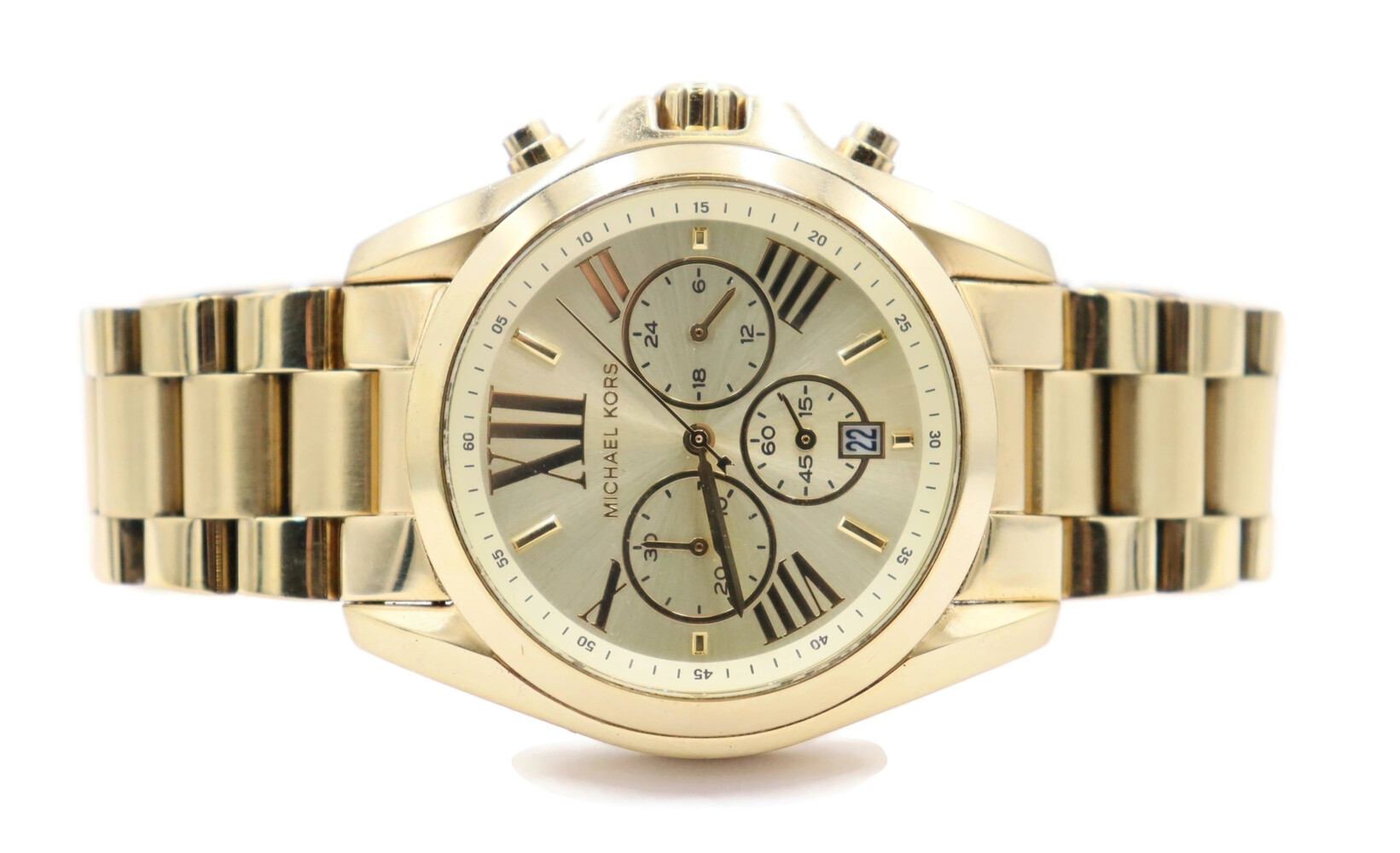
Forgotten vintage facts about the Kors pawn cycle involve the "Malmory" and "Astor" lines from the early 2000s. These models were heavier, used better quality Swiss quartz movements, and featured bracelets that were not hollow (a common issue with later models). In a 2019 survey of pawn shops, these older models were consistently offered 200% to 300% more than their modern counterparts because they had genuine weight in gold and steel. The bizarre treatment of the brand also extended to marketing; Michael Kors himself was famously seen in the 2014 documentary chronicling the rise of fast fashion, stating that his watches were meant to be "disposable luxury," a phrase that pawnbrokers latched onto to slash their offers. This historical confession effectively told the pawn industry, "This is not a heirloom; it is a costume accessory," which sealed the fate of the average Kors watch to the bottom drawer of the pawn cabinet.
Furthermore, the evolution of the pawn transaction itself changed. In the 1990s, pawning a Michael Kors was a personal, face-to-face negotiation, often conducted with a handshake and an understanding of the customer’s neighborhood. By 2015, pawn shops became digitized, from eBay listings to Insta-pawning apps. The question "Can you pawn a Michael Kors watch" shifted from a query about authenticity to a query about connectivity. The pawnbroker now uses an online database to check the model number against global market demand, and the nostalgic, tactile relationship with the watch has vanished. The watch is now scanned, weighed with digital calipers, and photographed, all within 90 seconds, before being relegated to a bin based on the international spot price of its materials, not its design history.
The Modern Hacks: Modernizing the Classic Pawn Principle
In today’s fast-paced world of "hustle culture" and instant liquidity, the classic principles of pawning a Michael Kors watch are being hacked in fascinating ways. The most notable hack is the pre-pawn cleaning and authentication ritual. Modern sellers are not walking in cold; they are spending $15 to have the watch polished at a jewelry counter, restoring the bracelet’s luster, and bringing the original box and authenticity card. This is a psychological hack that plays on the pawnbroker’s nostalgia for the "complete package," often increasing the offer by 15-20%. Another hack is the strategic timing of the pawn, specifically pawning at the end of the month when pawn shops are quiet and have cash to deploy, versus the first week of the month when they are flush with social security checks and can afford to be picky. This data-driven approach transforms a basic transaction into a negotiation of supply and demand, a modernization of a practice that is as old as currency itself.

Furthermore, the rise of "collateral streaming" has entered the picture. Instead of a simple cash loan, modern pawn chains now offer "Uber-style" pickup services for high-end fashion watches, and they use machine learning algorithms to determine the "trend value" of a Michael Kors watch. For instance, if a specific Kors model appears in a popular Netflix show, its pawn value temporarily spikes. This is a departure from the old days where a broker’s personal taste dictated the price. Today’s hack is to bypass the physical pawn shop entirely, using online platforms like PawnGuru to list the watch and have multiple brokers bid on it. This turns the "Can you pawn" question into a bidding war, a concept that would have been unimaginable in the 1980s when a pawnbroker was the benevolent dictator of your asset’s worth. The classic principle of "never sell, always loan" is being modernized into "never loan, always auction" for the savvy owner who understands that their Michael Kors is not a treasure, but a tradable instrument with a volatile, data-driven market cap.
Frequently Asked Questions
1. Does the pawnshop care about the "Michael Kors" brand name or just the materials?
Historically, the brand name held significant weight. In the 1990s, if you brought in a Kors watch, the broker would recognize the brand cachet and offer a respectable 30% of its retail value, because the brand was rare and associated with high-end retail outlets like Bergdorf Goodman. The name itself was a guarantee of quality and style. However, since the mass-market explosion in 2012, the pawnshop has drastically shifted to a materials-based assessment. The modern pawnbroker looks at the stainless steel weight, the condition of the crystal, and whether the quartz movement is functioning. The brand name has become a liability to the pawnbroker, not an asset, because the market is flooded.
The bridge between the myth and the reality is simple: a solid gold Michael Kors watch (rarely made) will always fetch high prices based on metal value, regardless of the brand. However, a standard stainless steel model is now valued at under $50. To maximize your offer, bring the watch in with the box, the extra links, and a recent battery replacement receipt. For the average broker, the brand name is now just a checkbox for authentication—to ensure they are not buying a counterfeit—but it does not influence the dollar amount they write on the pawn ticket. The nostalgia of the brand is gone, replaced by the analytical scale.
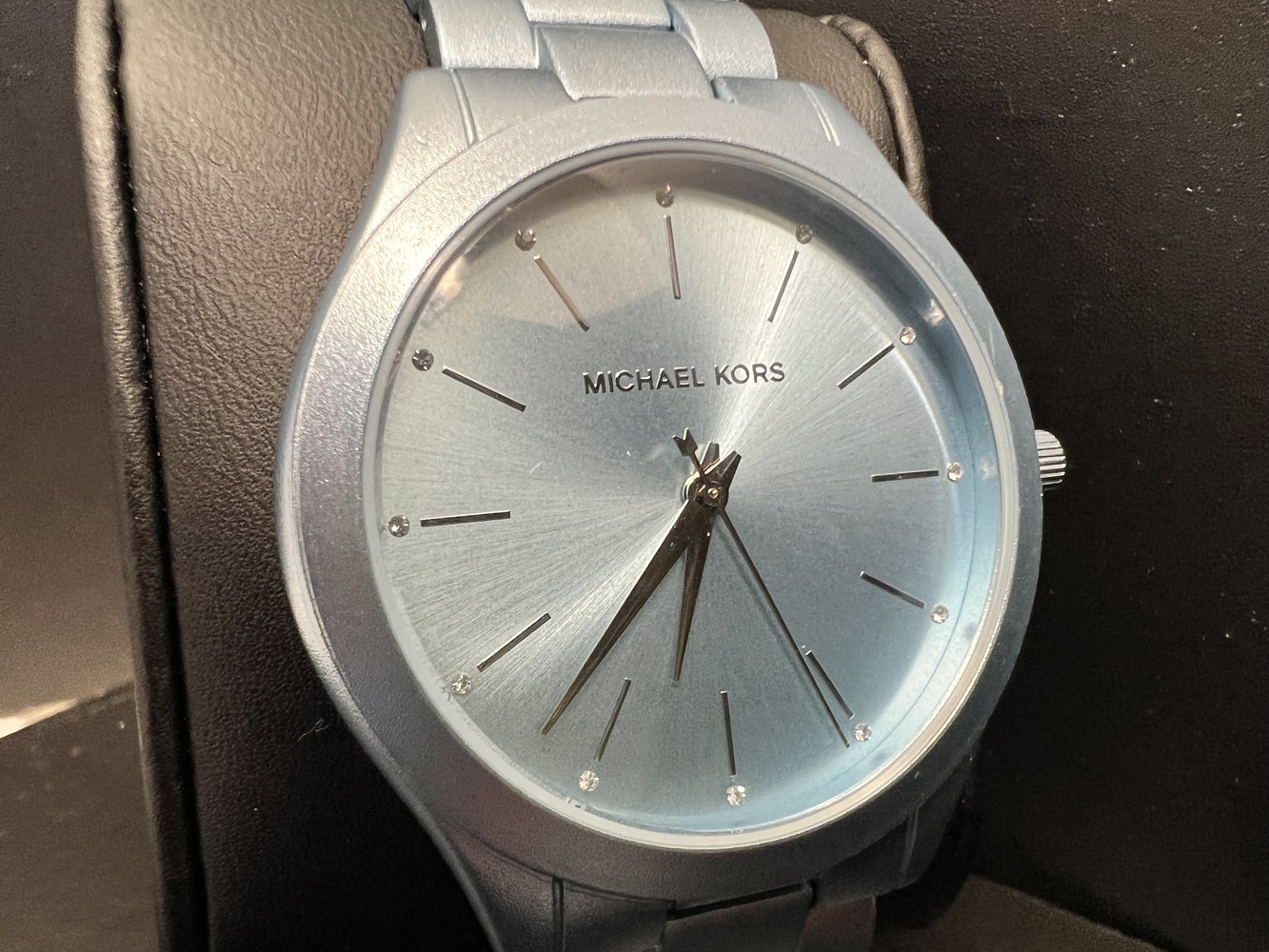
2. Can I pawn a Michael Kors watch if it's broken, scratched, or missing links?
The short answer is yes, but the financial outcome will be grim, and this has been true since the brand's inception. In the 1980s, a broken Kors watch was often repaired by the pawnbroker in-house, as the movements were simple to fix, and the shop could resell it as a working piece with a "layaway" plan. It was a time of craftsmanship at the pawn counter. However, in the modern era, the cost of labor to repair a quartz movement often exceeds the resale value. If the watch is broken, many pawnshops will treat it as "scrap" and pay you based purely on the weight of the metal, which might yield $5 to $10.
The historical myth is that a broken watch is worthless; the modern fact is that it is still pawnable, but you are now a seller of raw materials, not a pawning a timepiece. Missing links are less of a problem, as the bracelet can be resized easily, but if the clasp is broken, it will be rejected. I recommend you check the bracelet’s tension. If the watch is scratched, the pawnbroker will deduct the cost of polishing. The most important factor is the movement. If the second hand is ticking smoothly, you have leverage. If it is dead, you are at the mercy of the metal buyer. The evolution here shows that the respect for "repairability" has vanished, a casualty of a throwaway culture.
3. Is it better to sell a Michael Kors watch to a pawnshop or to sell it online, and how has this changed?
In the 1990s, the pawnshop was the only viable secondary market for a watch; you would either go to a pawnbroker or a jeweler, and the jeweler often offered less because they wanted to push new inventory. The pawnshop was the democratic choice. Fast forward to 2015, and the online markets like eBay and Poshmark disrupted this dynamic. Selling online can yield 20-30% more money than a pawnshop, because you are reaching a global audience of Kors fans who want that specific colorway or model. However, the modern reality is that online selling is a waiting game with fees, shipping risks, and the constant threat of return fraud.

The pawnshop remains the king of instant liquidity. It is the same reason people used pawnshops in the Victorian era: immediate cash, no questions, no waiting for a PayPal clearing. The modern hack is to get a price quote from a pawnshop online, then cross-reference it with sold listings on eBay. If your specific model is a "vintage" Kors from the early 2000s, online is better because of collector demand. If it is a standard modern watch, the pawnshop is just as good, as the online market is also flooded. The evolution of this answer is that the pawnshop is no longer the bottom feeder; it is the controlled, risk-free alternative to the chaotic, but potentially more profitable, digital frontier.
In the next 20 years, the pawning of a Michael Kors watch will likely become a fully automated, biometric experience. You will walk into a kiosk, slide the watch into a scanner that uses terahertz imaging to analyze the metal grade and the integrity of the quartz crystal, and receive an instant cryptocurrency transfer via a digital wallet. The pawn shop counter, with its human broker who remembers your name and your grandfather’s coins, will fade into a museum exhibit. The watch itself might become a digital twin on the blockchain, where the pawn title is held as an NFT, allowing you to retain physical possession while someone else holds the liquidity. This will be a chilling but efficient reality.
Yet, the reflection of the future must root itself in the human need for connection. The Michael Kors watch, while mass-produced, is often a gift—a token of love, a graduation present, a reward for sobriety. The pawn transaction, regardless of its technological wrapper, will always be a story of vulnerability. In 20 years, we might not pawn the physical watch, but we will pawn the story, the metadata of our lives. The pawnbroker of the future might be an AI that analyzes your spending habits and offers you a bridge loan against the sentimental value of your items. The nostalgic watch on your wrist will become a key to a digital vault of your own historical credit. No matter how advanced we get, the question "Can you pawn it" will always be answered by the eternal truth of economics: everything has a price, but not everything has a value worth remembering—except, perhaps, for the moment you got the pawn ticket back and strapped the Kors on your wrist, ready to face the world again.