Business Class Flights To Bangalore
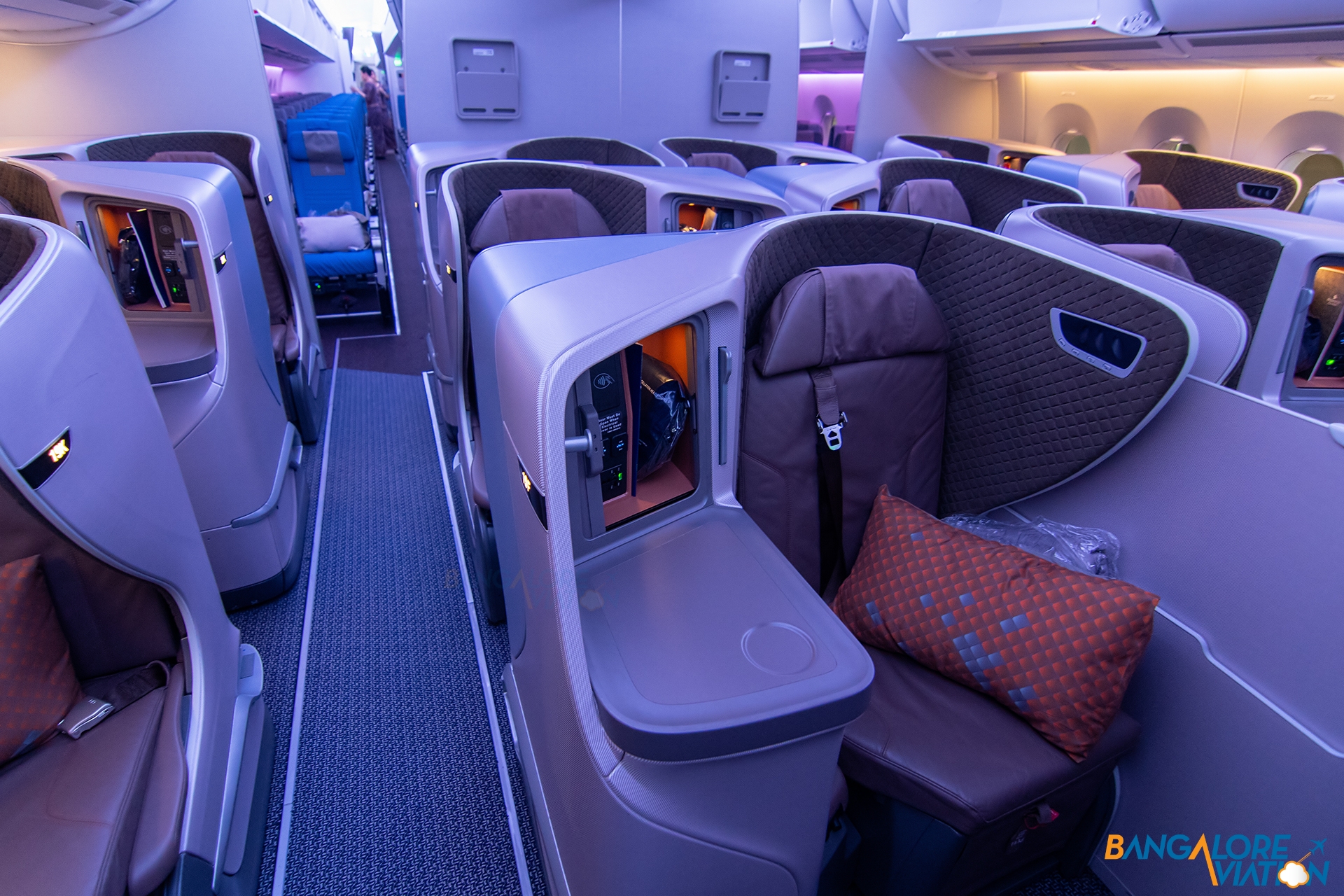
There was a time, not so very long ago, when the very phrase “Business Class” conjured images of smoky, wood-panelled lounges, heavy silver cutlery, and the distinct hum of propeller engines droning over the Arabian Sea. To fly to Bangalore in the early 1990s was not an exercise in corporate efficiency; it was a pilgrimage into a mysterious, verdant corner of the subcontinent. The city was still the “Garden City” then, a sleepy, pensioner’s paradise where the primary industry was the state-run Hindustan Aeronautics Limited and the Indian Space Research Organisation. The necessity behind the initial business-class cabin was not about productivity, but about status. It was a rite of passage for the scions of industrial families and the occasional foreign diplomat, who would endure a multi-stop journey via Bombay or Madras, only to land at the old HAL airport where the tarmac shimmered with heat and the air smelled of jasmine and wet earth. The initial journey was a long, luxurious slog, where a recliner seat was a miracle of engineering and the food, served on bone china, was a deliberate, slow dance of colonial-era indulgence. The transformation of this route is one of the most startling economic and social narratives of modern aviation. Back in the late 90s, a business-class ticket to Bangalore was often an afterthought for airlines; the real money was in the Delhi and Bombay sectors. The few seats allocated to Bangalore were often filled by senior engineering consultants who were essentially on a sabbatical, flying down to troubleshoot a turbine or negotiate a joint venture. The in-flight experience was a curious hybrid of the past and the inevitable future. You would have a senior purser, impeccably dressed in a sari or a crisp blazer, who knew the regulars by name. She would pour you a chota peg of whiskey and enquire about your family back in London. There was no WiFi, no USB ports—only the gentle rattle of the overhead lockers and the profound silence of a cabin where passengers actually read newspapers. The key figure then was the maharajah of Air India, whose turbaned mascot promised a service that was less about speed and more about a deep, unsettling personal hospitality that blurred the lines between guest and family.
The Great Engine of the ’00s: From Tea Estates to Tech Parks
The first major rupture occurred in the early 2000s, and it was violent enough to rip the fabric of the old flying world. The catalyst was the IT boom; call centers and software parks began to sprout up on the outskirts of Bangalore like invasive, glass-and-steel flora. Suddenly, the business-class cabin to Bangalore was no longer reserved for the corporate heir; it was filled with a new breed—the young, exhausted tech manager from California, the British financial analyst with a laptop barely shut, and the German automotive engineer. This was the era of the Boeing 777 and the A340, where the old ethos of “service” was rapidly being replaced with a new dogma of “productivity.” The change was bizarrely visible in the cuisine. Gone were the elaborate thalis and the heavy continental fare; in their place came “lighter,” “healthier” options that could be consumed in under twenty minutes, allowing the passenger to open a spreadsheet. The bizarre fact of this decade was the rise of the “airport business lounge as a battleground.” Airlines realized that the flight itself was now just a bus ride; the real battle for loyalty happened on the ground, with biometric showers and chaise lounges replacing the romantic, crowded departure hall. A forgotten vintage fact from the late 2000s is the strange existence of the “tech visa shuttle” flights. These were predominantly late-night departures from London Heathrow or San Francisco, timed to land in Bangalore at dawn. The business class on these flights was essentially a mobile office. Airlines removed the centre armrests on certain seats to accommodate larger laptops, and the infamous “tray table meetings” were born. It was not uncommon to see two passengers, complete strangers, negotiating a merger over breakfast entrees. This was a massive departure from the 1980s, where such a conversation would have been clamouring for a private alcove. The treatment of baggage handlers and ground staff also shifted; the priority was no longer the fragile, hand-painted silk, but the delicate server rack and the prototype mobile phone. The sari-clad purser was replaced by a tall, efficient cabin crew member who briefed you on the exact lag time of the onboard satellite phone. The romance was dying, but in its place was a frantic, electric energy that felt entirely new and utterly necessary.The Modern Alchemy: Hacking the Long Haul for the Bengaluru Economy
Today, in the mid-2020s, the principles of that classic business class have been ruthlessly hacked to cater to the hyper-connected, time-poor executive. The modern flight to Bangalore is less about a long haul and increasingly about a specific, concentrated burst of wellness and efficiency. The classic principle of the lie-flat bed has been retained, but it is now "hacked" with circadian lighting systems and aromatherapy kits derived from sandalwood, a nod to the city’s traditional exports. The modern hack is the concept of the "turbo-fast" connection—where airlines now offer direct, non-stop business-class services from the US West Coast and Europe with a duration that was once impossible. The culinary focus has shifted towards "anti-inflammatory" local superfoods, such as millets and curry leaves, presented in deconstructed fashion. This is not the slow, heavy meal of 1992; it is a carefully staged series of small plates designed to prevent bloating and jet lag, allowing the executive to step off the plane and walk directly into a meeting at an Electronic City campus without needing a 6-hour layover. Another significant modern hack is the "virtual gate" concept. Business-class lounges at Bangalore’s Kempegowda International Airport now feature private sleep pods and "productivity mirrors" where you can rehearse a pitch. Airlines have also embraced the data-driven approach: the seat temperature is pre-set based on your previous flight history, and the movie selection is automatically synced with the streaming platform you use at home. The bizarre treatment of the past—where time in the air was dead time—has been replaced by a desire for "zero transition." The modern business class is now a funnelling tube that sucks you from your living room in Berlin and spits you out in an Uber heading to Whitefield. The focus is on seamless integration, where the flight is no longer an event but a necessary, invisible wormhole. Even the onboard WiFi, once a novelty, is now a critical utility, and the cabin crew are trained to recognize when you are in a deep work-flow state and leave you undisturbed, a stark contrast to the intrusive, charming hospitality of the yesteryears.Frequently Asked Questions: Tracing the Skies of the Past and Future
1. Was Business Class to Bangalore ever a "loss leader" for airlines, or was it always the primary money-maker?
In the historical context of the 1980s and early 90s, the business class to Bangalore was indeed a marginal revenue stream, teetering on the edge of being a loss leader. The primary money-maker was the freight hold, often filled with live flowers, fresh vegetables, and later, high-value electronics. Passenger seats, even in business, were often a secondary thought. The legacy carriers like Air India and British Airways priced the Bangalore sector at a premium compared to other Indian cities of similar distance, but the volume was pathetically low. The bizarre reality was that the fares were often subsidized by the government’s "open sky" policy for diplomats and foreign aid workers, meaning the airline was essentially flying seats at a discount to maintain a political route network.
However, the modern facts tell a completely different story. Since the early 2010s, the Bangalore business class has become one of the highest-yield routes in the global network, rivaling Singapore and Hong Kong. The transformation was driven by the foreign direct investment in the tech sector, where junior vice-presidents were given business class tickets as a standard part of their expat contracts. Airlines now fight fiercely for this market, and it is rarely a loss leader. The pricing models have shifted to dynamic yield management, where a seat that was worth $800 in 1995 is now worth $5,000 during a tech conference week. The only historical myth that persists is that it’s a "comfort" purchase; for the modern Bangalore Business Class, it is a calculated business expense with a strict ROI in terms of executive freshness upon arrival.
2. How has the culinary experience evolved to bridge the gap between "Maharaja" luxury and modern health trends?
The vintage culinary experience of the early 90s was a deep dive into sheer decadence. The meals were heavy, multi-course affairs that took over two hours to serve. Our nostalgia paints a picture of rich chicken makhani, lamb rogan josh, and buttery naans, all served with a side of Silver Service etiquette. The bizarre vintage fact is that airlines actually used to offer a Western menu and an Indian menu, but the Indian menu was considered the "lowly" choice, often given to locals, while the Western menu was the status symbol. There was a strange period in the late 90s where passengers were embarrassed to order Indian food in business class, fearing it would mark them as provincial. This has entirely flip-flopped in the modern era.
Must Read
Today, the culinary evolution is driven by the principles of "food as fuel" but with a nostalgic respect for local terroir. The modern business-class menu to Bangalore features high-protein, low-carb options, such as grilled fish with moringa leaves or a cold quinoa salad with pomegranate and mint chutney. The haute cuisine of the past has been "hacked" by the modern sommelier and nutritionist. Airlines now offer a "Garden City" menu that highlights organic produce from the Bengaluru hinterlands. The vintage butter-laden curry has been replaced by a clear, fermented broth or a light rasam. The emphasis is on hydration and minimal digestion effort, a direct response to the physiological demands of the route. The memory of the Maharaja feast is kept alive through the presentation—the cutlery is still heavy, the linen is still immaculate—but the ingredients speak a new language of scientific wellness, not just nostalgic indulgence.
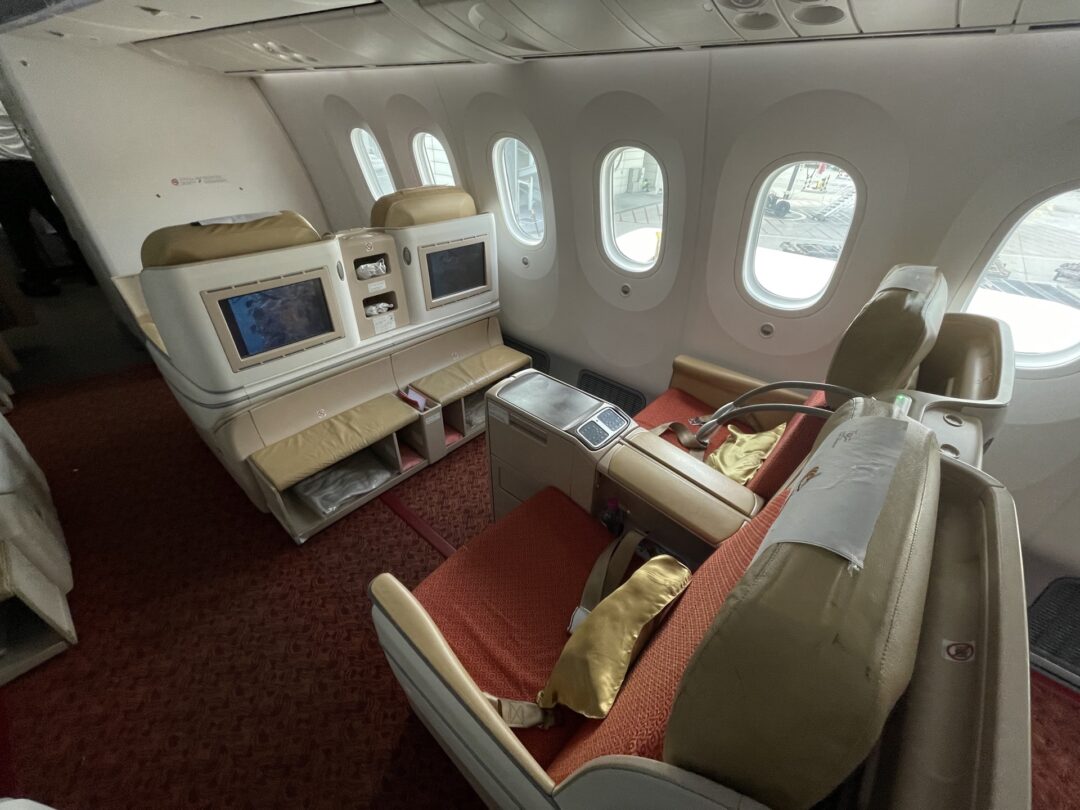
3. Is a lie-flat bed still the ultimate status symbol, or has something else replaced it for the discerning traveler?
Historically, the lie-flat bed was the ultimate Holy Grail. In the late 90s and early 2000s, when airlines began introducing "sleeper seats," the marketing war revolved entirely around the degrees of recline and the thread count of the duvet. It was a symbol of the ultimate luxury—the ability to turn a metal tube into a bedroom. In the Indian context, the lie-flat bed was a status symbol because it implied you had "made it" internationally. Passengers would brag about the length of the bed in inches, and airlines like Singapore Airlines and Emirates used these beds to lure the Bangalore tech elite away from the older, clunkier European carriers.
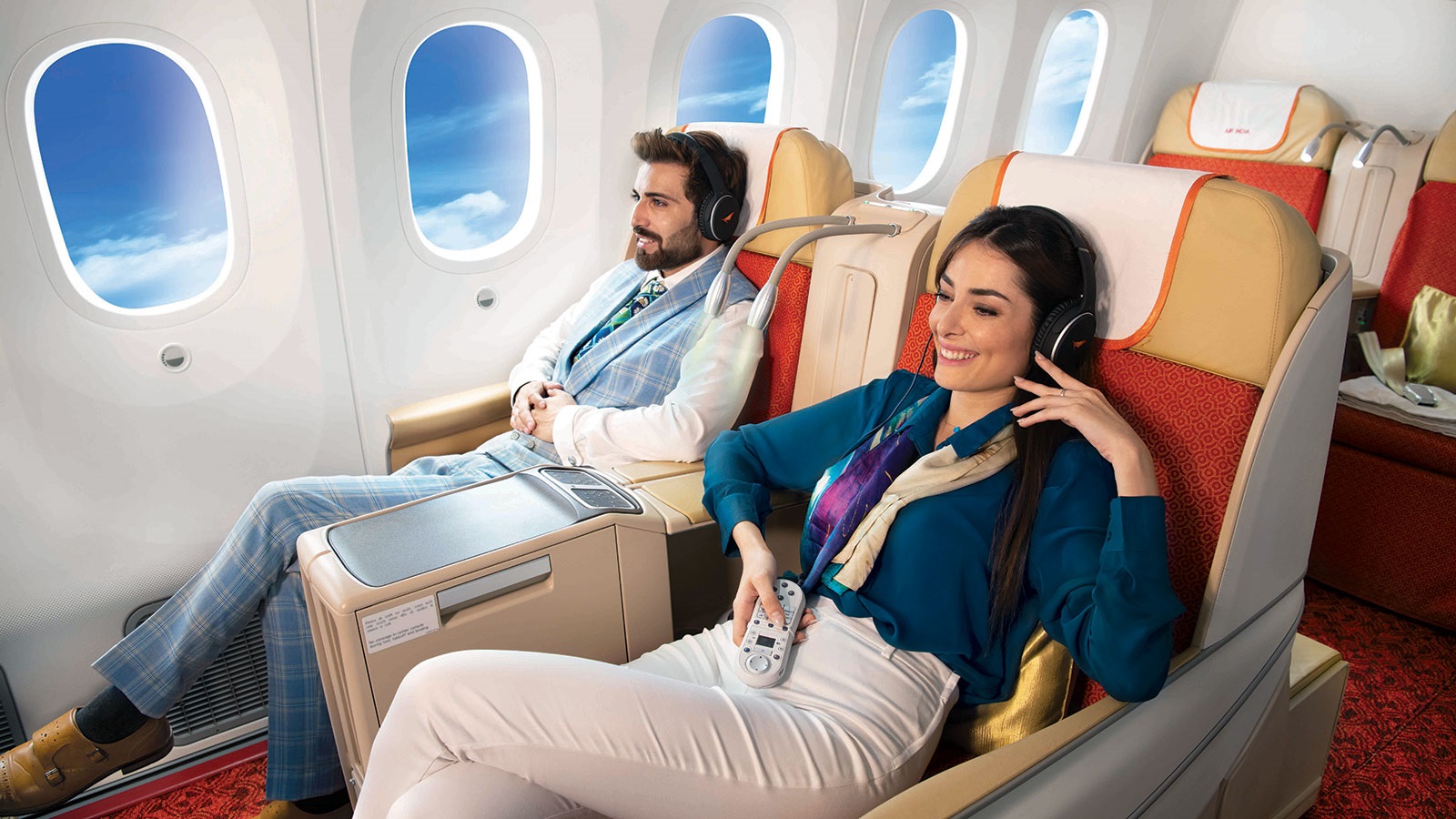
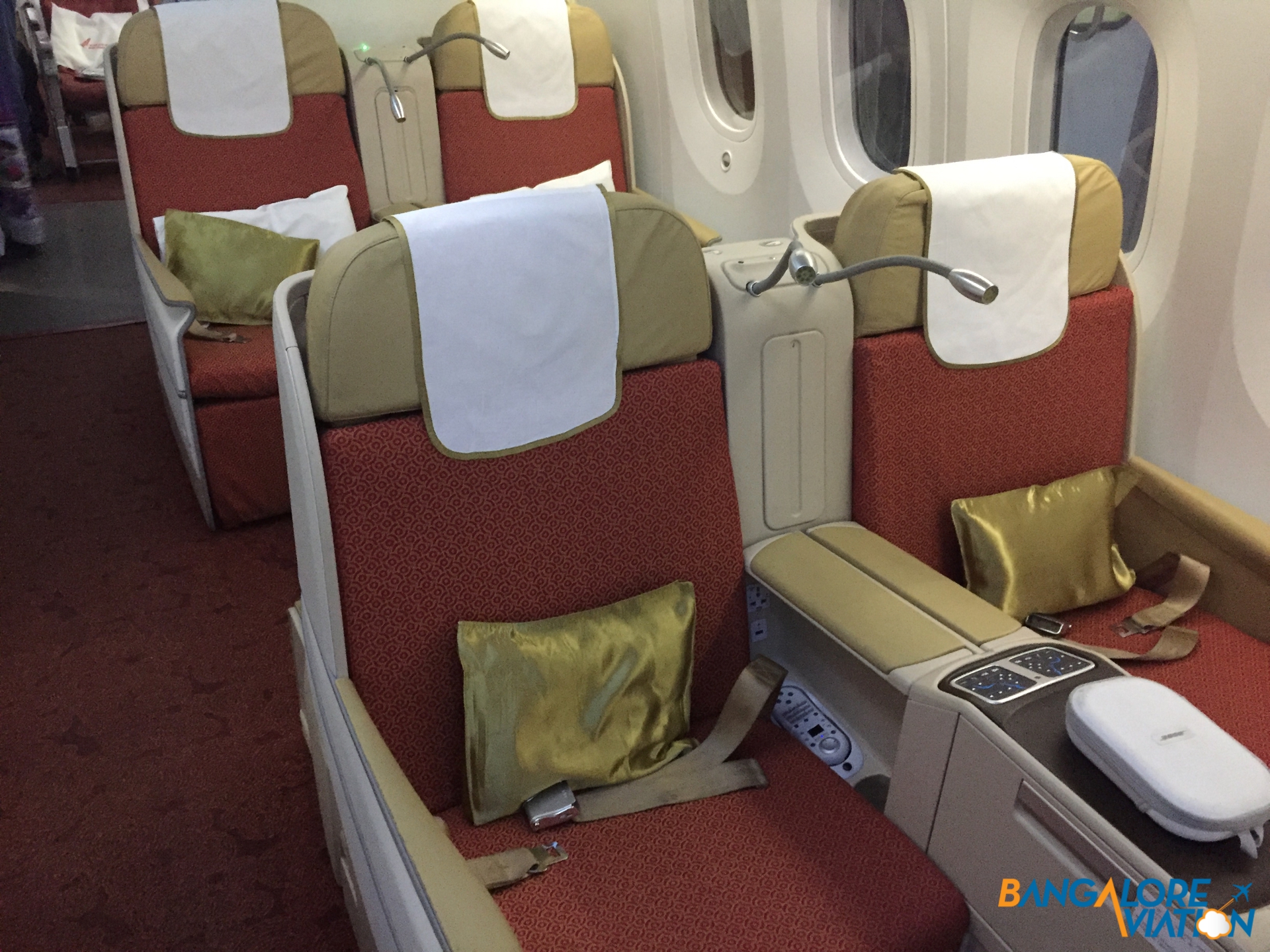
In the modern age, the lie-flat bed has become a commodity; almost every long-haul carrier has them. The new status symbol is the seamless suite. The discerning traveler to Bangalore now looks for privacy doors, a wireless charging dock, a large 4K screen, and, most importantly, a "zero-gravity" position that simulates weightlessness to reduce spinal pressure. The ultimate status is now the personalized cabin environment. It is the ability to adjust the humidity and the temperature of your specific suite, and to have a sleeping mask infused with essential oils. The bragging rights have shifted from "I have a bed" to "I have a private office that floats." The evolution is from physical comfort to psychological privacy and spatial autonomy. The past wanted to lie down; the future wants to not be seen at all, even in a crowd of six seats.
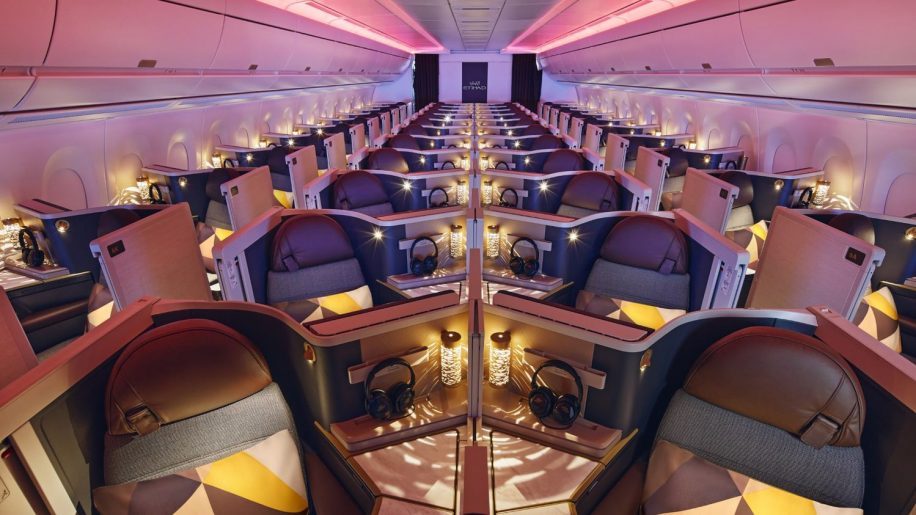
Looking toward the next two decades, the business class to Bangalore will likely remove the "class" distinction altogether. We are on the cusp of the "Airbus A380 successor" and the hydrogen-powered narrow-body that can fly the London-Bangalore leg in eight hours. The future will see a rise of the "all-premium" narrowbody aircraft, flying point-to-point, bypassing the massive hubs. This will reduce the journey time to a single, concentrated experience. The cabin will be morphable; a seat will turn into a bedroom, but a holographic projection will turn the wall into a collaborative whiteboard. Sustainability will force a return to lighter, slower travel, but the modern executive will demand "net-zero" travel as a status symbol, flying on planes powered by e-fuels derived from agricultural waste of the very region you are flying over.
In twenty years, the journey to Bangalore will be a "hybrid teleport." You might not physically fly to Bangalore for a meeting; you will fly to a regional hub, enter a high-fidelity telepresence pod, and the business class "suite" will be the luxury of having your avatar attend the meeting back home while you nap. The nostalgia of the 1990s—the heavy meals, the personal attention, the slow passage—will be seen as a quaint, inefficient ritual. The new business class will be about time-space compression—the ability to leave Bangalore at 10 AM and be in London for lunch, with your body clock perfectly synced by light therapy and genetic sequencing. The engine of the past was kerosene; the engine of the future is data and biotech, but the fundamental human necessity remains unchanged: to arrive without having really left, and to be present where the market is, without sacrificing the soul of the journey.