Brihadaranyaka Upanishad In Kannada
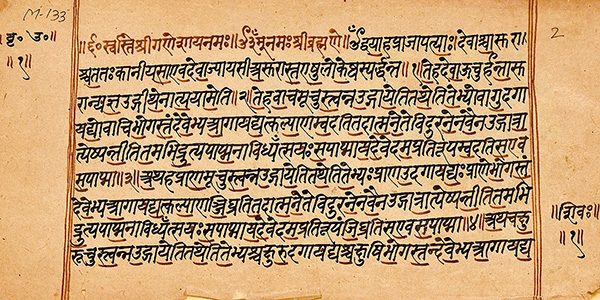
The Brihadaranyaka Upanishad, a name that translates to the “Great Forest Upanishad,” is not merely a dusty relic of ancient Indian philosophy; it’s a thunderous, cosmic echo that still vibrates through modern consciousness. Hailing from the Yajurveda, this text is often hailed as the king of Upanishads—the largest, the oldest, and the most philosophically dense. Written in a period of intense intellectual ferment (roughly 700-800 BCE), it captures a world transitioning from ritualistic sacrifice to profound internal inquiry. For the uninitiated, it might seem like a dense jungle of Sanskrit verses, but for those who venture in, it contains the blueprint for the most profound questions we can ask: Who am I? and What is real?
In a contemporary lifestyle saturated with curated wellness, brutal productivity schedules, and digital noise, the Brihadaranyaka feels startlingly relevant. It doesn’t prescribe a set of rules; instead, it conducts a radical excavation of the self, using dialogue, paradox, and even cosmic puzzles. It’s the spiritual equivalent of pulling the thread on your favorite sweater and watching the entire fabric of reality unravel into a luminous, interconnected whole. While many know the Gita or the Yoga Sutras, the Brihadaranyaka is the hidden gem—the deep-cut track that purists swear by—offering a vipassana like clarity that is anything but escapist.
The Cosmic Dark Web: Honey, Sacrifice, and the Death of the Ego
Let’s get one thing straight: the Brihadaranyaka Upanishad is not a gentle bedtime story. It begins with a grand horse sacrifice (Ashvamedha), describing the universe itself as a cosmic horse. This isn’t about animal slaughter; it’s a dark, poetic metaphor for the fragmentation of the ego. The text dissects reality limb by limb, mapping the cosmos onto the ritual body, only to realize that the ritual itself is a shadow play. The “dark fact” here is that the Upanishad systematically destroys the very notion of a stable, independent self (ahamkara). It tells us that the person we think we are—our likes, our social roles, our fears—is just a label pasted over the formless, infinite Brahman.
Must Read
Psychologically, this is terrifying and liberating in equal measure. Carl Jung would have been chomping at the bit here. The Upanishad introduces Yajnavalkya, a sage who resembles a modern intellectual gladiator. In a court of King Janaka, he defeats all challengers in a philosophical debate (the ancient equivalent of a tech keynote, but with way higher stakes—the loser loses their ego, not their stock options). Yajnavalkya’s key weapon is the concept of Neti, Neti—"not this, not this." This is a brutal psychological pendulum. When asked if the Self is conscious, he says no. If you say it’s unconscious, he says no. It’s a cognitive destabilization designed to shut down the logical brain so that a deeper intuition can arise. It’s the original "think outside the box" challenge, where the box is your entire mind.
Then there is the famous "Honey Doctrine" (Madhu Vidya). The Upanishad declares that everything is honey for everything else. The earth is honey for all beings, and all beings are honey for the earth. This isn't fluffy eco-spirituality; it’s a radical interbeing concept that pre-dates quantum entanglement. It means that your perception is not about the world; it is the world. This explains the dark fact of human suffering: we suffer because we think we are a separate droplet in the ocean, but the Upanishad insists we are the entire ocean experiencing itself through a droplet. The cultural impact is staggering—this single text influenced Schopenhauer, Nietzsche’s notion of the will, and even modern physics’ observer effect. It shifted Indian culture from outsourced ritualism (pay the priest to get results) to insourced responsibility (you are the priest, the sacrifice, and the god).
Rituals to Rewire Your Brain: The Yajnavalkya Protocol
Let’s get practical. You’re not going to a forest to meditate for forty years, but you can use the Yajnavalkya protocol for mental hygiene. The first scenario is the classic "Burnout Executive." She wakes up at 5 AM, checks emails, feels anxious about the stock market, and feels empty despite her success. Applying the Upanishad, she practices Neti, Neti during her morning coffee. She looks at her anxiety and says, "I am not this anxiety." She looks at her title, "I am not this CEO." She looks at her body, "I am not this body." This isn't a denial of reality; it’s a mental detangling. Within two weeks, the anxiety loses its grip because the "I" that was labeling itself as anxious has been deregistered. The energy previously spent on self-identification is now available for actual creative work.

Second scenario: the "Relationship Seeker." We often look for a "perfect soulmate" to complete us. The Upanishad tackles this directly with the story of Yajnavalkya and his wives, Maitreyi and Katyayani. Maitreyi asks for immortality, and Yajnavalkya famously says that a husband loves his wife not for the wife, but for the Self (Atman) that resides in her. This is the ultimate relationship hack. It implies we are all searching for the Atman, but we keep projecting it onto partners, objects, and status. The actionable takeaway: when you feel a craving for another person, realize that the craving is actually a homing signal for unity consciousness, not just biological lust. Once you see that, you treat the partner as a mirror, not a possession. It transitions the relationship from a "needy transaction" to a "joyful recognition."
Third scenario: decision making and FOMO. The Upanishad presents two paths: the Preya (the pleasant) and the Shreya (the good). The pleasant is the short-term dopamine hit—the binge-watch, the sugar rush, the easy compromise. The good is the long-term alignment with your true nature—the hard conversation, the disciplined workout, the sinking of a well. The dark fact is that the Upanishad says we are hardwired to choose the pleasant, which is why we suffer. The practice is to create a "pause ritual." Before any significant decision, ask: "Does this choice bring me closer to expansion (Brahman) or contraction (ego)?" This simple binary, lifted directly from the text, cuts through the noise of modern choice paralysis. You start acting from a place of alignment rather than reaction.
Finally, the scenario of Mortality. The Brihadaranyaka has a terrifying sequence on the stages of dying (the ascent of the prana). It sounds grim, but it’s the ultimate "life audit." The takeaway is not to fear death, but to realize that all worldly attachments are like grabbing water—the more you squeeze, the less you hold. The practical insight is the practice of "non-clinging" during the day. Every time you notice yourself clutching onto a need for a specific outcome (a promotion, a compliment), recognize that grip. Notice it, and consciously relax the mental fingers. This daily micro-practice of letting go is directly correlated to the Upanishad’s macro-claim that the fearless Self cannot be touched by loss.
The FAQ: Tackling the Tough Knots
1. Is the Brihadaranyaka Upanishad associated with a specific sect or religion?
While it is a canonical text of the Vedanta school and a cornerstone of Hindu philosophy, it is profoundly non-sectarian. It doesn’t worship a specific deity in a devotional sense. It transcends the Hindu pantheon to address the absolute principle, Brahman, which is defined as pure consciousness—without qualities (Nirguna). This makes it highly compatible with atheists, agnostics, and mystics of all traditions. It is less about "believing" and more about "experiencing" a universal truth.

In a modern context, this means you can be a secular intellectual and still derive immense value from its insights. The Upanishad actively encourages debate and rational inquiry over blind faith. The story of Yajnavalkya refusing to give a simplistic answer to his wife (who asks for a "how-to" guide to immortality) shows that the text demands rigorous intellectual engagement, not just pious recitation. It is the rebellious, philosophical wing of ritualistic culture, serving as a bridge between ancient logic and modern neuroscience.
2. What is the difference between Brahman and Atman in this text?
Brahman is the ultimate reality of the universe—the cosmic, unchanging, infinite consciousness that is the substratum of everything. Atman is the individual self—the inner witness, the consciousness that resides within you. The Upanishad’s central Mahavakya (great saying) is "Aham Brahmasmi" ("I am Brahman"). This is not a statement of ego; it is the radical realization that these two things are not separate. It’s like saying the wave and the ocean are fundamentally the same water, just in different forms.
The connection is a matter of perspective. Under the influence of Maya (illusion), you identify with the limited Atman (the wave) and feel separate. Upon realization, you understand that the Atman is a false boundary. This is the ultimate "dark fact"—you are not a "soul" trapped in a body; you are the entire universe pretending to be a local event. This concept can be overwhelming, which is why the text insists on Neti, Neti—you can’t understand it with the mind; you must become it through deep contemplation.
3. Why is the Upanishad called "Brihadaranyaka" (Great Forest)?
There are two primary interpretations. First, the literal one: it was composed in the forest (aranya) and is meant to be studied in seclusion, away from the distractions of village life. The "Great" (Brihat) refers to its length and comprehensive scope. But metaphorically, "forest" represents the dense, tangled, and mysterious nature of reality. It’s a place where you can easily get lost (in illusion) or find the ultimate treasure (wisdom). The forest is a symbol of the chaotic, untamed world of the senses.

The second interpretation is that the forest represents the guru-shishya (teacher-student) tradition. In the forest, all social conditioning is stripped away. There are no caste distinctions, no wealth markers, no societal pressures. It is the perfect laboratory for pure inquiry. The "Greatness" lies in the fact that this particular forest of wisdom contains the most dangerous and potent knowledge—the knowledge that can destroy your false identity. It’s the textual equivalent of a dark, uncharted safari where the ultimate hunter is the truth itself.
4. How does the Upanishad handle the idea of Desire and Karma?
Unlike later, more ascetic traditions that view desire as pure sin, the Brihadaranyaka treats it as the engine of the cycle of birth and death (Samsara). It famously states, "You are what your deep, driving desire is." This is a profound psychological insight. Our entire identity is shaped by our desires. If you desire power, you become a power-seeker. If you desire knowledge, you become a scholar. These desires create karma—the cause-and-effect chain that binds you to specific future experiences.
The "dark fact" is that your desires are not yours. They are inherited from the cosmic matrix, the eternal flux of nature. The text does not advocate for killing desire; it advocates for purifying it. You must redirect desire from the finite (money, fame) to the infinite (Brahman). This is the ultimate luxury lifestyle change: desiring only liberation into pure awareness. When your desire is aligned with the absolute, karma loses its grip because there is no selfish "doer" to bind—only the flow of the universe acting through you.
5. Can this text help with anxiety and fear of death in the modern age?
Absolutely, and this might be its most practical application. The root of anxiety is the fear of the dissolution of the individual self. The Upanishad directly targets this fear by providing the most radical therapy: assurance of immortality. It says that the Self (Atman) cannot be killed, and the one who knows this cannot be harmed. This is not a superstition; it is a shift in identity. When you stop identifying with the body-mind complex, the fear of its ending loses its power.
Practically, you can start by meditating on the "Witness." In moments of high stress, move your attention from the thought to the observer of the thought. That observer is the same before and after a stressful event—it is the unchanging screen upon which the movie of life plays. By acknowledging that screen as your true self, you invoke the Upanishad’s peace mantra (Shanti Patha). The resultant calm is not a forced positivity, but a profound, unshakable silence that knows it is not the storm, only the sky holding the storm.
The Brihadaranyaka Upanishad is not an escape from reality; it is the ultimate entry into it. It strips away the decorative layer of modern life—the apps, the filtered photos, the hustle culture—to expose the raw, glittering, terrifying majesty of existence. It reveals that our daily frustrations—the traffic jam, the passive-aggressive email, the feeling of being unseen—are just tremors from the collision of the ego with the infinite. The text invites us to stop rearranging the furniture of our lives and instead look at the foundation the house is built on. It asks us to realize that we are not just in the house; we are the house, the land, and the stars the house sits under.
Engaging with this text is like performing a software update on your consciousness. It doesn't force you to quit your job or move to a cave, but it changes your processing power. You start to see the interconnectedness of all things—how your morning coffee is the result of a billion cosmic events, and how the frustration with a colleague is ultimately frustration with your own internal resistance. It promotes a lifestyle of witnessing rather than clinging. You become less of a puppet pulled by external strings and more of a puppet master who realizes the strings are just illusions of connection.
We live in an age of unprecedented loneliness and superficial connection. The Upanishad answers this by showing that there is only one Self, and that Self is you. This is the ultimate dark/fun fact: you are not alone, because you never really were. There is just one awareness looking out through billions of eyes. To know this is to replace fear with curiosity, neediness with compassion, and self-doubt with the profound confidence of being the universe itself. It’s the most comprehensive life hack ever written—all you have to do is read, slow down, and listen.