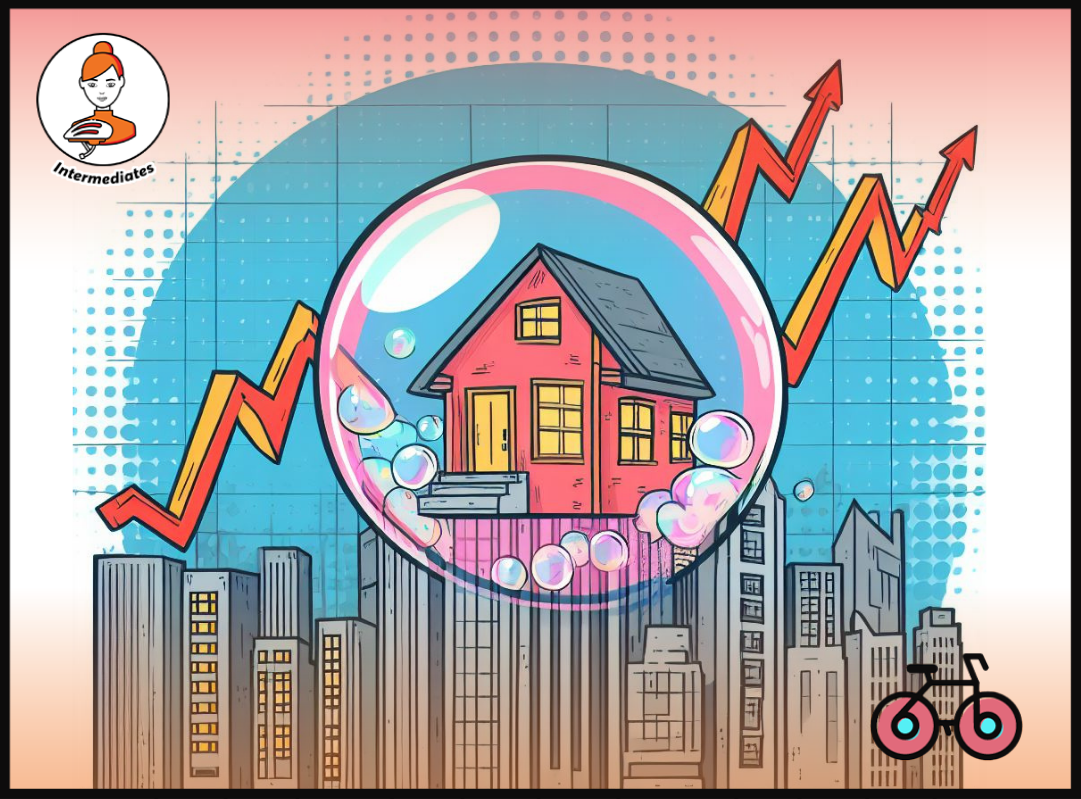
Bangalore Real Estate Bubble 2017

The year 2017 in Bengaluru felt less like a city and more like a giant, throbbing stock ticker. Every auto-rickshaw ride past Sarjapur Road was a live feed of cranes and dusty piling rigs, and every dinner party conversation eventually devolved into a hushed, conspiratorial debate about “price per square foot” in Whitefield. It was the year the phrase “IT corridor” became a secular prayer, whispered by young tech migrants and seasoned investors alike. The air smelled of diesel, fresh cement, and, unmistakably, of speculative greed. To understand the Bangalore real estate bubble of 2017 is to understand a moment when a city’s optimism outran its physical reality—a time when a two-BHK in a yet-to-be-built tower was treated less like a home and more like a lottery ticket.
Why does this specific year matter now, years later? Because 2017 was the fulcrum on which Bengaluru’s modern property saga tipped. It was the peak of a parabolic rise that began in 2014, fueled by a tsunami of venture capital, a booming startup ecosystem, and the relentless migration of talent from every corner of India. The bubble wasn’t just about prices; it was about belief. Developers sold a lifestyle of “lake views” that were actually sewage ponds and “gated communities” that were terminally delayed. Today, the city is still negotiating the scars and the windfalls of that year. Looking back, the bubble wasn’t a myth—it was a psychological event that rewired how an entire generation of Indians think about property, risk, and the dangerous allure of "FOMO" in the real estate game.
The Anatomy of Euphoria: Rent, Illusion, and the Great Land Grab
The lesser-known truth about the 2017 Bengaluru bubble is that it was not primarily a housing crisis—it was a land banking crisis dressed in an apartment’s clothing. Large developers, many now bankrupt or absorbed, weren't building to sell homes; they were hoarding land parcels to inflate their company's stock value. A single acre on Old Airport Road was revalued five times in two years without a single brick being laid. This created a phantom wealth effect. Existing homeowners felt richer, which made them borrow more against their properties, which fueled further speculative purchases. The fundamental economic vacancy of this cycle was hidden behind a glittering façade of glass towers and marketing brochures promising “Barcelona-inspired” clubhouses.
Must Read
Psychologically, the market was driven by a collective delusion that Bengaluru’s growth was a straight line to infinity. The dark fun fact here is that the city’s infamous traffic—the very congestion that would later devalue many far-flung projects—was ironically a sales tool. Developers sold “work-live-play” communities as a solution to traffic, but the actual analytics showed that most buyers were purchasing purely on a map, not on the real commute. People bought apartments in Devanahalli and Electronic City with the vague, unshakeable hope that “the metro will solve it.” The metro didn’t, and the bubble logic didn’t care. The cultural impact was visible in the matrimonial columns, where a residential address in certain “prime” localities became a higher currency than a postgraduate degree.
Moreover, the bubble manifested a peculiar behavioral finance quirk known as the “Greater Fool Theory.” Everyone knew prices were absurd—the rental yields had dropped to a pathetic 1.8% in some micro-markets, far below a fixed deposit. Yet, buyers continued, driven by the certainty that an even more foolish buyer would come along next year. This was the era of the “pre-sale flip,” where investors bought a unit at a launch price, paid 10% in cash, and sold the “agreement” six months later for a 40% profit without ever visiting the construction site. This created a parallel, unregulated shadow economy of token transfers. The city’s architecture became secondary to its bankability. It was a period where Indian urban ambition, traditionally conservative, bizarrely and brazenly embraced American-style speculative risk, but with zero regulatory guardrails.
Navigating the Wreckage: Lessons, Scenarios, and the New Playbook
Let’s walk through three distinct scenarios that define the 2017 bubble’s aftermath, because understanding these is your practical armor for the next cycle. Scenario One: The Late Migrant. Take Priya, a product manager who moved to Bengaluru in October 2017. She bought a 3-BHK in a brand-new luxury tower near Panathur for ₹1.5 crore. By 2020, the same unit was being rented out by the bank for ₹45,000 a month—a yield of 3.6%, barely covering the interest on her loan. Today, that unit’s resale value has only just recovered to her purchase price, seven years later after accounting for inflation, she actually lost money. The takeaway: Never buy at non-organic peak pricing based solely on rental income projections or “future office parks.” The future is always delayed.

Scenario Two: The Opportunistic Flopper. Ravi was a broker who saw the bubble as a swimsuit model sees a wave. He didn't buy apartments; he bought options on land with his investor network. They purchased a large plot in a village near Mysore Road for ₹80 lakh in 2016. By mid-2017, a real estate investment trust (REIT) rumor pushed its valuation to ₹2.2 crore. They offloaded it to a struggling mid-tier builder and walked away. The builder went insolvent by 2019, and the land is now a cow pasture with a high boundary wall. The lesson here is the nuance of liquidity vs. value. The bubble was a transfer of wealth from the passive to the active, but the active had to be ruthless, fast, and slightly unethical in their timing.
For the current potential buyer, the 2017 playbook offers a set of contrarian but golden rules. First, calculate the "Validation Metric": the ratio of monthly rent to the total price should be no lower than 4%. If a property yields less than that, you are not an investor; you are a philanthropist for the developer. Second, look for physical inventory, not digital renders. In 2017, over 60% of sales were “under-construction” with delivery dates of 2021. You must adopt the iron law of buying only ready-to-move-in properties, regardless of the 10% discount on pre-launch. A discount is worthless if you wait four years for a possession that may never come.
Finally, do not ignore the liquidity trap of lifestyle micro-markets. The 2017 bubble taught us that even in a fantastic city like Bengaluru, there are specific "Dead Zones"—areas hyped solely by a single tech announcement. After the bubble, areas like Yelahanka (which was going to be "the new BTM") saw prices stagnate for six years. Diversify your risk. If you must buy, choose a locality with organic, diversified commercial presence—not one dependent on a single “campus” that can be shut down or relocated to Hyderabad. The 2017 lesson is simple: Buy where people work today, not where they might work in 2028.
Frequency Asked Questions: The 2017 Verdict
Is it true that in 2017, Bengaluru’s real estate prices were the most inflated in India?
By median price-to-income ratio, yes, Bengaluru in late 2017 was arguably the most stretched among the top six Indian cities. While Mumbai had higher absolute prices per square foot, Bengaluru’s rate of escalation was steeper. A typical apartment in a decent locality cost roughly 11 to 13 times the average annual household income of the tech workforce. What made it uniquely inflated was the velocity of appreciation. Properties in specific corridors like Sarjapur appreciated 45% year-on-year, a hyper-growth that wasn't sustained by rental demand. The inflation was extreme because the buyer pool was dominated by young, highly leveraged startup employees with ESOPs that were themselves paper promises—an economic house of cards built on two layers of speculative valuation.

However, the inflation wasn't uniform. The central and eastern zones were heavily overvalued, while the southern zones closer to the old city limits were relatively kept in check. This selective inflation is why the bubble didn't burst all at once, but instead slowly bled out over 18 months. To say it was the "most inflated" is to remember it correctly if you account for the youth of the buying population. It wasn't the price that was shocking—it was the risk tolerance of the buyers, who were okay with zero rental yield because they believed the capital value would triple by 2022. That belief, not the price tag, was the truly inflated asset.
Did the RERA act (Real Estate Regulation Act) of 2016 actually burst the Bangalore bubble?
RERA was the pin that pricked the balloon, but it didn't create the puncture; it merely accelerated the inevitable leak of air. When RERA was implemented in May 2017, it forced developers to disclose project timelines and use 70% of buyer funds in a separate escrow account. This immediately choked off the cash flow of dozens of fly-by-night builders who were using new buyer money to complete old projects. As a result, hundreds of projects were stalled. This created a supply of paper that had to be sold at a loss, flooding the secondary market with discounted units. In that sense, RERA didn't burst the bubble in a dramatic crash, but it caused a liquidity crisis that froze new sales.
The second part of this is that RERA changed buyer psychology almost overnight. Before RERA, buyers were complicit in the informality. After RERA, buyers realized their rights, and the demand for "RERA-registered" projects slowed down the fast-paced, contract-flipping ecosystem. The developers who had over-leveraged themselves to buy land at bubble prices couldn't fulfill the new compliance costs (which included legal fees for clear titles, which many didn't have). So, while prices didn't crash, transaction volume collapsed by nearly 60% in the latter half of 2017. The bubble burst in terms of liquidity and volume, not necessarily in the absolute price tag—which took years to adjust downward.
What happened to the people who bought apartments in the 'Tier-2' locations like Devanahalli and Whitefield?
The fate of these buyers is a cautionary tale in delayed gratification and sometimes, total despair. Whitefield, surprisingly, had a resilient but hollow recovery. Those who bought ready-to-move units in 2017 are essentially back to break-even today, but they suffered a decade of stagnant appreciation while paying exorbitant home loan EMIs. The biggest losers were in Devanahalli and the airport corridor. In 2017, developers sold 2-acre "villa plots" with promises of a metro link to the airport and a central business district that never materialized. Buyers who invested there saw their resale values drop 35% within two years. Many of these are now ghost towns of partially built structures, occupied by cows and a few security guards.

However, there is a nuance of usage. For actual end-users who bought in Whitefield to be close to their IT parks, the 2017 purchase wasn't a financial disaster; it was a lifestyle choice that included the notorious traffic’s hidden cost. For the speculators in the outer rings, it was ruin. They were left holding plots that banks refuse to finance because their market value is lower than the outstanding loan principal. The psychological impact was severe—many young couples drained their parents' retirement funds for these plots, and the resulting financial depression caused a wave of divorce and relocation back to smaller cities. The land is still there, but its dream died quickly.
Is it wise to buy a property in Bengaluru now if I missed the 2017 low point?
Absolutely, but with a completely different set of metrics than those used in 2017. The market has matured. The bubble taught developers to focus on completion, not speculation. As of recent data, the city’s vacancy rates are dropping, and rental demand is outpacing supply, which is a healthy sign. However, you must be extremely discriminate. The 2017 "any location goes up" logic is dead. Today, the wise play is to buy in micro-markets near operational tech hubs with multiple access points—locations like Outer Ring Road (the functional stretches) or the new commercial corridors in North Bengaluru that have actual leased office space, not just announced ones.
The current market offers value in under-construction projects again, but only from Grade-A listed developers with a strong balance sheet. The dark fun fact of the current market is that the risk has shifted from the buyer to the builder. Because of RERA and the 2017 fallout, many builders are under-selling their projects to maintain cash flow. This gives you, the buyer, immense negotiation power. You can demand steep discounts (10-15%) and flexible payment plans without fear of losing your deposit, because the legal framework now protects you. If you buy within your budget for ownership, not flipping, and secure a property within 10 km of a functioning employment cluster, you are making a sound decision. Just avoid the "lifestyle hype" zones.
What specific 'dark fun facts' came out of the 2017 Bangalore bubble that most people still don't know?
One of the most macabre dark fun facts is the case of a prominent builder in Banashankari who, during the peak of 2017, registered a project that didn't have a valid environmental clearance. They sold 400 units based on a faked lake-view render. After the lake dried up (it was actually a sewage drain), the builder filed for bankruptcy, and the land was auctioned. The buyers formed a WhatsApp group called “Bubble Burst Survivors,” where they share legal document templates, not renovation photos. Another dark fact involves the sudden, absurd rise of “land bankers” at luxury hotels in UB City who were disguised as wealth managers. They were selling fractions of farmland to tech millionaires as a "hedge" against the stock market, which was a purely unregistered, illegal activity.
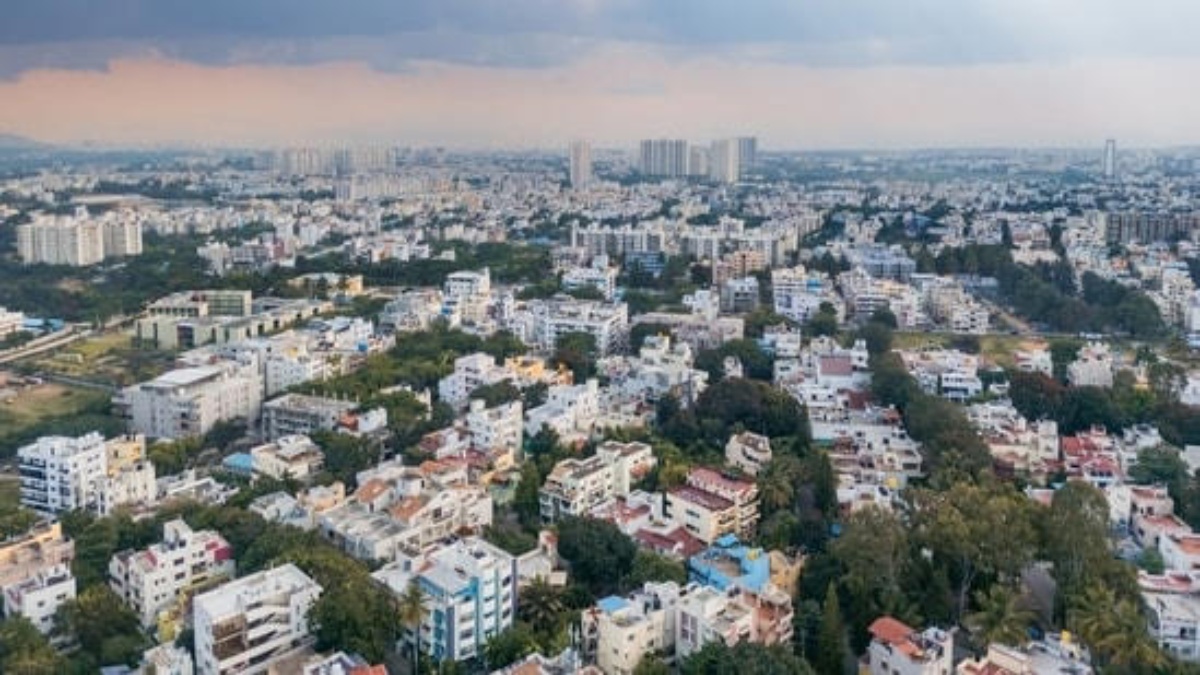
Perhaps the darkest and most amusing fact is the impact on interior designers. In 2017, the brief for every new apartment was “hotel lobby chic.” By 2020, the same clients were asking for “industrial loft conversion” to feel less bad about their reduced square footage. Furthermore, there was a known scandal where a single developer used the same copy-pasted satellite image of a lush green forest for three different projects in three different wards, none of which had any forest within 2 kilometers. This era birthed the phrase “Karnataka Photoshop Realty.” It became a running joke that the most honest part of any 2017 Bengaluru real estate transaction was the ₹50 non-judicial stamp paper on which the agreement was printed.
Reflecting on the 2017 bubble, we’re really reflecting on our own innate desire to outsmart time. We want to believe that a concrete slab can be a secure vault against the anxiety of a gig economy and unstable startup salaries. The bubble taught us that real estate is not a magic wand; it is a heavy, illiquid asset that requires patience and guts. Yet, our nature is to forget. Every three years, a new “bubble” appears—in cryptocurrency, in land near new airports, in data centers—and we flock to it with the same blind hope that characterized Bengaluru in 2017.
The city forgives us, though. Bengaluru’s streets are resilient, absorbing new waves of migrants who don't care about the 2017 losses because they didn't live them. The daily drama of this city is its heart. The bubble, while financially ruinous for some, forced a necessary recalibration of priorities. It made we realize that a home is not an investment portfolio; it’s a place to watch the rain soak the mango trees, even if the traffic is hell. The true asset in Bengaluru was never the square footage—it was the ability to adapt.
Human nature is to want a roof that appreciates in value faster than our careers. But the 2017 bubble, in its chronic, slow-burning aftermath, gifted us a quieter insight: safety is not found in a high return, but in a livable neighborhood. As you navigate the next decade of property ads, remember the ghost towers of 2017. Ask not, “Will this go up?” but rather, “Can I live here peacefully if the market falls?” If the answer is yes, you have already won the real battle—the one against your own speculative demons.