Are Wedding Rings Supposed To Match
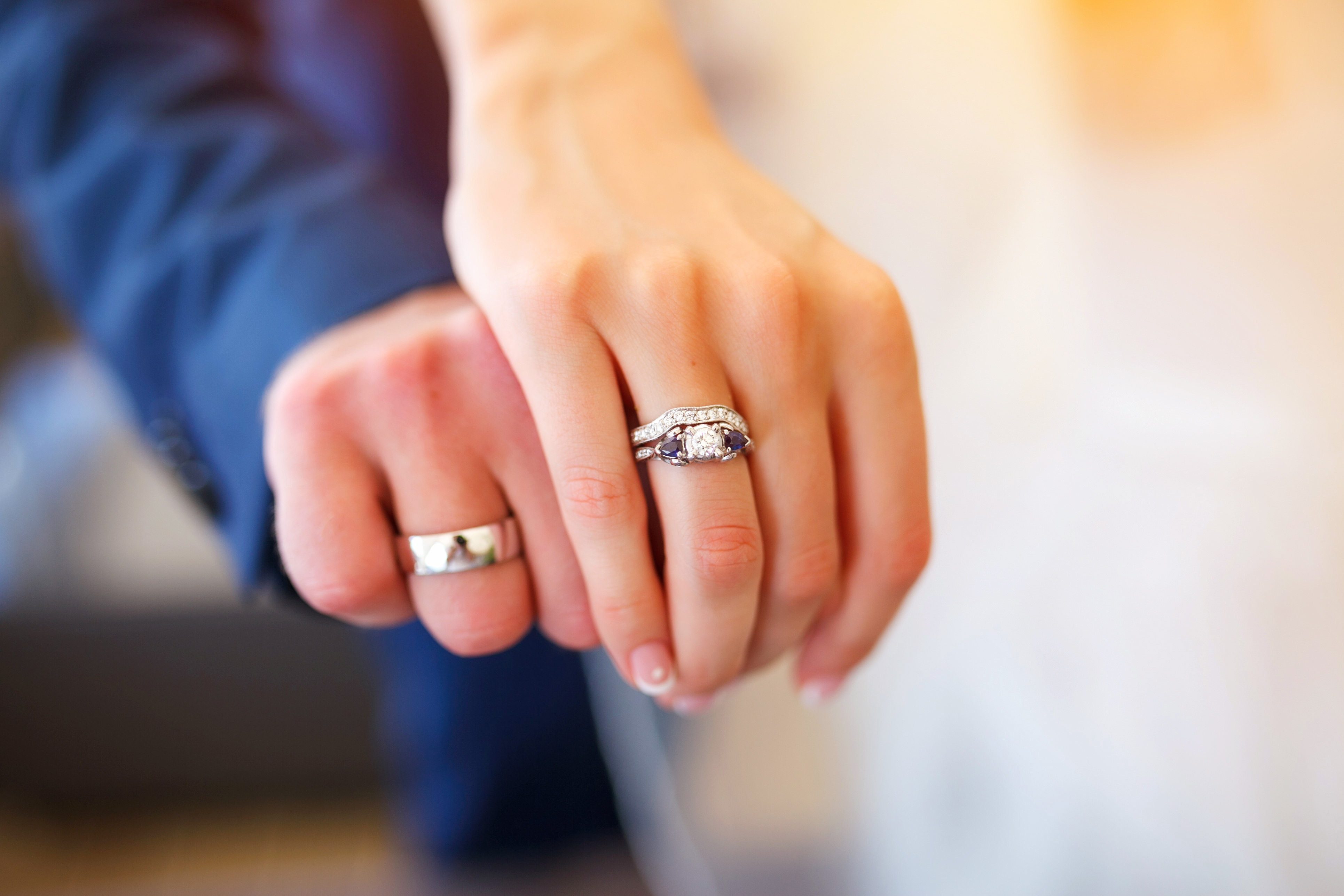
Let’s be real: you’ve stared at your hand next to your partner’s and wondered, “Should these match?” It’s a silent, universal panic. Do we need to return the rings and start over? Breathe. The short answer is a glorious, resounding “no.”
Think about it. You’re a human, and they’re a human. You don’t wear the same underwear, do you? So why would you wear the same metal? The idea of “matching” is a modern marketing ploy, invented to sell two of everything.
The Great History of Mismatched Hands
Way back in ancient Egypt, rings were just simple reeds or leather. They weren’t meant to be precious or shiny. They were just symbols—a circle of eternity wrapped around a finger.
Must Read
Fast forward to the Victorian era. Rings got fancy, but still didn’t match. The bride’s ring was often a complex design, while the groom’s was a simple gold band. It was about individuality, not symmetry.
The “His and Hers” Trap
That whole “matching sets” thing? Pure 20th-century advertising gold. Jewelers realized they could double their sales if they convinced couples they needed identical rings. Sneaky, right?
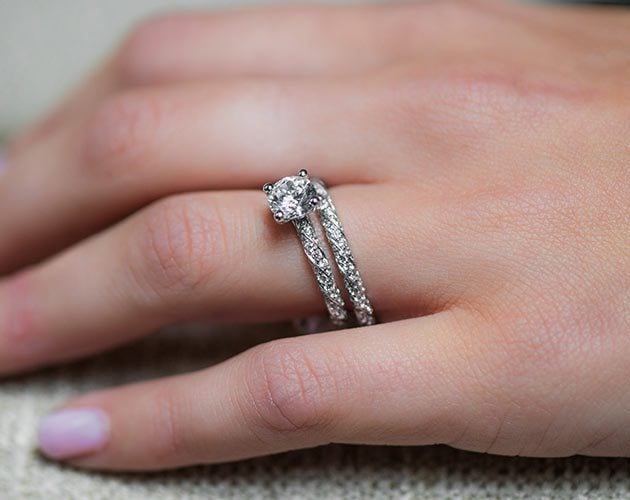
But here’s the funny part: most men and women have different finger shapes. A thick, wide band that looks rad on your fiancé might look like a chunky pipe on your slender finger. And their gold tone might wash out your skin tone.
Why You Actually Want Them to Differ
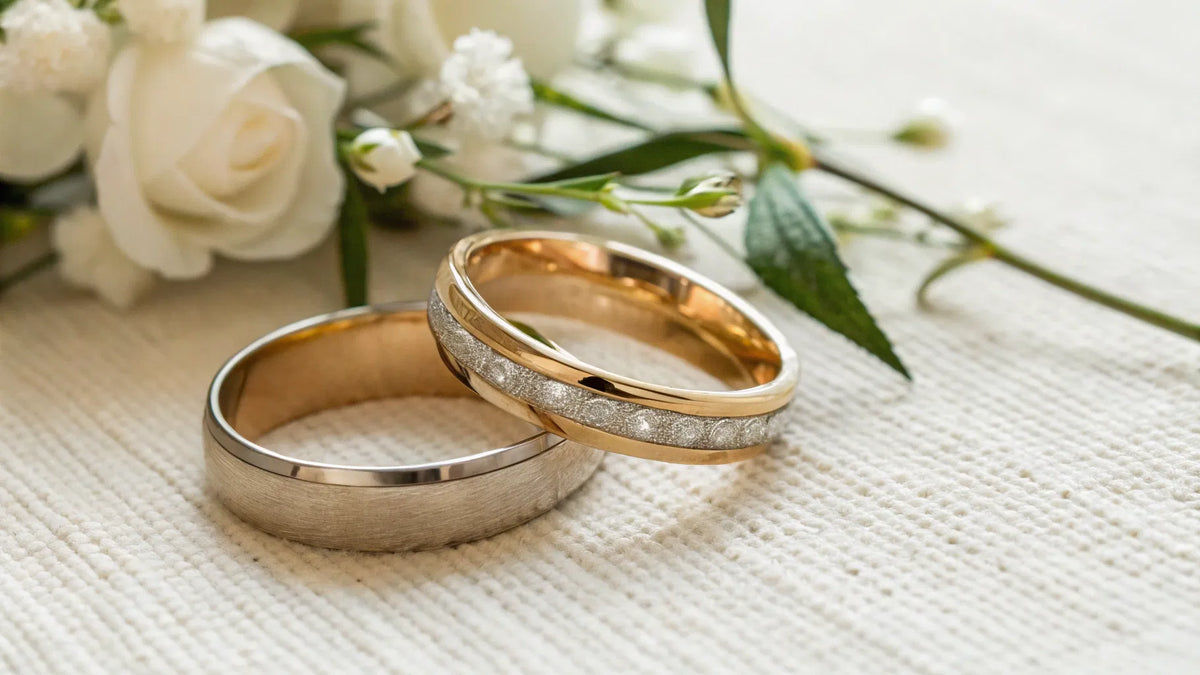
Mismatched rings tell a better story. Yours says, “I love rose gold and tiny diamonds.” Theirs says, “I dig titanium and want to survive a zombie apocalypse.” That contrast is cool.
Also, let’s talk about the practical side. If you’re an artist and they’re a welder, you’ll need different materials. Soft gold for you, scratch-proof tungsten for them. Matching ring sets are a one-way ticket to a re-polishing bill.
The Weird World of Ring Etiquette
Did you know that in some Nordic countries, both partners wear the same style? Yes, they do. But they also have a tradition of men wearing a plain band that’s wider than the woman’s. So, even when they “match,” they don’t.
And in the LGBTQ+ community, there’s zero pressure to match. It’s all about expressing each person’s unique vibe. Which is honestly how it should be for everyone.
The “Coordinated” Compromise
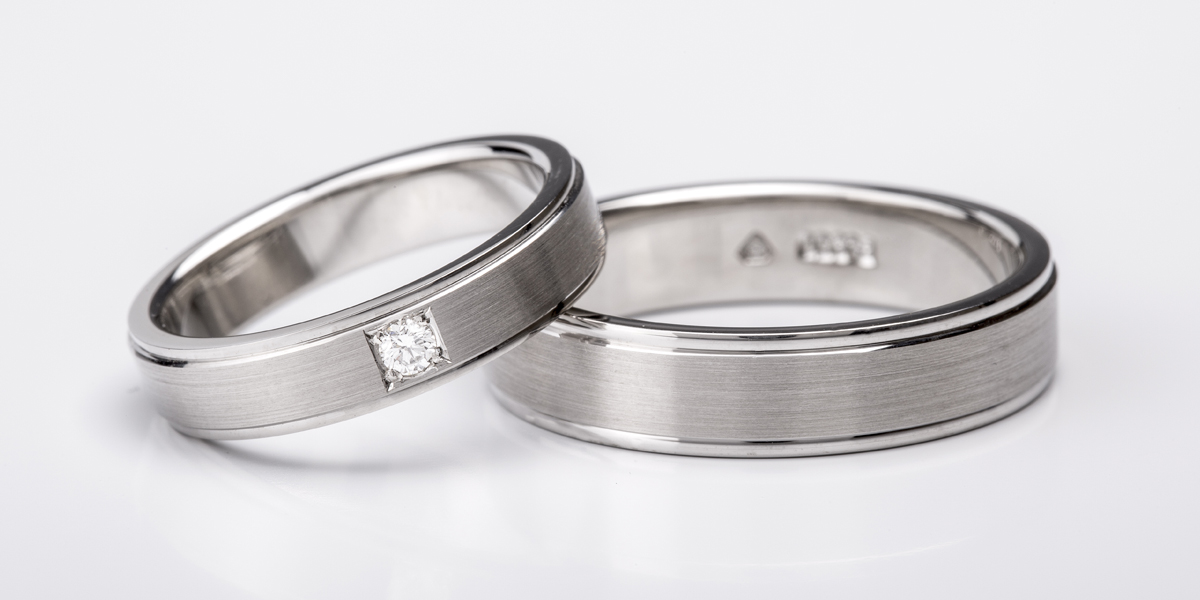
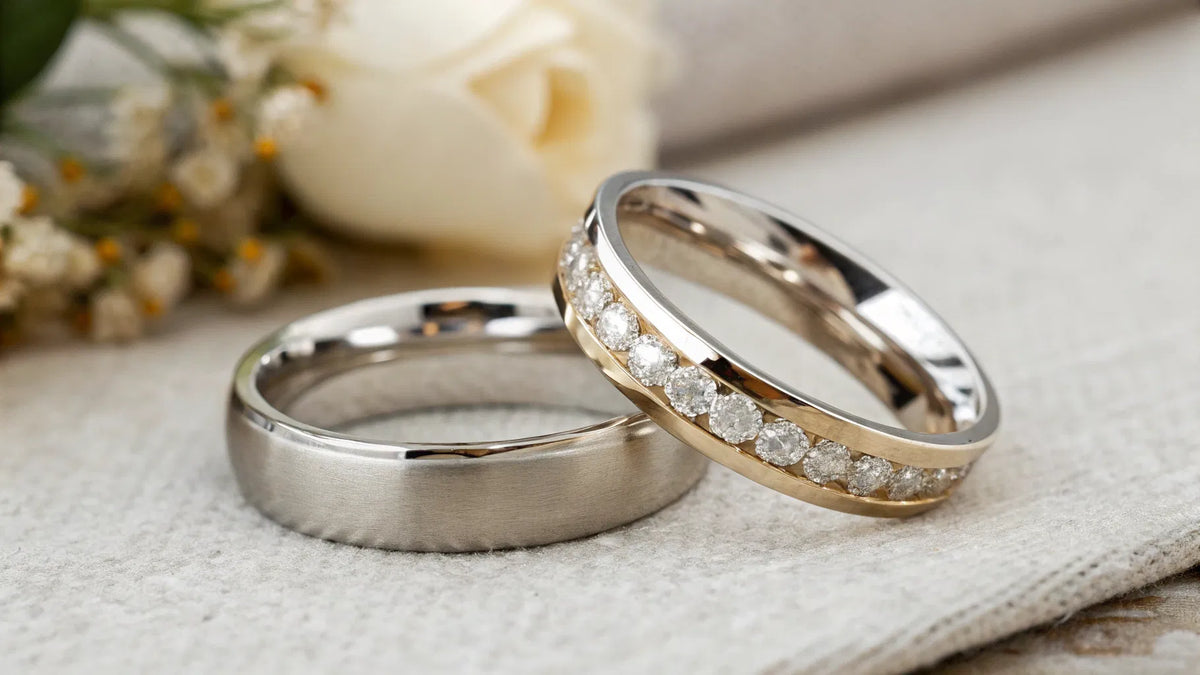
Still nervous about looking like you grabbed rings out of a gumball machine? Try coordinating instead of copying. Pick one element to share—like a tiny engraving inside, or the same metal finish on the edges.
Let’s say you both get a subtle hammered texture. That’s a secret nod to each other, not a costume. It’s the difference between a matching tattoo and a matching inside joke.
Here’s the fun, nosy question: have you ever looked at a mismatch and judged it? Probably not! You just thought, “Oh cool, they each have their own thing.” That’s the energy.

The Final Fingertip Verdict
Your wedding rings are a promise, not a uniform. They don’t have to be clones to be connected. A mismatched set is more interesting to look at, more honest, and way easier to buy.
So, go ahead and embrace the chaos. Get the gold crescent moon ring if you want. Let them get the matte black band. No one will arrest you.
And if anyone asks, just say, “We like to keep the mystery alive.” Then wink. They’ll be too confused to argue. Now, go show off those beautiful, mismatched fingers.