
Are Medical Alert Bracelets Worth It
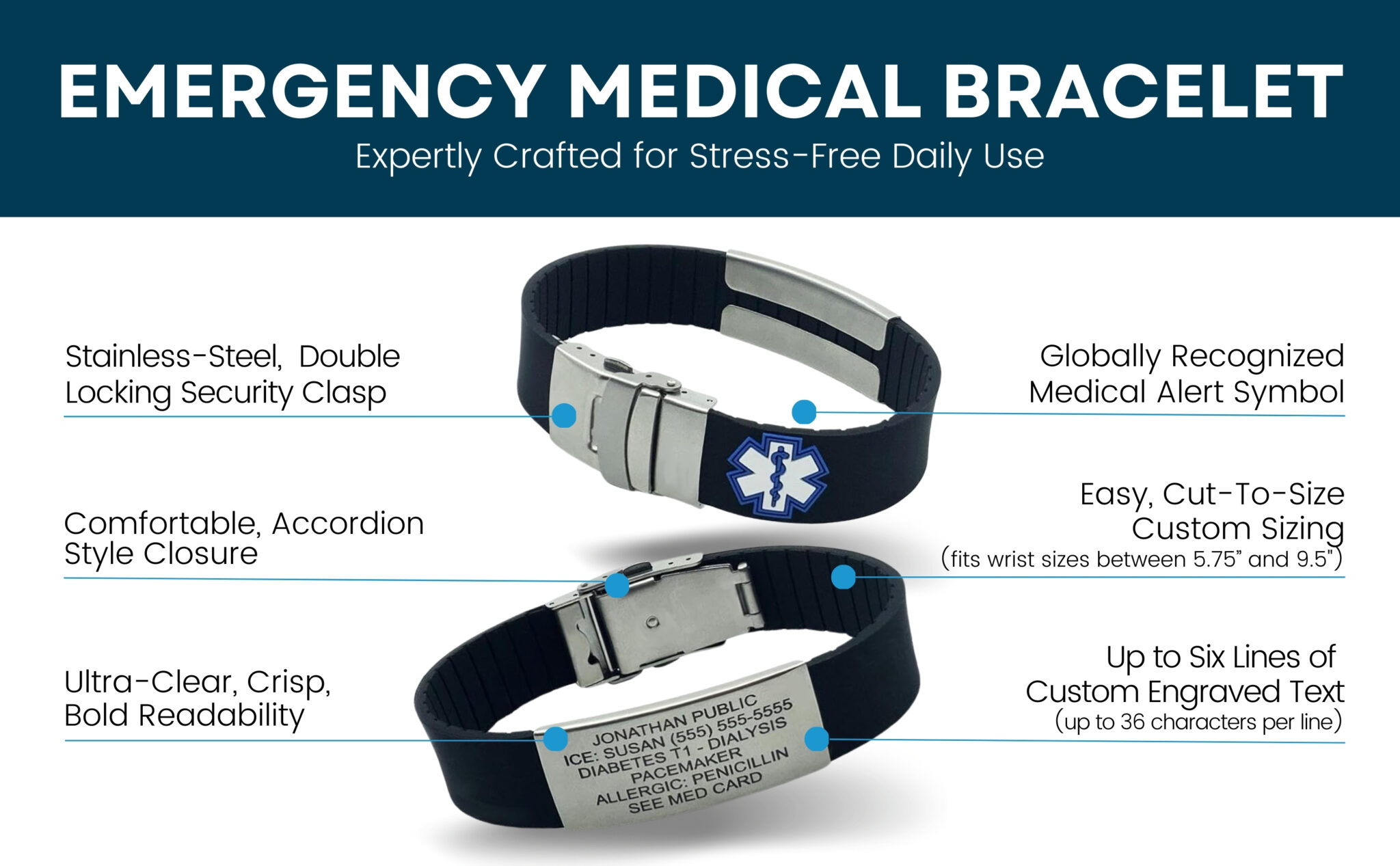
At their core, medical alert bracelets are a simple analog signal in a hyper-digital world. They are a physical, always-on data packet inscribed with critical biological facts—your blood type, your chronic conditions, your allergies, and your emergency contacts—designed to be read by a first responder within the first 60 seconds of an emergency. The entire premise rests on a brutal physiological timeline: during anaphylaxis, cardiac arrest, or a hypoglycemic coma, your cognitive function—your own ability to communicate your medical history—is offline. The bracelet bridges that gap, providing a triage advantage that can bypass minutes of diagnostic guesswork. In real-world terms, this is a cost-benefit analysis of a few grams of metal versus the potential for a 1,000% increase in diagnostic speed during a critical event where every second of cerebral hypoxia can kill roughly 2 million neurons.
However, the efficacy is not inherent in the metal itself; it is a function of data fidelity and placement. The physics of emergency medicine dictates that a responder looks for two things: motion and contrast. A bracelet wedged under a sleeve is invisible, rendering it functionally inert. Similarly, a bracelet that says "Diabetic" without specifying Type 1 vs. Type 2 is offering low-resolution data that could lead to a dangerous treatment protocol. The science of emergency response is a system of heuristics, and your bracelet is a heuristic accelerator. If it forces a responder to pause and decipher abbreviations, it has failed its primary objective. If it allows them to immediately access the correct antidote, it becomes the most efficient piece of medical kit you own—costing less than a single copay for a specialist and weighing less than a shotgun shell.
But is it worth the daily annoyance of wearing one? The data suggests a resounding yes for a specific demographic: those with latent conditions. A condition is "latent" if it is invisible to the naked eye but catastrophic when acute. Epilepsy, severe food allergies, diabetes, anticoagulant use, and pacemaker implantation all fall into this category. For the healthy 30-year-old with no comorbidities, the bracelet is a low-yield asset. But for the individual managing a chronic biological imbalance, it is a force multiplier for personal safety. It is an insurance policy that doesn't pay out in currency, but in the preservation of neurological function and the prevention of iatrogenic errors—the medical mistakes that occur when doctors treat the symptom without knowing the cause.
Must Read
The Biology of Triage: Why Metal Beats Memory
To understand why a bracelet matters, you must understand the biological chaos of an emergency. When your body experiences a traumatic event or a sudden anaphylactic reaction, your sympathetic nervous system activates the "fight or flight" response. This triggers a cascade of catecholamines—adrenaline and noradrenaline—which redirect blood flow away from the prefrontal cortex (the seat of logical memory) and toward the skeletal muscles. In practical terms, you become mentally incapacitated. Even if you are conscious, your working memory is fragmented. You cannot recall your medication list, nor can you articulate the specific name of your rare blood disorder. This is a hard biological limitation, not a personal failing.
Furthermore, consider the stress physiology of the first responder. They are operating under a high cognitive load, often in a noisy environment with an elevated heart rate. Their brain is scanning for pattern recognition. The visual cortex is highly attuned to identifying jewelry—rings, watches, and necklaces—before reading text. A medical alert bracelet leverages this by using a universal icon (the Rod of Asclepius) and a standard color palette (often silver or gold) that signals "medical data" instantly. This bypasses the need for verbal interaction, which is unreliable in a trauma scenario. The bracelet acts as an external hard drive, offloading the burden of recall from a biological system that is currently failing.
There is also the science of drug interaction to consider. Every emergency department protocol involves the administration of broad-spectrum treatments. If you are on Metformin for Type 2 diabetes and are given an IV contrast dye for a CT scan, you risk a lethal condition called lactic acidosis. If you are on blood thinners like Warfarin and receive a standard dose of vitamin K, you negate your entire therapeutic window. The bracelet is the only passive monitor that alerts the physician to these silent chemical conflicts before they cause a secondary iatrogenic event. It is the only piece of your medical record that is automatically accessible without a smartphone password, a HIPAA waiver, or a patient portal login.

Strategic Implementation: Optimizing Your Alert System
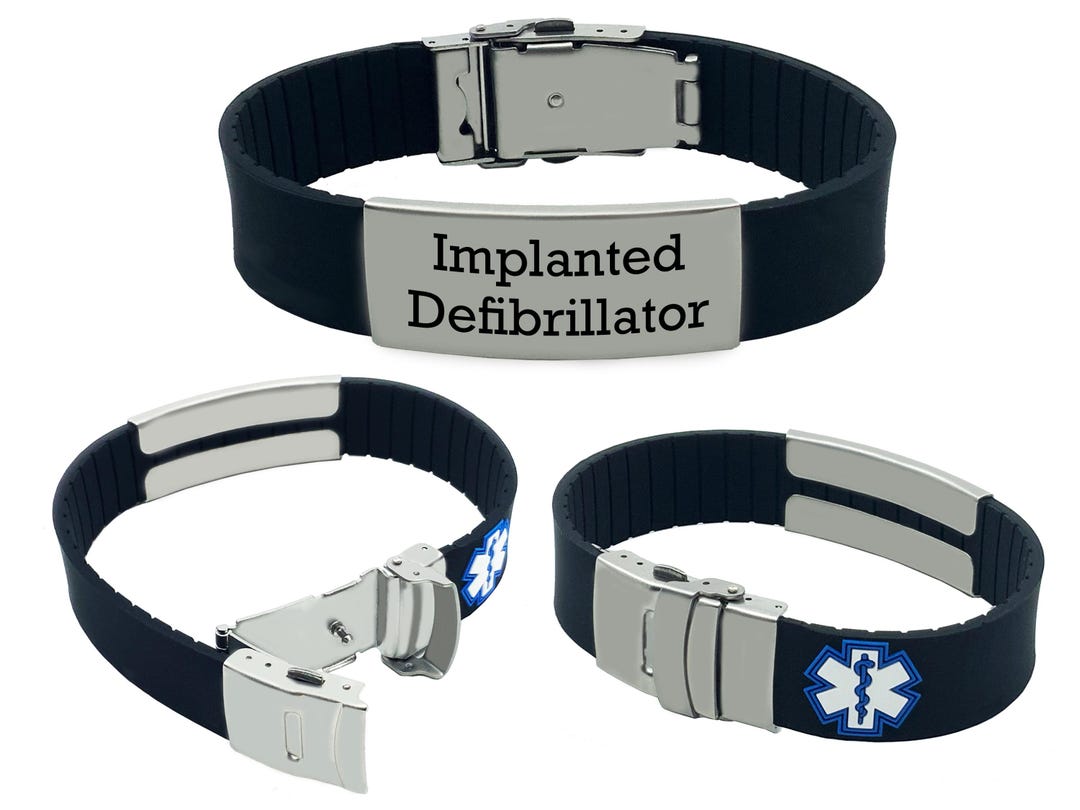
To maximize the utility of a medical alert bracelet, you must treat it like a piece of high-performance data infrastructure. The first hack is data density optimization. Forget engraving a full sentence. The rule is: 3 conditions max, 1 medication max, 1 allergy max. Use standard medical abbreviations that are universally recognized by EMS (Emergency Medical Services). For example, "DM1" (Type 1 Diabetes), "HTN" (Hypertension), "DOAC" (Direct Oral Anticoagulant). If you have a pacemaker, engrave "PM" and the manufacturer. The goal is to convey the life-threatening differentiators only. Do not list hypertension if you also have a pacemaker; the pacemaker is the acute risk. Prioritize by lethality.
Next, consider the placement biomechanics. The standard wrist placement is good, but it fails in car accidents where the arm is pinned. The better hack is a dual-location strategy. Wear one on the wrist for general incidents, and consider a secondary engraved ID on an ankle or a shoelace tag for vehicular trauma. More critically, the bracelet must be snug but not restrictive. If it spins around your wrist, the engraving is facing the inside of the arm, rendering it unreadable. Test your fit: you should be able to slide one finger between the metal and your skin, but the bracelet should not rotate a full 180 degrees without resistance. This ensures the engraving stays perpendicular to the responder's line of sight.
Your third actionable step is the digital redundancy protocol. A metal bracelet is useless if your emergency contacts are outdated. Set a recurring calendar event every six months to audit the engraved number and your linked digital medical ID (like Apple Health or Medicalert's database). Call the number on the bracelet to ensure it still connects to a human who knows you. Furthermore, integrate this with your smartphone lock screen. However, do not rely solely on the phone—batteries die, screens crack, and facial recognition fails in a trauma setting with a swollen face. The bracelet is the low-tech analog backup to your high-tech life. This is an optimization of resilience, not a choice of one over the other.
Finally, consider the material science of the bracelet itself. Avoid pure aluminum or cheap alloys if you have a nickel allergy—a severe dermatological reaction will make you remove the bracelet, negating its purpose. Choose surgical-grade stainless steel or titanium for hypoallergenic properties and corrosion resistance. If you undergo an MRI, ensure your bracelet is non-ferromagnetic. Titanium is paramagnetic and safe for MRI, but aluminum is also safe. Do not wear ferritic stainless steel (which is magnetic) into an MRI suite; it could become a projectile. Check your bracelet with a strong refrigerator magnet before purchase. If it sticks, it's a projectile risk. This is a life hack that protects against both the emergency you have and the emergency you might accidentally create.
Frequently Asked Questions and Troubleshooting
1. I have a smartphone. Isn't the medical ID on the lock screen enough?
No, not for severe trauma. A smartphone relies on the user’s coherence to provide the passcode or utilize FaceID/TouchID. In a cardiac arrest, your hands are clammy, your face may be distorted by swelling or blood, and your eyes are closed. The failure rate for biometric authentication in field trauma is significantly high, wasting precious minutes. Furthermore, EMS protocols often forbid touching a patient’s phone to protect the chain of evidence or due to privacy liability concerns. The bracelet provides a physical, zero-energy, universally accessible data point that does not require a charge cycle.
However, the smartphone is not useless. It is an excellent supplement. The optimal setup is a bracelet for the immediate visual triage, and a passive digital ID for the hospital’s receiving team. When you arrive at the ER, a nurse with a charging cable can access the lock screen medical ID (which can be viewed without unlocking on most platforms). Use the bracelet for the acute phase, and the phone for the secondary phase. They complement each other but are not interchangeable.
2. I have a chronic condition, but I rarely leave the house. Is it still worth it?
Yes, and the data shows this is precisely where they are most critical. The risk of an emergency is not correlated with leaving the house; it is correlated with the condition's volatility. If you have severe asthma or epilepsy, a seizure can occur in your kitchen just as violently as on a public sidewalk. Additionally, home alone, you lose the "eyes-on" benefit of a bystander who might call an ambulance. If you are found unconscious at home, the paramedic has zero context for your condition. The bracelet provides the differential diagnosis instantly, preventing them from assuming a drug overdose or a stroke.
Consider the "found down" protocol in emergency medicine. The paramedic must choose between triaging a stroke, a cardiac event, a hypoglycemic event, or a seizure. Giving them the answer on your wrist materially changes the medication they push. For example, naloxone (Narcan) is routinely given to unconscious patients to rule out opioid overdose. If you are not an opioid user, this is a rapid, but harmless, diagnostic test. But if you are an insulin-dependent diabetic, they will instead test your glucose and administer dextrose. The bracelet saves that 2-minute test, moving you faster toward definitive care.
3. What if I lose weight or gain muscle? Does the bracelet become useless?
Yes, a loose bracelet is a low-yield safety device. If the band is too large, it rotates, tears, or catches on objects. It can also become a snag hazard. The fundamental rule of wearables is that they must be actively unnoticed to be correctly maintained. If you are constantly fidgeting with it, you will eventually take it off and lose it. The optimization hack is to buy a bracelet with an adjustable sizing clasp or a breakaway nylon band. Titanium links often require a jeweler to remove links, which is a hassle you will avoid, resulting in a loose state.
To optimize, treat the bracelet like a wedding ring. If it leaves a temporary indentation on your skin, it is too tight. If you can pass your pinky finger between the band and your wrist, it is too loose. You want a friction coefficient that prevents spinning but allows fluid movement of the wrist joint. Weigh yourself monthly and check the fit. If you change your body composition drastically, replace the band. It is a $5 fix for a $5000 emergency room diagnostic cost saving.
4. Are silicone VS. metal bracelets more effective?
This is a durability-versus-visibility trade-off. Silicone bracelets are excellent for active individuals because they are waterproof, do not scratch, and are comfortable in high-motion environments. However, silicone has a lower survival rate in extreme conditions—they melt at high temperatures (think car fire) and degrade with prolonged UV exposure. They also have a lower "premium" visual cue; responders are conditioned to look for metal jewelry first. The weaponization of the visual cortex is better served by a shiny metal surface that glints under ambulance lights.
Metals are superior for data retention. Engraving on stainless steel is permanent and cannot be worn away by friction. However, a metal bracelet is cold in winter and can be uncomfortable for those with sensory processing issues. My recommendation is a hybrid: a stainless steel core with a silicone co-molded exterior. This offers the visual glint of metal at the edge, the hypoallergenic comfort of silicone, and the robust durability of steel. Always check the engraving depth—it should be at least 0.2mm deep to remain legible after years of wear.

5. What is the "Ulysses Pact" and how does it apply to bracelets?
The Ulysses Pact is a psychological strategy where you bind yourself to a future course of action to prevent self-destructive behavior during a moment of weakness. For medical alert bracelets, this applies to psychiatric conditions and addiction medicine. If you have a severe allergy to penicillin, you don't need the bracelet when you are well; you need it when you are cognitively compromised and unable to advocate for yourself. But more powerfully, the bracelet is a Ulysses Pact for your self-esteem. Wearing it is a weekly commitment to acknowledging your condition. It prevents "medical denialism"—the behavioral pattern where patients skip their medication or engage in risky diet behaviors because they want to ignore their biology.
In the field of internal medicine, we often say that the patient who knows their A1C and wears their alert ID is 40% more likely to adhere to their treatment plan. The bracelet is a physical anchor for your illness. It externalizes the problem, allowing you to separate your identity from your disease. When you strap it on, you are not saying "I am sick"; you are saying "I am prepared." This behavioral priming has measurable outcomes in patient compliance and reduces the "why me" cognitive burden, replacing it with a proactive "what next" mentality.
Respecting the science of medical alert bracelets is an act of radical humility. It forces you to accept that your body is a fragile chemical system that can, and will, malfunction without notice. By wearing one, you are offloading your safety to a repository that is not subject to panic, memory loss, or biological decay. This is the ultimate optimization of your time: it automates your emergency response before you even need it. It is a life hack that operates on a timescale of milliseconds, yet has a lifespan of decades.
In a world increasingly dominated by complex biotech and AI-driven diagnostics, there is profound elegance in a static piece of metal. It is the Pareto Principle applied to personal safety—achieving 80% of the critical diagnostic information with 20% of the effort. We become better humans when we systematically remove our own weaknesses. We cannot prevent the fall, but we can ensure the rescue. That is the quiet, data-backed strength of the medical alert bracelet: it is the difference between being a victim of circumstance and being a proactive operator of your own biological vessel.


