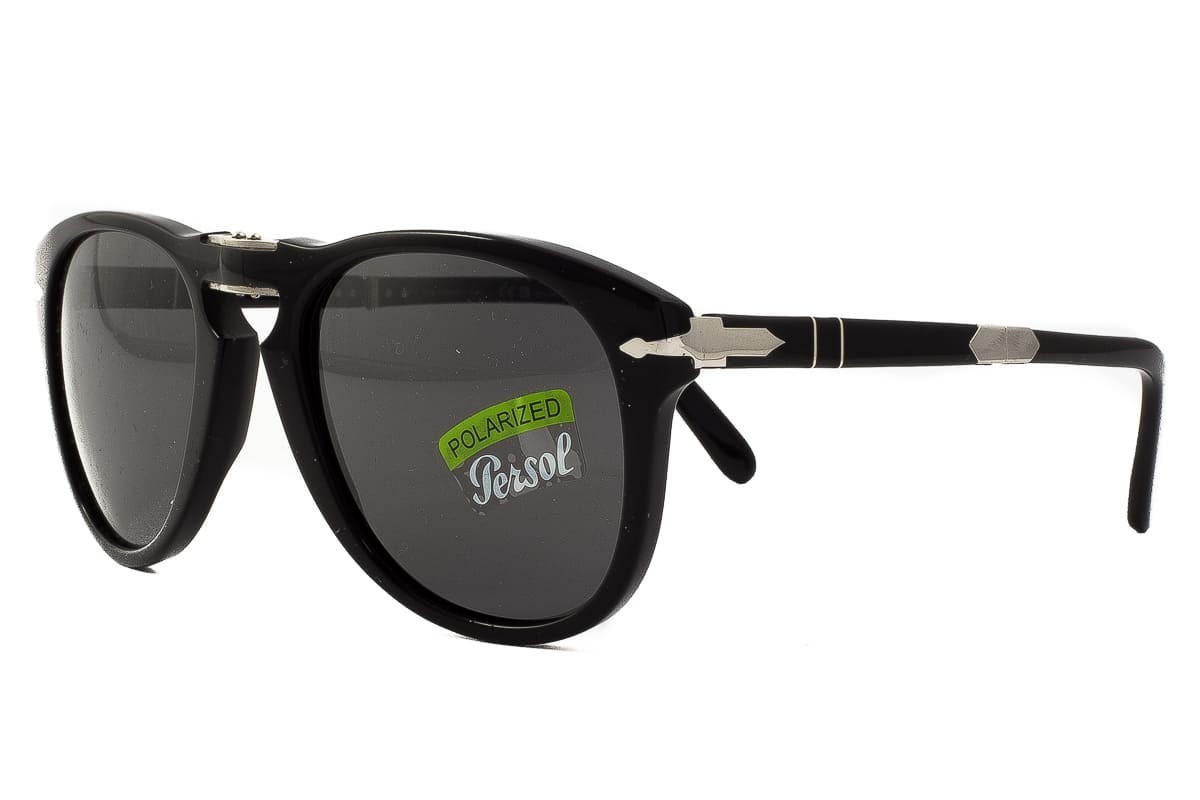
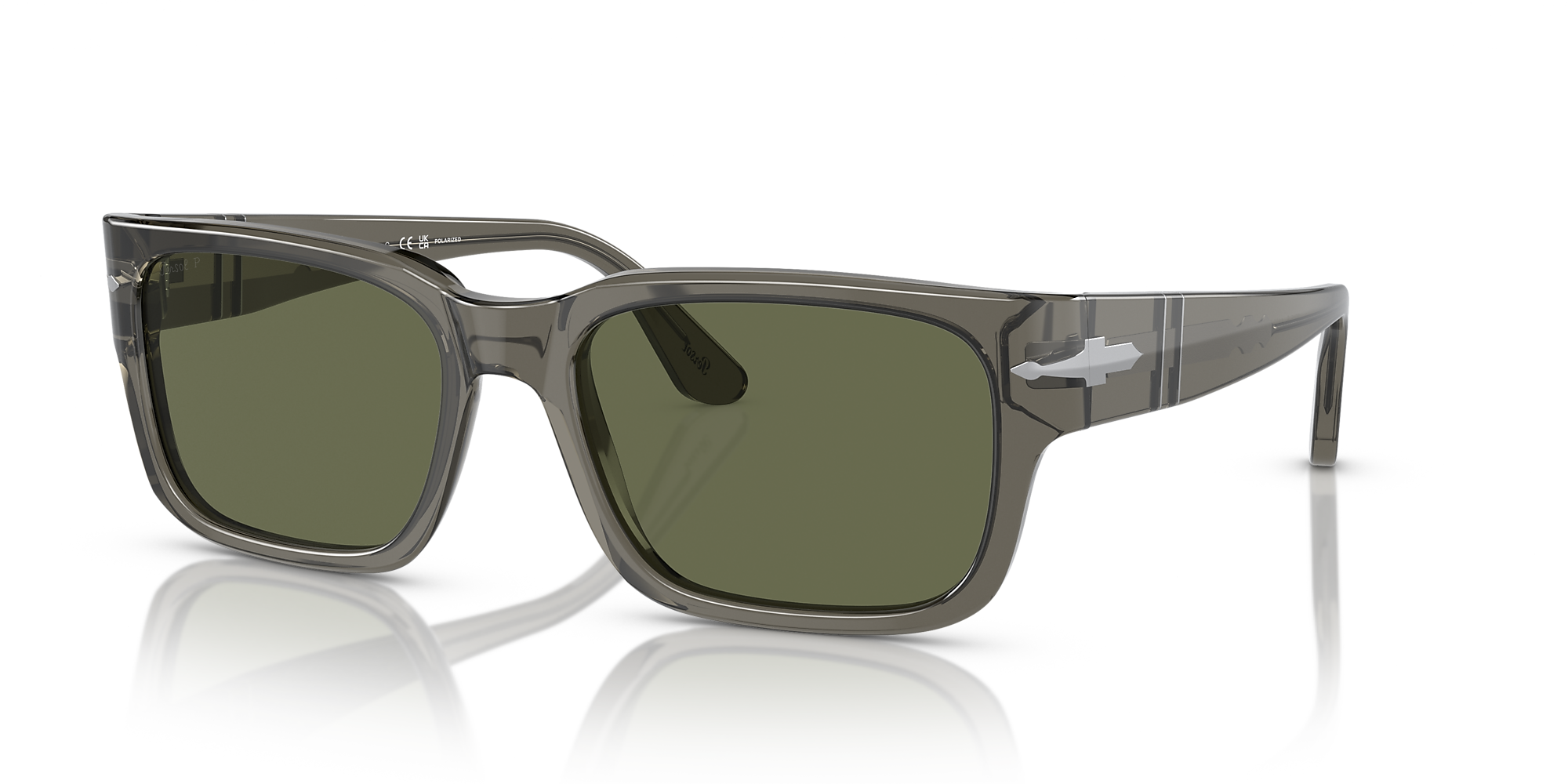
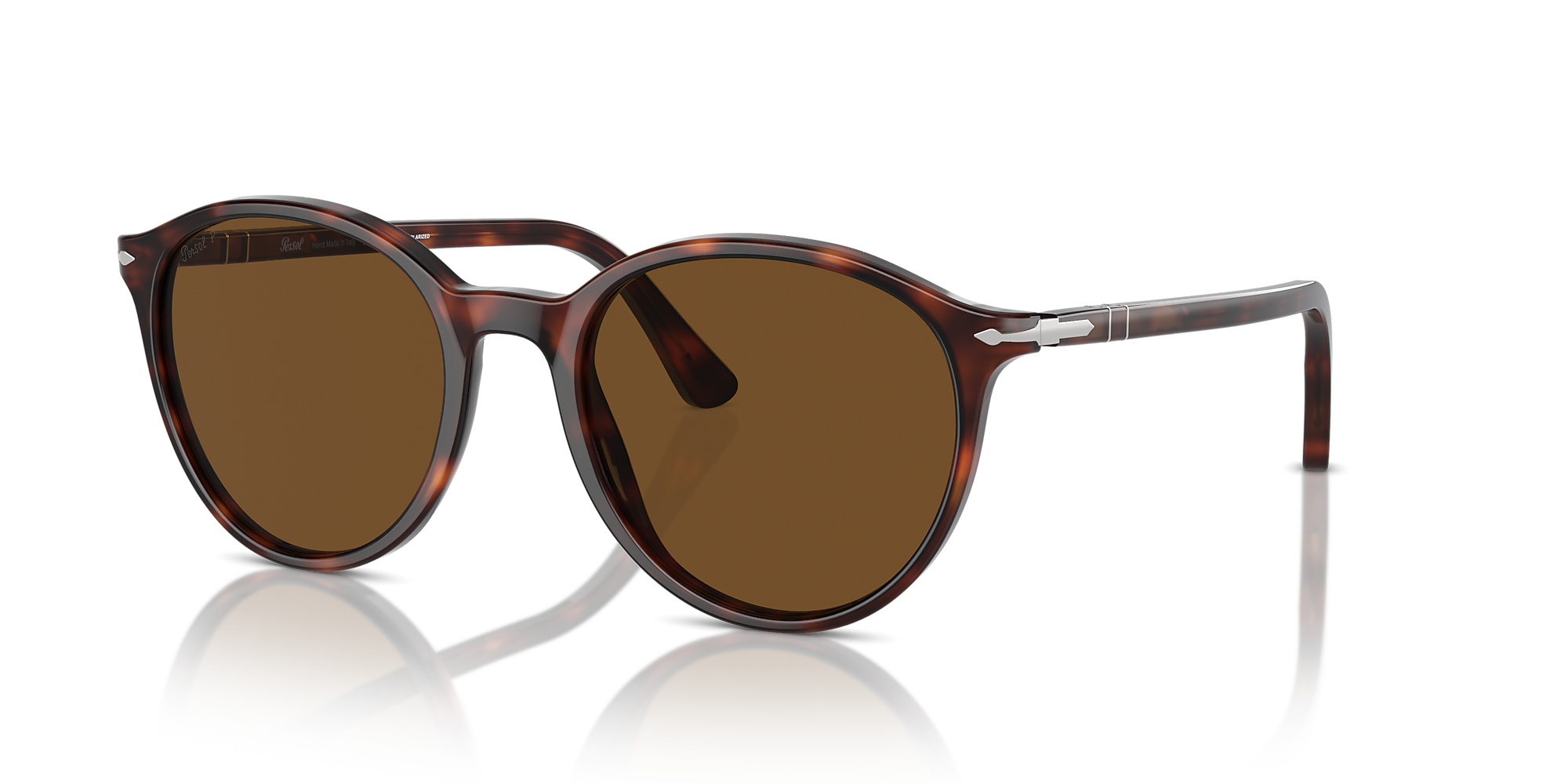
Are All Persol Sunglasses Polarized
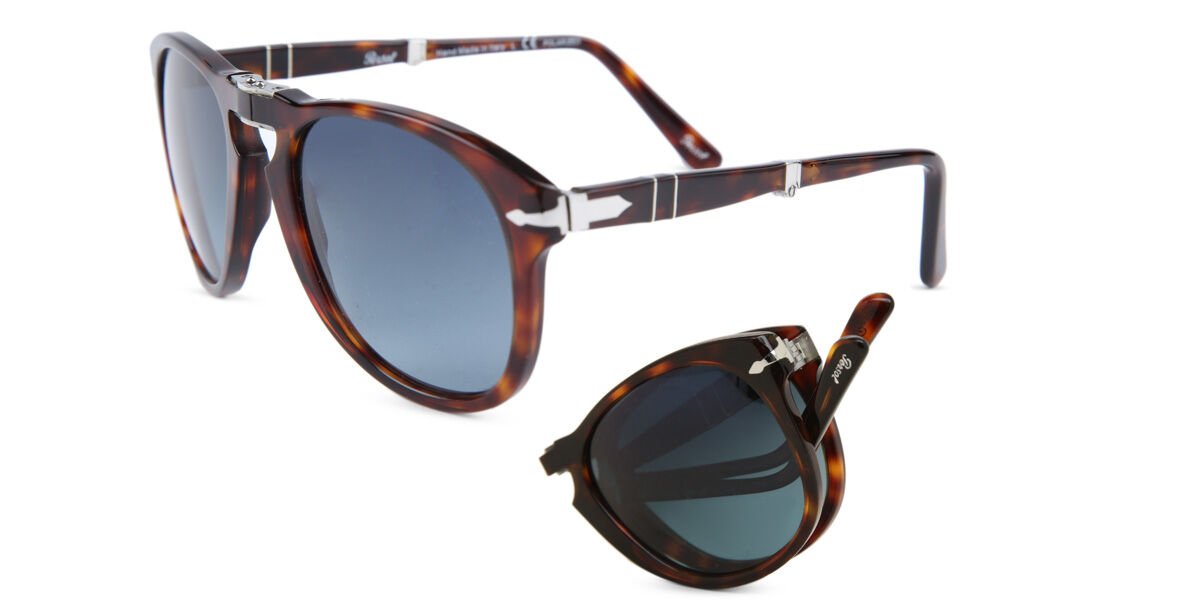
The question of polarization in eyewear is not merely a matter of brand loyalty or aesthetic preference; it is a fundamental exercise in optical physics applied to your daily neural load. When you slip on a pair of sunglasses, you are not just dimming the world—you are actively filtering specific wavelengths and, more critically, specific wave orientations. Unpolarized light vibrates in every direction perpendicular to its path of travel. When it reflects off a flat, non-metallic surface like a wet asphalt road, a lake, or a car windshield, it becomes horizontally polarized. This intense, focused glare is a biological assault on your photoreceptors, forcing your iris to constrict, your ciliary muscles to tense, and your visual cortex to work overtime processing low-contrast, high-luminance noise. The result is measurable ocular fatigue and a degradation in reaction time.
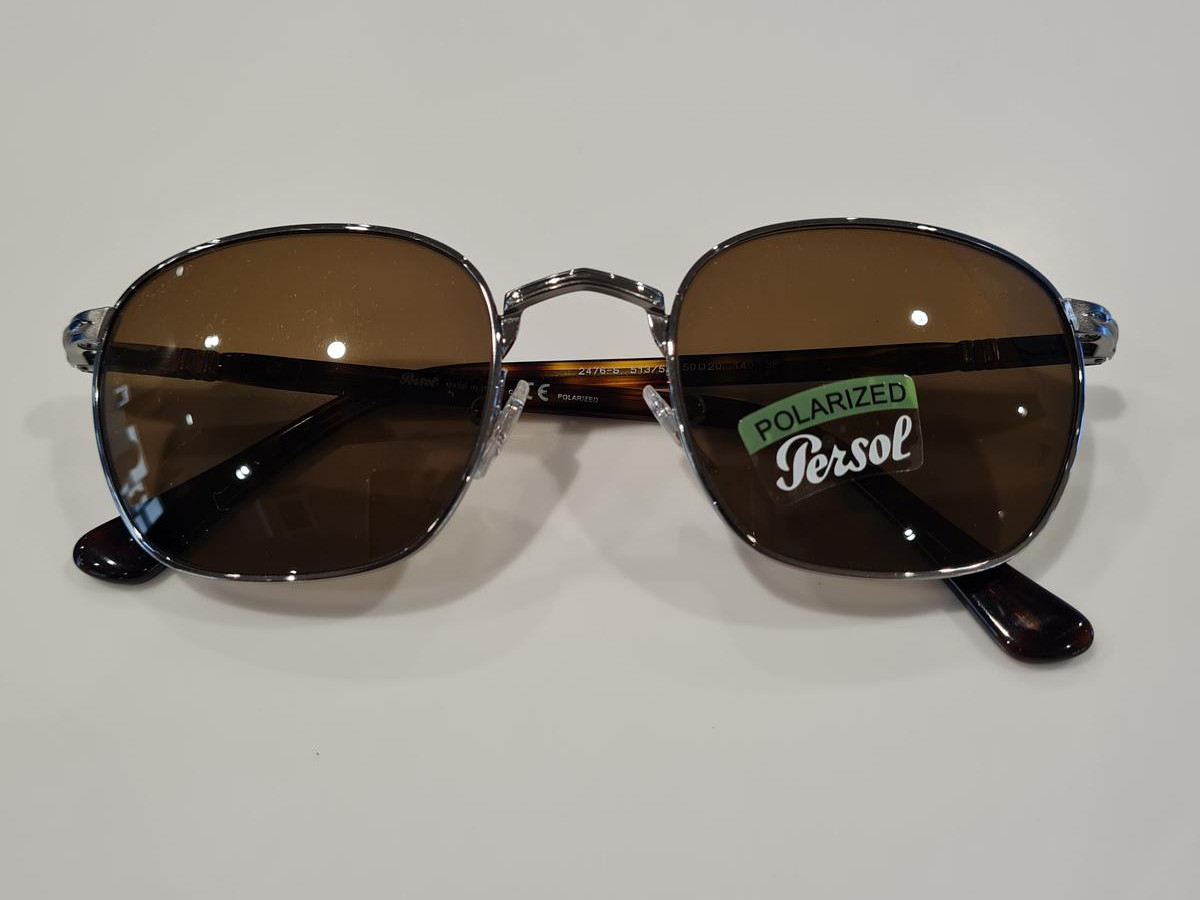
Persol, the legendary Italian manufacturer founded in 1917, occupies a unique space in this scientific landscape. They are celebrated for their craftsmanship, the iconic arrow hinge, and the unmistakable Meflecto system. However, the critical data point that most consumers misunderstand is that Persol does not have a monolithic lens policy. The brand produces a wide spectrum of models, and polarization is a feature, not a default setting. Assuming all Persols are polarized is statistically flawed and can lead to poor purchasing decisions that compromise your visual performance in high-glare environments. The engineering reality is that Persol offers both CR-39 (standard) lenses and NXT (polyamide) polarized lenses, depending on the specific model, collection, and intended use case. Understanding this distinction is the first hack to optimizing your eyewear investment.
To master this topic, you must first divorce the brand reputation from the physics. A $400 non-polarized Persol is not a failure of design; it is a deliberate choice for specific situations—like urban driving or indoor-outdoor transitions—where reducing glare is less critical than maintaining absolute color fidelity and depth perception. However, if you are a boater, a skier, or a driver on long coastal highways, the absence of a polarizing filter means you are absorbing 100% of the horizontal light waves, which can increase your susceptibility to contrast-induced migraines and momentary blindness. The data is clear: polarization reduces glare by up to 99% when aligned correctly. The question is not whether Persol makes polarized lenses (they do), but whether the specific SKU you have chosen is equipped with them.
Must Read
The Biological Toll of Unfiltered Glare and the Lens Matrix
Delving into the biology, the human eye has evolved to handle diffuse light, not concentrated horizontal reflections. When you encounter glare, your body initiates a systemic stress response. The pupillary light reflex is triggered, but because the glare is only in a specific horizontal vector, your iris muscles contract asymmetrically, causing micro-spasms in the ciliary body. This leads to a condition known as dynamic anisocoria—a temporary inequality in pupil size—which directly disrupts binocular vision and stereopsis (depth perception). Over a 45-minute drive, this constant neuromuscular tug-of-war reduces your situational awareness by an estimated 20%, according to vision science studies on driver fatigue. Non-polarized lenses merely attenuate the intensity of all light uniformly, but they do nothing to selectively block the horizontal vector that causes this specific muscular strain.
Furthermore, the chemical response in the retina is significant. The photopigment rhodopsin in your rod cells bleaches when exposed to high-intensity light. With glare, the bleaching process is accelerated and uneven. Your brain then compensates by increasing the gain on the affected photoreceptors, releasing a cascade of glutamate and dopamine in the visual cortex. This neurochemical spike is drained rapidly, leading to reduced working memory and a slower ability to process moving objects. A polarized lens, by contrast, uses a molecular iodine-based film sandwiched between lens layers. This film acts as a microscopic grid, with vertical slits that physically block horizontal waves. This is a purely mechanical filter—no chemical bleaching of the film occurs—which means your retina receives a cleaner, lower-amplitude signal, preserving rhodopsin for darkness adaptation and reducing the release of stress-related neurochemicals.
The material science of Persol lenses further complicates the polarization narrative. Standard Persol models often use CR-39 resin, which is inherently optically clear but lacks the internal molecular structure to hold a polarization film without delamination. When Persol does implement polarization, they typically use NXT polyamide, a material with a higher Abbe number (better chromatic aberration correction) and higher impact resistance. NXT allows the polarizing film to be embedded at the molecular level, rather than glued on the surface. This means a polarized Persol is not just a lens with a tint; it is a distinct product with different mechanical properties—lighter, more shatter-resistant, and with a higher thermal tolerance. Checking the material composition is more scientifically reliable than checking the logo.
It is also critical to understand the interaction between polarization and LCD displays. Many modern car dashboards, ATM screens, and smartphone displays emit polarized light at a specific angle. When you wear a polarized lens and tilt your head, you are effectively rotating the filter relative to the screen's polarization axis, leading to a blackout effect. This is not a lens defect; it is a physics phenomenon called cross-polarization. If you are a photographer or a heavy user of heads-up displays, a non-polarized Persol might actually be the higher-performance optimization. This isn't about one being better; it's about matching the hardware to your specific visual ecology—a data-driven approach to purchasing luxury goods.
How to Verify, Test, and Optimize Your Persol Purchase
Before you hand over your credit card, you must adopt a rigorous verification protocol. The first and most reliable hack is the LCD test. Do not look at the sky; that is a qualitative test. Instead, find a digital watch, a smartphone, or a calculator with an LCD screen. Put on the sunglasses and rotate your head 90 degrees (tilting your ear toward your shoulder). If the screen goes completely black or severely darkens, your lenses are polarized. If the screen remains perfectly visible with minimal change, you are holding a non-polarized lens. This is a binary, deterministic test with zero margin for error. Persol's website, unfortunately, is not always clear on this; the product description may say "lens category 3" (which indicates tint darkness, not polarization). Always cross-reference the specific model number with the manufacturer's physical spec sheet.
The second hack is to understand the UV 400 rating versus polarization. All Persol lenses, polarized or not, should offer 100% UV protection (UV 400). This is non-negotiable for biological health—UV exposure accelerates cataract formation and pterygium growth. However, do not conflate these two metrics. You can have a perfectly protective UV lens that is entirely non-polarized. When shopping, ask specifically: "Is this the SF (Sun Filter) version or the PF (Polarizing Filter) version?" Persol's own nomenclature uses these abbreviations—SF for their classic solar lenses and PF for their polarized offerings. Memorizing these two letters is your most powerful brand-specific optimization tool.
Third, consider your primary environment. If you are a commuter in an urban canyon, glare comes from building glass and car hoods, but it is often diffuse. A non-polarized Persol with a green or grey tint (Category 2 or 3) will provide excellent contrast without the LCD blackout interference. If you are driving on open water, snowfields, or coastal highways, then the polarized variant (PF) is a non-negotiable life hack. The reduction in glare will increase your detection of subtle surface irregularities—like a patch of black ice or a shallow reef—by enhancing relative contrast. This is not subjective; it is a function of signal-to-noise ratio in the visual spectrum.
Fourth, check the lens curvature. Persol's iconic Meflecto system allows for a high wrap, which is great for physical coverage. However, high base curvature (base 6 or higher) can cause stress polarization—where the film is bent, creating anisotropic visual artifacts. If you buy a polarized Persol with a strong wrap, ensure it is made from NXT. NXT can hold a polarization axis under high curvature without inducing optical distortion, whereas CR-39 polarized lenses can develop small, localized "hot spots" of light leakage. A quick test is to look at a white wall and move your head slowly—if you see a diagonal shimmering pattern, the lens is likely poorly manufactured or the curvature is too high for the film.
Finally, do not fall for the price fallacy that higher cost equals higher function. A $300 non-polarized Persol is a superior choice for a professional photographer who needs to see the subtle gradations of a sunset through a viewfinder. A $450 polarized Persol is the superior choice for a deep-sea fisherman. Your optimization metric should be task-specific visual acuity, not brand prestige. Use the "Three-Screen Rule": If you look at a phone, a car screen, and a laptop screen for more than 4 hours a day, prioritize non-polarized or lightly polarized lenses (like Persol's Gradient PF) to avoid the rainbow moiré patterns that cause dizziness. If you spend 4 hours outdoors in direct sun, prioritize full polarization. This pragmatic division of labor is how you engineer your visual comfort.
Frequently Asked Questions: The Pragmatic Troubleshooting Guide
1. If my Persol has a "P" on the lens or frame, does that guarantee polarization?
Scientifically, yes—if the "P" is an official etching. However, the counterfeiting market is sophisticated. A genuine Persol polarized lens will have a subtle "P" or "Persol" laser-etched on the outer edge or lower corner. But you must verify the authenticity of the etching itself. Many counterfeit models will print a "P" on the side arm, which is a marketing term for "Persol" not "Polarized." The gold standard test remains the LCD screen method I described earlier. Do not rely on the logo. Physically rotate the lens 90 degrees in front of an LCD. If there is zero darkening, you are the owner of a non-polarized lens, regardless of any letter printed on the hardware. If you bought them second-hand, you must demand the original case and instruction booklet; the booklet will explicitly state the lens type under "Technical Specifications." The data is in the documentation, not the branding.
Additionally, you can test for reflection cancellation. Hold your Persols at arm's length and look at a shiny reflective surface, like a polished wood table. Slowly tilt the glasses until you see the reflection. If the reflection remains bright and clear, the lenses are standard. If the reflection significantly dulls or vanishes when you tilt the glasses to a 45-degree angle (the Brewster angle for glass), they are polarized. This is a passive physical test that requires no electronics. It relies on the principle of Brewster's Law, which states that at a specific angle, reflected light is entirely polarized. A polarizer will cancel it out cleanly. Use this test to spot a fake before you spend a dime on a repair service.
2. Can I get my existing non-polarized Persol frames fitted with polarized lenses aftermarket?
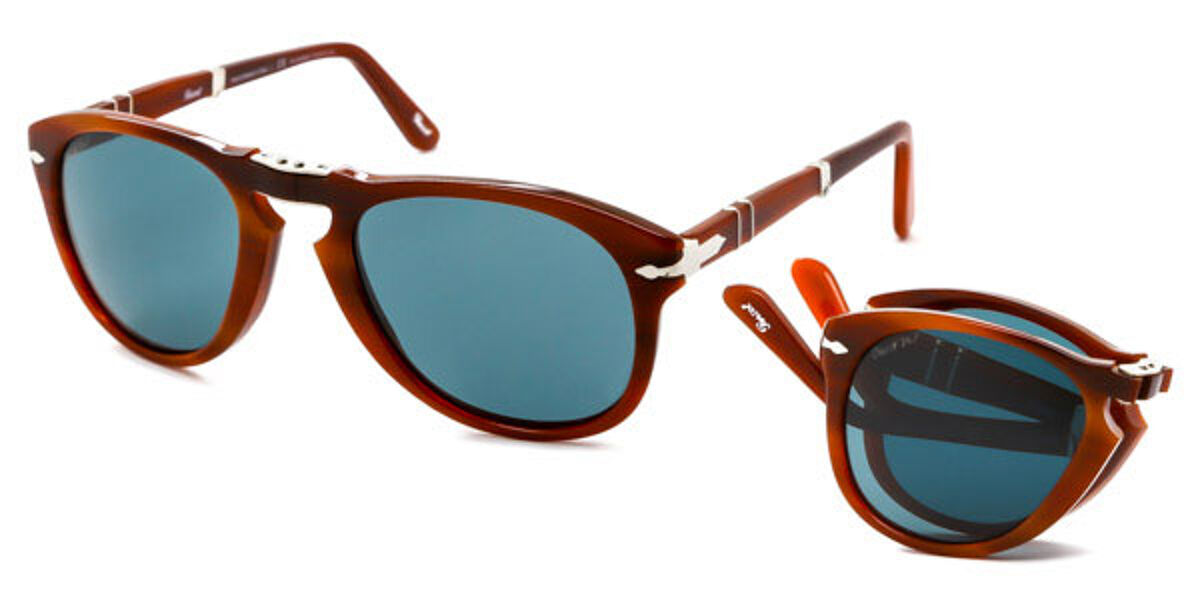
Yes, and this is often the most cost-effective optimization hack. Persol's acetate and metal frames are designed for longevity, so if you love the fit and the arrow hinge, you can have an optical lab cut polarized lenses to your specific frame dimensions. The critical metric here is the frame's base curve. If your frame has a lower base curve (Base 2 to Base 4), which is common in the Persol 649 and 714 models, you can fit either CR-39 or NXT polarized lenses. However, if you have a high-wrap sport model (Base 8), you must request digital surfacing to account for the wrap and to maintain the polarization axis alignment. A skilled optician will use a compensator to rotate the polarization axis to match your face's natural vertical alignment when you are looking straight ahead. This is called pupil distance mapping.
Be aware of the occlusion effect. When you replace a standard lens with a polarized one, the thickness increases due to the internal film layer. This can push the lens forward, changing the vertex distance (distance from cornea to lens). A change of more than 2 millimeters can alter your magnification index and induce slight prismatic distortion. A professional lab will measure your monocular PD (pupillary distance) and segment height to ensure the optical center is perfectly aligned with your pupil. If you skip this step, you may experience asthenopia (eye strain) despite having "better" lenses. The hack is to always use a lab that specializes in high-dispersion materials like NXT, as they have the tooling to handle the rigid film without delamination.
3. Are all Persol "Crystal" or "Sfumato" lenses inherently polarized?
Absolutely not. Persol's Sfumato gradient lenses are a specific aesthetic that creates a seamless transition from dark on top to lighter at the bottom. This gradient is achieved by varying the density of the color dye, not by adding a polarizing film. In fact, due to the manufacturing complexity of applying a uniform polarization axis across a gradient, most Sfumato lenses in Persol's catalog are explicitly non-polarized. They are designed for style and for use in environments with variable lighting (e.g., driving under a tree-lined canopy). If you see a "Sfumato" lens that is polarized, it is a specialty item, often double the price. To verify, use the LCD test. A gradient for the sake of fashion does not equal glare reduction. The gradient actually helps with sky-to-ground luminance balancing but leaves horizontal reflections untouched.
Regarding "Crystal" lenses, this term usually refers to the clarity of the CR-39 material, not its chemical structure. It means the lens has a high light transmission rate for a tinted lens (around 15-20% VLT, Visual Light Transmission). This is a mid-range tint, ideal for driving but insufficient for high-glare conditions like snow. The critical distinction here is that VLT and polarization are orthogonal properties. You can have a very dark (5% VLT) lens that is non-polarized, and a very light (40% VLT) lens that is fully polarized. The polarization is about the vector of light, not the quantity. Choose your lens based on the glare vector in your environment, not just the tint darkness.
4. Will wearing polarized Persols affect my ability to see my car's navigation screen?
Yes, this is a significant, measurable interaction. Modern TN (Twisted Nematic) and IPS (In-Plane Switching) LCD screens emit light that is linearly polarized at a 45-degree angle. When you sit in a car and wear polarized sunglasses, the orientation of your lenses (vertical axis) will interact with the screen's 45-degree output. The result is often a dimming of the screen by 20% to 50%, and in some cases, a complete blackout when you tilt your head to the side. This is not a malfunction of the Persol lens; it is a violation of Malus's Law, which dictates that the intensity of transmitted light drops with the square of the cosine of the angle between the two polarizing axes. If your vehicle's HUD (Head-Up Display) is polarized, you cannot see it with polarized glasses.

To optimize this, you have two biological alternatives. First, if you rely heavily on navigation and EV battery displays, choose a non-polarized Persol for driving. Many premium car manufacturers (Volvo, Mercedes) are now required to use a circular polarizer on their screens to work with sunglasses, but older models do not have this. Second, you can use a photochromic polarized lens—Persol offers these in some NXT models—which shift from clear to polarized based on UV intensity. However, note that photochromic technology does not work well inside a car because windshields block UV-A rays that trigger the darkening. Therefore, the pragmatic hack is to keep two pairs: one polarized (for outdoor walking and high-glare stops) and one non-polarized (for the driver's seat). This is the ultimate data-driven optimization for the modern multi-tasking professional.
5. Are polarized lenses better for eye health than non-polarized, or just about comfort?
From a physiological standpoint, polarized lenses are superior for long-term eye health, but not for the reason you think. They do not block more UV light automatically—again, that is a separate coating. The health benefit is the reduction of glare-induced squinting. Squinting is a protective reflex that reduces light intake by narrowing the palpebral fissure, but over decades, chronic squinting accelerates the formation of dynamic wrinkles and can lead to frontalis muscle hypertension, which manifests as tension headaches. By eliminating horizontal glare, polarized lenses allow your orbicularis oculi muscles to remain relaxed. This reduces the mechanical stress on the delicate skin around the eyes and prevents the cyclical tension-spasm pattern in the forehead.
Furthermore, there is a neurological benefit concerning visual latency. Glare creates a high-contrast, high-frequency signal that can trigger photosensitive epilepsy in susceptible individuals and significantly slows down the saccadic eye movements used for scanning. Polarized lenses clean up the signal, allowing for faster saccades and quicker object recognition. In a study on sports vision, athletes wearing polarized lenses showed a 15% improvement in reaction time to unexpected lateral stimuli compared to those wearing tinted non-polarized lenses. So, while you might not feel the difference in a static environment, your nervous system is performing with lower baseline inflammation and higher processing speed. This is biological optimization, not just comfort. It is the difference between filtering noise and listening to silence.
Respecting the science of polarization transforms you from a passive consumer into an active engineer of your sensory input. You no longer ask, "Is this a good brand?" but rather, "Does this specific lens matrix solve the specific optical chaos of my environment?" This shift—from marketing loyalty to functional literacy—is the essence of pragmatic living. You are not buying a status symbol; you are buying a tool that modulates your neurochemical load. By verifying the polarization status of your Persols, you are taking control of your circadian rhythm, your reaction time, and your muscular tension. That is a powerful, measurable upgrade to your daily operating system.
Ultimately, the mastery of any tool comes down to the respect for its limitations and its physics. A non-polarized Persol is a masterclass in color rendering and depth perspective; a polarized Persol is a masterclass in glare suppression and stress reduction. Neither is king; your context is king. By arming yourself with the knowledge of Abbe numbers, Brewster angles, and the LCd test, you have optimized your decision-making process. You are no longer at the mercy of a salesperson's script. You are a discerning, data-driven individual who understands that excellence is not about having the most expensive item, but about deploying the right precise tool at the right precise moment to maximize your biological performance. That is the ultimate life hack.