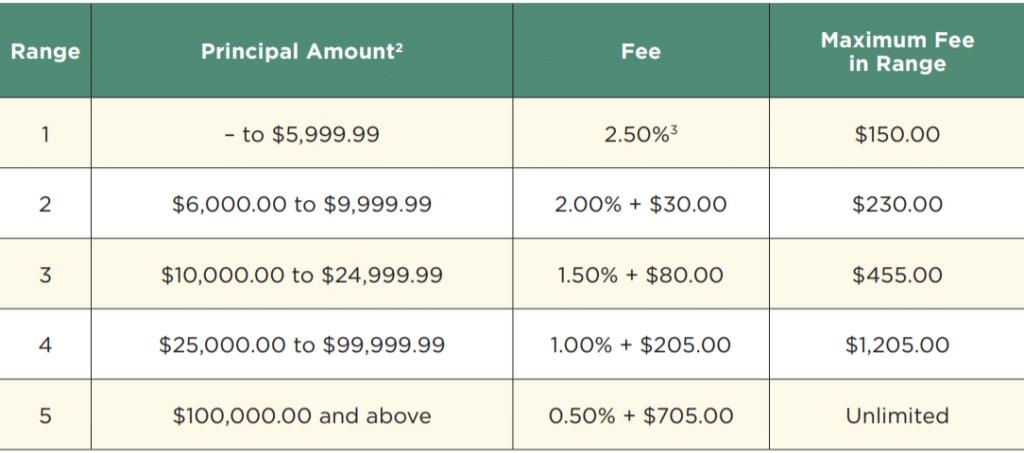
Ameriprise Financial Planning Fees
There is a quiet, often unspoken moment that happens when we first confront the idea of paying someone to manage our money. It is not merely a transaction; it feels like a confession. We are admitting that our finances have grown complex enough to require a professional, and in that admission, we often hear a whisper of inadequacy. Our brains, hardwired for survival, interpret the outflow of cash not just as a cost, but as a threat to our safety. This triggers a primal, defensive response—a tightening in the chest, a surge of skepticism—that has little to do with the actual dollar amount and everything to do with our deep-seated need for control and certainty in an inherently uncertain world.
In our modern age, where financial literacy is both celebrated and shamed, the topic of advisory fees sits in a uniquely uncomfortable space. We are bombarded with DIY investment apps that promise low costs, yet we yearn for the reassurance of a human guide. This dichotomy creates a cognitive dissonance that can paralyze us. We fear the fee itself, but we also fear the cost of our own ignorance. This article is not just a breakdown of Ameriprise's pricing structure; it is an exploration of the psychological terrain you must navigate to make peace with the cost of professional guidance, and ultimately, with the value of your own peace of mind.
The Invisible Tug-of-War: Value vs. Cost
The most significant mental hurdle we face is the confusion between price and value. When we see a line item on a statement saying "Advisory Fee," our brain’s pain center (the insula) lights up, processing this as a tangible loss. We think, "I could have bought a car with that," or "That's a vacation I didn't take." This is a classic cognitive bias known as the endowment effect, where we overvalue what we already have (our money) and undervalue what we are receiving (expertise, time, and emotional buffering). We struggle to quantify the cost of a sleepless night, the anxiety of a market downturn, or the hours wasted researching funds—because these are not itemized on a bill. Yet, these are precisely the intangible benefits a financial advisor provides.
Must Read
For many, the resentment toward the fee is a projection of a deeper internal conflict: the fear of surrendering autonomy. We want to believe we are the authors of our own financial destiny. Paying an advisor feels like handing over the pen. This is especially acute for high-income earners who are used to being the smartest person in the room. The emotional trigger is often a loss of status. To sit across from an advisor and admit, "I don't know how to optimize my estate plan," feels like a demotion. This ego-driven resistance is often the loudest voice in the room, drowning out the rational analysis of whether the advisor is actually saving you money through tax-loss harvesting or asset allocation.
Another hidden trigger is the anchoring bias. We latch onto the first number we see—say, a 1% annual fee—without contextualizing it. We become fixated on the percentage, ignoring the reality that a 1% fee on a well-diversified portfolio that returns 7% net of fees is far superior to a 0.5% fee on a poorly allocated portfolio that returns 4%. We are comparing the fee to a hypothetical zero, rather than to the chaos of our own attempts. This fixation creates a scarcity mindset, where we focus on the money leaving our account rather than the wealth being preserved. It is a mental trap that breeds chronic dissatisfaction, regardless of the actual performance of the portfolio.
Finally, there is the ghost of past trauma. If you grew up in a household where money was scarce, any recurring fee—no matter how justified—can trigger a panic response. Your brain associates the automatic deduction with the landlord knocking on the door. This is a somatic memory that bypasses logic. You may intellectually understand the fee is fair, but emotionally, you feel like you are being bled dry. Recognizing this trigger is crucial, as it allows you to separate the ghost of your past from the reality of your present financial stability.

Rewiring Your Mindset: A Practical Path to Clarity
To move from resentment to acceptance, you must first change your internal narrative. Instead of asking, "What is this costing me?" ask, "What is this protecting me from?" Start by calculating the cost of your own anxiety. Track how many hours a year you spend worrying about your portfolio, checking the market, or arguing with your spouse about retirement projections. Assign an hourly rate to that time. In most cases, you will find that the advisor’s fee is a fraction of the cost of your own psychological wear-and tear. This reframing shifts the fee from an expense to an insurance policy against your own cognitive biases.
Next, perform a "Value Audit" with the specific Ameriprise advisor you are considering. Do not just ask about performance; ask about their behavioral coaching process. Ask, "What happens to my portfolio when the market drops 20%?" A good advisor will tell you they will call you before you call them, and they will help you stay the course. That single act—preventing you from selling at the bottom—is often worth more than the fee itself. Write down the specific scenarios where the advisor has saved you from yourself in the past year. If you cannot list at least three, you are paying for a transaction, not a relationship. If you can, you are paying for a behavioral safety net.
Embrace the concept of Subscriptions over Purchases. We pay for Netflix, gym memberships, and cloud storage without blinking because we understand the continuous value. The Ameriprise fee is a subscription to your future self. To internalize this, set up a separate "Wellness" category in your budget where you track this fee alongside your therapy, gym, and nutrition costs. This physically reclassifies the expense in your brain. You are no longer paying for a product; you are investing in your daily emotional resilience. This simple accounting trick can dismantle the resentment because it celebrates the ongoing nature of the relationship.
Finally, schedule a "Fee Reconciliation" meeting twice a year. This is not a performance review of the market, but a personal review of your feelings. Ask yourself (and your advisor): "Am I sleeping better? Am I less reactive to financial news? Do I have a clearer sense of my life's purpose in relation to money?" If the answer to these is "no," then the fee is unjustified. But if the answer is "yes," remind yourself that you are not buying stock picks; you are buying a stable nervous system. In a world of chaotic headlines and market volatility, that stability is a luxury that is arguably priceless. The fee is simply the toll you pay to live in a state of financial sobriety rather than a state of frantic, reactive survival.

Frequently Asked Questions: The Emotional Undercurrents
How do I know if the Ameriprise fee is "worth it" when I can buy an index fund for nearly free?
This question is the heart of the DIY vs. advisor dilemma, and it is rooted in a fear of being "ripped off." The emotional answer is that you are comparing a ham sandwich to a gourmet meal. The index fund provides the raw calories of market returns, but it does not provide the digestion. The fee is worth it if you are prone to behavioral mistakes. If you are the type of person who feels a surge of adrenaline during a market crash and is tempted to log in and sell, then the advisor is your emergency brake. The index fund cannot call you and talk you off the ledge; the Ameriprise advisor can.
Furthermore, the fee is justified when it encompasses holistic planning. It is not just about the portfolio. It is about tax efficiency, insurance gaps, estate planning, and the coordination of your entire financial life. If you attempt to do this alone, the time cost is astronomical, and the emotional cost of getting it wrong—such as a penalty for a missed RMD or a mis-filed tax form—is far higher than the 1% fee. You are paying for a quarterback to coordinate a complex play, not just a running back to carry the ball. If your situation is simple, the fee is pure emotional padding. But if your life is complex—with business income, children, and a mortgage—the fee is a cost that buys you the most valuable asset: mental bandwidth.
Why does seeing the fee on my statement make me feel physically angry, even when I agree to it?
The physical anger you feel is a textbook loss aversion response. Behavioral economists Daniel Kahneman and Amos Tversky proved that the psychological pain of losing $100 is twice as powerful as the pleasure of gaining $100. When the fee is deducted automatically, it feels like a quiet, passive theft, even though it was agreed upon. The anger is exacerbated by the fact that the service is intangible. You cannot see the "tax strategy" you just bought, so your brain tries to classify it as a zero-sum loss.
To process this anger, you must give the transaction a narrative. Create a ritual around the fee. Instead of ignoring the deduction, schedule a reminder to send your advisor a thank-you note or write a journal entry about the specific help you received that month. This transforms the abstract withdrawal into a concrete relationship exchange. The anger is a signal that you feel disconnected from the value. Reconnect by asking your advisor for a "second opinion" on a financial decision you are making at work or in your family. When you utilize the service and see the tangible benefit (e.g., "she saved me $3,000 in taxes"), the anger slowly dissolves into a sense of partnership.
Is it normal to feel judged by the advisor when I admit I don't understand a financial concept?
Yes, it is profoundly normal. This feeling stems from imposter syndrome. We assume that because the advisor has a designation like CFP® or a corner office, we are somehow "less than" for not knowing the difference between a Roth IRA and a traditional IRA. This fear of judgment is a projection. Often, we are judging ourselves for not having paid attention sooner. The advisor is rarely judging you; they are simply cataloging your knowledge level to figure out how to teach you best. However, the shame response can make us dumb, as we smile and nod, pretending to understand, thereby defeating the purpose of the advice.
To break this cycle, you must explicitly state your confusion at the very beginning of the relationship. Say, "I have a lot of anxiety around my blind spots. I need you to explain things to me as if I am five years old, and I need you not to take my confusion as a personal failing." This vulnerability immediately flattens the power dynamic. Remember that the advisor is a servant to your life, not a master of your destiny. They hold the map, but you own the car. When you feel judged, remind yourself that you have successfully earned the money you are asking them to manage—they have not. Your ability to earn is your primary credential, and that is something no certification can buy.
What if I just want to "do it myself" but my partner wants an advisor? How do we resolve this?
This is a classic relational conflict that pits the desire for control against the desire for safety. The partner who wants to DIY often values autonomy and frugality, seeing the fee as an insult to their intelligence. The partner who wants the advisor often values security and delegation, seeing the DIY approach as reckless. The emotional root is not about money; it is about trust. The DIY partner fears that the advisor will "take over" and diminish their role in the family's financial success. The advisor-seeking partner fears that the DIY approach will lead to ruin without a safety net.
The resolution lies in compartmentalization. Do not make it an all-or-nothing decision. Agree to use Ameriprise for specific complex areas like taxes and insurance, while retaining control of the day-to-day investment portfolio for yourselves. Or, inversely, let the advisor handle the investments, but have the DIY partner be responsible for tracking the advisor’s performance against a benchmark quarterly. This gives the DIY partner a sense of audit and control, without removing the advisor. The key is to treat the fee as a "trial run" for six months. At the end of the trial, have a "feeling debrief" where you both discuss how you felt about the decisions, not just the returns. This emotional data is often more persuasive than the financial data in resolving the impasse.
How do I stop obsessing over the fee every month and just trust the process?
Obsession is a symptom of a lack of control elsewhere in your life. The fee is a fixed, predictable expense, so your brain fixates on it because it is a concrete variable. The market, the economy, and your job security are chaotic, unpredictable variables you cannot control. To stop obsessing, you must redirect that control energy toward your own behavior. Create a strict, automated contribution plan that does not require your input. If you are not watching the contributions, you are less likely to watch the expenses. Second, detach your sense of identity from your brokerage statement. Your net worth is not a report card for your human worth.
Finally, engage in radical acceptance. Accept that you are paying a fee to buy back your time. Every month, that fee is purchasing you the freedom to think about your art, your family, or your hobbies. When you feel the obsession creeping in, ask yourself, "What would I be doing if I wasn't obsessing over this?" Then go do that thing. The fee is the guardrail that allows you to drive your life without looking down at the map every second. Trust the process with the knowledge that worry is a poor use of your imagination. The fee is a fixed cost of your freedom, and your freedom is worth it. Eventually, the fee becomes as invisible and accepted as the electricity bill—a necessary utility for a well-lit life.
Mastering the psychology of advisory fees is a rite of passage into financial maturity. It is the moment you stop treating money as a fragile egg to be hoarded and start treating it as a tool to be deployed. The fee is not a wound; it is a vaccination. It inoculates you against the disease of impulsive financial decisions and the anxiety of isolation. When you finally pay for professional help without resentment, you are not just buying portfolio management—you are buying a partner in your own emotional regulation. You are admitting that you are human, and that admission is the greatest strength you can possess.
This journey is not about becoming a passive observer of your wealth. It is about becoming the CEO of your life, someone who understands that the most valuable asset you own is not your home or your stock options, but your ability to remain calm, clear-headed, and generous in the face of uncertainty. By reconciling the cost of guidance, you are not losing money; you are investing in the one thing that compound interest cannot create: peace of mind. In that peace, you will find the clarity to not only grow your wealth but to enjoy the life that wealth is meant to enable.