
All The Five Nights At Freddy's Books
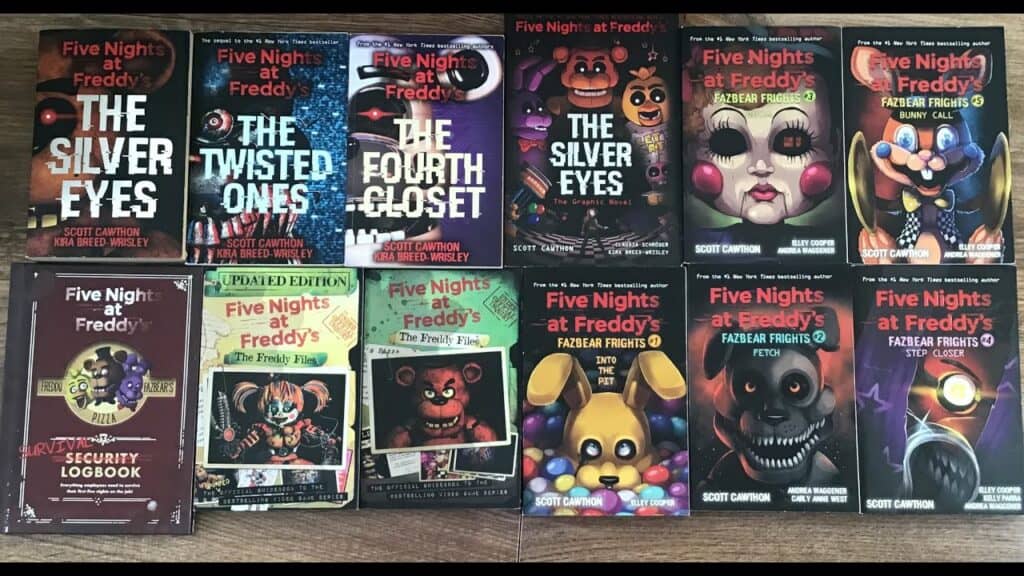
Let’s be real for a second: if you’ve scrolled past a hyper-caffeinated streamer screaming at a haunted animatronic rat, or seen a BookTok influencer weeping over a page count while holding a paperback with a pizzeria on the cover, you know the drill. Five Nights at Freddy's (FNAF) has mutated from a jump-scare indie game into a multi-media juggernaut, and the books—yes, plural—are the messy, lore-drenched centerpiece of this obsession. We’re not just talking about one novelization; we’re talking about a sprawling, contradictory, timeline-shattering library that makes the MCU look like a bedtime story. The discourse is feral, the theories are unhinged, and the book sales are inexplicably massive. Why? Because Gen Z and Gen Alpha have decided that the text is the ultimate horror, and frankly, they’re not wrong.
We are currently living through the Silver Eyes era renaissance, a time when the physical book is fighting back against the algorithm. While TikTok trends usually push perfumes or water bottles, the FNAF literary universe has carved out a permanent niche in the "weird kid" renaissance. It’s a phenomenon where plot holes aren’t bugs; they’re features for fanfic writers to exploit. The books aren't just side content; they’re the Rosetta Stone for a fanbase that treats every glance from a robot chicken as a cryptic clue. If you’ve been lingering on the edge of this rabbit hole, clutching your copy of The Hunger Games for safety, this is your intervention. We are going to dissect every spine, every lore bomb, and every questionable retcon.
But here’s the twist: this isn't a simple reading list. This is a guide to surviving the lorepocalypse. The FNAF books have evolved into a labyrinth of parallel universes, Fazbear Frights anthologies, and interactive choose-your-own-nightmares that actively gaslight the reader. It’s a cultural phenomenon that proves the audience doesn’t want clean narratives; they want trauma, robots, and cryptic math. So, grab your flashlight, charge your phone, and pray that the battery doesn’t die before you finish this article, because we are diving deep into the pizzeria’s basement.
Must Read
The Secret Society of Lore Detectives and BookTok Trauma Junkies
Let’s talk about the subculture, because it’s weirder than a dehydrated Springtrap. The FNAF book community operates less like readers and more like digital forensic archivists. On Reddit (r/fivenightsatfreddys), users don’t discuss character arcs; they discuss the "Stitchwraith Stingers" as if they were encrypted CIA documents. The toxicity here isn’t about shipping wars—it’s about canon superiority. There is a distinct, venomous hierarchy between "Game Trilogy" purists, who claim the original novels are the only truth, and the "Fazbear Frights" devotees, who argue that the short stories are the real hidden blueprint. Social media amplifies this; a single ambiguous sentence in The Twisted Ones can spark a 400-comment war on X (formerly Twitter), with users posting wall-text essays and color-coded timeline charts that look like conspiracy theorist corkboards.
The dynamic is fascinating because it’s built on trust issues. Scott Cawthon, the creator, famously stated the books are "canon" but also "not canon" in the same breath, creating a Schrödinger's Cat situation that has driven the fanbase into a state of permanent paranoia. This instability is the fuel for the trend. On BookTok, the videos aren't just reviews; they are trauma dumps set to eerie phonk music, with creators crying over the ending of The Fourth Closet while using a filter that makes their eyes glow. The social commentary here is razor-sharp: this is a generation that has grown up with unreliable media, misleading news cycles, and constant reboots. The FNAF books are the perfect metaphor—a mixtape of broken memories that rewards those who obsessively parse every comma for hidden meaning, while punishing those who just want a linear story. It’s a cultural shift from passive consumption to active interrogation, and it’s equal parts brilliant and exhausting.
How to Read All The FNAF Books (Without Losing Your Sanity or Wallet)
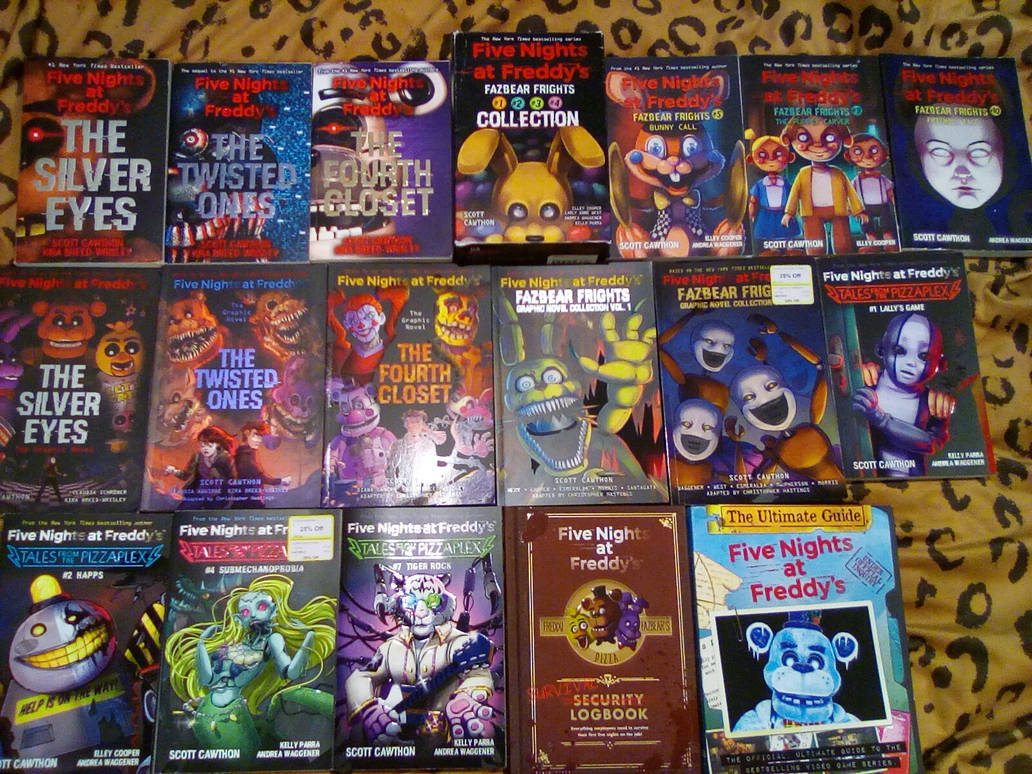
First, accept that you are not reading a series; you are entering a gacha game for plot points. The original trilogy—The Silver Eyes, The Twisted Ones, and The Fourth Closet—is your gateway drug. These are the "Charlie Trilogy" focusing on Charlotte Emily. Do not expect a tight narrative. Expect shifting perspectives, animatronics that teleport because "twisted metal," and a climax that hinges on illusion discs that make absolutely no scientific sense. My tip: read these first, but do not try to reconcile them with the game timeline. Treat them as an alternate dimension prequel. Savor the descriptions of agony, but keep a notebook for the names—specifically any mention of "Henry" or "William"—because those are your only threads home.
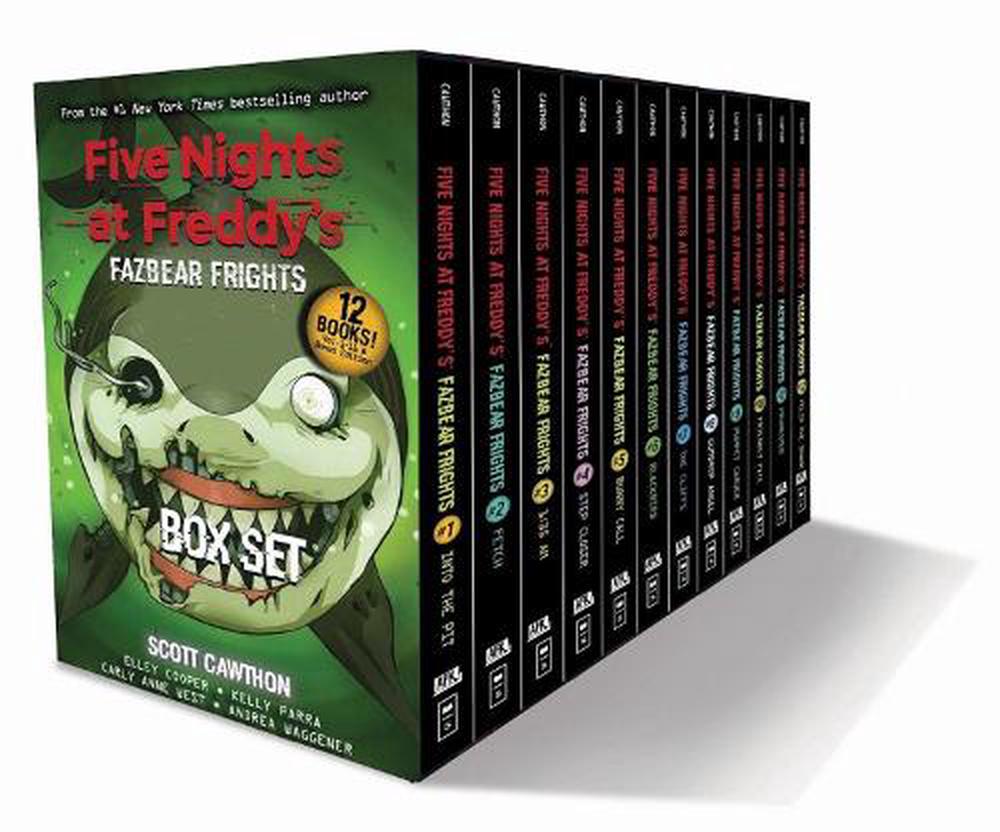
Next, you must confront the elephant in the room: the Fazbear Frights series. This is the anthology grind. There are 12 main books, each containing three short stories, and then the graphic novel adaptations, and then the Tales from the Pizzaplex series which adds another 12 volumes. If you try to buy these all at once, you’ll need a second mortgage. Tip number one: use your library app. Libby and Hoopla have these in droves because librarians are apparently sick of dealing with kids hiding them in the return slot. Tip number two: skip the graphic novels unless you are a completionist with a steel spine. The art style is inconsistent and often falls into the uncanny valley, making the text version scarier anyway.
Here is the strategic reading order to avoid fiscal ruin: Start with Fazbear Frights #1: Into the Pit (the story "Into the Pit" is essential lore), then jump to #3 (1:35 AM) for the Eleanor lore. After that, you can safely skip to #7 (The Cliffs) and #8 (Gumdrop Angel) just for the vibes. The "Stitchwraith" epilogues are the connective tissue, so read those final pages religiously. Do not, under any circumstances, buy the full Tales from the Pizzaplex series on a whim. That series is for the "Lore Sickos" who enjoy reading about indie game characters doing data entry. Instead, borrow the e-books for free, or wait for the "Fazbear Frights: Graphic Novel Collection" in bargain bins. Your wallet will thank you.

Finally, embrace the "Cliffhanger Diet." Do not read more than one Fazbear Frights story per week. The stories are designed to be demented and depressing—children getting bitten in half, haunted ball pits, and emotional abuse. If you binge them, you will suffer "Dead Kid Fatigue" and start feeling numb. Treat them like spicy food: a small bite is flavorful, an entire bowl will destroy your stomach lining. Also, do not trust YouTube summaries. While YouTubers like Dawko are godsends, watching summaries ruins the joy (or horror) of experiencing the clunky prose firsthand. You need to read the line, "The blood tasted like pizza grease," yourself to truly understand the absurdity.
FAQ: The Internet's Most Violent Debates, Answered
Are the FNAF books actually scarier than the games?
Objectively, yes, but in a deeply freudian way. The games rely on atmospheric dread, jump scares, and the tension of limited power. The books, however, have zero chill and rely on body horror and psychological torture. The novels describe things the games can only imply—like the squeezing of organs inside a metal suit, the sensation of being crushed while your spine is still intact. The Fazbear Frights stories take this further, introducing concepts like "The Puppet" as a literal vessel for a murdered child’s agony. The horror is more visceral because the text forces you to imagine the plasticity of flesh against steel. However, the games are scarier in a "gameplay" sense because you are actively responsible for your survival. The books are scary because you are a passive observer forced to watch a torturer work. If you want to sleep with the lights on, the books win.
The internet debate usually splinters here: Game purists argue that the jump scares are "real" because they trigger the fight-or-flight reflex, while book fans argue that a well-written description of a child crying inside a broken animatronic shell is a deeper, lasting dread. The nuance is that the books are scarier for the lore—they explain why the animatronics are scary. The games are scarier for the action. If you are deeply invested in the "Agony" mechanic (emotions manifesting as metal), the books are a masterclass. If you just want to be startled, the games remain king. But as a literal reading experience, the books offer a level of gut-wrenching detail that no jumpscare can replicate.
What is the correct reading order (canon vs. release)?
This is the question that starts wars. The "Release Order" is the safest, most democratic route: start with the Charlie Trilogy (2015-2018), then move to Fazbear Frights (2019-2022), then Tales from the Pizzaplex (2022-present). This works because it respects the evolution of Scott Cawthon’s writing voice and prevents you from seeing later retcons that invalidate earlier mysteries. However, the "Chronological Lore Order" is chaos. Many fans argue you should read Fazbear Frights #8 ("The Puppet Carver") first, because it explains the origin of the Puppet's mask, only to realize it contradicts the original trilogy. The truth is: there is no correct order because the chronology is a cube, not a line.
The fandom’s general consensus for a "Newbie" is to ignore the timeline and read for thematic resonance. The Tales from the Pizzaplex series is explicitly set inside the video game location from Security Breach, so if you want to understand why Glamrock Freddy acts the way he does, you have to read those. But they spoil the twist that the "Pizzaplex" is built on the original FNAF 1 location. My advice: read by release date and treat every book as a "what-if" scenario. The only exception is to read the Fazbear Frights epilogues in order, as they form a continuous narrative featuring the Stitchwraith. Mixing those up is akin to reading the final Harry Potter book first—you’ll be lost and angry.
Why is the book lore so contradictory? Is Scott Cawthon trolling us?
To answer bluntly: Yes, but lovingly. The contradictions are not errors; they are a deliberate narrative strategy designed to keep the community engaged. Scott has stated that he views the books as a "different continuity" but also a "key" to solving the games. This is a genius marketing move because it makes every stray detail feel like a puzzle piece, even when it isn't. The contradictions—like the color of the "Foxy" mask in The Silver Eyes versus the game—force fans to create complex "alternate dimension" theories. The trolling aspect comes from the fact that Scott publicly invites theories on Steam, watches the discourse, and then writes the next book to invalidate the most popular one. It’s a Socratic method of fan engagement.
However, there’s a more pragmatic reason: the books are written by multiple ghostwriters (most notably Kira Breed-Wrisley), especially the Fazbear Frights anthologies. With so many different writers and independent short stories, continuity errors are inevitable. But the fandom has canonized these errors as "distortions" or "memory fragments," which is a highly effective coping mechanism. It’s not trolling in a malicious sense; it’s trolling in the sense that the creator knows the fanbase will do the hard work for him. He provides the absurd juice, and the fans squeeze it into a narrative lemonade. So yes, he’s trolling, but he’s trolling the algorithm, ensuring that every book release trends for a week straight because of outlandish theories.
Is this a passing fad? Probably not. The FNAF book franchise is the literary equivalent of a perpetual motion machine fueled by nostalgia and trauma. As the core audience ages, they will inevitably pass these books to their younger siblings, who will discover the joys of "Agony" and "Remnant" just as the previous generation discovered Goosebumps. The franchise has successfully pivoted from a game series to a "lifestyle" brand where the books are the intellectual property's beating heart. While the movie made bank, the books offer a depth that film cannot achieve—the ability to describe the smell of rotting pizza mixed with ozone in a way that triggers a primal response.
Moreover, the books serve as a cultural barometer for the modern attention span. They are short, punchy, and designed for skimming, yet they encourage hyper-fixation. This is not a fad; it’s a new literary format—the "lore rollercoaster"—where the journey makes no sense, but the emotional high is addictive. As long as fans demand answers (and the creators refuse to give them), the books will remain a permanent, permanent fixture in the horror landscape. The only thing that will change is the cost of the collector’s editions, which will, inevitably, triple in price on eBay. So, buy them, read them, and accept the fact that you will never fully understand the timeline. That’s the point. That’s the fun.


