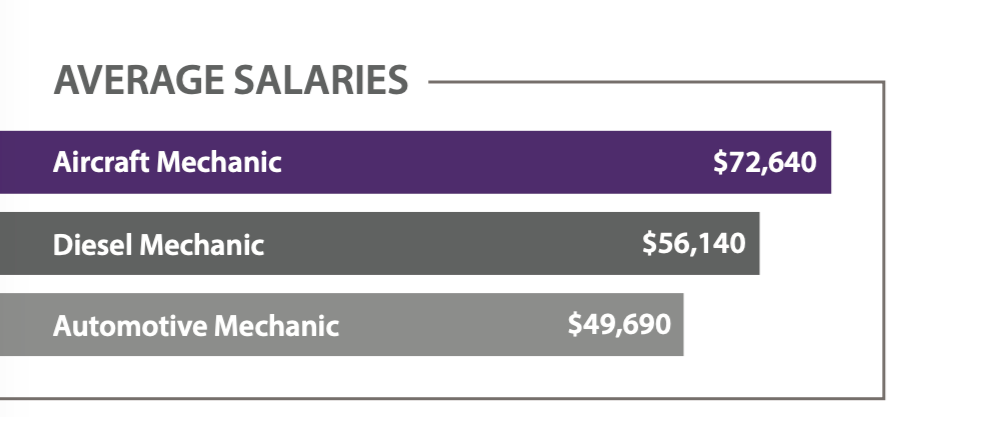
Aircraft Engine Technician Salary

Let’s be honest: nobody’s daydreaming about jet engines when they’re scrolling through TikTok at 2 a.m. You’re watching a guy in a hoodie explain why he quit his six-figure tech job to pressure-wash driveways, or a girl ranting about the audacity of charging $14 for a salad. But then, like a 747 hitting turbulence, your FYP delivers a video: a grease-monkey god in a pristine white jumpsuit, holding a turbine blade the size of a surfboard, casually captioning it, “Just flexing my $140k salary, no degree required.” Suddenly, the algorithm has spoken. The aircraft engine technician salary has officially become the new niche flex—the anti-college, pro-trade counterculture that’s breaking the internet’s collective brain.
Why the sudden obsession? In a post-pandemic economy, where white-collar layoffs hit harder than a bird strike on a fanblade, the blue-collar renaissance is in full swing. We’re tired of glorified gig work and buzzword-laden “head of synergy” roles. People are looking at the tarmac with reckless optimism. The idea that you can fix a $20 million piece of precision machinery, have a union, and still make it to your kid’s soccer game is intoxicating. And the numbers floating around—$35 to $80 an hour, bonuses, and zero student debt—are the kind of financial foreplay that makes a libertarian weep with joy and a liberal reconsider their major.
But hold your horses, because this isn’t just about turning a wrench. This is a deep dive into a world where high-voltage chaos meets hyper-specific mechanical autism, where your salary is dictated by a stamp on a logbook, and where the phrase “turbine disk” can make or break your mortgage application. It’s a trend, a cult, and a genuinely lucrative pivot—but it’s also a minefield of misinformation. Let’s pop the hood on this financial engine and see if it’s actually worth the grease burn.
Must Read
The Subculture: Where Hangar Rats and Finance Bros Collide
If you think the "trad wife" or "sweatpants CEO" communities are weird, welcome to the MRO (Maintenance, Repair, Overhaul) Mafia. This isn’t your dad’s car repair shop. The subculture is split into two distinct, often warring factions. First, you have the Legacy Hangar Rats—guys (and it’s still aggressively male, which we’ll get to) who started as line mechanics in the 90s, smoked Marlboros in the break room, and have seen things that would make OSHA file a restraining order. They view the new wave of "TikTok Techs" with the same disdain a punk rocker has for a pop-punk cover band. They believe you must suffer for your craft, and that a 4:00 AM shift is the only true baptism.
Then, you have the New School Diploma Daddies. These are the zoomers and late-millennials who saw a viral video about the salary, dropped $15k on a Part 147 school, and now post content about "Day in the life" from the hangar. They use words like "synergy" and "airflow optimization," and they’re clapping back at the Old Guard with sick beats and AR goggles. The cultural friction is real. The internet loves to dramatize the "binary" of it—low overhead vs. high stress. But the shared enemy keeps them united: the gatekeeping at airlines and the brain-tumor-inducing bureaucracy of paperwork.
Social media has exacerbated the toxicity. On Reddit’s r/aviationmaintenance, you’ll see threads titled “Is it over for me at 30?” next to memes about “$45/hr but my spine is dust.” The salary discussions are weaponized. A commenter will post their W-2, only to be eviscerated by someone claiming they make more on a C-check. It’s a porn war of paystubs. Meanwhile, on X (formerly Twitter), finance influencers are hijacking the trend, citing "$80/hr to touch shiny parts" as a hedge against AI. It’s a bizarre echo chamber where the working class authenticity is being commodified, and the reality of radiography and NDT inspections is reduced to a dopamine spike for the algorithm.
The Pragmatic Blueprint: How to Chase That Turbine Cash (Without Losing Your Mind)
Okay, you’re intrigued. You see the $80,000 starting salary and the progression to $150k+ with overtime. But navigating this trend requires the precision of a torque wrench and the skepticism of a man who just found a loose bolt in his engine core. Do not just quit your job because a TikTok influencer with eyeliner said so. Let’s get practical.
First, ignore the headline numbers; calculate the "quality of life" per hour. That massive salary often includes night shifts (the "graveyard premium") and mandatory overtime in July in Phoenix, Arizona, where the tarmac temperature hits 120°F. You aren't being paid to hang out. You are being paid to stand on your feet for 10 hours, contorted into fetal positions behind the hush house, replacing fan blades that weigh 80 pounds, and documenting every. Single. Torque. Reading. The real math is: $55/hr base, but you'll be working 6 days a week during the Summer travel season. That $140k comes with a 60-hour week caveat. Decide early if you value time more than money, because this job will eat your weekends.
Secondly, respect the "A&P" (Airframe & Powerplant) certification, but don't worship it. It’s the golden ticket, but it’s not a Harvard MBA. The quickest route is a Part 147 school (which now includes more modern, hands-on training). But look for employer-sponsored apprenticeships. Airlines like Delta, United, and even the regional carriers are desperate—I mean, desperate—for techs. They will pay for your schooling in exchange for a 2-year contract. It’s a trade-off: lower starting pay initially, but you graduate with zero debt, which is a more significant flex than a higher base pay when you're 50.

Third, pick your lane. Are you into "line maintenance" (fixing the quick stuff at the gate, running around, high pressure, high interaction) or "heavy checks" (taking a plane apart for a month, systematic, almost meditative for introverts)? Heavy check techs are the actual unicorns. They make bank because they understand blueprints, corrosion control, and sheet metal. If you have any semblance of spatial awareness, pivot toward sheet-metal mechanics and NDT (Non-Destructive Testing). These side-specialties bump you out of the generic "mechanic" wage bracket and into the "engineer-lite" bracket where salaries inflate by 25% instantly.
Finally, curate your internet feed. Stop watching the "salary reveal" videos. Start watching the "toolbox tour" and "failure analysis" accounts. The most valuable content creators are the ones who show you the scabs on their hands and the paperwork on their desk. They talk about wanting to quit, about the back pain, and about the micromanaging. If you can handle hearing about the negatives and still feel the itch to turn a wrench, you have the right psychology. Also, learn to use a borescope before you buy your first Snap-On toolbox. Trust me on this—the flex isn't the red toolbox; it's the ability to see a cracked combustor liner from 2 inches away without paying for a repair bill that exceeds your car's value.
Your Burning Questions, Answered (Based on the Internet's Worst Debates)
1. Is the Aircraft Engine Technician Salary really worth the "risk" of jet fuel exposure and heavy metals?
Let’s talk about the elephant in the hangar. The internet is torn between those who say "it's just oil" and those wearing hazmat suits to change the oil in their Honda Civic. The reality is nuanced and ugly. Jet fuel (Jet-A) is kerosene—it’s a skin irritant and a respiratory annoyance. But the real hidden danger is the heavy metals in engine alloys and the hydraulic fluid (Skydrol), which will melt your boots and possibly your liver if you're not careful. However, the risk is largely mitigated by modern PPE—and the union will fight for it.

So, is the extra $30/hr worth the potential long-term health risks? It’s a gambling game. You won't drop dead at 40 like a radium watch painter, but you will have dry skin and a slightly higher risk of respiratory issues if you’re careless. The techs who last 30 years treat their PPE like a religion, not a suggestion. If you’re the type of person who thinks "chemicals are a liberal hoax," you will die young. If you are paranoid and wear a respirator to check the oil, you’ll be fine. The salary is high because of this perceived risk. Are you getting compensated for the risk? Yes, but only if you negotiate well and don't let the company gaslight you into "they didn't have PPE back in my day" nonsense.
2. Do I need a four-year degree to get into this, or is a certificate really enough?
This is the hottest anti-intellectualism debate raging in the comment sections. Short answer: No, you don't need a bachelor's degree. An associate’s degree or a certificate from a Part 147 school is the standard, and it’s considered a vocational "blue-collar Ivy League" credential. The airlines literally hire you based on your ticket and your ability to not strip a bolt. A four-year degree might help you pivot into management later, but it's a massive waste of time and money if you want to be hands-on with the engines.
However, here's the viral nuance: the "degree" doesn't gauge intellect, it gauges compliance. The biggest barrier to entry isn't school—it's the background check and the drug test. You can have a PhD in engineering, but if you have a DUI from last weekend, an airline won't touch you because they need you to have an airport ID badge (SIDA badge). The internet loves to shout "SKILLS MATTER, NOT DEGREES!"—which is true—but they forget that sobriety and clean criminal record are the invisible requirements. If you have a medical marijuana card? Still a no-go in most US hangars. The certificate gets your foot in the door; the clean record keeps you in the building.

3. AI and Drones are taking jobs. Will a robot replace the Aircraft Engine Technician in 10 years?
This is the existential dread that pops up on every financial independence forum. The fear is that a drone will fly into the nacelle, scan a flaw, and an AI will automatically order a replacement part. Is this the end? Absolutely not. If anything, AI is making the technician more valuable. Sure, AI can detect a hairline crack in a turbine blade from a borescope video faster than a human eye. But who do you think fixes the crack? Who removes the blade, manages the tooling, and re-balances the rotor? AI cannot do that yet. Robotics are clunky, expensive, and can't get into the tight spaces behind the access panels.
But here is the actual shift: the job will become more cognitive and less manual. You'll rely more on augmented reality (AR) glasses showing diagrams and AI diagnostics, rather than just your gut feeling. The salary will likely stagnate for the "grunt" work, but skyrocket for the "interpreters" of the data. The techs who will thrive are the ones who learn to code or understand sensor logic alongside the mechanical work. If you are a Luddite who refuses to use a tablet, you will be left behind. If you embrace the tech, you become the human pilot for the robot, and that’s where the $80/hr top-end comes from. The irony is that AI won't eliminate the job; it will just force you to learn Python to keep the robot in check.
So, is the Aircraft Engine Technician salary a fleeting TikTok trend or a permanent lifestyle change? It’s a real, sturdy, and expanding career path driven by a global pilot shortage and a backlog of airplane orders. Unlike "quiet quitting" or "rage applying," this is a physical commitment that will survive any crash of culture. The trend aspect—the influencer hype—will fade, but the demand won't.
In a world obsessed with digital anonymity and intangible assets, this job is gloriously tangible. You can point at a 747's powerplant and say, "I made that spin correctly." That is a hyper-masculine, hyper-satisfying dopamine hit that crypto bros will never understand. The salary is just the carrot; the real reward is the mastery of chaos. It’s a permanent change because the hardware is still made of metal, and metal fatigue is a permanent fact of physics. As long as physics exists, someone has to fix it—and they'll get paid handsomely to do it. Now, go wash your hands; you look like you need a shower.