Air Force Honor Guard Requirements
There is a moment, frozen in the amber of collective memory, when the world goes silent. It is the click of a heel on polished marble, the rustle of a perfectly pressed uniform, and the slow, deliberate folding of a flag that has draped a casket. The United States Air Force Honor Guard is not merely a ceremonial unit; it is a living monument to discipline, a bridge between the raw violence of war and the serene dignity of remembrance. Its origins, however, are far humbler than the gleaming parade grounds of Joint Base Anacostia-Bolling would suggest. In the late 1940s, as the Air Force was brutally carved out of the U.S. Army, it inherited the traditions and the logistical chaos of its predecessor. There was no grand school for drill; there were only grizzled sergeants who knew the exact pressure needed to snap a salute and the weight of grief that followed a burial under a white cross in a foreign field. The initial necessity was not for showmanship, but for a solemn, unspoken pact—that no airman would leave this earth without a final, flawless farewell.
The early years were a study in improvisation. In 1947, when the Air Force became its own branch, the first honor guards were assembled ad hoc, often pulling experienced drill instructors from infantry units who had learned their craft on the sun-baked parade grounds of Fort Benning. These men brought with them the Army’s ancient rituals—the 21-gun salute, the mournful call of "Taps"—but they lacked a distinct identity. They were fighting against the ghosts of the past, trying to forge a new aesthetic out of the cold, sleek promise of jet-age warfare. The uniform was a transitional nightmare, mixing Army khaki with the new Air Force blue, a visual metaphor for an institution struggling to define itself. The human necessity, though, was crystal clear: in the aftermath of World War II and the onset of the Cold War, the nation needed a symbol of order and precision to counter the existential dread of the atomic age. The Honor Guard became that symbol—a tiny, perfect island of control in a world teetering on the brink of chaos.
But even in those fledgling days, the standards were quietly brutal. Anecdotal records from the 1950s speak of airmen practicing the "silent drill" for eight hours a day, their rifle bolts snapping with such ferocity that they would later find shards of brass in their boots. The requirements were not just physical; they were psychological. A single bead of sweat rolling down a temple during a state funeral was deemed a failure of the highest order. These pioneers, many of whom were Korean War veterans, understood that the currency of their trade was the suppression of self. They were not individuals; they were the projected will of the Air Force. It was a harsh, unforgiving apprenticeship, and those who could not stand the heat were quickly discarded, sent back to the practical world of loading bombs and fixing radars. This era forged the foundational myth of the Honor Guard: that perfection is not a goal, but a baseline.
Must Read
The Crucible of Perfection: From Wool to White Gloves
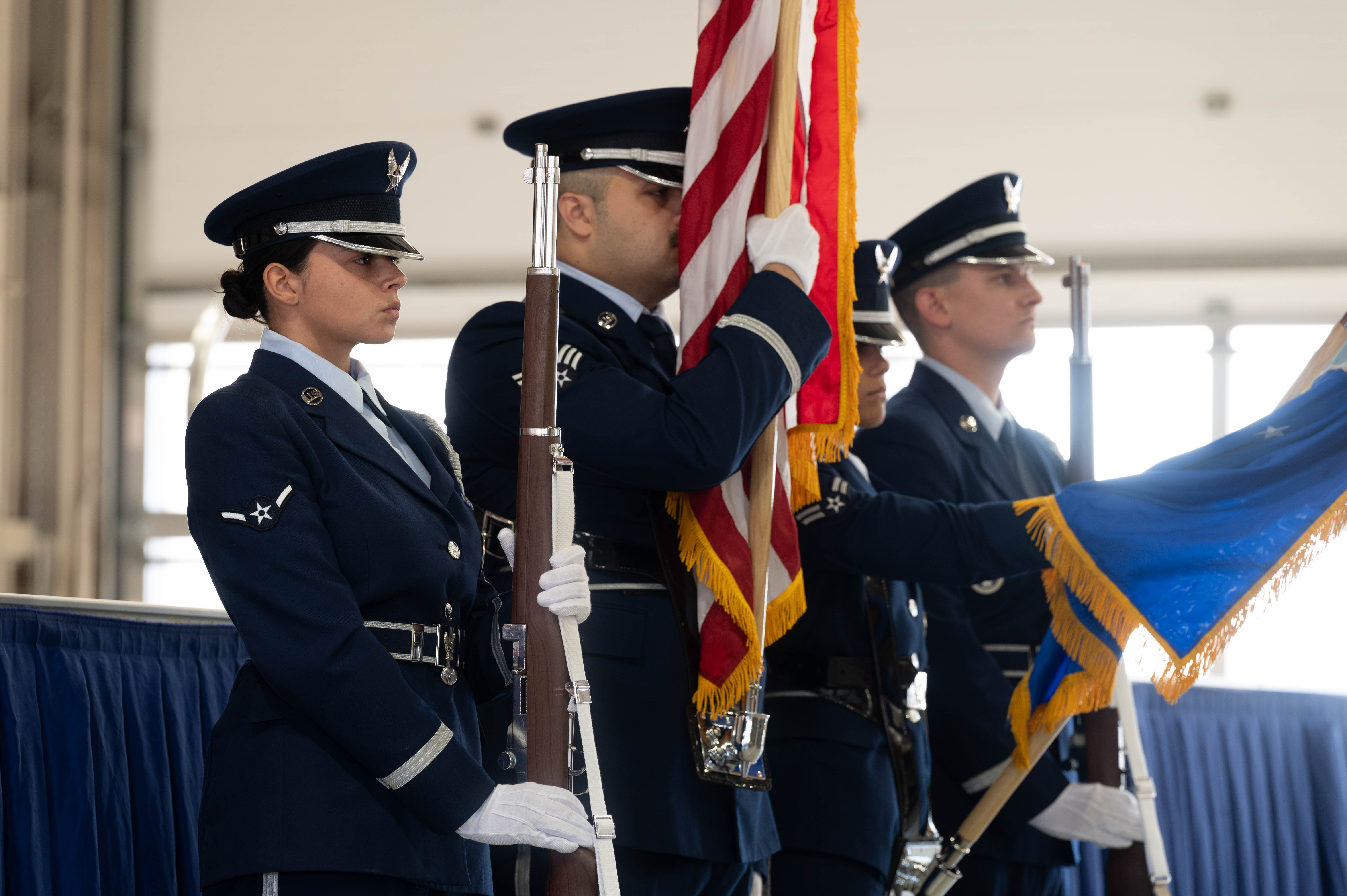
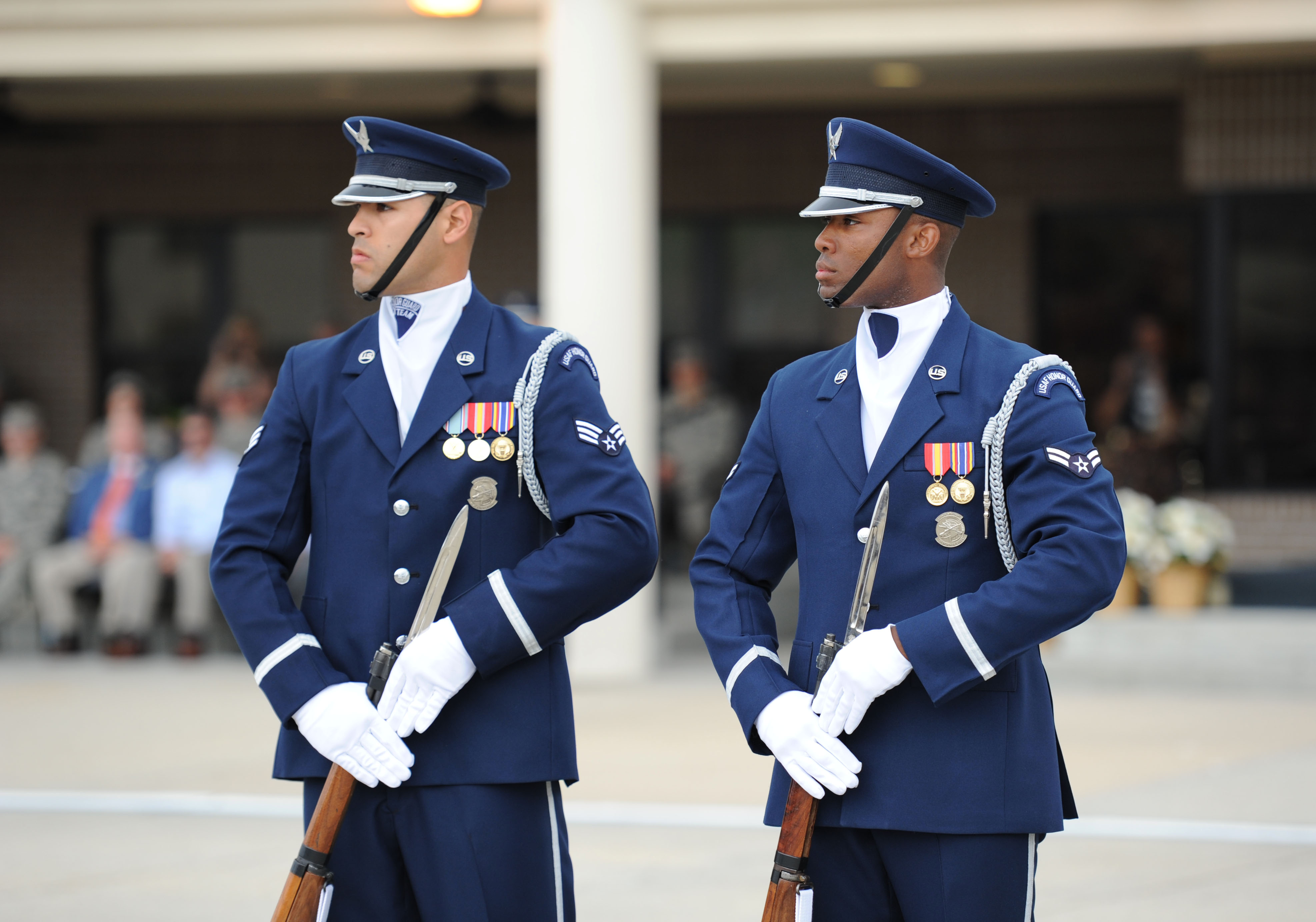
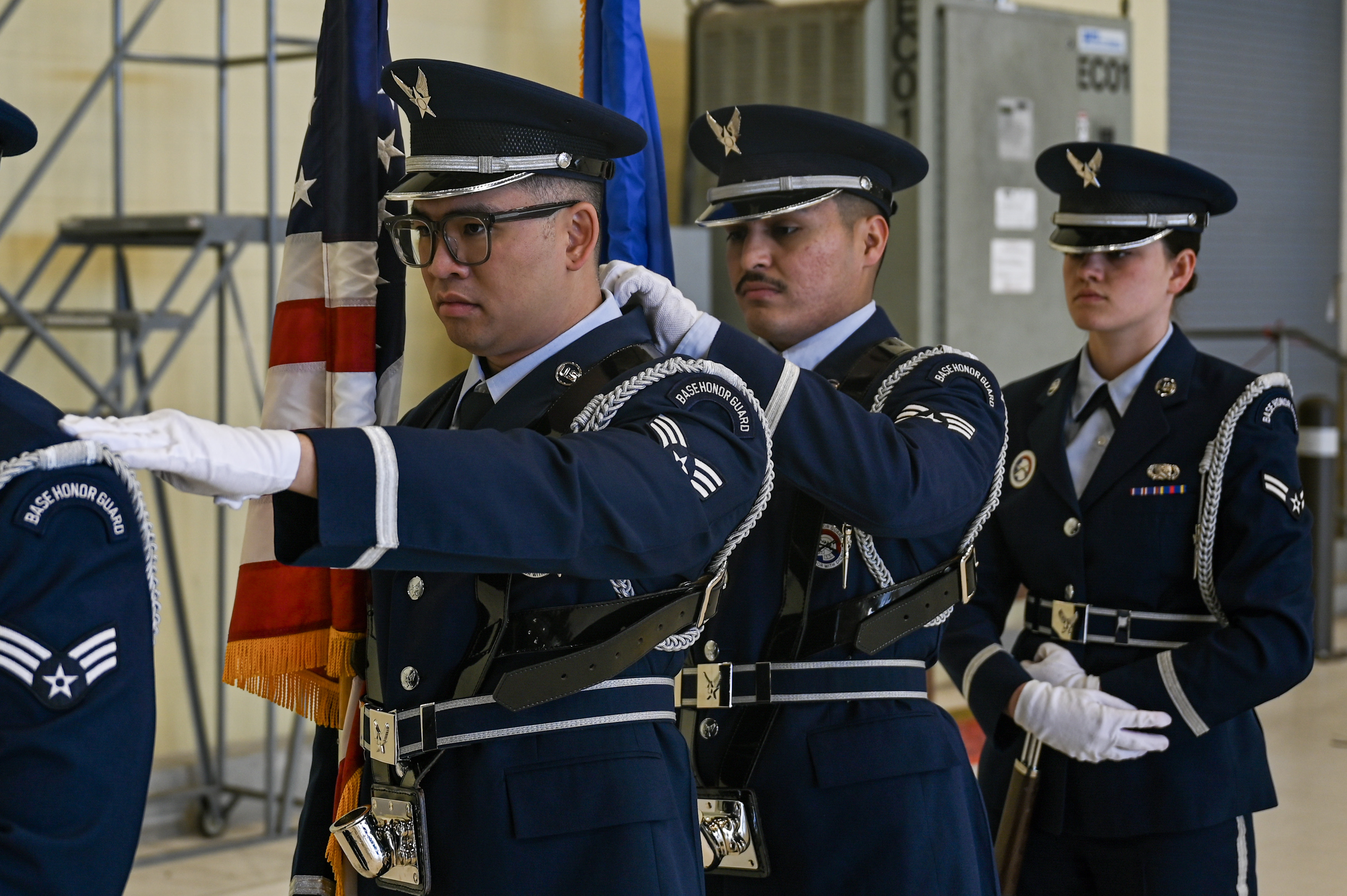
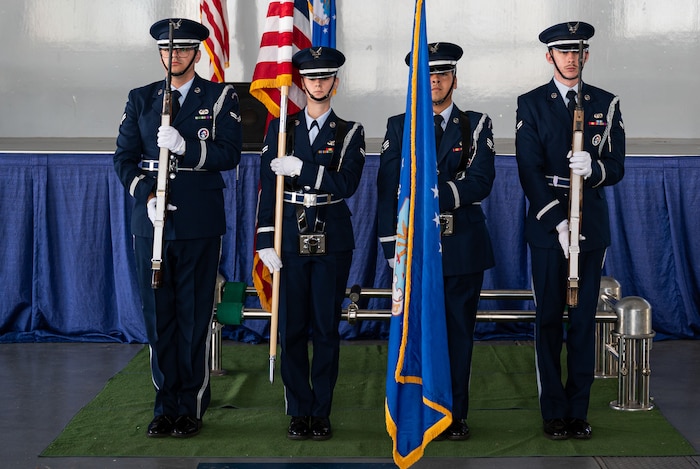
The transformation of the Air Force Honor Guard into the precision instrument we see today began in earnest during the 1960s, a decade of enormous social upheaval. As the country fractured over Vietnam, the military faced a crisis of public perception. The Honor Guard, paradoxically, became a neutral ground—a place where political anger was silenced by the sheer, hypnotic beauty of drill. To achieve this, the Air Force made a decisive break from Army tradition. They adopted the distinctive ceremonial uniform that remains iconic today: the high-collar "Ike" jacket, the silver-blue trim, and, most critically, the stark white gloves that seem to absorb light rather than reflect it. This was a major modernization, designed to create a visual contrast against the dark suits of diplomats and the grim newsreels from Southeast Asia. It was during this period that the infamous "Chris" (the wooden rifle used for drill) was refined, weighted and balanced so perfectly that a drop was considered a court-martial offense.
Forgotten vintage facts from this era are rife with bizarre quirks. For instance, in the 1960s, the standard for a prospective guardsman's height was notoriously rigid—between 5'10" and 6'4"—but the weight requirement was almost absurdly low, leading to a period of "skinny airmen" who looked fantastic in profile but often fainted during long summer ceremonies. The fainting, known internally as "dropping out," was so common that a system of "hidden spotters" was developed—airmen stationed in the crowd whose only job was to catch a falling guardsman before he hit the pavement, dragging him off the field by his ankles so the formation appeared uninterrupted. In the 1970s, there was a bizarre obsession with "muzzle discipline" for the ceremonial rifles, where the airmen were taught to hold the weapon so stiffly that the arm would vibrate, a condition they called "the shakes," which was actually cured by strapping iron weights to their wrists during practice.

The 1980s brought the era of the "Technicolor Uniform." As defense budgets swelled under President Reagan, the Honor Guard saw an influx of new materials. The heavy wool of the past was swapped for a synthetic blend that held creases sharper than a razor, but it was a flashpoint for controversy. The new fabric was shiny, and under the harsh television lights of the Iran-Contra hearings and state visits, it photographed poorly, creating a glare that obscured the airman's face. The response was a bizarre, short-lived order to spray the uniforms with a matte-finishing fixative, a chemical that makes hairspray and is notoriously flammable. One near-miss during a practice with a lit cigarette near a smoker’s huddle led to the immediate revocation of that policy. This decade also saw the formalization of the "sergeant of the guard" role as a senior NCO position, a massive shift from the previous "pick the tallest guy" mentality. They became the gatekeepers of the "Blood Stripes," the red stripe on the trousers that signifies a combat leader, and they demanded that every airman understand the actual history of the flag they were folding, not just the choreography.
By the late 1990s, the requirements became codified into a brutal selection process. The "Beast" week was introduced, a five-day initiation that takes prospective guardsmen through 20-hour days of relentless drill, physical conditioning, and rote memorization of military history. Legends from this time speak of a final exam that required a candidate to recite the names of every Air Force Medal of Honor recipient while performing a complex sequence of rifle spins. The failure rate was often above 50%. However, the most profound shift was psychological. The leadership realized that they weren't looking for good soldiers; they were looking for stoic performers. They began using sports psychologists and biofeedback monitors to teach the airmen how to lower their resting heart rate. The goal was to have a pulse rate below 60 beats per minute during a ceremony, ensuring steady hands and clear eyes, even when holding a rifle at port arms for 45 minutes straight. This was a hacking of the human body, not just the drill manual.
The Modern Hack: Biomechanics and the Digital Drill Floor
In the last decade, the classic principles of the Honor Guard—immobility, precision, and emotional detachment—have been subjected to a technological revolution. The "hacking" is no longer about physical punishment, but about data. On the drill floors of the 2024 era, you won't just find mirrors; you’ll find motion-capture sensors and laser grids. When a new trainee executes a "present arms," a software algorithm measures the angle of the elbow, the torque of the wrist, and the micro-fluctuations in balance, grading them against a digital model of perfection. This isn't just about looks; it’s about endurance. By analyzing the gait of the "pallbearers" walking with a heavy casket, biomechanical engineers have altered the distribution of weight in the ceremonial boots, adding carbon-fiber insoles that are invisible from the outside. This allows the airmen to hold a stationary position, such as guarding the Tomb of the Unknowns (a joint duty, but under Air Force rotation), for hours without developing the debilitating "guard knee" that plagued previous generations.
Furthermore, the tradition of the "silent professional" is being modernized with augmented reality (AR) headsets during training. Trainees can now run through a full state funeral in a virtual simulation, with the software throwing distractions at them—wind gusts, spurious noises, even a simulated flyover—to train their baseline startle reflex. This does not water down the historic rigor; rather, it concentrates it. It allows an airman to experience a dozen "dress rehearsals" in a single afternoon, accelerating the emotional conditioning that used to take months of real-world ceremonies. But perhaps the most significant "hack" is in the recruitment of the person themselves. The modern requirements have shifted to prioritize cognitive endurance over sheer height. A candidate in 2025 must undergo a battery of neuropsychological assessments, looking for "optimal absorptive capacity"—a fancy term for the ability to disassociate from pain without losing situational awareness. It is the same skill used by top-tier snipers and concert pianists. This is a perfect marriage of vintage discipline with cutting-edge neuroscience.
Frequently Asked Questions
Can you have tattoos or visible skin markings in the Honor Guard?
Historically, this was an absolute, non-negotiable ban. In the 1950s and 1960s, any tattoo that could be exposed, even by a slight breeze catching a sleeve, was grounds for immediate disqualification. The reasoning was pure nostalgia: the Honor Guard represented a clean, sanitized version of the military, and a tattoo was seen as a working-class blemish that clashed with the aristocratic precision of the ceremony. Airmen would go to extreme lengths, using heavy-duty concealer and, in some cases, seeking painful dermabrasion to erase ink before applying for the position. It was a mark of totalitarian perfectionism within the unit.
Today, the rules have evolved significantly, reflecting a broader societal acceptance of body art. Under the 2021 revisions, tattoos are now permitted, provided they are not visible while wearing the ceremonial dress uniform. This means the neck, hands, and face must be completely clear. However, the "hack" for many is that even sleeve tattoos on the forearms are allowed, as the long sleeves of the dress jacket cover them completely. The modern standard focuses far more on the "whole person" concept—evaluating whether a tattoo's presence would degrade the unit's sacred dignity. A tattoo of a skull on the forearm is fine; a tattoo of a political slogan on the knuckles is not. This shift acknowledges that the discipline is in the uniform, not just in the skin underneath.
Is the height requirement still as strict as it used to be?
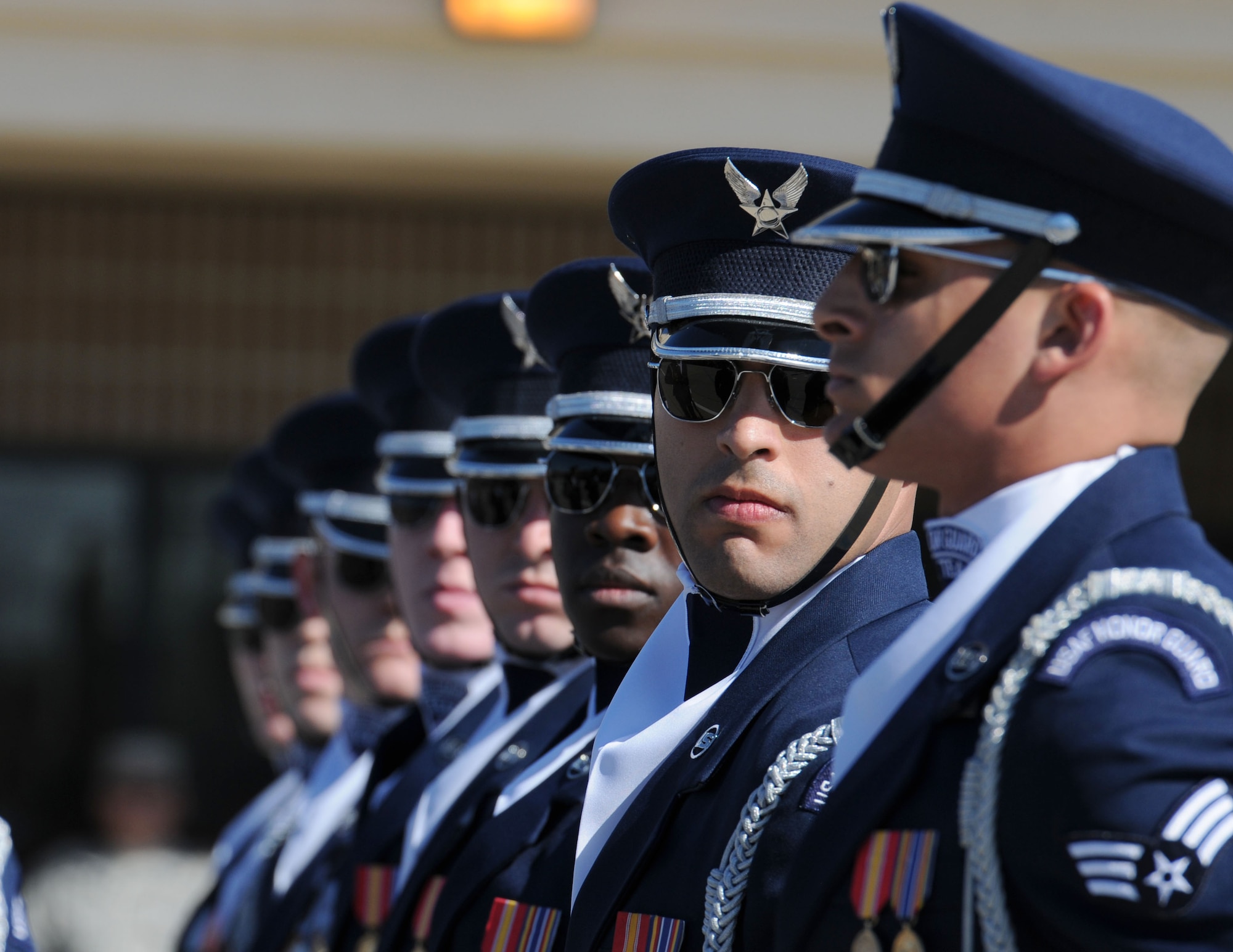
The vintage myth, popularized in the 1970s, was that you had to be a towering 6'4" to even be considered. In reality, the historical range was quite narrow—typically 5'10" to 6'3"—and it was strictly applied to ensure sight-lines and visual symmetry. However, there was a bizarre loophole in the 1980s where a candidate could be shorter if they had exceptionally long arms, as the "shoulder-to-shoulder" alignment in the formation was considered more critical than total height. This led to the infamous "T-rex" to "orangutan" spectrum of accepted recruits.
In the contemporary USAF, the height requirement has been carefully recalculated using anthropometric data. The current standards are surprisingly flexible—generally ranging from 5'8" to 6'5"—but the emphasis has shifted to proportion. The critical measurement is now "sitting height" and "crotch height," which are used to predict stride length and ensure that the rucksack-heavy marching formations maintain a uniform silhouette. The modern philosophy is that a shorter airman with perfect posture can look just as imposing as a taller one with a slight slouch. They no longer ask if you are tall; they ask if you can stand tall, which is a far more painful requirement to meet.
What is the most physically demanding part of the job?
Most civilians assume it is the rifle drill or the long marches. But historically, veterans of the 1960s and 1970s will tell you that it was the "stationary posture" at the casket during a funeral in the rainy season. For hours, airmen must maintain a "resting at ease" stance, but with the subtle tension required to prevent their wool uniforms from absorbing water and causing the trousers to droop. The pain was neuropathic—a burning in the lower back and a swelling in the knees that made walking out of the cemetery a grueling test of will. In the past, they taped their knees and ankles with a rigid adhesive, which increased fatigue but held the joint in place.
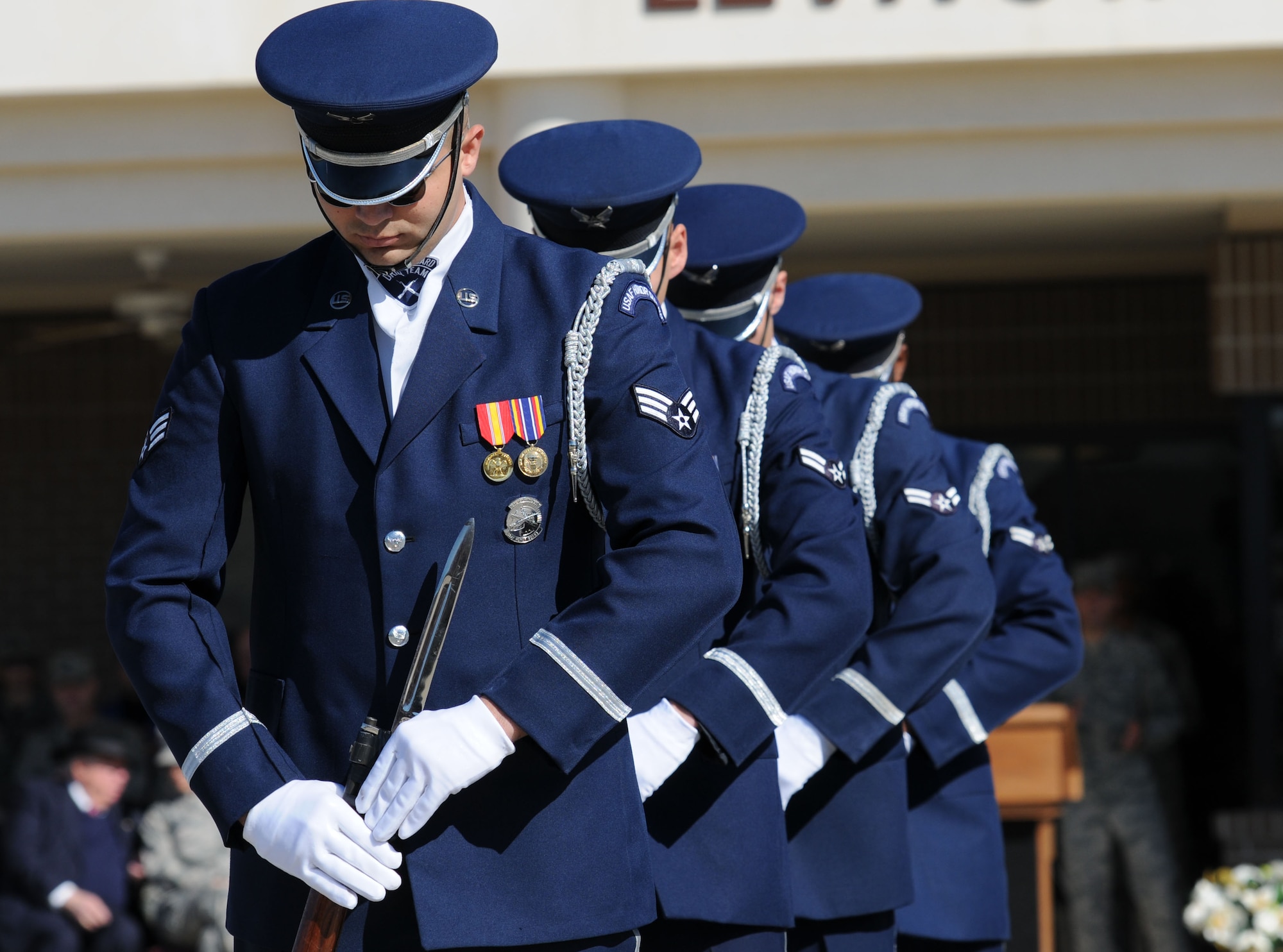
Today, the most demanding element is arguably the "casualty situation" of the flag fold. The modern fold requires a meticulous, high-tension creasing that, when done twenty times in a row during a single shift, causes micro-tears in the flexor tendons of the hands. The hacking of this issue has involved physical therapy protocols borrowed from Olympic gymnasts, focusing on eccentric loading exercises to strengthen the forearms. Furthermore, the modern airman must wear the "ceremonial harness" under their coat—a direct descendant of a parachute harness—which carries a hydration pack and a small cooling system to prevent hyperthermia in the summer heat. This allows them to withstand extreme temperatures that would have felled their predecessors. The difficulty hasn't lessened; it has simply moved from the bones to the muscles, and the tolerance for pain remains the only true constant in the requirements.
Looking toward the next two decades, the evolution of the Air Force Honor Guard will be driven by the collision of tradition and autonomy. We are likely to see the integration of exoskeletons during training, not to make the airmen stronger, but to standardize their movements with a robotic precision that eliminates the last traces of human tremor. Imagine a future where the "perfect fold" is algorithmically verified by a camera that measures the flag's symmetry to the micron, and where a drone flies overhead, not to deliver a payload, but to project a visual grid onto the parade field, guiding the airmen's spacing with laser lines.
Yet, the human necessity will remain stubbornly analog. No machine will ever replicate the grief in a widow's eyes, nor the absolute stillness required to honor a fallen pilot. The future airman will likely be a hybrid—part cyborg, part mystic—wearing a biometric suit that monitors their adrenaline and cortisol, adjusting their audio feed to play calming white noise directly into their bones. But as they walk through the gates of Arlington, the clicking of their heels will still echo the ghostly footsteps of those first pioneers from 1947. The technology will change, the height charts will shift, and the tattoos will fade, but the promise—that no one is forgotten—will define the next 20 years just as powerfully as it defined the past 75. The Honor Guard will continue to stand, not as a relic of the past, but as a sentinel for the future, holding the line between duty and humanity.