10050 Cielo Drive Crime Scene Photos
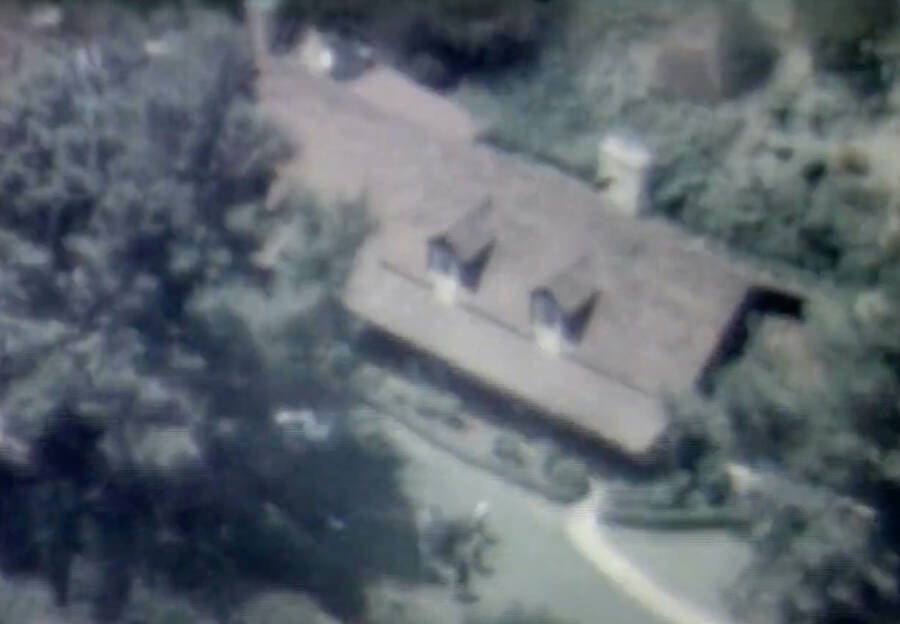
The address 10050 Cielo Drive doesn’t just sit on a map; it sits in the collective unconscious of American pop culture like a splinter that never fully dissolves. For decades, the name has been shorthand for the brutal end of the 1960s—the moment when the Haight-Ashbury dream curdled into something far more sinister. Yet, the morbid fascination with this property has less to do with the architectural style of the sprawling French chalet and everything to do with the tension between the idyllic Hollywood hillside and the unspeakable violence that transpired within its walls on the night of August 9, 1969. The crime scene photos, though grizzly and often re-created in films, remain a cultural taboo, a visual grail for true-crime aficionados who seek to understand the chaos that ended the lives of Sharon Tate and four others. Today, as the original house is demolished and the address changed to 10066 Cielo Drive, these images function less as evidence and more as a stark, haunting portal into a bygone era of celebrity, paranoia, and the death of innocence. Why does this particular crime scene continue to captivate us over fifty years later? It isn't merely the celebrity of the victims, though the presence of a pregnant Hollywood starlet certainly amplifies the tragedy. It is the randomness of the selection, the theatricality of the murders, and the subsequent unraveling of the Manson Family that turn these photographs into a psychological Rorschach test. We look at the wide-angle shots of the living room, the blood-spattered furniture, and the ominous scrawled word "PIG" on the front door, and we are forced to confront the fragility of the security we believe we have purchased with fame or fortune. The photos are a brutal reminder that the hills of Los Angeles, which glitter with promise by day, can cast very long, dark shadows at night. In the modern digital age, where we are saturated with graphic imagery daily, the restraint of the official evidence photos—often taken in black and white, focusing on spatial details rather than gore—makes them eerily more powerful than any snuff film aesthetic.
The Architectural Ghost: Why the House Itself Was a Silent Witness
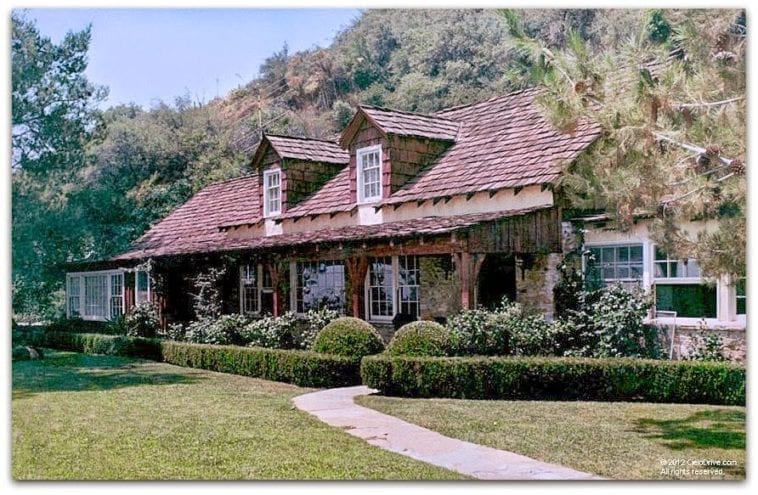
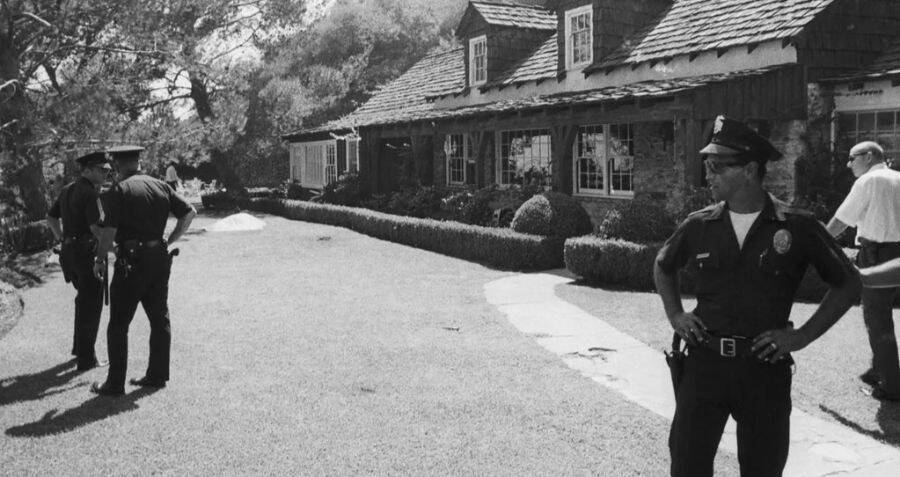
To truly understand the crime scene photos, one must first understand the house as a character in the drama. Built in 1942 by a local architect for the grand sum of $67,000, the property at 10050 Cielo Drive was not a sprawling mansion but a modestly sized, secluded getaway that had previously housed stars like Cary Grant and Henry Fonda. By the time Roman Polanski and Sharon Tate moved in, the grounds were overgrown, the privacy absolute, and the entrance marked by a heavy wooden gate that did little to keep out the world. The crime scene photos reveal the idiosyncrasies of this layout: the long driveway that dead-ended into the carport, the large picture windows that offered a view of the lawn but no view of the neighbors, and the winding path that led to the guest house where Jay Sebring, Wojciech Frykowski, and Abigail Folger were staying. This isolation is the first "character" in the photos; it explains why the perpetrators had hours to execute their plan unchallenged. The property was a trap disguised as a sanctuary. Examining the exterior shots, you notice the telephone wire that had been cut, a detail that turns the house from a residence into a sealed vessel. The absence of sound in the photos is deafening. We see the lawn chairs overturned near the pool, the shards of glass on the patio, and the general disarray that suggests a struggle that spilled from the interior to the exterior. The famous image of the front door—a heavy, carved wooden slab—shows the word "PIG" scrawled in what appears to be a desperate, shaky hand, likely using a bloody towel or cloth. This was not the work of a graffiti artist; this was a signature, a messaging system. The architectural details—the low-hanging eaves, the rustic stone walls, the dark interior wood paneling—create a claustrophobic atmosphere in the photos, a sense that the walls themselves absorbed the terror and are now trying to leak it back out to the viewer decades later. The house was demolished in 1994, but its blueprint remains eternally etched in the minds of those who have studied these images, serving as a reminder that environments hold memory, even if we try to bulldoze the physical evidence. The interiors of the crime scene photos are particularly challenging to parse because they show domesticity interrupted. The living room, with its large, overstuffed white sofas, looks like the set of a glamorous film, yet it is here that the most devastating violence occurred. Sharon Tate, eight and a half months pregnant, was found lying on the floor near the sofa, a nylon rope tied around her neck and slung over a beam in the ceiling, connecting her to the body of Jay Sebring, her former boyfriend. The photos show the intricate geometry of the crime—the looping rope, the sprawling body positions, and the sheer volume of blood that soaked into the white shag carpet. Psychologically, we are drawn to these images because they necessitate a cognitive dissonance: this is where people lounged, listened to music, and planned a future, yet the final photo of the room is a still life of horror. The crime scene photos force us to reconcile the intimate scale of the room—it wasn't a vast mansion, but a cozy den of creativity—with the magnitude of the brutality.Dissecting the Frames: The Dark Art of Evidence and Media Consumption
In the age of instant digital access, we assume that every detail of the Tate murders is available online. However, the official crime scene images taken by the LAPD are closely guarded, and the ones that circulate are often grainy reproductions, photocopies of photocopies, or stills from documentaries that have been pixelated to blur the most graphic elements. This scarcity creates a specific dynamic: the blank spaces in our knowledge are filled with our own imagination, which is often far worse than reality. When you do manage to see a relatively clear image—say, the one showing the closed door of the guest house with a bullet hole through the wood—you are struck not by the horror, but by the banality of the materials. Wood splinters, cotton rope, red wine on a tablecloth—these are everyday objects transformed into evidence of a fever dream. The act of viewing these photos is, therefore, an act of curation; we are forced to look away from the victims' faces and instead focus on the environment, which allows us to project our own fears onto the scene. There is a practical, if grim, insight to be gleaned from analyzing how these photos are consumed versus how they were used in court. For investigators, the photos were forensic gold—showing the trajectory of the bullets in the driveway where Steven Parent was shot, or the positioning of the knife marks on the screen door. They were objective data. But for the public, the photos became subjective horror. The trial of Charles Manson and his followers in 1970-71 was a media circus, and the publication of select images in tabloids like The National Enquirer served to demonize the counterculture, painting a picture of a generation out of control. This bifurcation—the photo as science versus the photo as spectacle—is a lesson in media literacy. We must ask ourselves: are we looking at these images to understand a historical event, or are we looking to feel a vicarious thrill? If we are honest, the answer is usually the latter, and that says more about our own psychological needs than about the victims themselves. We crave the boundary-pushing experience, the safe terror of a nightmare we can close the browser tab on. For the modern reader, the true-crime boom has turned the Cielo Drive crime scene into a case study in "disaster tourism." Writers, podcasters, and documentary filmmakers have spent thousands of hours reconstructing the timeline from those photos. The lesson for us is less about the specifics of the Manson Family and more about situational awareness and the illusion of safety. The house at 10050 Cielo Drive was rented to celebrities who believed their fame and seclusion made them untouchable. Yet, the crime scene photos show a house where the gates were easily climbed, the locks were standard, and there was no panic button or security system. The actionable takeaway is not to live in paranoia, but to understand that the physical security of your home is a direct reflection of your threat model. The Polanskis had a glamorous threat model of paparazzi, not a homicidal cult. In our own lives, we often under-protect our digital and physical spaces because we believe our "neighborhood" or our "status" protects us. Furthermore, the photos highlight a crucial psychological component: the aftermath for the survivors—the neighbors, the first responders, and the families. The images we see are the "clean" evidence photos, but the real photographs are the ones in the minds of those who had to clean the blood-soaked carpets. The lack of closure, famously, drove Roman Polanski to make bizarre and dark films like Rosemary's Baby and later Chinatown, both of which deal with corrupt systems and violated female bodies. As a case study, this teaches us about PTSD. The crime scene is not just a place where a crime happened; it is a locus of trauma that radiates outward. When we consume these photos, we are tapping into a legacy of pain that goes beyond the victims. We are connecting to the grief of Doris Tate, Sharon's mother, who spent years campaigning for victims' rights because she was horrified that the photos were being sold for profit. Her activism, born from the violation of seeing her daughter's death scene commodified, led to California's "Victims' Bill of Rights" in 1982. So, looking at these images is not a passive act; it is an engagement with a complex legal and ethical history.The Forensic Aesthetics: Between Documentary and Exploitation
It is nearly impossible to discuss the Cielo Drive photos without addressing the ethical tightrope that true-crime content creators walk. The line between a documentary and exploitation is often determined by the intent of the viewer, but the imagery itself is static. When you look at the photo of the living room, you are viewing a space where four people lost their lives in a blitz attack. There is no way to "prettify" that fact. The modern obsession with "aesthetics" in true crime—making moodboards of crime scenes, buying candles inspired by serial killers—distorts the reality of these photos. They are not art; they are evidence of a failure of humanity. To treat them as a source of macabre inspiration is to disrespect the victims and to miss the point entirely. Instead, we should view them with the solemnity of a visit to a war memorial, acknowledging that the artifacts we see (the rope, the glasses on the table) are the relics of a human tragedy. The scarcity of high-quality photos has also led to the proliferation of "recreations" in films like Once Upon a Time in Hollywood (2019). Tarantino, notably, shows the lead-up to the crime but alters the outcome, providing a cathartic relief for the audience that the real photos cannot offer. This juxtaposition is fascinating. The real crime scene photos show a reality where the "heroes" do not survive, and the "hippies" are the villains. Tarantino's film, which relies heavily on the public's memory of those grainy photos, works because the audience knows the true history. The art becomes a shadow of the evidence. This interplay between the real and the re-created suggests that our culture is still trying to rewrite the ending of 1969, to superimpose a narrative of justice over the chaos of the photographs. Yet, the photos remain stubbornly real, a constant reminder that some narratives cannot be revised, only endured. This is the ultimate power of the crime scene photo: it is a hard stop on the story, a full stop that refuses to allow any fictional deviation.Frequently Asked Questions
Why are the actual 10050 Cielo Drive crime scene photos so difficult to find?
The LAPD considered the Tate case highly sensitive, and the original negatives and prints were held in the evidence locker for decades. Unlike modern cases where evidence is often digitized and released via public records requests, the 1969 paperwork was archived under a strict seal, exacerbated by the intense publicity and the subsequent threat of harassment against the victims' families. The few photos that leaked into the public domain during the early 1970s were often smuggled out by investigators or sold by disgruntled staff, leading to their reproduction in low-quality tabloids. These copies were then rephotographed, losing resolution and contrast, which is why the versions online today are so grainy.
Furthermore, the families of the victims, particularly Sharon Tate's mother Doris, successfully lobbied for laws in California to protect victims' families from the distress of public sale of crime scene images. In 1982, the California Penal Code Section 129 Pace was amended to prevent the commercial exploitation of these photos without family consent. This legal precedent means that the official high-resolution images remain locked in a vault, accessible only to law enforcement, legal scholars, or by direct court order. This makes the scarce, blurry copies the only visual currency for the public, which paradoxically increases their mystique and value. The difficulty in finding them is a testament to the legal system working to preserve human dignity over morbid curiosity.
What is the significance of the word "PIG" written on the door?
The word "PIG" at the Cielo Drive residence was the final, theatrical touch by the killers. In the context of the Manson Family, "Pig" was a derogatory term for the establishment, authority figures, and the wealthy elites who, in Manson's delusional "Helter Skelter" prophecy, were to be blamed for a coming race war. The writing was not just a random taunt; it was a deliberate act of misdirection and branding. The killers wanted to make it look like the murder was the work of a political radical (like the Black Panthers), initiating the race war, rather than the work of a caucasian cult leader trying to protect himself from exposure. The photo of the door, with the word scrawled in what appears to be blood, is one of the most iconic images of the case, symbolizing the violent collision of counterculture politics and irrationality. It was, in effect, a PR stunt for a war that existed only in Manson's mind.
Must Read
Interestingly, forensic analysis later debated whether the word was written in blood or in a brown substance that looked like blood, with some reports suggesting it was the victim's blood mixed with a creamy cosmetic or furniture polish. This detail illuminates the chaotic and improvised nature of the crime. The killers were not meticulous; they were stoned and frenzied. The writing of "PIG" was an afterthought, an attempt to add a layer of meaning to what was otherwise a senseless slaughter. For the viewers of the photo, the word acts as a chilling exclamation point, transforming a private home into a public spectacle. It is the single element of the scene that speaks to the killer's motive, even if that motive was fundamentally insanity.
Who were the four other victims besides Sharon Tate, and where were they found?
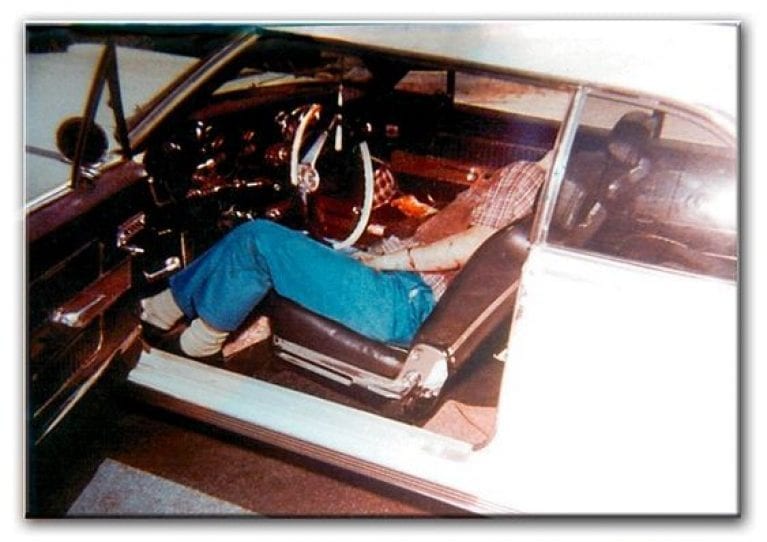
Beyond Sharon Tate, the victims were Jay Sebring (age 35), a renowned Hollywood hair stylist and Sharon's ex-boyfriend; Wojciech Frykowski (age 32), a Polish screenwriter; Abigail Folger (age 25), a coffee heiress and Folger's girlfriend; and Steven Parent (age 18), who was visiting the property's caretaker, William Garretson. Parent was shot first, four times in the car as he was driving away from the estate at around 12:15 AM. His body was found in the white Rambler near the front gate. The crime scene photos show the car's windows shattered and Parent slumped over the seat, his young life cut short by what is believed to be a chance encounter—he was simply in the wrong place at the wrong time, as the intruders were cutting the telephone wires.

The interior of the main house was the scene of the most brutal attacks. Sebring was found in the living room near the front door, shot and stabbed multiple times. Sharon Tate was found near the sofa, bound and mortally wounded. In the guest house, the struggle was even more chaotic. Frykowski managed to fight his way out onto the front lawn before being shot and stabbed, while Folger was chased down the side of the house and collapsed on the grass near the lawn chairs. The crime scene photos document a trail of blood leading from the front door, across the living room, and out to the lawn, showing the frantic, desperate struggle for survival. The geography of the crime scene is crucial: the killers started at the bottom of the hill, worked their way up to the main house, and then went to the guest house to ensure no witnesses remained—a chilling, methodical progression.
Did the crime scene photos contribute to any changes in law or police procedure?
Yes, indirectly and directly. Directly, the handling of the Tate crime scene photos was a catalyst for the California penal code changes regarding the release of autopsy and scene images to the public. Doris Tate's relentless activism, triggered by seeing her daughter's body in a tabloid, led to a law that made it a misdemeanor for coroners and police to release "corpse photos" for commercial gain. This was a landmark shift in privacy law, acknowledging that a victim's dignity extends beyond their death. Procedurally, the LAPD's failure to secure the Cielo Drive property quickly (the gate was locked, and the initial responding officers were overwhelmed) led to criticisms about crowd control and evidence preservation at high-profile scenes. The sheer number of unauthorized persons who walked through the house before the forensic team arrived compromised some chain-of-custody issues, although the main evidence was collected.
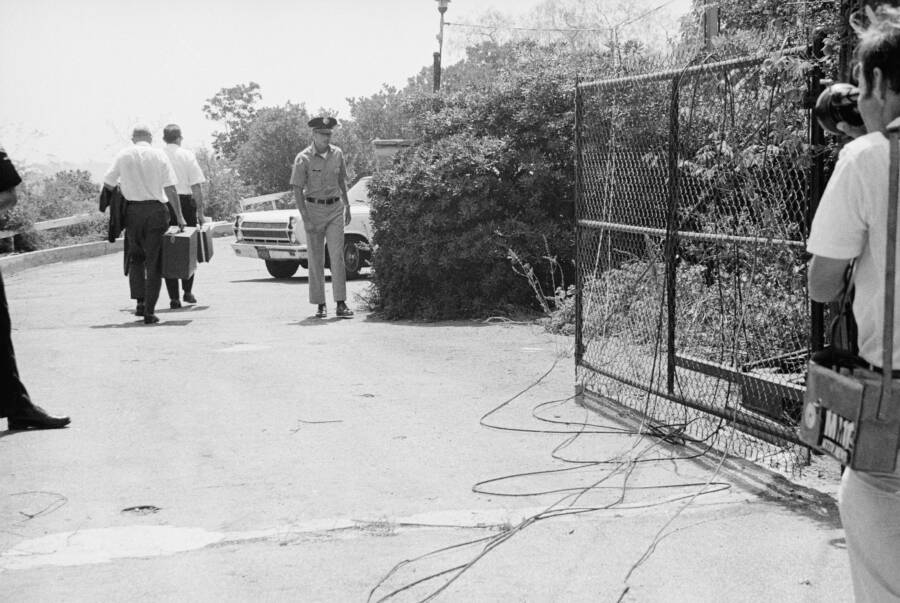
More broadly, the case highlighted the need for inter-agency communication. The LAPD initially failed to connect the murders to the later murders of the LaBianca family the following night because of jurisdictional disputes and lack of information sharing. The crime scene photos from both scenes were eventually compared, revealing the same knife type and rope, leading to the unified task force that caught the Family. The Manson case became a textbook example for the FBI on "multicide" and cult behavior, leading to profiling techniques that consider the ritualistic elements of crime scenes (like the "PIG" writing) as keys to the perpetrator's psychology. Thus, the photos were not just evidence for the courtroom; they were evidence of a need for systemic change in how law enforcement approaches serial and high-profile killings.
Is the original 10050 Cielo Drive house still standing?
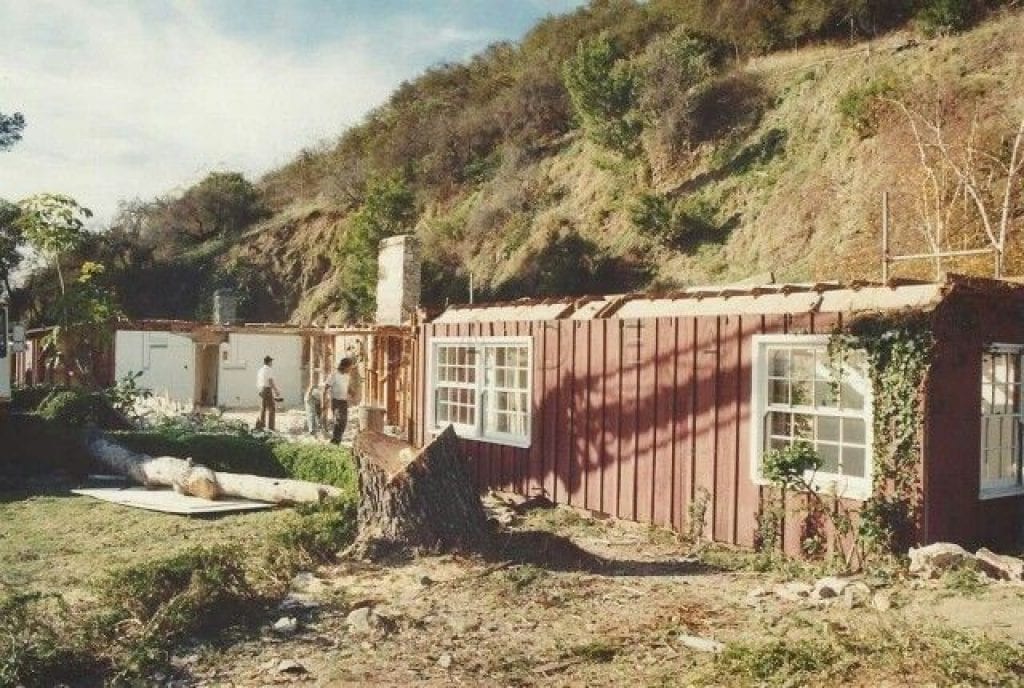
No. The original house was demolished in 1994 by the then-owner, a record producer. He wanted to erase the stigma, but more practically, he also wanted to build a larger home. The demolition was highly publicized, and many fans and historians protested, but the physical structure was razed to the ground. Interestingly, the demolition was planned to occur on the 25th anniversary year of the murders, though it happened a bit later. The new house built on the property was a modern Mediterranean-style mansion, designed to be invisible from the street and completely different from the wooden, chalet-style original. The owner at the time famously altered the street number from 10050 to 10066 Cielo Drive to erase the address connection—a move that was partially successful in reducing trespassers, but which did little to stop the speculation.

Today, if you visit the site, you will see a private gate and a large, terraced mansion that bears no architectural resemblance to the one in the photos. The tragedy is that the location, which was beautiful for its seclusion, has now doubled down on that seclusion. For fans of true crime, visiting the site is a surreal experience because there is literally nothing left to see. The driveway is paved differently, the gate is high-tech, and the hillside has been regraded. The crime scene photos are now the only record of what the place looked like. This makes the photographic archive even more precious and historically significant. The physical destruction of the site, paradoxically, elevated the importance of the images we have left, turning the photos from simple evidence into the definitive historical record.
As we scroll past these infamous images in a documentary or a Reddit thread, we are engaging with a mirror of our own mortality. The photos from 10050 Cielo Drive strip away the glamour of the 1960s and reveal the raw, pre-digital reality of flesh and blood. They connect to us because they shatter the illusion of a linear, safe existence; they prove that chaos can enter through the most beautiful front doors. In our daily lives, we often compartmentalize violence—we place it in inner-city neighborhoods, in war zones, or in the distant past. But the Cielo Drive photos occurred in the heart of the entertainment capital of the world, to people who had achieved the ultimate dream. This proximity to privilege makes the threat feel universal; if it could happen there, on that quiet, winding street, why not anywhere? Human nature compels us to look for patterns and narratives in chaos. The Manson case and its accompanying photos offer a neat, tragic narrative: a failed musician, a counterculture, and a gate that failed. We cling to this narrative because it suggests that if we can understand the "why," we can protect ourselves from the "what." Yet, the deeper truth revealed by the photos is that there is no logic. The victims were not chosen for who they were; they were chosen because of the house's former owner, the producer who had slighted Manson. This randomness is the most terrifying aspect of the imagery. It forces us to accept that safety is an illusion, and that our best defense is not our locks, but our community and our awareness of the fragility of the human condition. Ultimately, looking at the crime scene photos of 10050 Cielo Drive is a profound meditation on legacy. The victims—Sharon Tate, Jay, Wojciech, Abigail, and Steven—were not just names on a police report. They were people with hopes, dreams, and, in Tate's case, a baby due in weeks. The photos, despite their grim subject, ensure that we never forget them. They are a testament to lives interrupted, a call to remember the individuals behind the sensationalism. In a modern world that is increasingly desensitized to violence via screens, we must approach these images with a sense of reverence. We must let them be a reminder that the past is not dead; it is not even past. It lingers in the pixels of those old photographs, waiting for us to look closely enough to see not just the horror, but the humanity that was lost.